World Crocodile Day 2026: 154 gharials hatchlings guided back into the Gandak River
Valmikinagar, June 17, 2026: A total of 154 gharials have successfully hatched along the Gandak River, Valmikinagar, Bihar this year, marking over a decade of continued conservation success in the landscape.
The Wildlife Trust of India, in collaboration with the Department of Environment, Forest and Climate Change, Govt. of Bihar, has been working to protect the critically endangered gharials in the Gandak River since 2014-15. The efforts have continued to pay off, since the team discovered gharial breeding sites along the river in 2016. Today, the Gandak River is home to the second-largest population of these fish-eating reptile in the world!
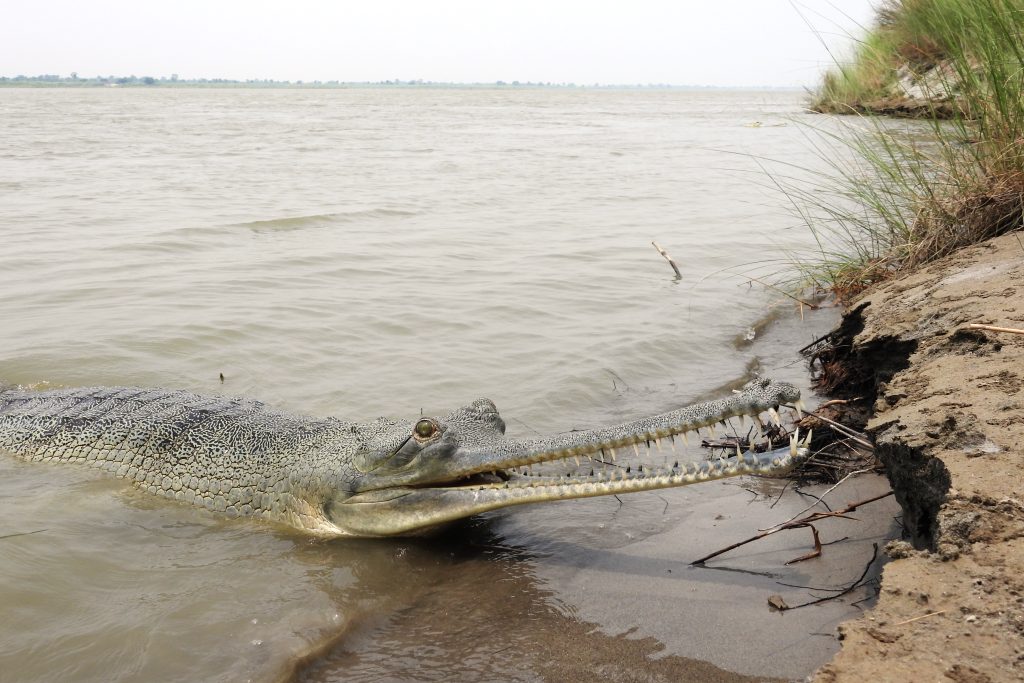
Adult female gharial by the river bank during the hatching event | Photo © Shantam Ojha/WTI
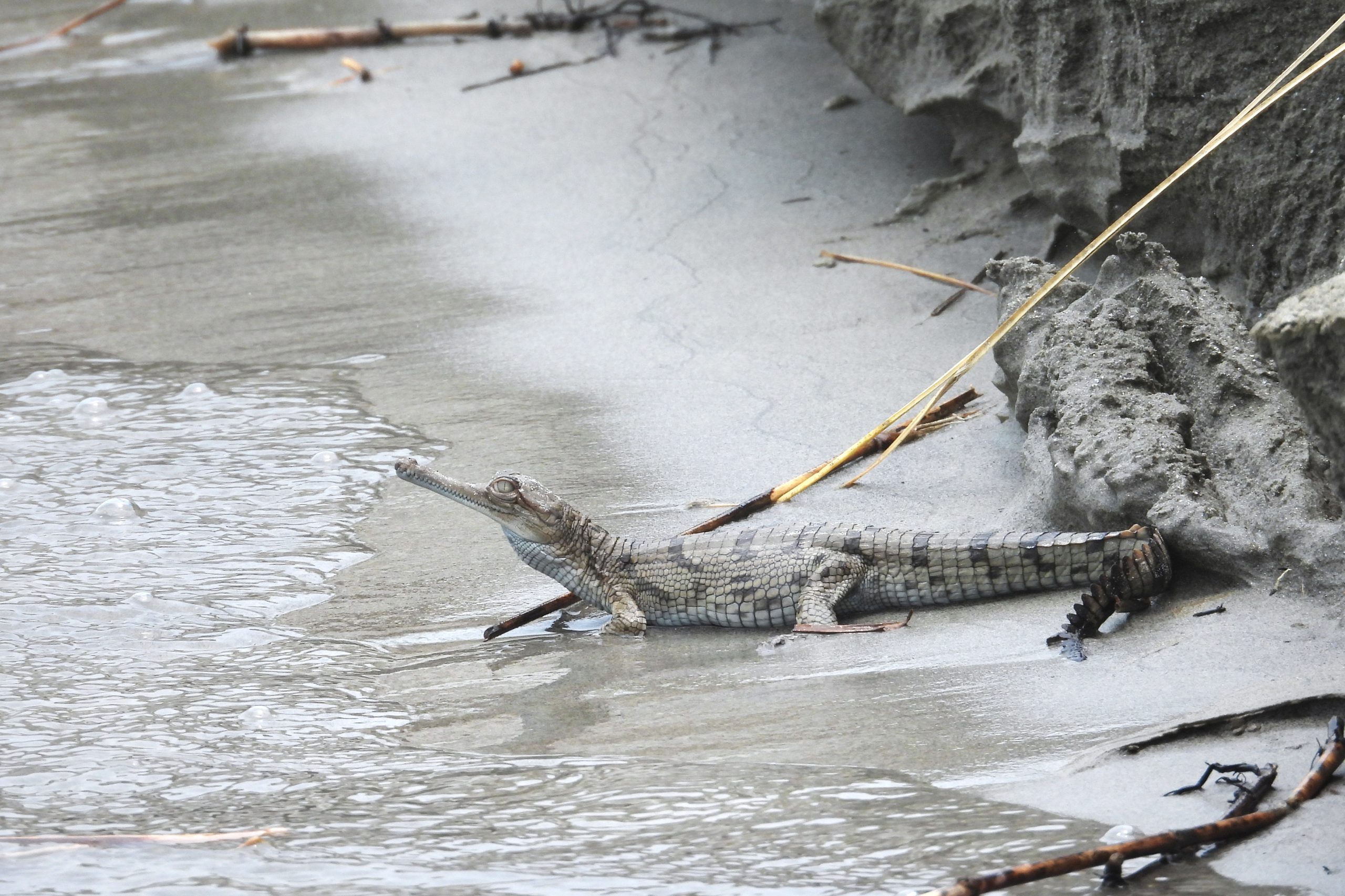
A total of six gharial nests were detected in the Gandak River this year. The first detection was in the Dhanaha region of Bettiah Division. A total of 31 hatchlings were released from this nest on 6th June in the presence of Mr. Gaurav Ojha, the Conservator of Forests, Mr. Pankaj Kumar, Divisional Forest Officer and Mr. Shriman Malakar, the Range Officer. Four other nests were monitored in the Areraj region of Motihari Division. One additional nest was observed to have hatched naturally. A total of 123 hatchlings in the region have been recruited into the river so far. The hatchlings were released in the presence of forest department representatives, including Ms. Priyanka Shyamal, Range Officer, Mr. Arun Kumar, Forester, and Mr. Shashi Raj, Forest Guard, on the 10th, 14th, 15th and 16th June.
The Gandak River basin hosts one of the few remaining and the second-largest breeding population of gharials. Categorised by the IUCN Red List as Critically Endangered, this gharial relies on natural high sand banks along river banks to make a hole nest. Females lay clutches of 40-50 eggs in these nests once a year.
Patrolling along the river starts in early March when the team of researchers, forest department staff, and local community members look for nesting signs along the sandbanks. “Once a nest is confirmed, the team continuously monitors the site till the hatchlings come out around the month of June. This monitoring is important to ensure protection of the nests against natural predation, trampling by livestock or erosion of riverbanks. Nest monitoring continued till the hatchlings come out and make their way to the river”, explains Dr. Samir K. Sinha, the Chief Ecologist at Wildlife Trust of India. While the IUCN assessment indicates that the population of the species is increasing, it remains critically depleted and requires continued conservation interventions across its distribution range to enhance breeding success and support population recovery. The Gandak River currently supports a minimum of 433 gharials, according to the most recent population estimate conducted in February 2026.
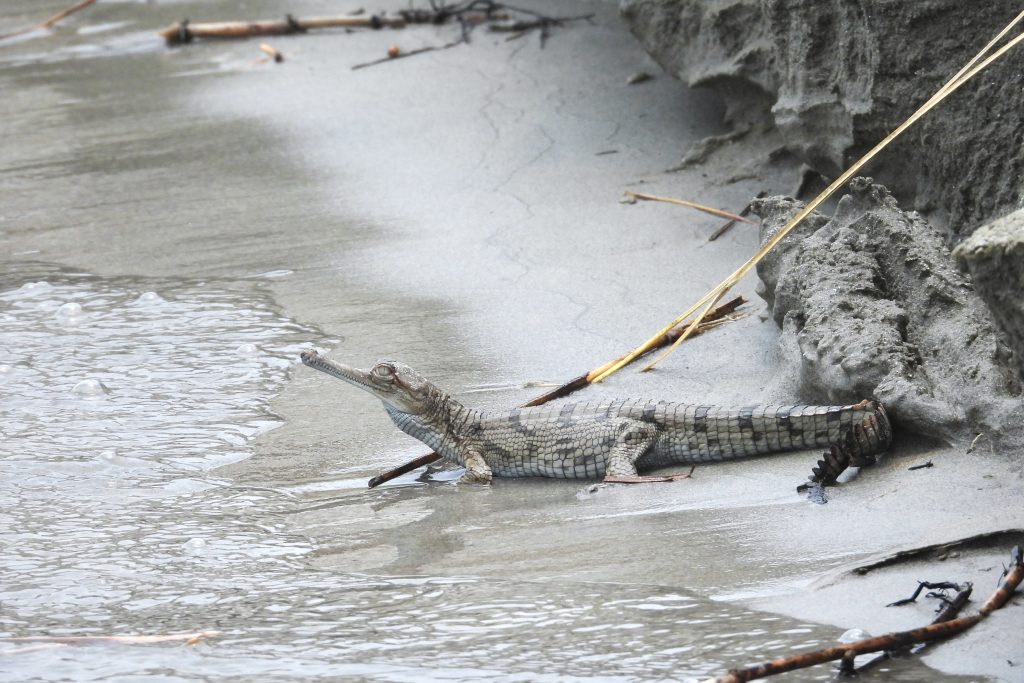
Gharial hatchlings along the Gandak River | Photo © Shantam Ojha/WTI
Wildlife Trust of India is thankful to the continued support of the Los Angeles Zoo, California, and the Department of Environment, Forest, and Climate Change, Government of Bihar, in these conservation efforts. The team has assisted in the successful hatching of more than 875 gharials, resulting in the much-needed augmentation of the population of the species in the Gandak River.