Fireflies – The Lanterns in the Woods
It was then, in the distance, that I spotted a tiny green flicker. Then another. And another.
I must have been no older than eight or nine when my family took a summer trip to Lansdowne. We had tucked ourselves in a small lodge within the pine and oak forests, far from the familiar sounds and lights of the city. I vividly recollect exploring the winding trails around the property, collecting fallen pinecones, all day. But once darkness fell, the forest felt entirely different.
Lying in bed at night, I listened attentively to the various sounds of the forest outside – trees rustling in the wind, crickets chirping endlessly, and beings walking outside. The forest, which had seemed so welcoming in the daylight, suddenly felt vast, endless and intimidating.
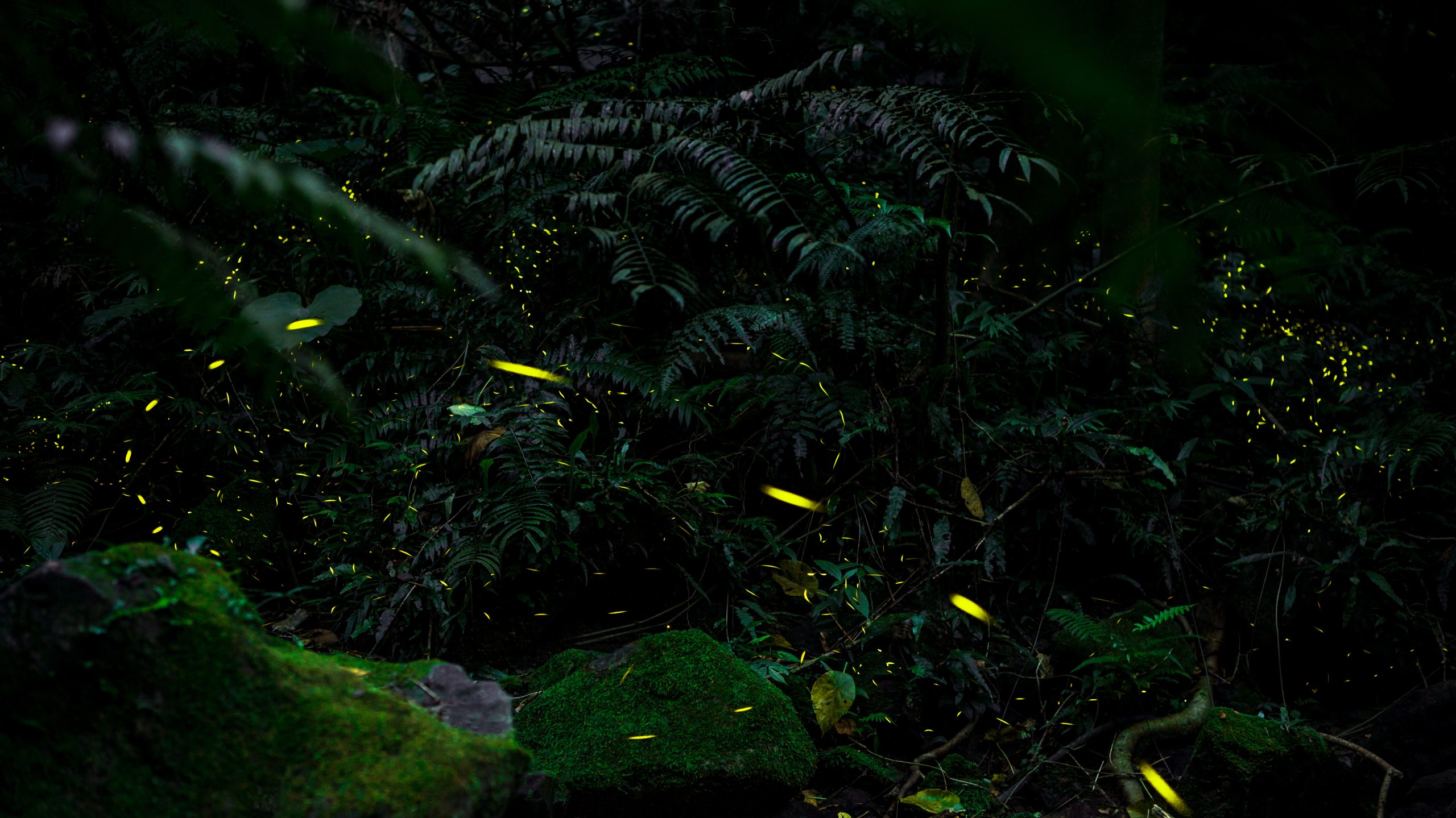
Noticing my unease, on our last night there, my father took my hand and led me outside through the narrow trail behind the cabin. It was then, in the distance, that I spotted a tiny green flicker. Then another. And another. I saw the small lights appear and disappear among the vegetation. They seemed almost magical, like little stars that had drifted down from the night sky to settle among the trees. Until then, I had only seen fireflies in animations and storybooks. I had never imagined that the creatures actually existed outside the screen. There weren’t many of them, just a handful blinking quietly in the darkness, but in my mind, they transformed the forest completely. The sounds that had frightened me moments before now felt different. Instead of a place to fear, the forest suddenly seemed alive with undiscovered secrets and tales. All it took was a few tiny insects carrying their own lanterns in the woods.
A forest full of fireflies | Photo © Sriram P Murali
The creatures of spectacle
It has been 15 years since I first saw fireflies, and my interest in the creatures has become even stronger. I still imagine the fairy spectacle I witnessed in the forests of Lansdowne, and I have never since missed an opportunity to go back.
Fireflies are not flies at all. They are beetles belonging to the family Lampyridae. On warm, humid evenings, these insects perform one of nature’s most enchanting spectacles, carrying their own light. Those brief flashes that I saw were not random at all. Each flicker was part of a conversation. Across grasslands, wetlands and forests, fireflies use their light to communicate, producing distinct flashing patterns to locate potential mates. They also use these lights for other reasons, such as defending their territory or keeping away predators. What appeared like a handful of floating green and gold lanterns was a language, hundreds of years in the making – an evolutionary spectacle.
Light by fireflies is created through a chemical reaction called bioluminescence, which takes place in a specialised organ in their abdomen. This natural process relies on compounds called luciferase and luciferin present in the firefly’s tail, along with oxygen and energy from their own cells. This results in the creation of a “cold light” – light produced with almost no heat. Luciferin is resistant to heat and glows under the right conditions, whereas luciferase triggers the emission of this light. In certain species, even the eggs glow faintly before the larvae emerge. The larvae, often called glow worms, spend months or even years hidden in leaf litter, rotting wood and damp soil. They hunt snails, worms, slugs and other soft-bodied invertebrates. While the adults seem delicate, the younger forms are rather efficient hunters of the forest floor.
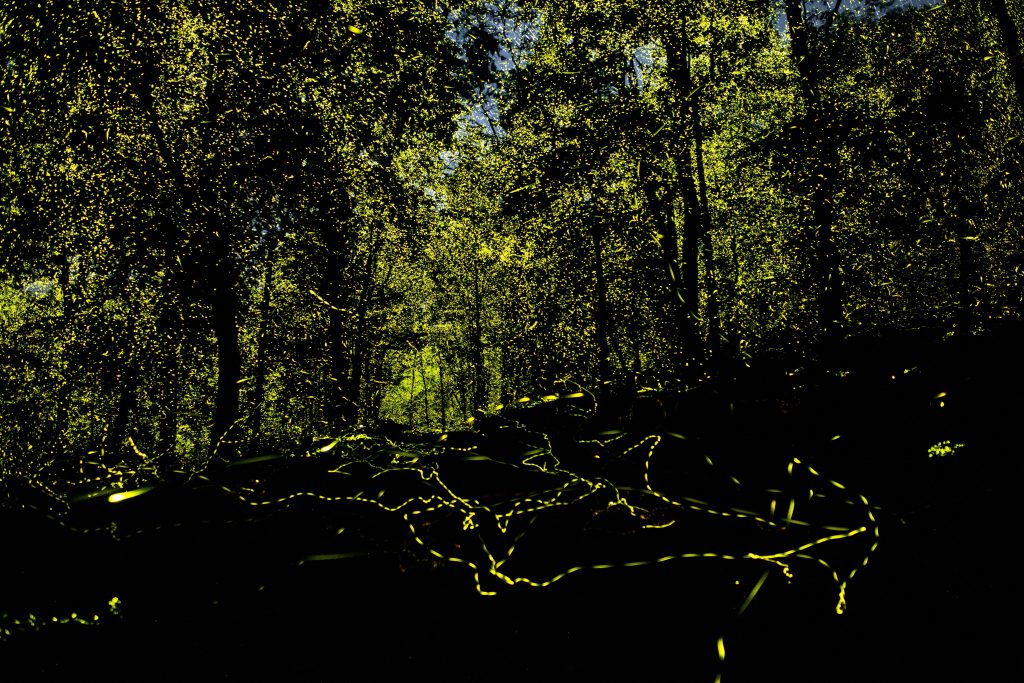
The mating ritual of fireflies captured in the forests of Tamil Nadu | Photo ©Sriram P Murali
Where to find fireflies?
Fireflies are found across much of the world – from tropical forests to temperate grasslands, though they are most abundant in warm, humid habitats near streams, marshes, ponds and forest edges. They spend most of their life within leaf litter and decaying vegetation, only emerging as adults for a brief period to find mates and reproduce. This makes them particularly sensitive to changes in the environment. Artificial lights can drown out the flashes that they use to communicate, making it difficult for the male and female to find one another. The loss of forests, wetlands and other natural habitats further reduces the spaces where their larvae can grow and hunt. As towns and cities continue to drown the stillness of the night sky, some of nature’s oldest lights are becoming harder to find. These insects are closely tied to the health of the ecosystem that hosts them. When their light begins to fade from a landscape, it may be a sign that something else has been lost as well.
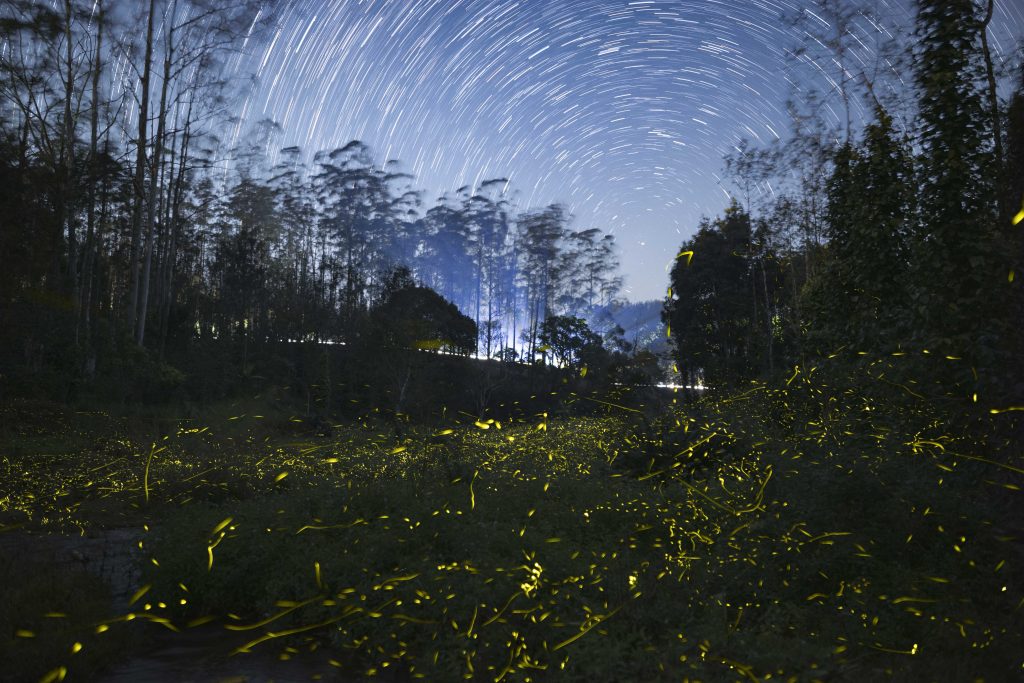
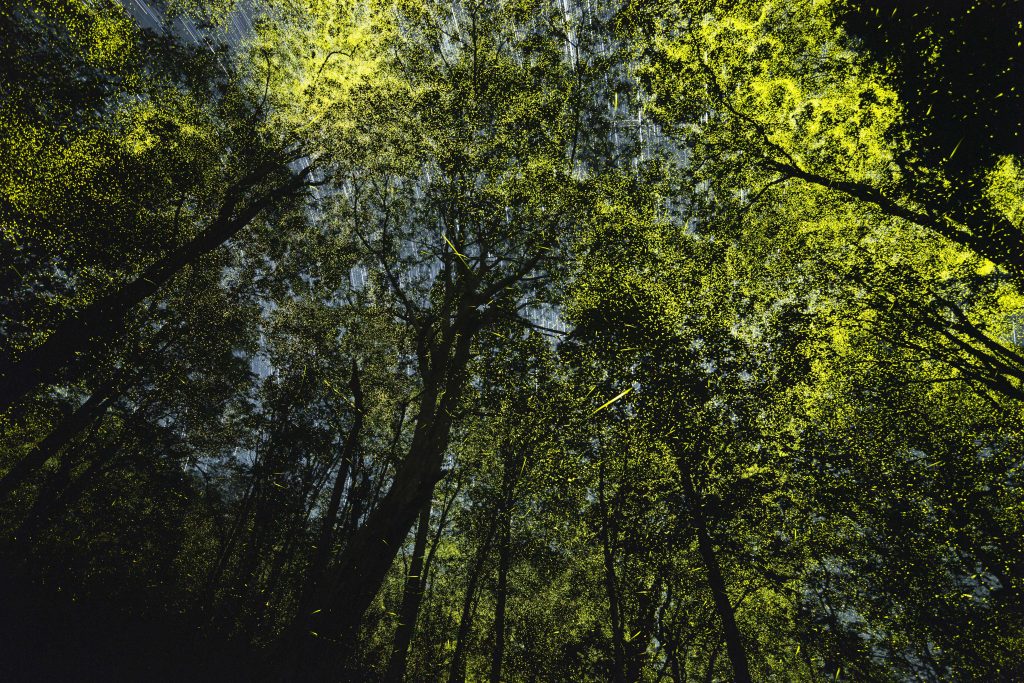
Fireflies against the backdrop of star trail | Photo © Sriram P Murali
The spirit of wonder
It is no coincidence that fireflies appear so often in children’s storybooks, animations and folklore. Long before the chemistry behind their glow was explained by science, people were fascinated by the glow they carried. For instance, in parts of Japan, fireflies are celebrated as symbols of remembrance and fleeting beauty. The Hotaru-gari firefly viewing festival is a beloved summer tradition in the country. Across different cultures, they have been associated with spirits, hope, stars and guidance. In India too, the forests of Annamalai Tiger Reserve, Mudumalai Tiger Reserve and even the Nilgiris come alive with fireflies with the onset of monsoons.
Fireflies invoke a sense of childlike wonder among those who encounter them. For many, the memory of a firefly is not simply the memory of an insect, but of a place, season or a moment in time. Perhaps that is the reason why they have left such a lasting impression on me. While I cannot recall every detail of that trip to Lansdowne – not the food we ate, the trails we walked – but I do remember the fireflies vividly. And how the forest felt after I saw those twinkling lights in the trees. Over the years, I have learned of their complex life cycles, their predatory skills, and their remarkable communication. Yet no scientific explanation has diminished the wonder of that first encounter I had when I was young. The glow lasted only for a few seconds, but their memory will last a lifetime.
Story by Pallavi Ghosh, Intern, Wildlife Trust of India.