Beyond Ritual: Barna Parv – A Living Prayer for the Conservation of the Wild
In the shadow of the Himalayan foothills, where the Valmiki Tiger Reserve (VTR) spreads its green expanse across the north-western corner of Bihar, are communities that live in quiet harmony with nature. Among these, the Tharu – an indigenous group with deep ancestral roots in the region – practice a tradition that is both spiritual and ecological: The Barna Parv.
Every year during the Hindu month of Bhadrapada (August-September), the Tharu villages around VTR observe Barna Parv, a unique ritual lasting between 48 and 60 hours. During this time, villages effectively close themselves off from the outside world. No one is allowed to enter or leave, and an unwritten law is strictly enforced – no plants are to be touched, no twigs broken, no new leaves plucked, and no animals killed. Even fields and markets remain shut. The forest is granted uninterrupted rest and respect, as the people of the village stay indoors and observe a symbolic detachment from all forms of interference with nature. Cattle grazing is not allowed, and villagers refrain from trampling the grass. Anyone who violates these rules are penalised by the community aldermen. During Barna, like Navratri, the female divine is worshipped in the form of young girls, symbolising the regenerative power of nature. Cultural dances like Jhamta-jhumta are performed around asthan or Barhamsthan, which are usually around Peepal trees (Ficus religiosa), locally called barkhan or peepar, where a guru (community priest) conducts the pujan (rituals).
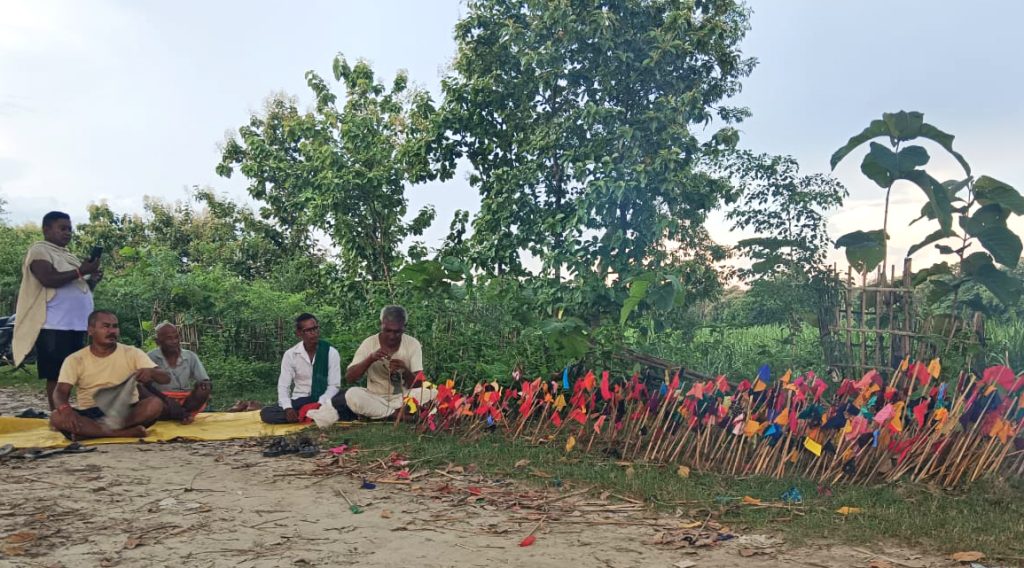
Barna Parv ritual | Photograph by Pavel Ghosh/WTI
Barna is a powerful act of environmental stewardship. Rooted in the Tharu belief that forests and all life within them are sacred – the festival is a traditional form of conservation, allowing flora to regenerate during the peak of the monsoon season. This inherited respect for nature is part of the Tharu way of life and reflects a deep ecological consciousness passed down through generations.
This tradition has been so impactful, that the Hon’ble Prime Minister of India, Shri Narendra Modi, praised the Barnafestival during his Mann Ki Baat address in August 2020. He applauded the Tharu community of West Champaran for their deep-rooted love for nature and recognised Barna as a shining example of indigenous environmental conservation. The Prime Minister’s acknowledgement brought national attention to this grassroots tradition and affirmed the vital role of local communities in protecting the country’s natural heritage.
At a time when protected areas like the Valmiki Tiger Reserve face increasing threats from wildlife crime, habitat destruction and illegal trade, such community-driven practices are more important than ever. Recognising this, the Wildlife Trust of India (WTI), with the support of the Bureau of International Narcotics and Law Enforcement Affairs (INL) of the United States Department of State, launched a focused initiative under the “Strengthening India’s Wildlife Crime Prevention and Law Enforcement Measures along the Indo-Nepal Border” Project.
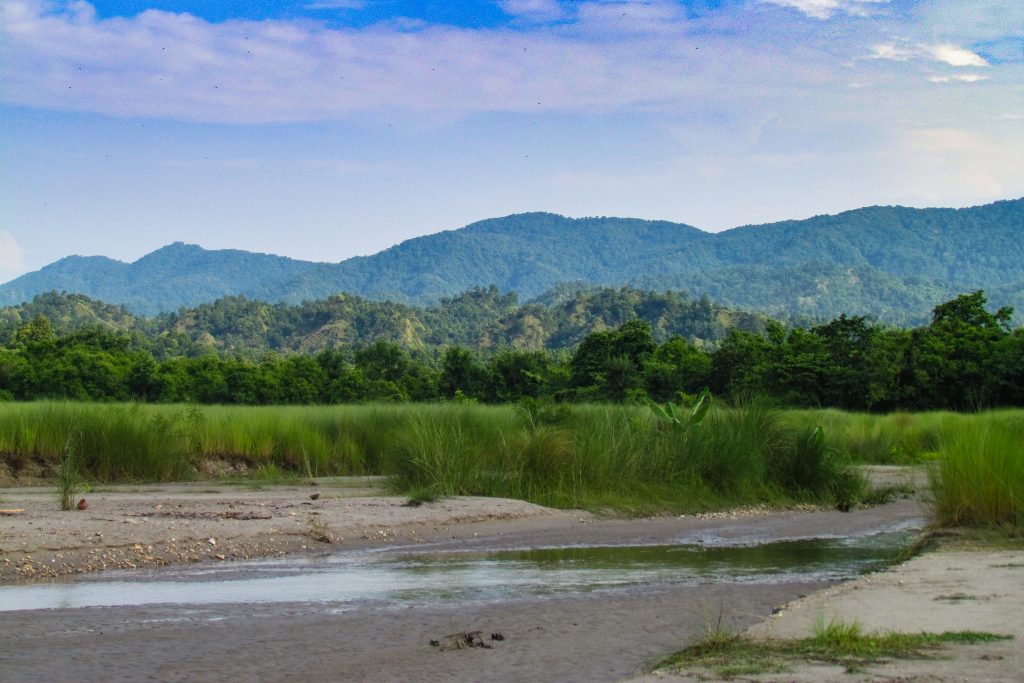
Valmiki Tiger Reserve landscape | Photograph by Dr. Samir K Sinha/WTI
This project is centered on community-based wildlife crime prevention. WTI, in close coordination with the Bihar Forest Department, has been working to strengthen conservation efforts by actively engaging local populations – especially the Tharu and other indigenous groups living in and around the reserve. Through community sensitisation programs and capacity-building efforts, the project has fostered awareness around the risks posed by wildlife crime and the importance of protecting biodiversity. According to official records, the Tharu community resides in 214 revenue villages, colloquially termed as Tharuhat (थरुहट)¸ spread across Bagaha-II, Ramnagar, Gaunaha and Mainatand Community Development Blocks of West Champaran district, Bihar, with an estimated population of about 2.5 lakh (0.25 million).
A key outcome of this work has been the formation of Village Vigilance Volunteer (V3) teams in identified wildlife crime hotspot villages. These V3 teams, made up of community members themselves, are trained to detect and report illegal activities, assist in monitoring wildlife movement, and serve as a vital bridge between local people and forest authorities. They have become the eyes and ears of conservation on the ground, often alerting authorities to suspicious activity well before any formal law enforcement can respond.
Importantly, the conservation ethos promoted by WTI builds upon the very values that festivals like Barna already embody. Rather than imposing new ideas, the initiative reinforces traditional beliefs in the sanctity of nature. Barna, with its strict observance of ecological restraint, becomes a natural occasion for discussing modern conservation challenges—ranging from poaching to deforestation and illegal trade in wildlife.
During the festival, WTI officials, often join community elders in storytelling, interactive sessions, and open dialogue, encouraging younger generations to view conservation not as an external enforcement mechanism but as a cultural duty. In this way, Barna becomes both a celebration and a call to action, blending spiritual observance with practical protection of the environment.
Prayer being offered to nature as part of Barna Parv ritual | Photograph by Pavel Ghosh/WTI
Given that the Tharu Community is the most demographically significant group residing along the fringes of the reserve, their active participation in wildlife protection is indispensable. Their traditions, knowledge systems and strong community networks make them ideal partners in safeguarding the region’s forests and wildlife. As they have done for generations, the Tharu people continue to demonstrate that conservation is most effective when it comes from within the community itself.
As the monsoon breathes new life into the forest, and the Tharu villages retreat into silence during Barna, a different kind of vigilance unfolds. It is not born of regulation or fear, but of faith, reverence, and a centuries-old understanding that nature must be allowed to thrive, free from harm. And now, with modern conservation efforts supporting these values, the forests of Valmiki are protected not only by patrols and policies – but by the people who have loved and lived with them for generations.
Pavel Ghosh is the senior field officer with WTI’s Strengthening Cross Border Wildlife Crime Prevention and Law Enforcement between India and Nepal Project, currently posted in Valmiki Tiger Reserve.