National Wildlife Week 2025: Students & Communities Champion Coexistence
Wildlife Trust of India (WTI), together with state forest departments and partners, celebrated Wildlife Week 2025 with a diverse range of activities– school competitions, community meetings, nature walks and capacity-building sessions. Every activity highlighted the simple idea of people and wildlife sharing space in harmony.
Garo Green Spine, Meghalaya
At Captain Williamson Memorial Government College, in Baghmara, WTI and the State Forest Department hosted inter-school essay, extempore, quiz, and painting competitions on the theme of human–animal coexistence. The event saw the participation of over 110 students from various schools.
Smt. Nazia Marak, Director, Balpakram National Park, joined as the Chief Guest and spoke about coexistence in everyday life. WTI’s Balsreng T. Sangma shared clear, practical steps that young people can take to support wildlife-friendly communities. The Balpakram National Park Division presented WTI with a certificate of recognition for its contribution to the landscape.
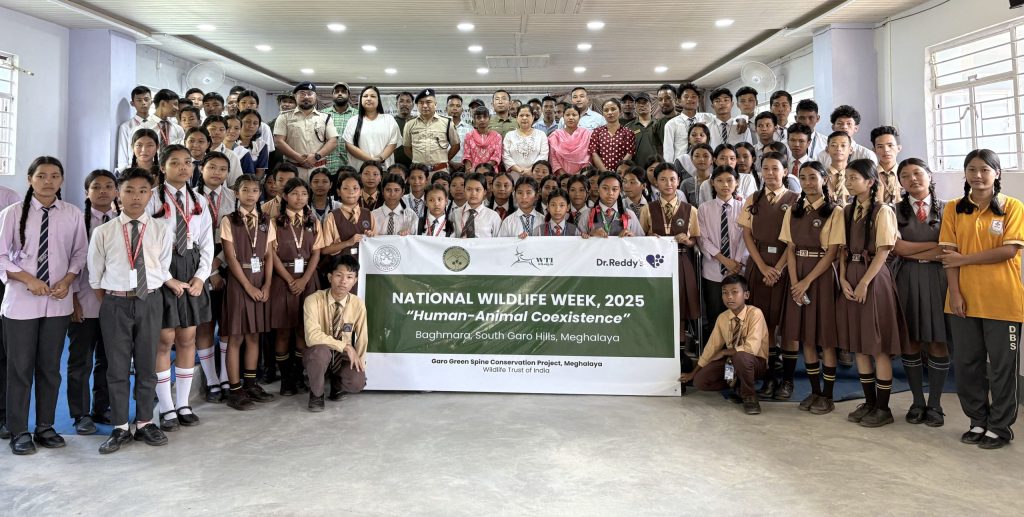
Wildlife Week at Captain Williamson Memorial Government College, Meghalaya | Photograph by Rimachi Lieson/WTI
Sarus Habitat Securement, Uttar Pradesh
Two awareness programmes were conducted under the Sohagi Barwa Wildlife Division in Maharajganj District. At Astha Intermediate College, Basahi, more than 165 students learned about human–wildlife conflict, prevention, safety, and timely reporting. A choupal at Shivpur village on the Maharajganj–Kushinagar border focused on livestock protection, personal precautions and ways to reduce negative wildlife interactions. Forest staff and WTI’s team answered questions and shared ready-to-use guidance.
At Katarniaghat Wildlife Sanctuary, celebrations opened in a government high school in the Nishangadha Range with a lively student debate on wildlife featuring32participated. This was followed by an interactive session led by WTI’s Rapid Response Team on human–wildlife conflict (HWC) mitigation, wildlife identification and behaviour, and the purpose of Wildlife Week. The range forest staff joined in to share insights on elephants and rhinos. The WTI team also distributed HWC posters, and art-and-craft books, and introduced students to our public alert system, “Aapka Prahari”.
The closing ceremony at the Gerua Nature Interpretation Centre brought together students from across the sanctuary for a quiz, prize distribution for all week-long competitions, and screenings of WTI’s short films “Kinara” and “Mere Desh Ki Zameen”. To amplify the message of coexistence, Katarniaghat’s state elephants, Jaimala and Champakali, were offered a ceremonial treat with the participation of officers, teachers, and students.
Terai Tiger Project, Uttar Pradesh
At Swami Dayanand Saraswati Vidya Mandir Inter College, students presented poems, paintings, and short plays on coexistence, the impacts of snares, and the value of nature around us. DFO Bharat Kumar D. K. and SDO Ramesh Chouhan presented awards and encouraged students to follow safety measures and report wildlife crime. Our team distributed awareness materials, including posters onuman–wildlife conflict mitigation, supporting ongoing awareness efforts within the school campus.
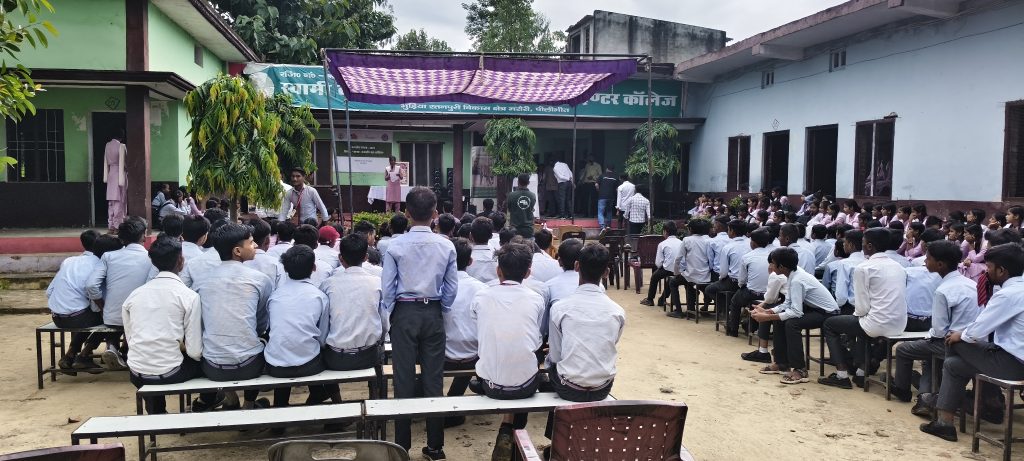
Wildlife Week celebrations in Pilibhit | Photograph by Debkanta Kabiraj/WTI
Kannur Kandal, Kerala
Our team operating out of Kannur, organised drawing competitions at GCUPS Kunhimangalam and Edanad UPS Edat, introducing 41 students to mangrove ecology. A guided bird walk brought 50 students of VPPMKPG VHSS Trikaripur to the Kuniyan Wetland to observe local species. As part of a student science fair, teachers and students from St. Ann’s AUP School, Nileshwaram, SABTM HS, Thayineri and PMSA PTS VHSS, Kaikottukadavu visited the Mangrove Interpretation Centre for project mentoring and environmental education.
CBRC, Pakke Landscape, Arunachal Pradesh
The Centre for Bear Rehabilitation and Conservation (CBRC) supported a series of community and frontline activities. These included a cycling rally from Seijosa gate to Nameri National Park to promote conservation, a snake identification and rescue workshop for frontline forest staff and animal keepers led by experts, and a community marathon from Bhalukpong gate to the Tippi range. Additionally, the Annual Butterfly Meet at Ziro brought together participants, educators, and specialists to highlight pollinators, orchids, and broader biodiversity, with our biologists contributing sessions on moths and the importance of bear conservation.
Pan-India Whale Shark Project
Gujarat: WTI brought together students and forest trainees through a series of talks and workshops, in collaboration with the Forest Research and Training Centre and the Marine National Park and Sanctuary at Jamnagar. Frontline trainees joined dedicated sessions on whale shark conservation and field protocols.
Kerala: The team led a sensitisation event in Manrothuruth, Kollam, where a life-size whale shark inflatable drew public attention to responsible marine practices.
Goa: In collaboration with the Goa Forest Department, Directorate of Fisheries, and ReefWatch, WTI held interactive sessions for fisherfolk and coastal forest guards in North and South Goa. School programmes reached hundreds of students, and Drishti supervisors and staff discussed local sightings, ideas for beachside information boards, and the need for quick response when protected marine fauna come ashore.
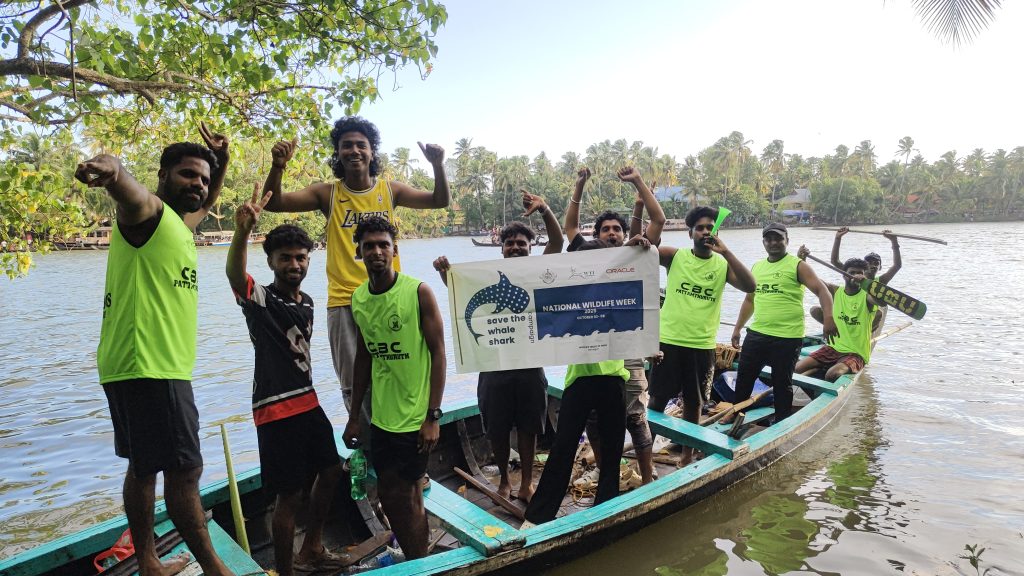
wildlife Week 2025 at Munorethuruth, Kollam | Photograph by Jithin Jose/WTI
HAWK Launch, Odisha
During the 71st National Wildlife Week 2025 in Bhubaneswar, the Forest, Environment & Climate Change Department, Govt of Odisha, in partnership with the Wildlife Trust of India (WTI) and NTT DATA, officially launched the Hostile Activity Watch Kernel (HAWK) in the state.
The event was honoured by the presence of Dr. Kambhampati Hari Babu, Hon’ble Governor of Odisha, Shri. Ganesh Ram Singh Khuntia, Hon’ble Minister of Forest, Environment & Climate Change Dept., Govt. of Odisha, alongside Shri Satyabrata Sahu, IAS, Additional Chief Secretary, Forest & Environment Department, Shri Suresh Pant, IFS, Principal Chief Conservator of Forests (HoFF), and Shri Prem Kumar Jha, IFS, Principal Chief Conservator of Forests (CWLW). The gathering included senior policymakers, forest officials, scientists, and conservationists from across India.
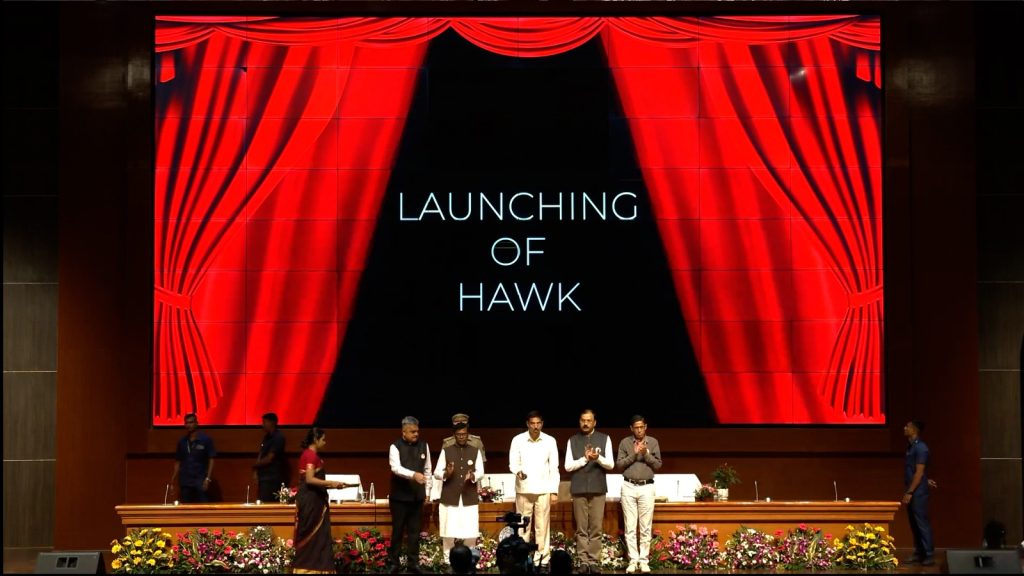
Hon’ble Governor of Odisha officially launched HAWK as the State’s official Wildlife Offence Management Tool | Photograph by Odisha FD
Countering Pangolin Trafficking Project, Manipur
In Manipur, WTI’s Countering Pangolin Trafficking initiative was recognised by the Forest Department for its contributions to wildlife conservation across the state. The honour was presented during the state-level Wildlife Week celebrations, in the presence of Hon’ble Governor Shri Ajay Kumar Bhalla. WTI CEO Jose Louies and the project team were commended for their efforts in advancing community-led conservation.
Assam
In Assam, the Environment, Forest and Climate Change Department conferred Certificates of Commendation to WTI’s Dr. Bhaskar Choudhury and Dr. Rathin Barman for outstanding service in rescue, rehabilitation, science, and conservation leadership.
Under the White-winged Duck Recovery Project, the team ran a series of awareness and training programmes aligned with the theme of “Wildlife Coexistence.” A technical session for trainee forest guards at Makum focused on the ecology and field monitoring of the White-winged duck (Asarcornis scutulata), its role as an indicator of rainforest health, and practical methods for habitat and nest-site checks.
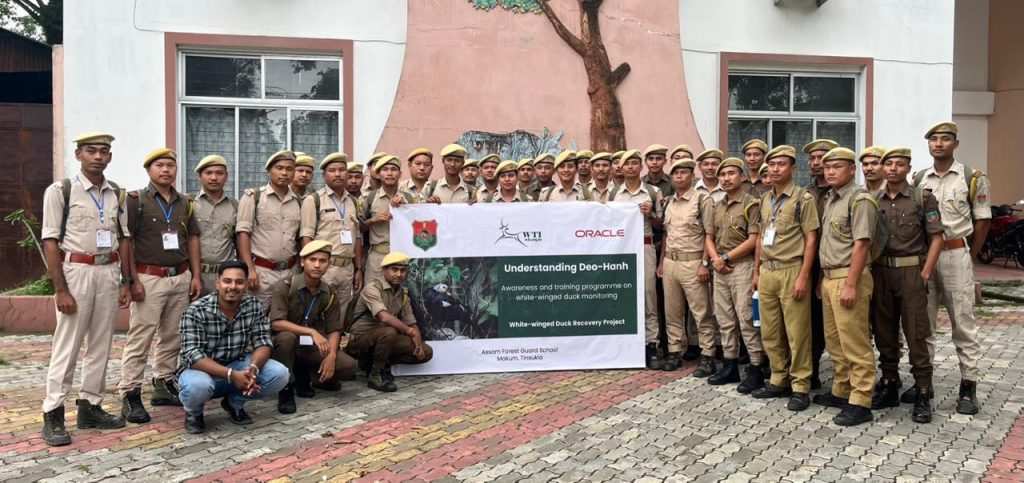
Awareness event with the Assam forest guard school during Wildlife Week 2025 | Photograph by Ashutosh Saikia/WTI
Community outreach near the Dihing Patkai landscape brought together local leaders, youth, and families to discuss conservation challenges, traditional knowledge, and everyday practices for safer coexistence. A short documentary and cultural performances helped carry the message beyond the meeting hall.
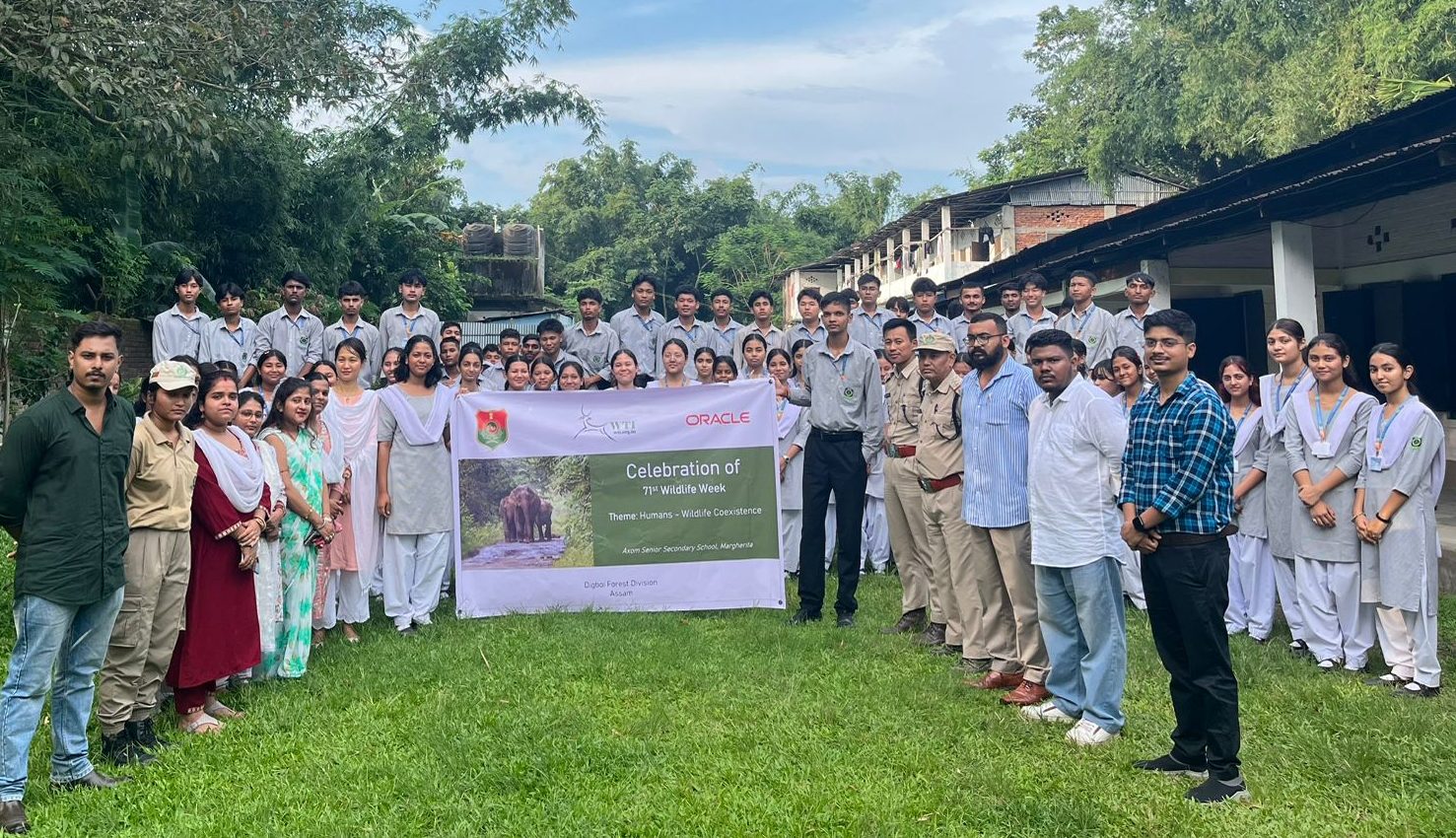
The week concluded with an awareness programme at a senior secondary school in Margherita featuring a debate on coexistence and conservation-and-development, expert talks on wetlands and connectivity, student presentations, and an open Q&A with forest officials and WTI representatives. Participation topped a hundred, with strong student engagement throughout.
Across campuses, wetlands, village commons, and training halls, Wildlife Week activities focused on practical skills, community safety, and a culture of care for nature. With state forest departments and local partners, WTI remains committed to advancing coexistence and strengthening systems that protect India’s natural heritage.