WTI’s ‘Grain for Grain’ initiative supports 123 households affected by human-elephant conflict in Nagaland
Nagaland, 26th October 2025: Human-elephant conflict (HEC) has become a significant challenge affecting both communities and wildlife in Nagaland. Elephants, in search of food, often raid croplands and damage property. These incidents not only lead to severe economic strain for local farmers but also create a growing sense of pressure and fear, sometimes escalating into retaliatory actions that endanger elephant populations.
Recognising the pressing need to restore balance and promote coexistence, the Wildlife Trust of India (WTI), on the 24th and 25th of October 2025, extended its support to five affected villages across Wokha and Zunheboto districts through its “Grain for Grain” initiative.
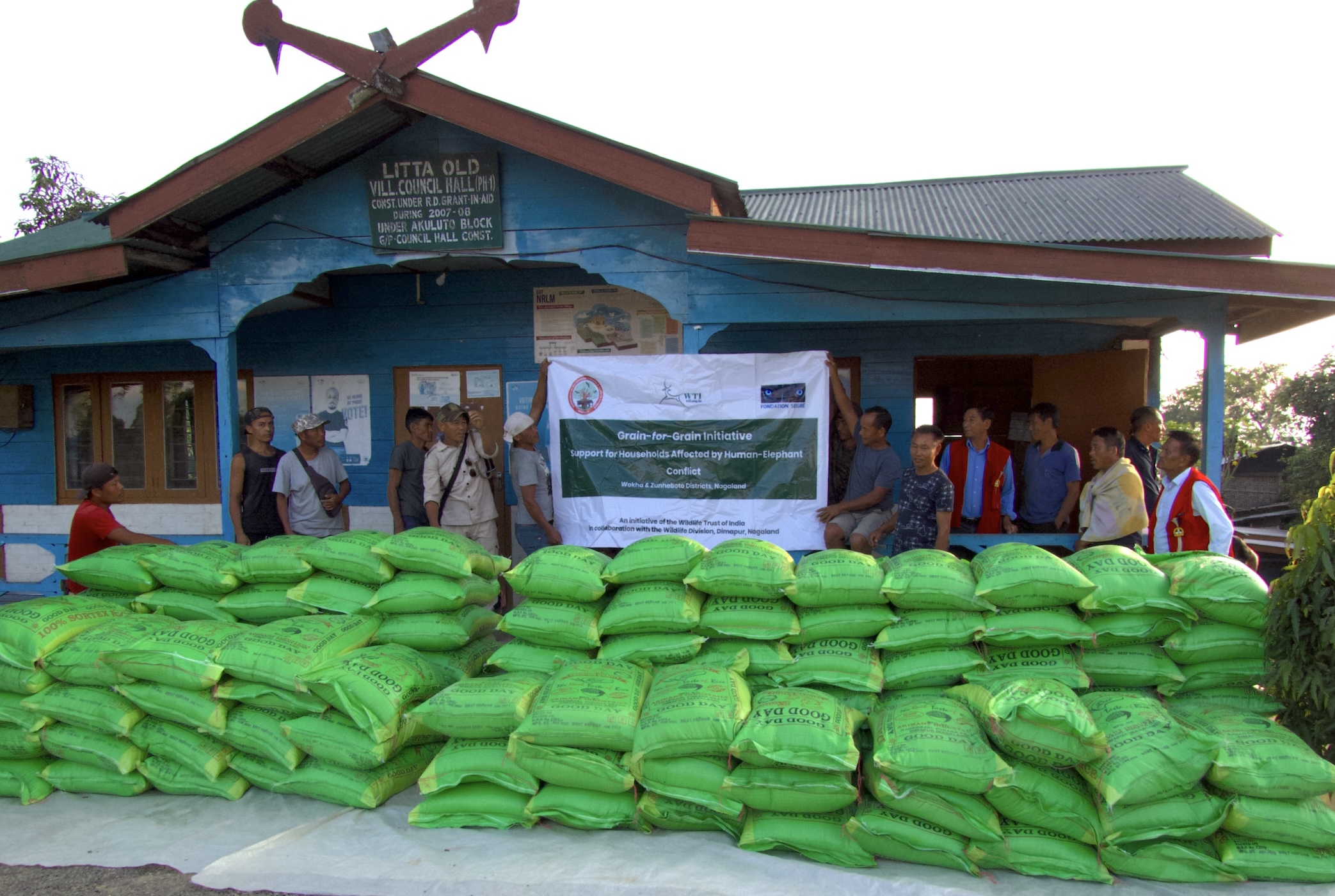
Under this initiative, WTI, with support from Fondation Segré, provided 1 quintal of foodgrain to families who suffered crop losses due to elephant depredation. The grain, primarily rice or wheat, depending on the region’s staple diet, serves as a symbolic and practical gesture of solidarity with those whose livelihoods are at risk from recurring wildlife interactions. A total of 123 households from the identified villages received this support, reaffirming WTI’s commitment to building resilient and harmonious community-wildlife relationships.
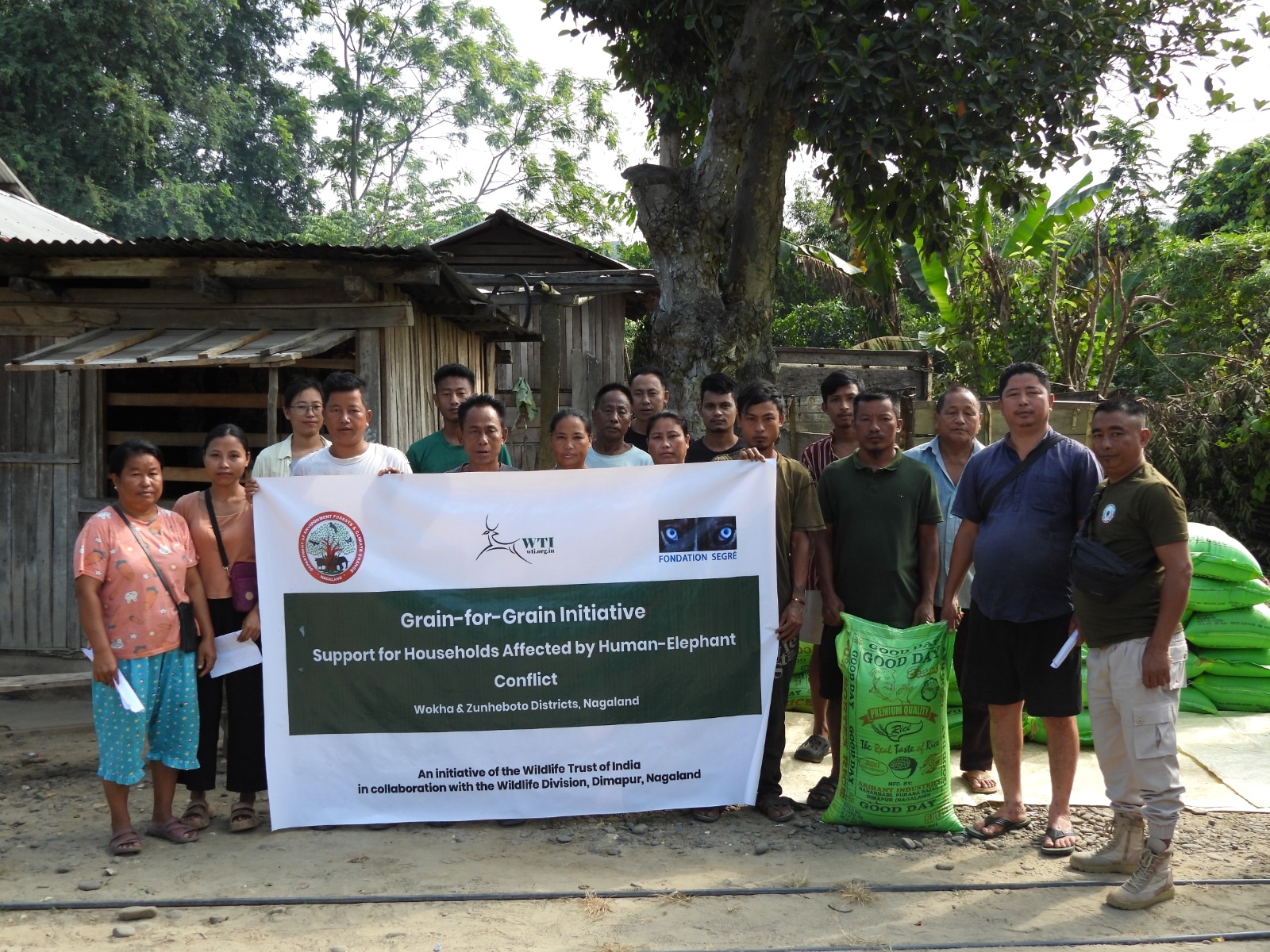
‘Grain-for-Grain’ is an initiative by WTI to provide relief to people who have incurred crop losses to wild elephants | Photo by A R Tizeve
The handover was done in the presence of officials from the Forest Department and WTI field officer Mr. Chingrisoror Rumthao. Expressing his gratitude upon receiving the aid, Community Leader Mr. Kughazhe Assumi from Litami village in Zunheboto district of Nagaland said, “Elephants have been frequenting our villages for the past 22 years, but no one ever came to help us in the times of despair. Today, the Wildlife Division of Dimapur, WTI, and Fondation Segré have extended their support, and we are truly grateful for their assistance. We now feel hopeful that we will continue to receive their guidance and protection as our guardians”.
Speaking to the community about what this initiative means for the people of Wokha and Zunheboto, Mr. Rumthao added, “This effort aids coexistence between humans and wildlife, and serves as an inspiration for all of us dedicated to wildlife conservation.”
Elephants require vast expanses of land to fulfil their ecological needs. However, with increasing urbanisation and the expansion of agriculture, their natural habitats are shrinking and often fail to sustain them year-round. Consequently, they are compelled to move across or into human-habituated landscapes. This overlap in space and resource use often leads to human-elephant conflict (HEC).
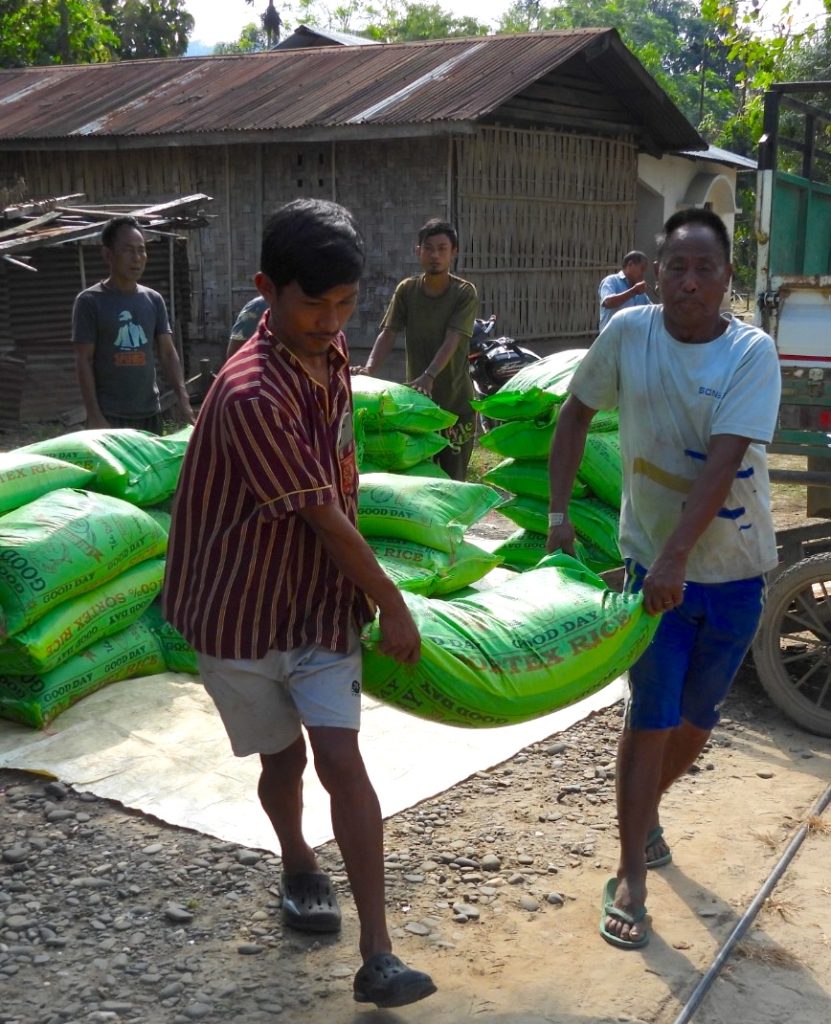
Beneficiaries carry home the grain provided by WTI | Photo by A R Tizeve
The “Grain for Grain” initiative offers a pragmatic and empathetic response—one that goes beyond mere compensation. The program seeks to acknowledge the hardships faced by these communities while reinforcing a spirit of tolerance and understanding towards wildlife. By providing foodgrain aid as a form of direct relief, the initiative helps reduce the financial burden caused by crop loss and ensures families have immediate access to sustenance during crucial times. Since 2011, WT has provided ‘Grain for Grain’ support to more than 500 families in Arunachal Pradesh and Nagaland, distributing over 45,000 kg of foodgrain.
By standing with affected families and emphasising cohabitation, WTI aims to support livelihoods, promote understanding, and reduce friction in areas where elephants and people live in close proximity. This effort also reinforces the organisation’s commitment to finding balanced solutions that protect both human interests and wildlife habitats.