Stranded Hoolock Gibbon family translocated to safety in Arunachal Pradesh
Arunachal Pradesh, 6th December, 2025: In a remarkable display of teamwork and dedication, a stranded family of Hoolock gibbons was successfully rescued after a challenging four-day operation in Horu Pahar village, located in Arunachal Pradesh’s Lower Dibang Valley District. The rescue was jointly carried out by the Mehao Wildlife Sanctuary (WLS) authorities and the Wildlife Trust of India (WTI), highlighting the growing urgency to protect India’s only ape species amid rapid habitat loss.
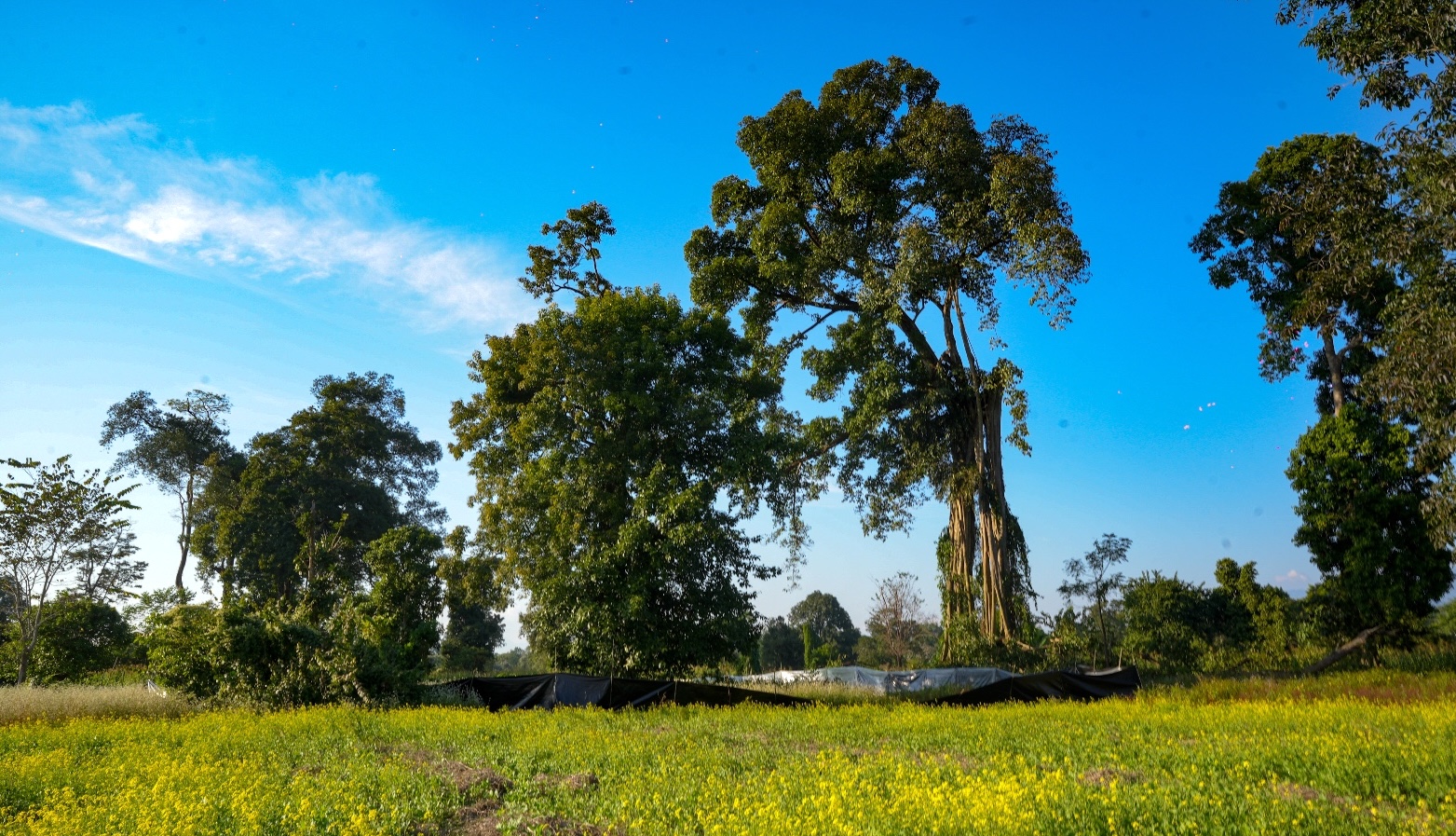
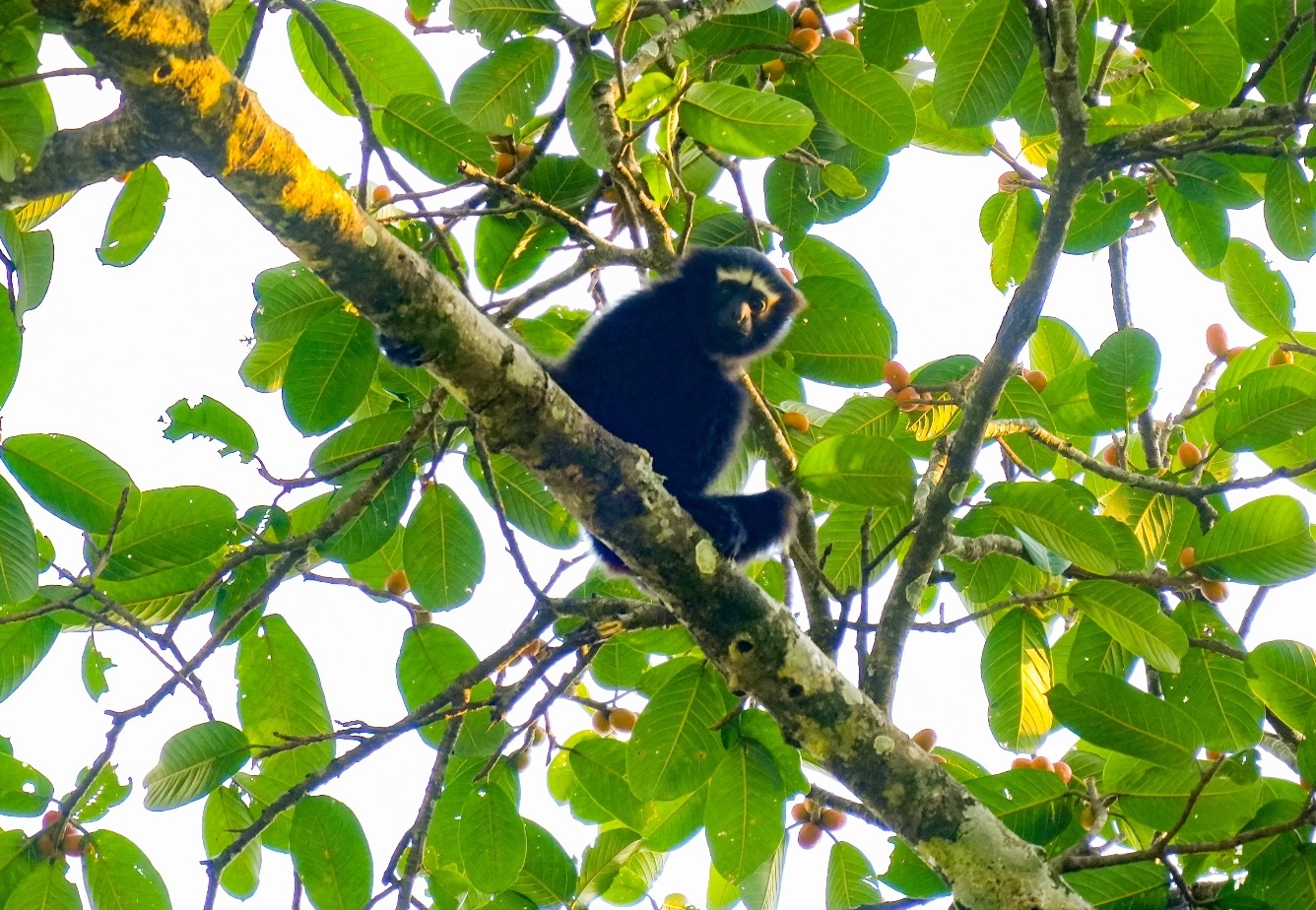
The ficus tree inhabited by the three gibbons | Photo © Dipen Rangmang
The trio (an adult pair and their juvenile) had been confined to a single 45-metre-long ficus tree for an extended period. Expanding agricultural activities in the area had severely fragmented their habitat, leaving them without a continuous forest canopy to move safely through the treetops.
As a result, the hungry and undernourished gibbons were repeatedly forced to descend to the ground, exposing them to significant dangers such as feral dogs and human disturbance. With their survival at risk, immediate intervention became critical.
The complex rescue operation involved a 30-member team from the Forest Department, led by Divisional Forest Officer (DFO) Mito Rumi, and RFO Shri Magone Linggi and supported by WTI veterinarians Dr. Bhaskar Choudhury, Dr. Panjit Basumatary, and Dr. Mehedi Hasan, under the leadership of Mr. Sunil Kyarong.
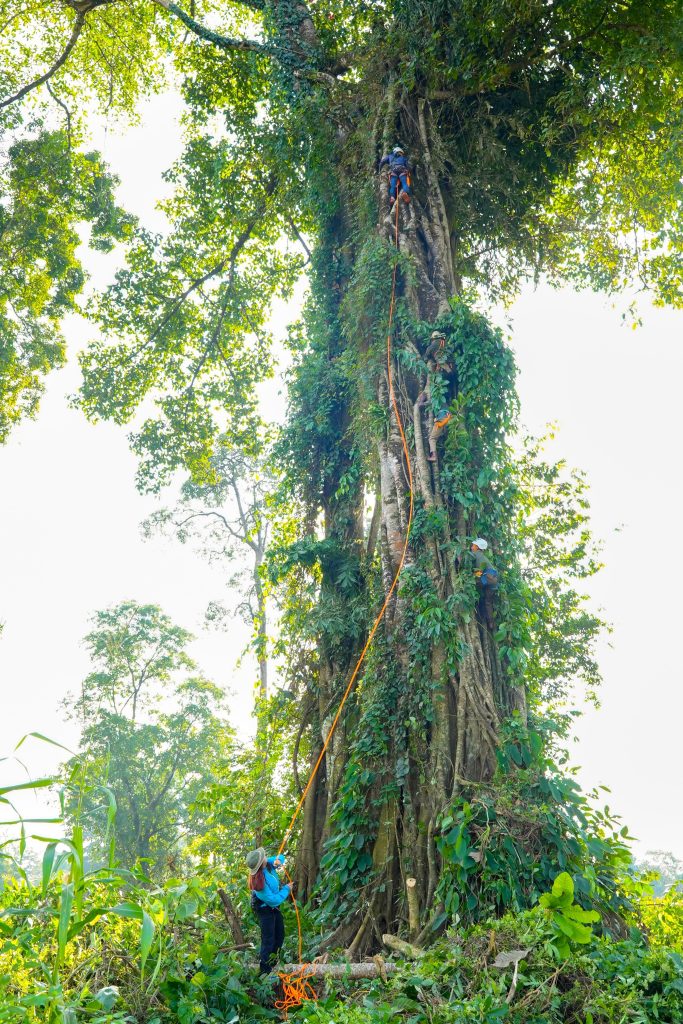
The expert climbers scaling the tall tree to reach the gibbons | Photo © Dipen Rangmang
Additionally, the Climbing Team of forest officials Monli Meto, Chipra Mekola, Bomken Chisi, Gindo Mena, Toye Linggi and Marshal Bhengra, along with mountaineering volunteers Maro Meto and Hachu Lombo, played a crucial role in carrying out the rescue using advanced rope-climbing techniques. Once safely captured, the gibbon family underwent an on-site health examination by the WTI veterinary team and was ID-marked before being released into the Mehao Wildlife Sanctuary. They are currently under post-release monitoring by Bhaskar Jyoti Das, a WTI biologist intern.
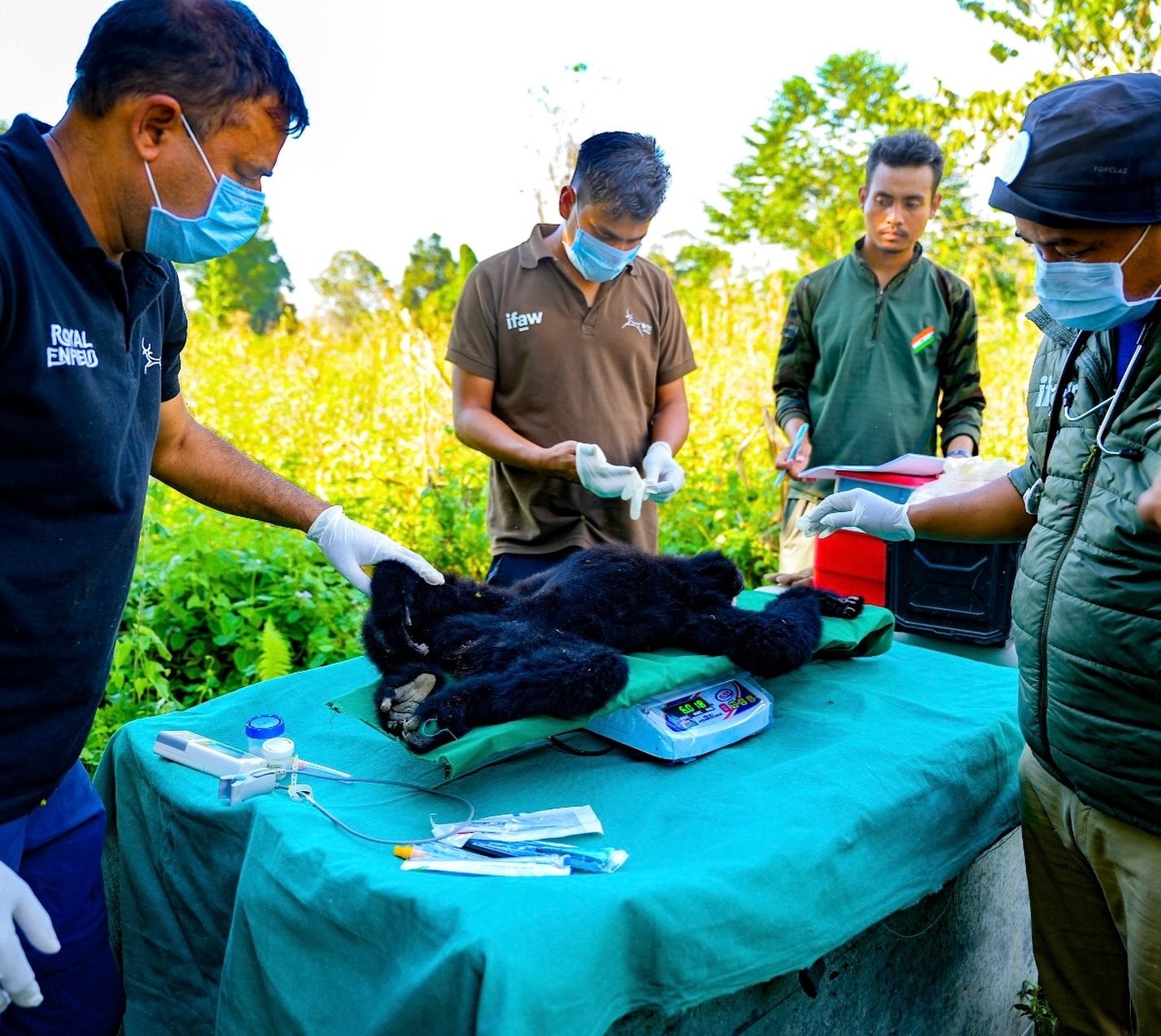
WTI veterinary team examining the gibbons | Photo © Dipen Rangmang
The Hoolock gibbon holds a unique place in India’s biodiversity as the country’s only ape species. Despite being protected under Schedule I of the Wild Life (Protection) Act, 1972, the species continues to face severe threats from habitat fragmentation and declining populations.
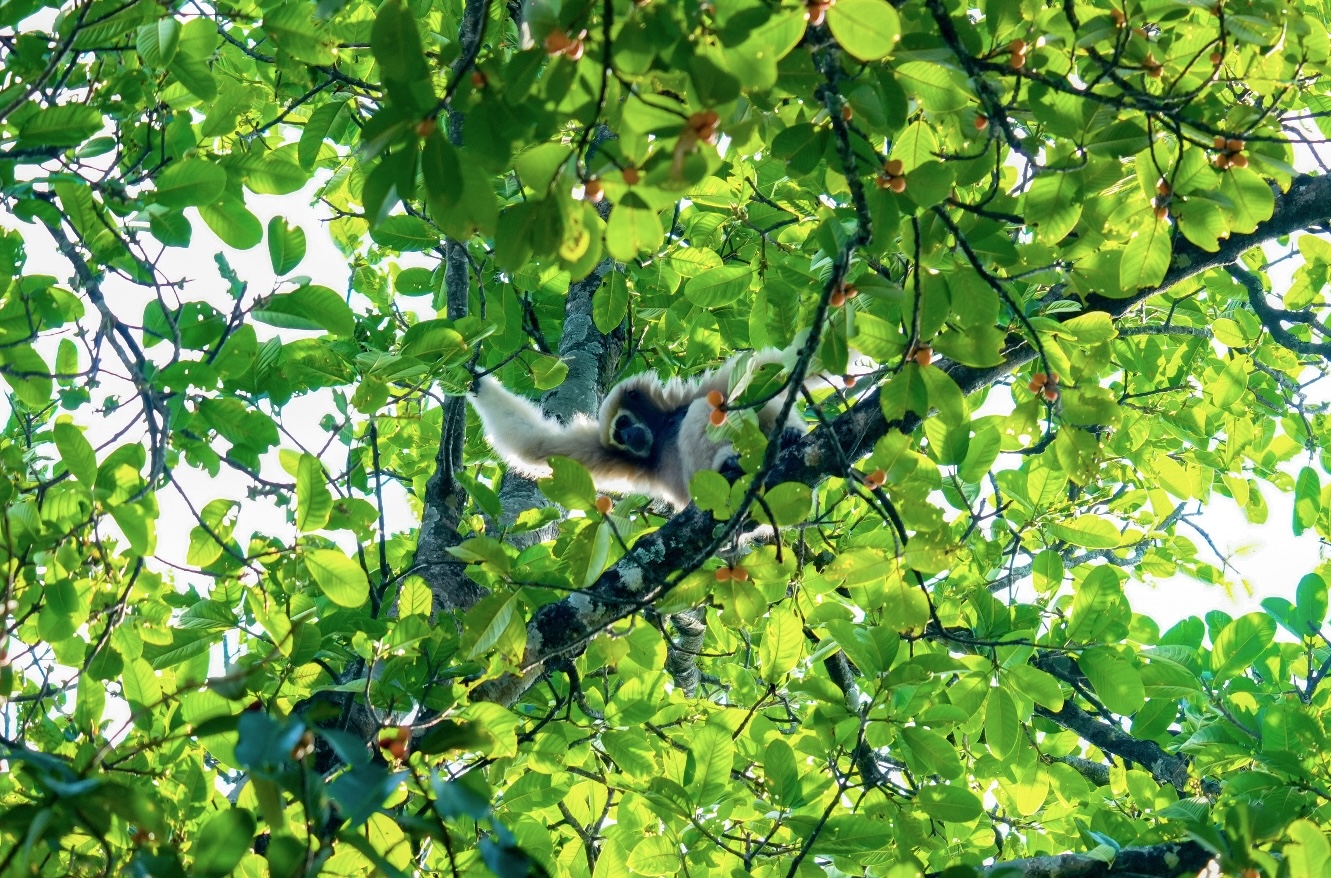
Several more stranded families have been identified in Denlo village, Lower Dibang Valley District, with rescue operations set to continue in the coming months | Photo © Dipen Rangmang
This rescue serves as a powerful reminder that while timely intervention can save lives, safeguarding the future of Hoolock gibbons ultimately depends on protecting their forest homes.