
An Unexpected Encounter with My Soul Animal: The Pangolin
Much of my work happens behind the scenes – frantic phone calls, meticulous paperwork and constant coordination of wildlife rescues and seizures. For over six years, I have been working with Wildlife Trust of India and enforcement agencies across the country to fight wildlife crime, leading projects like the “Countering Pangolin Trafficking” in India’s north-east. During this time, I’ve had the opportunity to contribute to efforts that have led to the rescue of more than 20 pangolins from poachers. Most of these animals were released back into the wild by enforcement agencies, and each rescue has brought a profound sense of joy. I had hoped that someday I could live the experience in person.
Back in 2019, I had received intelligence from a village near the border of Chhattisgarh and Odisha, about a wildlife trafficker who was in possession of a live ‘khipri’ for sale. I didn’t know what the word meant at that time but it was the first time I had ever saw a pangolin. It was an Indian pangolin (Manis crassicaudata), and its condition was heart-breaking. Subjected to immense stress, packed into a plastic rice bag, alongside a weighing scale, it was meant to be boiled alive and skinned for its scales.
We brought the animal back to our operational base, gave it food and water and placed it in a dark, quiet room. Soon after, we left to complete the case documentations. I still regret not having focused solely on the pangolin’s care. The following morning, the pangolin had died. I was devastated – it was the first pangolin I had ever seen, and I had not been able to save it.
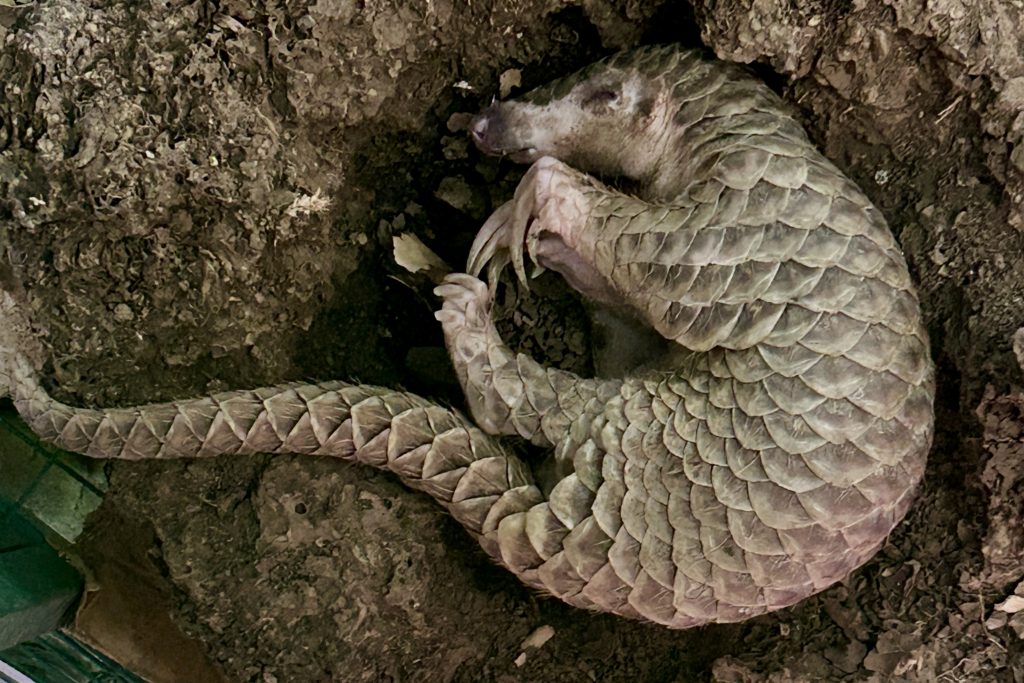
Rescued Chinese pangolin from Noney, Manipur | Photograph by Monesh Singh Tomar/WTI
The Silent Struggle of the Most Trafficked Mammal
Pangolins are among the most trafficked mammals in the world, yet their plight is largely invisible to the public eye. They are hunted for their meat, considered a delicacy in some cultures. Their scales are wrongly believed to have medicinal properties. This insatiable demand has pushed all eight species of pangolins to the brink of extinction.
India is home to two species: the Indian pangolin (Manis crassicaudata) and the Chinese pangolin (Manis pentadactyla). Both are listed under Schedule I of the Wild Life (Protection) Act, 1972, and Appendix I of CITES, affording them the same legal protection as flagship species such as tigers, elephants, and rhinos. Despite this, they are relentlessly hunted across India and trafficked to illegal markets in Southeast Asia. This makes them a conservation priority in an unending race against time. The rescue operations are complex, requiring collaboration with local communities, forest departments, and law enforcement. We often find pangolins in dire conditions, malnourished or injured, after being seized from smugglers. Rehabilitation is a delicate process, demanding specialised knowledge and immense patience. Each success is a small victory in a much larger war.
I had always hoped to one day see a pangolin in the wild, perhaps even with a baby on its back.
The Fateful Trip to Northeast India
My journey this time began with a series of workshops for the Forest and Police departments across several north-eastern states. After conducting a session in Kohima, Nagaland, we travelled to Noney, Manipur. Noney, a newly formed district located on NH-37, connecting Manipur and Assam, was a crucial region in our fight against wildlife traffickers.
Still sore from the journey, I woke up the next morning to a message I never expected. I rushed to meet Mr. John Sha, the Divisional Forest Officer (DFO). He guided me outside, where a young Chinese pangolin was kept in a cage with an ant comb and a bowl of water.
The animal was brought in by locals from a neighbouring village and was handed over to the forest department about10 days ago. The pangolin appeared active and healthy, but drawing on past experience, I requested Mr. John to consult a veterinary officer for a thorough check-up to ensure it was ready for a return to the wild. The examination confirmed it to be a young male, estimated to be between 8 months and 1 year old, and was deemed fit for release.
The Moment of Truth
Following the proper IUCN guidelines, we identified a safe location to release the pangolin in a hilly area, close to where it was found. Around 5:00 p.m., as the sun began to dip behind the hills, painting the sky in hues of orange and purple, the release operation was set in motion.
Gently lifting him from the cage, I could sense him sniffing the forest air and the freedom awaiting ahead. I watched the pangolin slowly make its way back into its wild home. There couldn’t be a more rewarding experience.
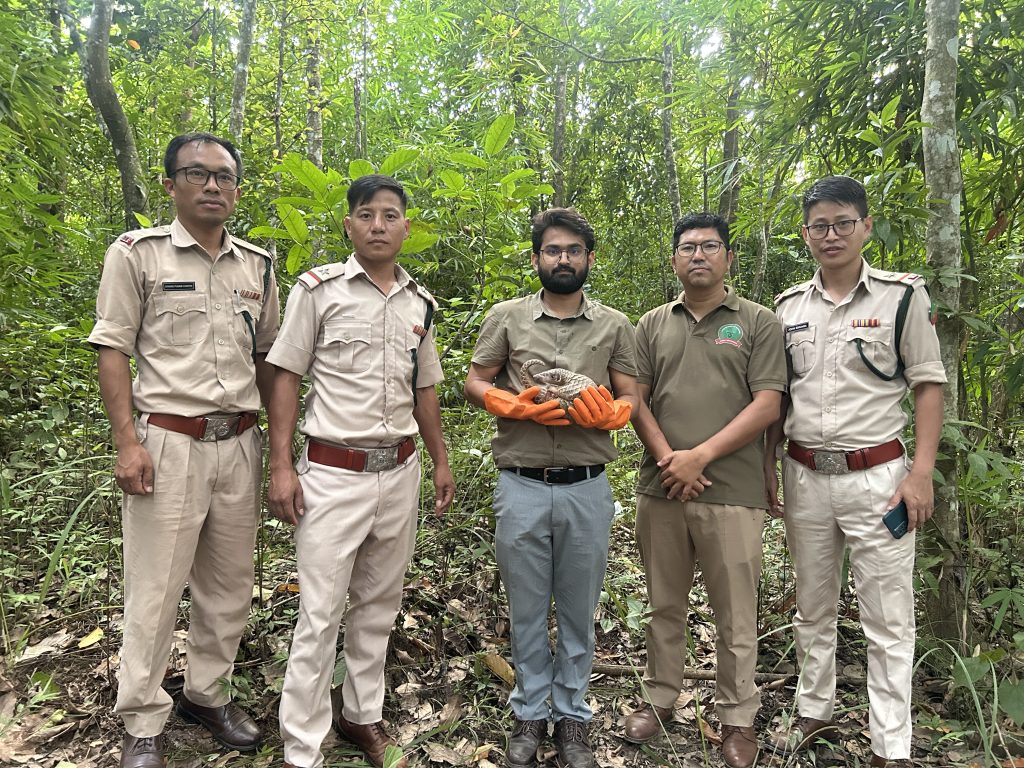
Group photo with forest department staff during release of the Chinese pangolin back to the wild | Photograph by Sonim Kasar/WTI
A Collective Call to Action
The pangolin I released that evening symbolised hope – a future where these special creatures can once again thrive, a future we must all work to create. In Manipur and Nagaland, WTI’s “Countering Pangolin Trafficking” project is taking a holistic community-led approach to reduce hunting and trade of pangolins. So far, 252 Tangkhul villages have officially banned the hunting, consumption, and trade of pangolins, hoolock gibbon and hornbills in the region. The project has also engaged diverse communities through programs like the Pangolin Cup, a football tournament that brings sports and conservation together.
Since its launch in 2023, the project, supported by the Pangolin Crisis Fund, has helped save six pangolins, safely returning them to the wild. there has been a remarkable shift in attitude among communities that once hunted these animals for meat and scales. I look forward to a day when our forests become safe sanctuaries for pangolins and other wildlife.
Monesh Singh Tomar is the Assistant Manager with WTI’s Wildlife Crime Control Division and leads the Countering Pangolin Trafficking Project in Manipur.