
Footsteps That Saved the Jungle: The Van Rakshaks of Valmiki
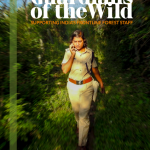
Not all battles are fought with weapons. Some are fought with leech-clad boots, aching limbs, sunburnt skin, and sleepless nights far from family—fought silently by those whose mission is to protect India’s natural heritage. One such frontline is the dense green fold of Valmiki Tiger Reserve (VTR), nestled in Bihar’s north-western frontier. Here, mobile signals fade, but the jungle connects with a deeper rhythm—one shaped not just by monsoons and migrations, but by the unwavering footsteps of those who guard it. They are foresters, forest guards, tiger trackers, rhino watchers, and frontline patrolling staff ranger—the unsung sentinels whose quiet commitment holds together the fragile balance between wilderness and the human world. On World Ranger Day, Valmiki remembers them—in the trees that stand tall, in tigers that still prowl fearlessly, and in birds that continue to sing. Behind every saved life, there is one Van Rakshak who stood in its defence.

Joint anti-snare walks by members of PRT, Forest Department and WTI in Valmiki Tiger Reserve | Photograph by Madhumay Mallik / WTI
There was a time when Valmiki bore little resemblance to the thriving forest it is today. In 2010, the reserve had just eight surviving tigers. Poaching syndicates operated unchecked. Traps were laid openly. Encroachment spread steadily, and with it grew the fear that the forest’s end was near. But amid this despair, a quiet resistance began. Forest patrolling staff, including foresters, forest guards and forest ranger, along with local trackers who knew the jungle intimately, chose to stand their ground. They declared: “This forest is ours. We will not let it die.” Their dedication was not without sacrifice. Patrolling teams—comprising permanent and temporary staff—began venturing deeper, farther, and longer: across rugged hills, dense thickets, rivers, and streams. Rain or shine, they walked the wild with vigilance. Armed with sticks and wireless sets, they dismantled traps, seized illegal arms, and responded to wildlife emergencies. In remote, sensitive zones, anti-poaching camp (APC) staff lived in bare-bones camps for weeks. They cooked their own meals, faced wild animals and poachers, and endured harsh weather—with little more than courage and commitment. Their reward was not comfort, but the knowledge that their presence was saving lives. Most of the daily wage staff lacked formal education in wildlife science, but they had something more powerful: generational knowledge. They could read a disturbed bush, spot the faintest pugmark, and interpret the meaning behind a broken twig. They were the jungle’s whisperers. Tiger and rhino trackers became the forest’s first line of intelligence, playing a key role in curbing wildlife crime.
Even the strongest resolve needs support. The Bihar Forest Department, recognising the immense service of its frontline staff, has consistently worked to improve their working conditions, upgrade remote camps, and provide better equipment. These efforts were meaningfully bolstered by the Wildlife Trust of India (WTI) under its flagship Van Rakshak Project (VRP), launched in 2000. The VRP aimed to bring dignity, identity, and capacity to India’s forest protection force—especially in overlooked landscapes like Valmiki. Thousands of forest guards and temporary staff have since been trained in wildlife crime investigation, evidence handling, emergency response, first-aid, and wildlife laws. In Valmiki, this renewed skillset—backed by WTI’s technical assistance and the department’s logistical support—made Van Rakshaks more confident and effective. Patrol routes became more strategic, response times improved, informer networks grew, prosecution rates increased, and poaching incidents dropped—and the forest began to heal.

Frontline forest staff patrolling in Dudhwa Tiger Reserve | Photograph by Madhumay Mallik / WTI
Since 2019, WTI, with the support of the Bureau of International Narcotics and Law Enforcement Affairs (INL), United States Department of State, has been providing wildlife crime prevention assistance to these rangers of VTR. To further boost morale and enhance operational readiness, field kits—including raincoats, water bottles, caps, and other essentials—were distributed to departmental staff, helping them stay better equipped to face the challenging conditions in the service of wildlife protection.
Many of the brave daily wage staff guarding Valmiki belong to indigenous communities—Tharu, Oraon, and Mushahar—for whom the forest is not just a workplace, but an extension of their home. They grew up listening to the calls of animals and learned to read the seasons through signs in nature. For them, protecting a wild animal is not a job—it is devotion. The rise in tiger numbers is a visible outcome, but the deeper success lies in the restoration of trust between people and the forest. Communities surrounding the reserve have begun reporting crimes, engaging in conservation, and taking pride in their shared heritage. The forest is no longer a battleground—it is a collective legacy.

Patrolling for multi-loop snares installed by locals to trap hares | Photograph Idris Mohammed/WTI
And so, on this World Ranger Day, while the world scrolls through headlines, the forest remembers—not in words, but in silence. In every rustling leaf, in every tiger that crosses a camera trap, in every rhino calf curled beside its mother—it remembers those who guard it, so others may live. We may never know all their names, but the jungle will always carry the memory of their courage and kindness. To the guardians of Valmiki—the Van Rakshaks, the foresters, the forest guards, the trackers, the patrolling party staff, the APC staff, the ranger and the rhino watchers—your stories are not written in ink but in every footprint of the forest. You are not just protectors of the wild. You are the reason the wild still dreams. And because of you—and the enduring commitment of the Bihar Forest Department and WTI—the roar of Valmiki will never fade.
Pavel Ghosh is the senior field officer with WTI’s Strengthening Cross Border Wildlife Crime Prevention and Law Enforcement between India and Nepal Project, currently posted in Valmiki Tiger Reserve.