Life in the mangroves: The isolated inhabitants of Thuruthi, Kunhimangalam
Kunhimangalam Thuruthi is an isolated human settlement in the Payyannur taluk of Kannur district, Kerala. Surrounded by the winding Peruvamba River, this small island (Thuruthi in Malayalam) holds no other name. Though close to the Payyannur municipal area and the Panvel–Edappally national highway, the island remains a world apart. Unlike the semi-urban mood of Payyannur, much of Thuruthi is a mosaic of wetlands and patches of lateritic rock. Its mangrove forests, among the most significant on the Malabar coast, host 13 true mangrove species, including Rhizophora, Avicennia, Acanthus, Aegiceras, Kandelia and Bruguiera. Much of the land belongs to a mosaic of private owners, and the rest is owned and managed by the Kerala Forest Department, the Wildlife Trust of India, and SEEK, a regional environmental NGO.
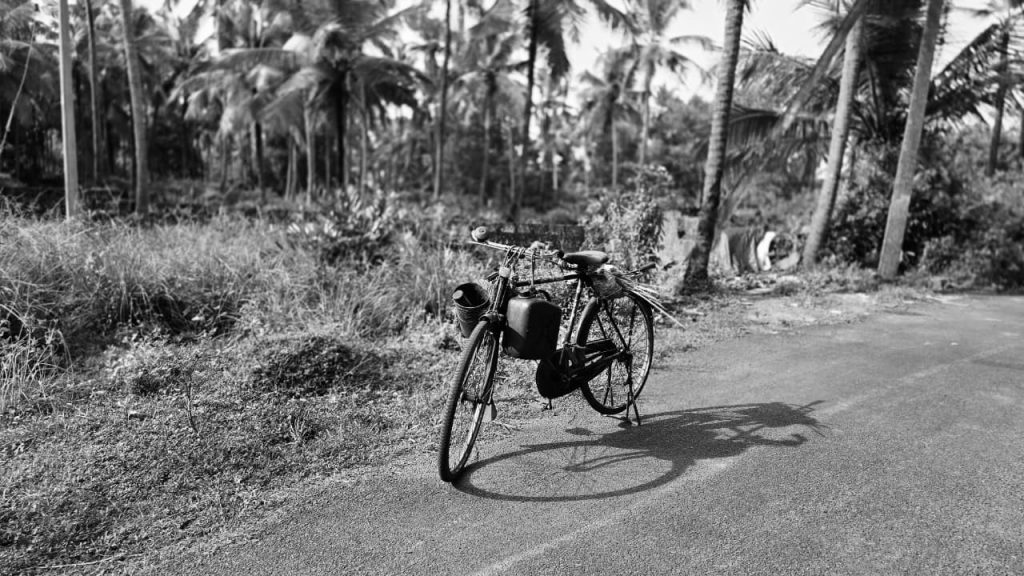
Bicycle with toddy tapping tools and a toddy can | Photograph by Vimal Lakshmanan/WTI
Sathi’s Family: The Last Heartbeat of Thuruthi
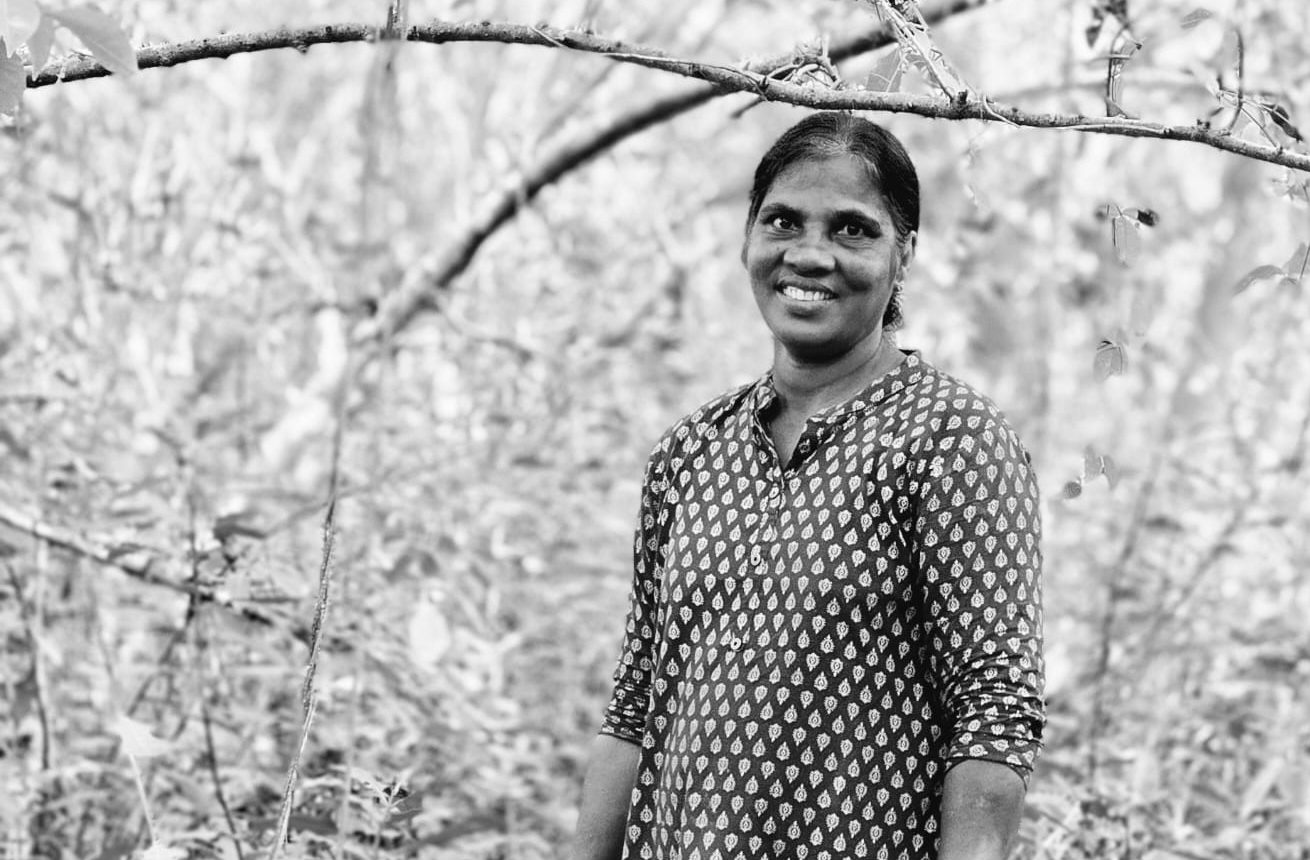
On the way to Wildlife Trust of India’s Central Mangrove Nursery, there stands an incomplete hollow-brick house – no real doors, no proper windows and a structure left open to the wind and the world. Inside lives Sathi, a woman in her sixties, along with her husband Chandran, an unmarried son and two pet dogs, Zimba and Kanchu.
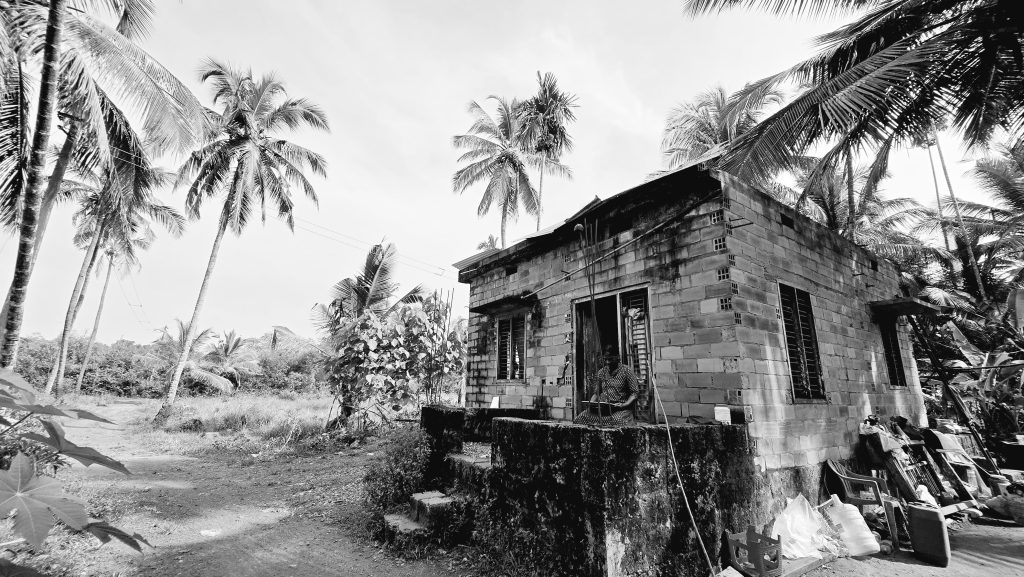
Sathi’s incomplete house in Thuruthi | Photograph by Vimal Lakshmanan/WTI
Fishing in the mangroves is a lifeline for families like Sathi’s. Every day they collect fish, crabs and shrimp using traditional bamboo fishing baskets. They tap toddy from the palms, tend a few coconut trees, monitor privately owned mangrove patches, and maintain a small dairy operation. Even then, income remainsuncertain. Yet their deep knowledge of the mangroves keeps them closely connected to WTI’s nursery work. Last year, Sathi was recognised as the best dairy farmer in Kunhimangalam and this year, her family was honoured as the best agricultural family of the Kunhimangalam Grama Panchayat.
During a conversation one afternoon, Sati told me of the countless hardships she had faced over the years – floods, isolation, and poverty. But still, she smiled and said, “I will stay here till my last breath.”
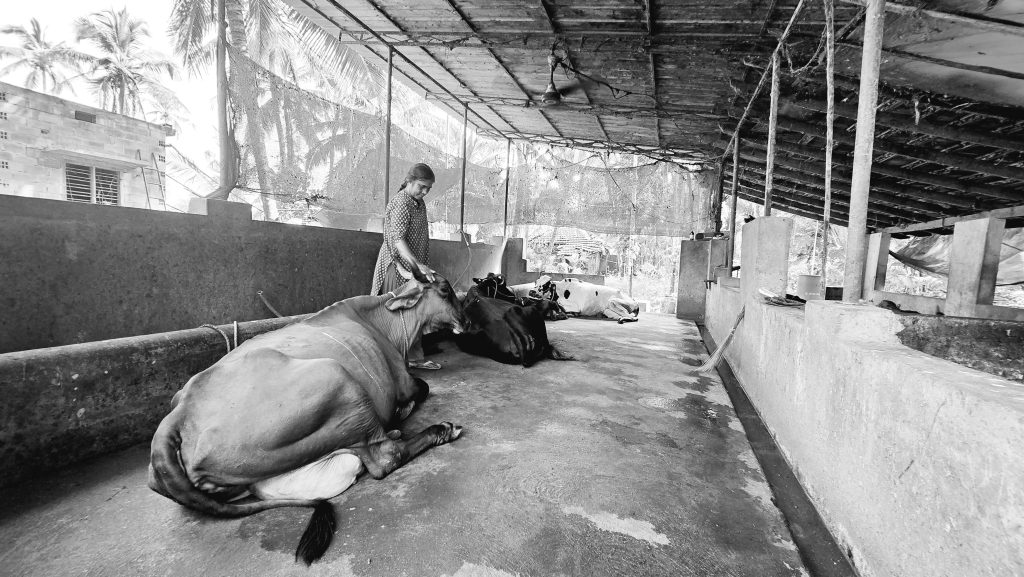
Sathi at her dairy farm where she raises Dry cattle breed | Photograph by Vimal Lakshmanan/WTI
Their drinking water comes from a nearby well. The water tastes salty and with evident traces of heavy metals. Yet it has been their only source for decades. Today, only four of the eight houses in Thuruthi are inhabited. Besides Sathi’s family, two houses near the entrance belong to single individuals, and one is occupied by a family of six. The remaining houses stand empty. The families who once lived there left for other parts of Kannur, unable to survive the isolation and the challenges of the mangrove island.
At night, Thuruthi transforms into a world of quiet magic. The mangroves, which stand tall and dense along the banks, turn almost ink-black under the darkness. Yet the full moon softens them, sprinkling a silvery glow across the leaf tips, as though each leaf has been gently dipped in glittering light.
Above the canopy, bats glide in slow circles, their wings slicing the night air as they roam freely around the island. The moon hangs high and bright, its reflection spreading across the Perumba River like a luminous face watching over the water.
Every now and then, the serene silence of the river is broken by the sudden splash of a fish leaping out, sending ripples across the moonlit surface. In the shadows of the mangroves, fireflies gather like tiny drifting stars, adding a mysterious and enchanting beauty to the night.
In this stillness where moonlight, river, and wilderness blend, Thuruthi becomes a place that breathes with quiet wonder, a place where even the darkness seems to shimmer with life.
Nearly forty golden jackals roam the island, their calls echoing through the wetlands. There has been a recent surge in jackal-bite incidents across Kannur and Kozhikode districts, leaving the residents uneasy. Sathi has tried many times to find a bride for her son, but no family agrees. The hesitation is always the same: “How can we marry our daughter to someone living on a deserted mangrove island?”
Yet, for Sathi, this island is home. Its silence, its challenges, its beauty, everything is woven into her life.
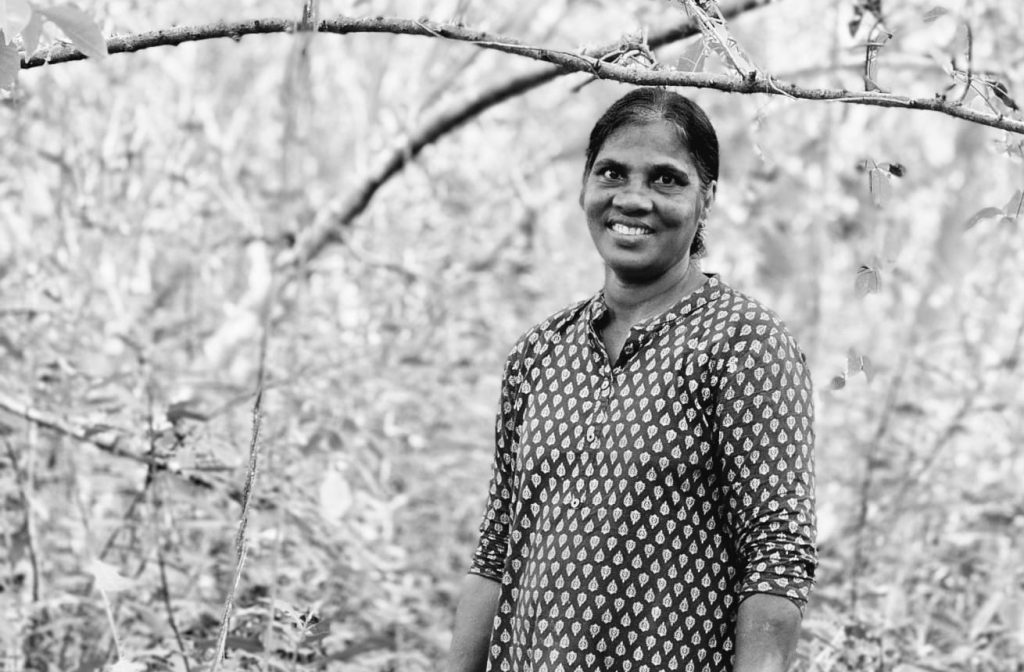
Sathi in the mangrove land in Kunhimangalam Thuruthi | Photograph by Vimal Lakshmanan/WTI
A life rooted in water and mangroves
Thuruthi is more than just a landscape; it is a living story of people whose resilience has been shaped by wetlands, dependent on rivers, and bound to the mangroves they understand better than anyone else. Families came and left. Houses rose and fell. But Sathi’s family remained, continuing to fish, farm and care for the land.
Amid the chirping of kingfishers, the rustling of mangrove leaves, and the distant cries of jackals, their story continues. As long as the mangroves stand, Thuruthi will not be silent, for it carries the heartbeat of the people who refuse to give up on it.
Story by Sanal Viswanath, Officer-in-charge, Kannur Kandal Recovery Project, Wildlife Trust of India