The Forest’s Blessing
Earlier this month, I was in Seijosa, Arunachal Pradesh, attending the Pakke Paga Hornbill Festival and visiting our Centre for Bear Rehabilitation and Conservation project site. After wrapping up work in Pakke, I finally made my way to Dehing Patkai National Park, drawn by the hope of spotting the elusive White-winged duck – a species I have been researching on as part of my work with the White-winged Duck Recovery Project.
My co-workers spoke of it in hushed, reverent tones, describing sightings as “the best experience of their lives.” Locally known as the Deo Hanh, the duck was less of a bird to me and more of a ghost story. Today, this Spirit Duck carried the weight of legend.
“You don’t just ‘find’ a white-winged wood duck; you are allowed to see it”, recounted Mahesh, my colleague who was accompanying me. Taking the local folklore to heart, I stood at the edge of the dense greenery, closed my eyes, and struck a deal with the canopy.
“Mother Forest, I whispered. If you think I deserve it, please let me see her. And if not… well, I’m stubborn. I’ll just keep coming back.”

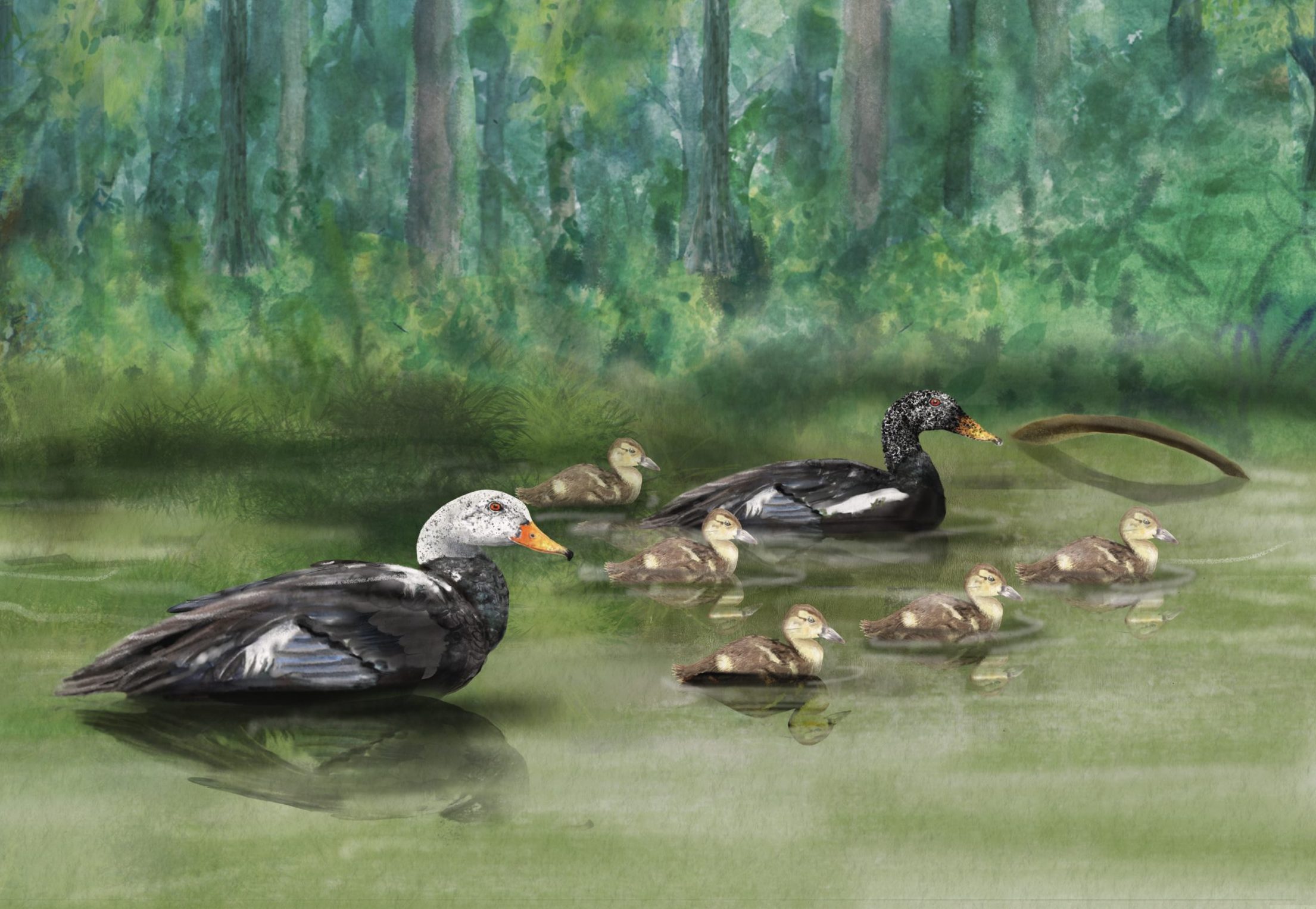
Illustration of white-winged ducks | Illustration © Richa Kedia
In the tea-scented air of Assam and the rugged hills of Arunachal, they say this bird is the guardian of the forest and a messenger of rain. But numbers tell a grimmer story. With only about 150–450 mature individuals left globally, and perhaps fewer than 150 in India, as per BirdLife International 2024, the Deo Hanh isn’t just shy; it’s a species standing on the edge of a cliff.
We spent the day trekking through the thick of it, witnessing the silent tragedy of habitat loss and fragmentation. By the time we reached the “Lal Batti” area, my shoes were heavy, but my heart was still hopeful. We moved with “ninja” precision—light feet, silent breathing—creeping toward a secluded pond where the duck had been sighted before and was our best chance today. We waited. And waited. Mahesh and the forest guard vanished into the bush to track and check for signs.
QUACK. The silence was broken.
It wasn’t a gentle, nursery-rhyme quack. It was a loud, startling sound that mimicked the screech of splitting bamboo. I froze. Was that it? Was the Spirit Duck screaming at us? We held our breath for what felt like an eternity, but the forest went silent again. The “not my day” feeling started to creep in, cold and heavy. I stood perfectly still, lost in a bit of a pout, when a rustle started behind me. Snake? I wondered, my adrenaline spiking. The rustling grew louder, sounding like a clumsy hiker tumbling down the hill. Oh no, Mahesh had slipped, I thought, turning my head slowly to the right, readyto offer help.
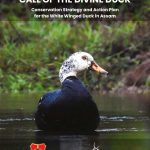
I didn’t find Mahesh. Instead, I found myself staring at something huge, just four feet away. It was nearly as tall as my knees—a magnificent, speckled creature that looked like an ancient forest deity. The Deo Hanh.
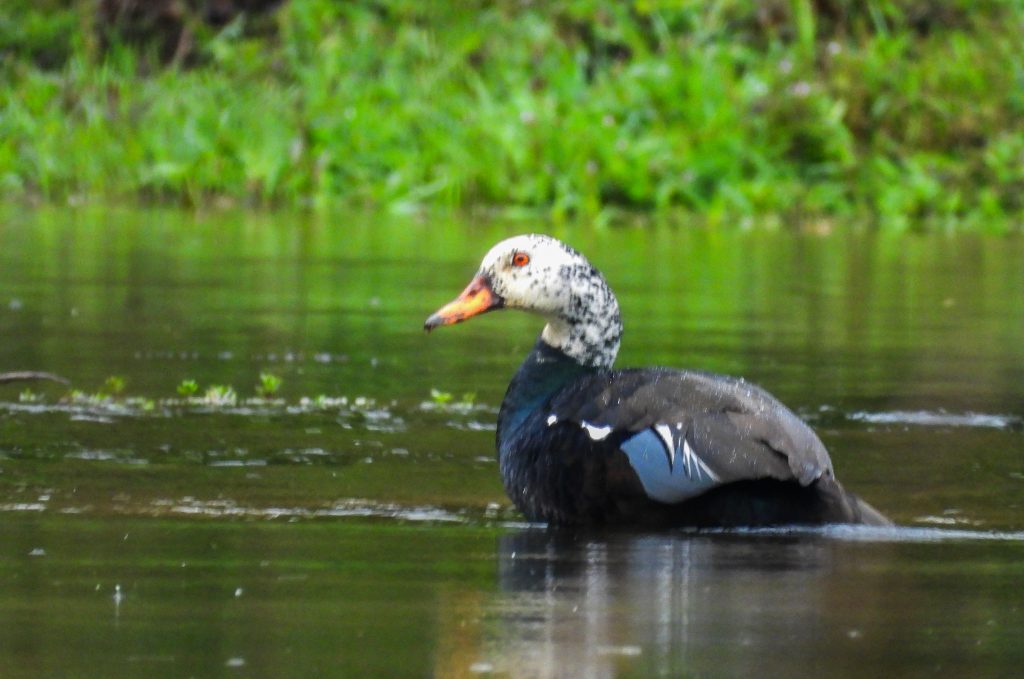
White-winged duck in Design Patkai Wildlife Sanctuary | Photograph © Aftab Ahmed / WTI
Time didn’t just slow down; it stopped. I stayed frozen in a suburban standoff. For a few seconds, which felt like a full minute, we locked eyes. I couldn’t speak; I couldn’t even remember how to breathe. It was a “National Geographic” moment happening in my personal space. As quickly as the magic started, the duck decided I’d had enough of a blessing. With a shy, powerful beat of its wings, the Guardian took flight, vanishing back into the shadows of the trees. I stood there in the mud, heart hammering against my ribs, with nothing to say but a heartfelt “Thank you”, without actually uttering the words. The forest had heard my prayer and decided I was worthy of a four-foot introduction.
I dream of a future where the Deo Hanh isn’t a “ghost” or a “rarity” whispered about in office hallways. I hope for a world where these secluded ponds are safe havens, where the Spirit Duck can guard the forest without the risk of extinction hanging over its wings. I hope to meet the Deo Hanh again.
Story by Aishwarya Menon, Programme Officer, Natural Heritage Campaigns