The Quiet Wings of Manas National Park – Photo Story
The day began before sunlight filtered through the tea leaves. As the rest of the team sipped their morning tea and walked into the tea garden for an early-morning photoshoot, my colleague Vedant and I scanned the tree branches, searching for flashes of colour against the dark backdrop.
Nested in the gentle slopes of the Himalayan foothills, where woodlands give way to alluvial grasslands and tropical forests, Manas is home to a great diversity of wildlife and is best known for its stripes, tusks, and horns. The National Park and a World Heritage Site, it is located in the state of Assam and borders the forest of Bhutan in the North. The landscape is spread along both sides of the Manas River, flanked by reserve forests to the east and west. The Manas-Beki system is the major river system here, which further joins the mighty Brahmaputra River downstream.
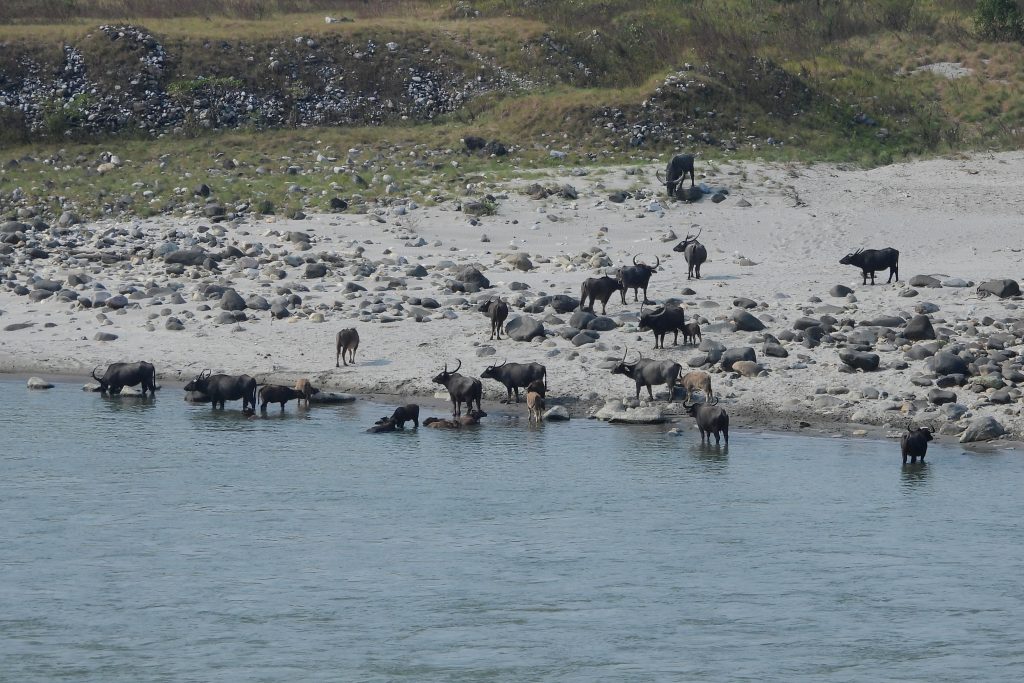
Wild water buffaloes in the banks of Beki River, Bhutan
With a constant water source from the Manas-Beki rivers, expansive alluvial grasslands, semi-evergreen forests and moist and dry deciduous forests – along with elevations ranging from approximately 50 to 250 metres above mean sea level – Manas National Park is considered an ideal habitat for the one-horned rhinoceros. Big cats too roam these landscapes. It also supports a remarkable variety of birdlife, including the critically endangered Bengal Florican. For me, it was about these tiny bursts of colour that flutter briefly against the sky.
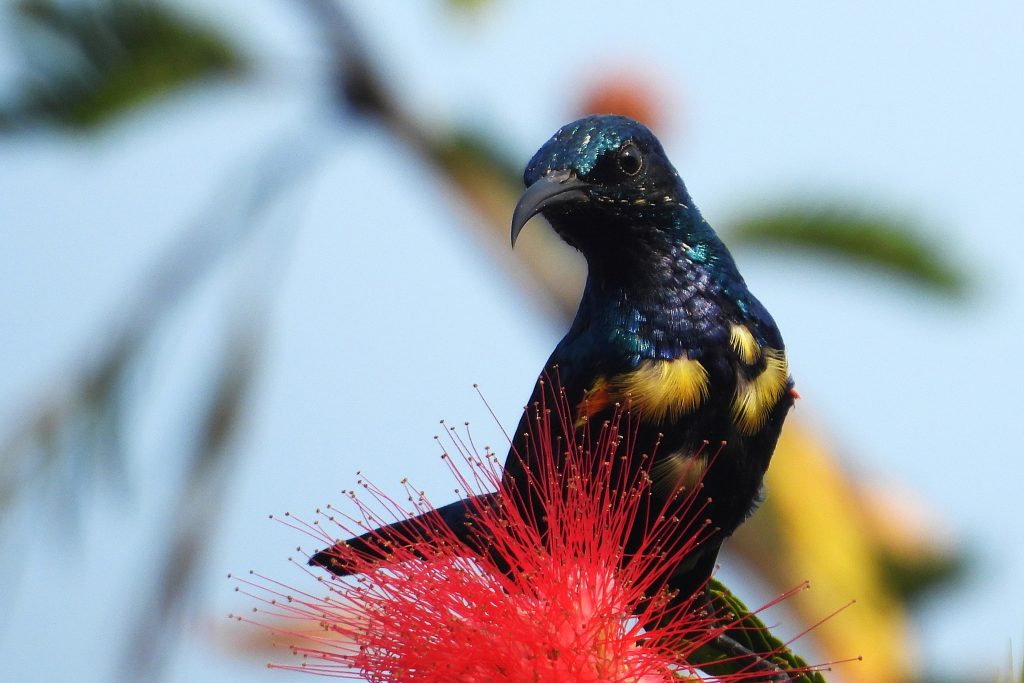
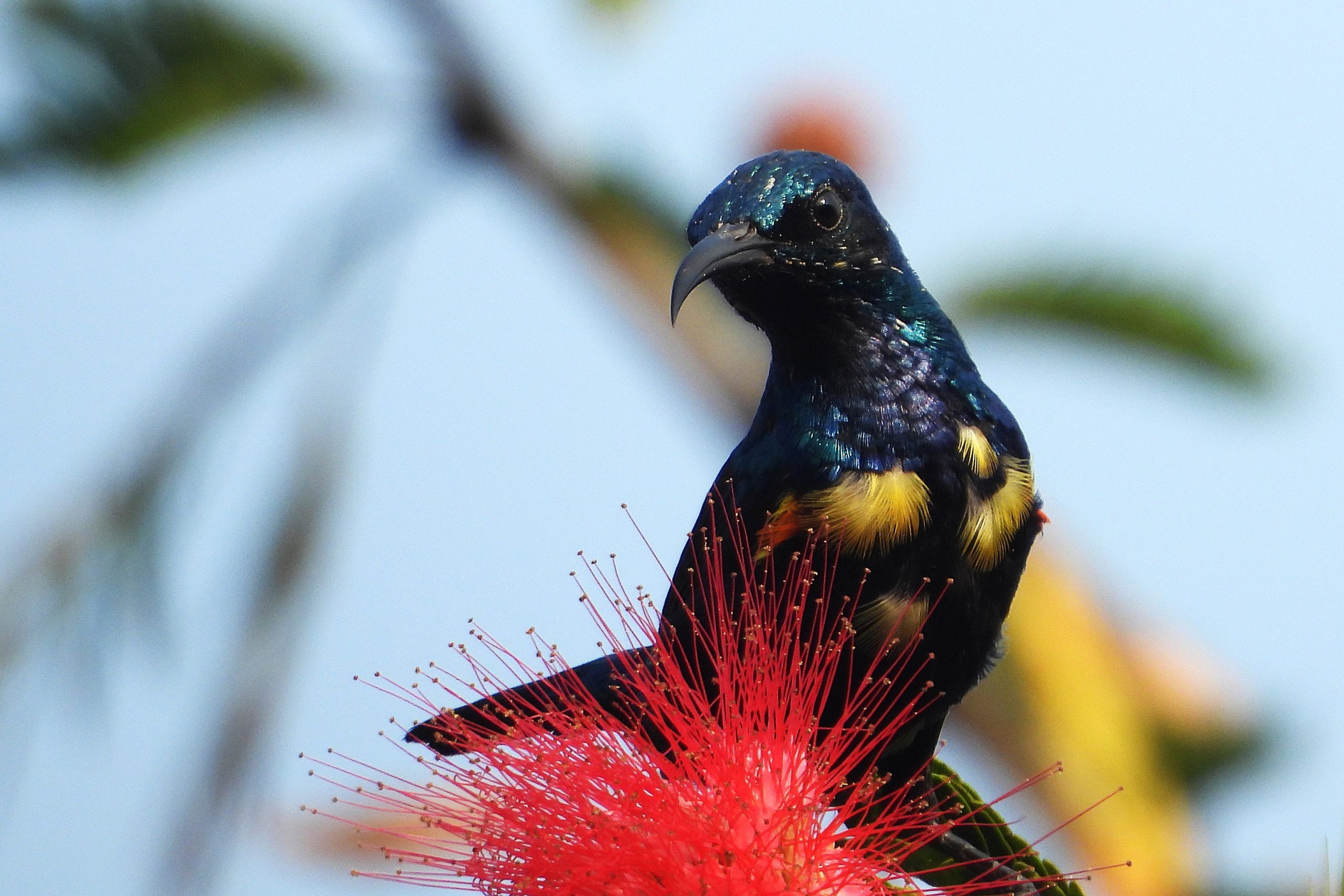
Purple sunbird (Cinnyris asisticus)
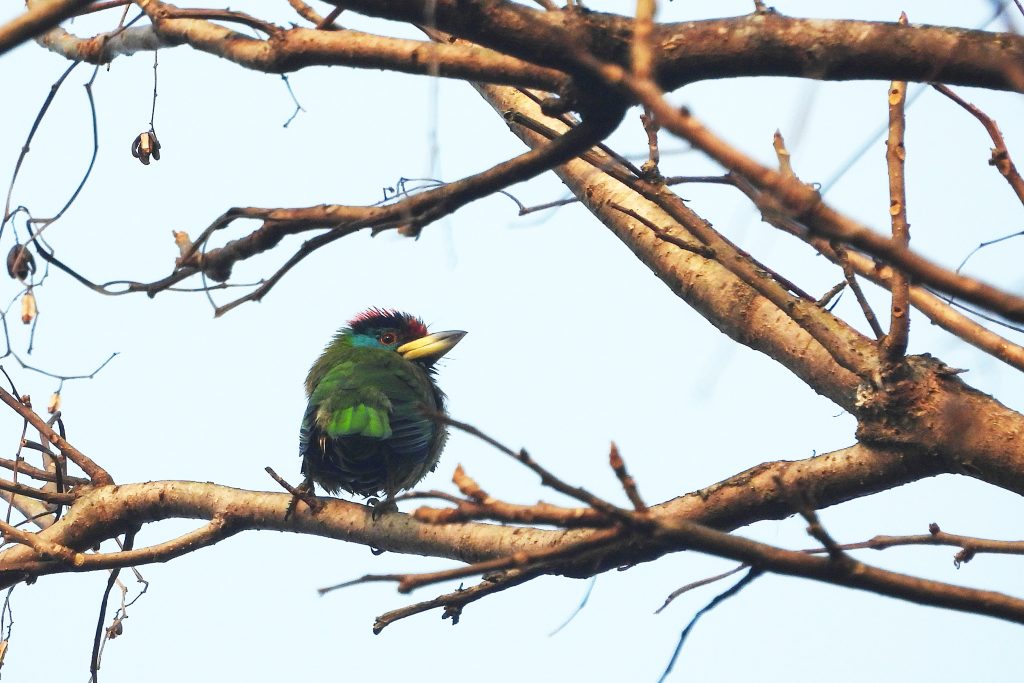
Blue-throated barbet (Psilopogon asiaticus)
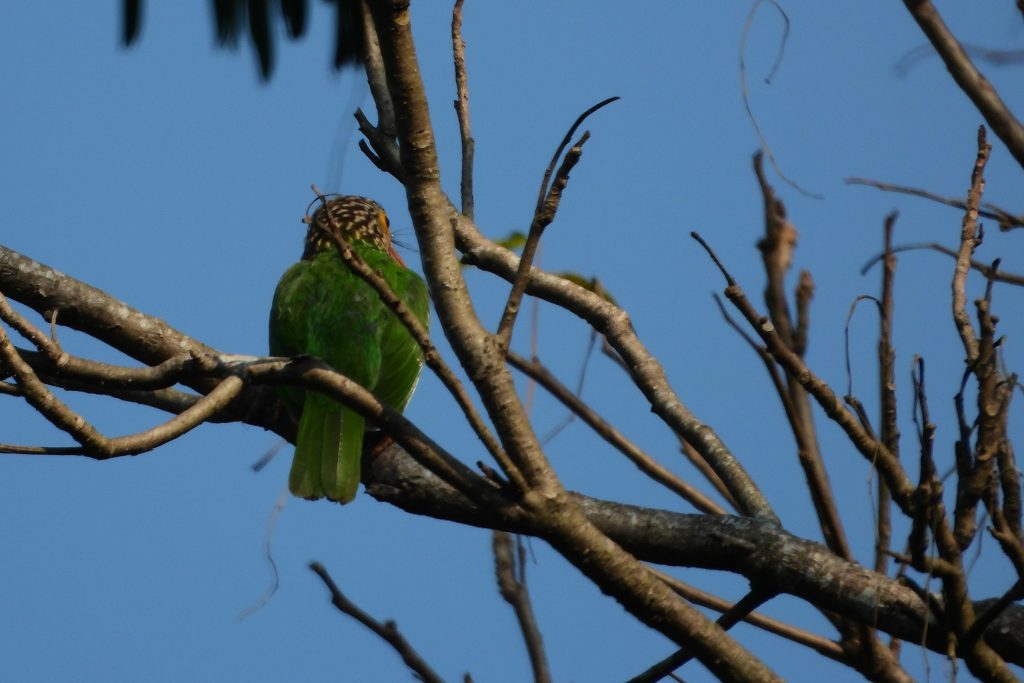
Lineated barbet (Psilopogon lineatus)
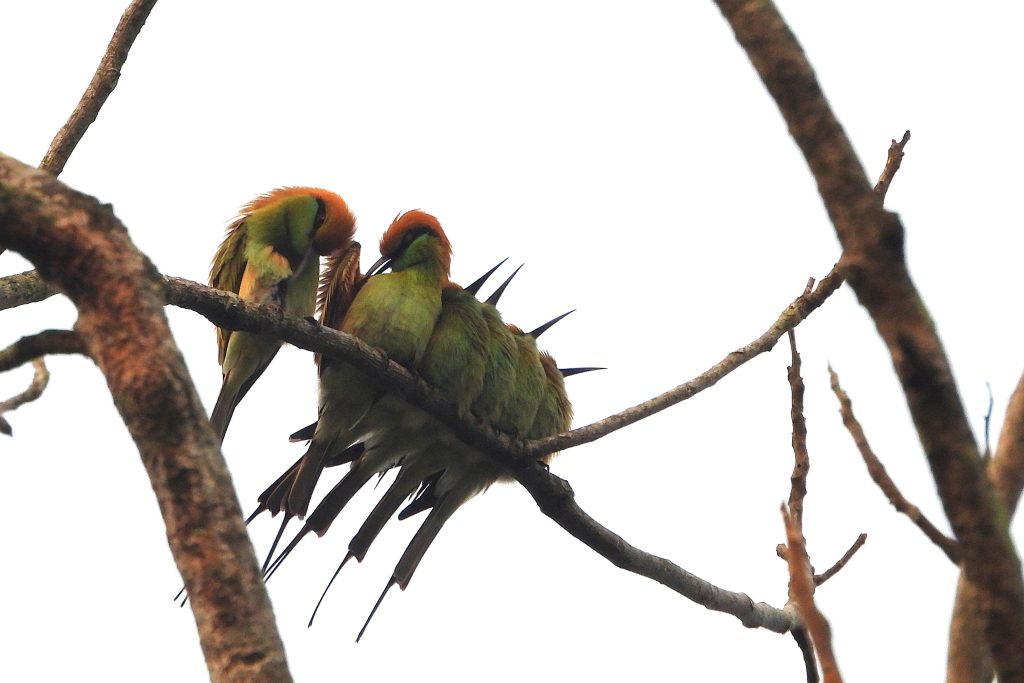
Asian green bee-eater (Merops orientalis)
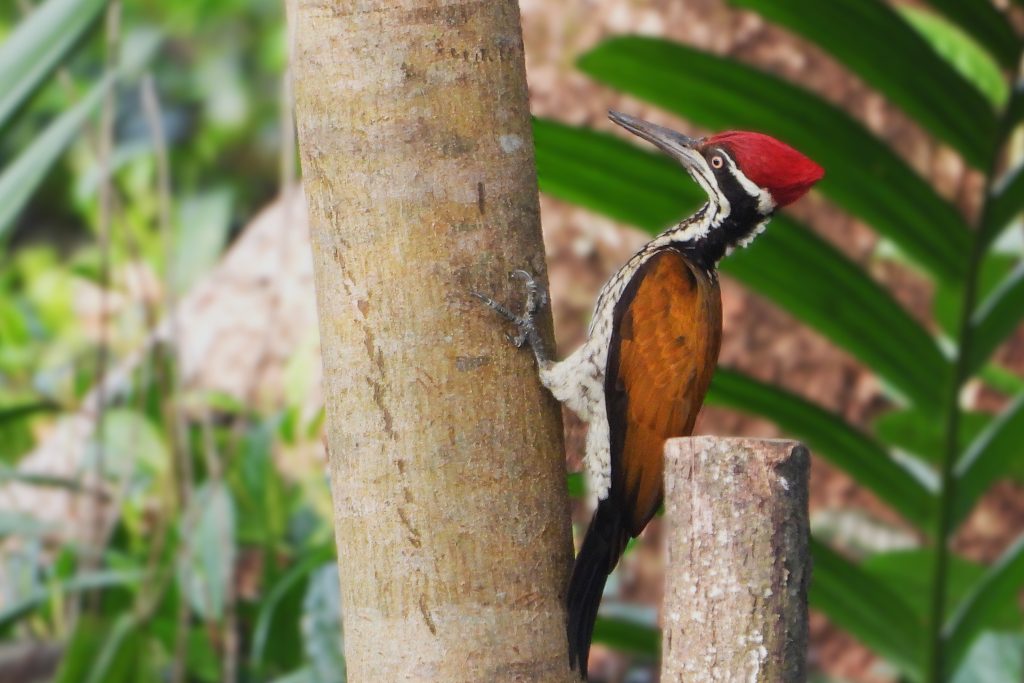
Greater flameback woodpecker (Chrysocolaptes guttacristatus)
The greater flameback woodpecker (Chrysocolaptes guttacristatus) is known as a key indicator of a healthy forest. All species of woodpeckers are tree dwellers and drill holes in dead or dying trees to make their home. Once they migrate, these cavities are often used by other bird species to nest their young ones. The primary threats they face include deforestation and the removal of older, often dead trees that are essential for excavation.
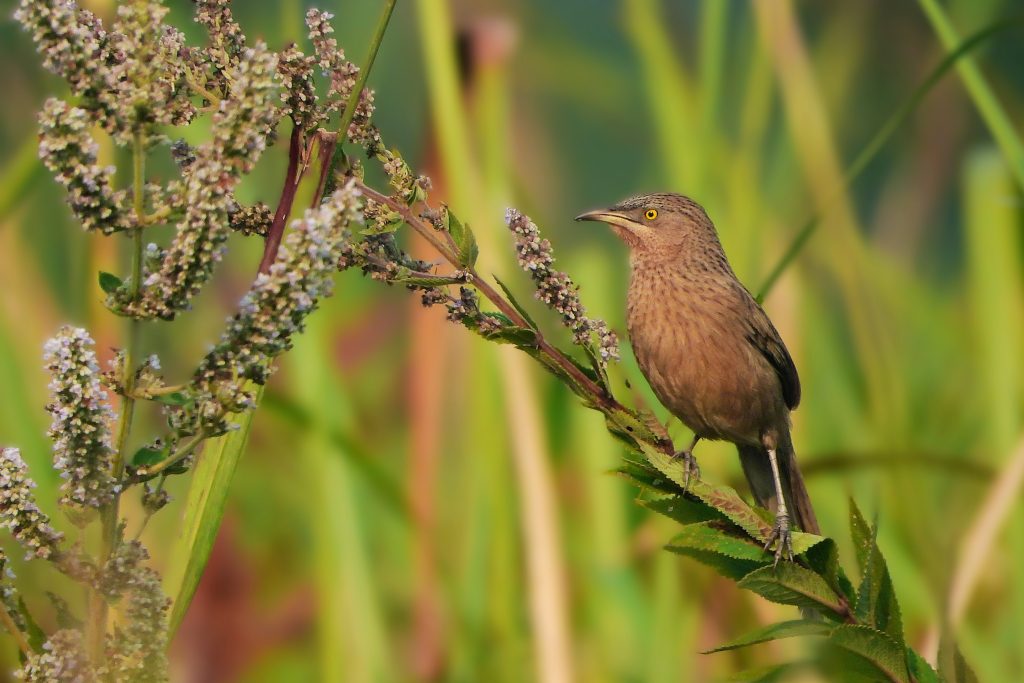
Striated babbler (Argya earlei)
Striated babblers (Argya earlei) are highly social and primarily communicate through a variety of loud vocalisations. They can be easily identified by their bright yellow eyes and faint pale moustache. Living in a large flock, they rely on constant communication to keep track of each other. Listed as ‘least concern’ in the IUCN Red List, the population of this species is believed to be decreasing.
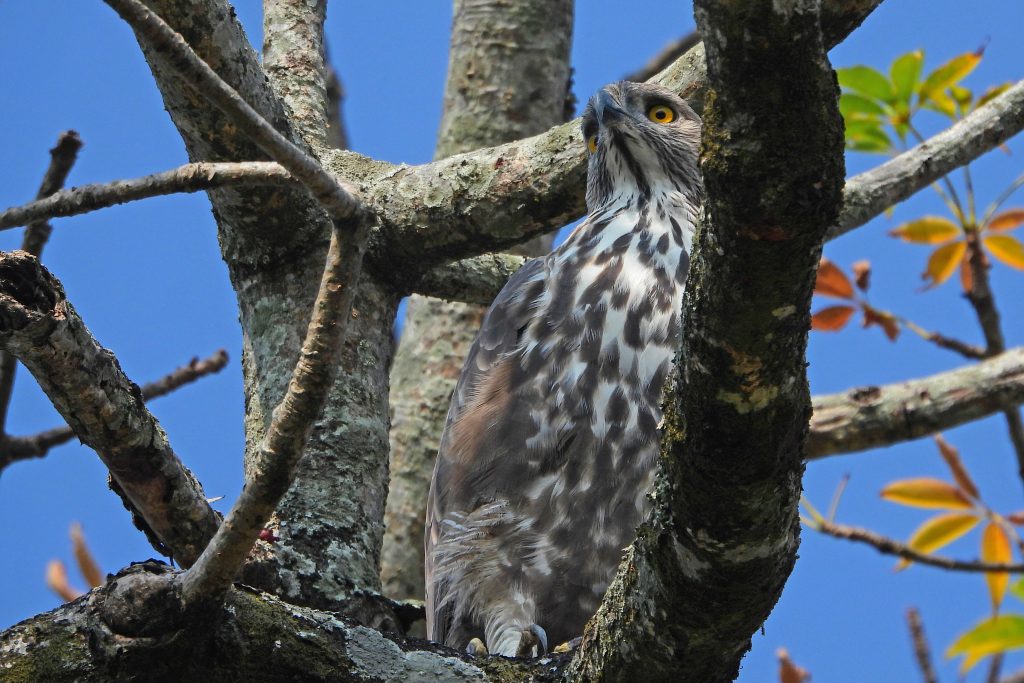
Changeable hawk-eagle (Nisaetus cirrhatus)
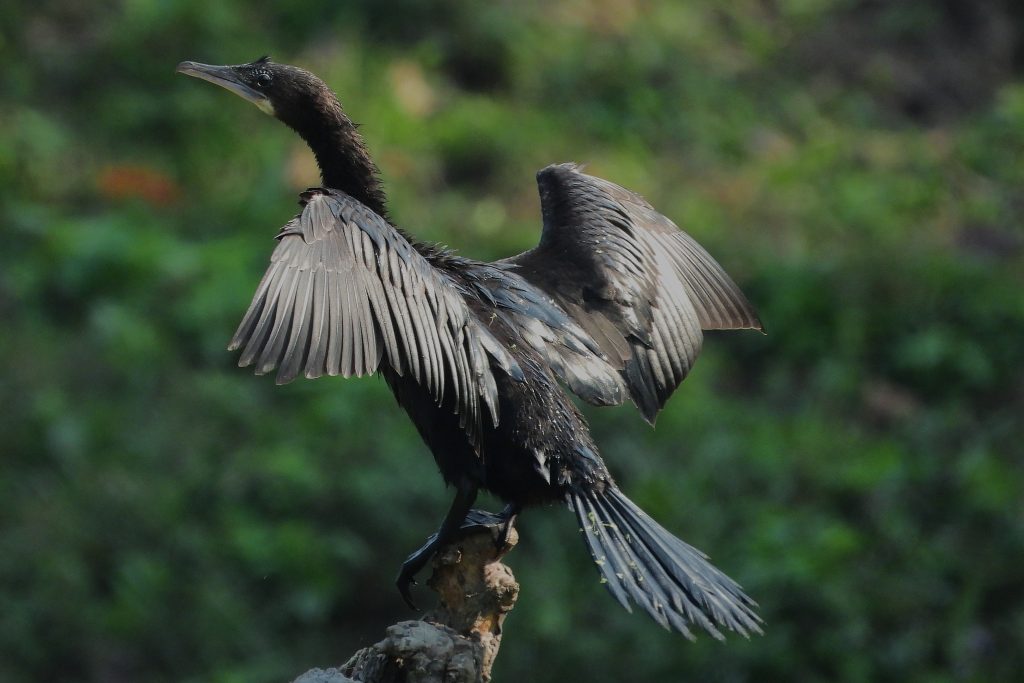
Little cormorant (Microcarbo niger)
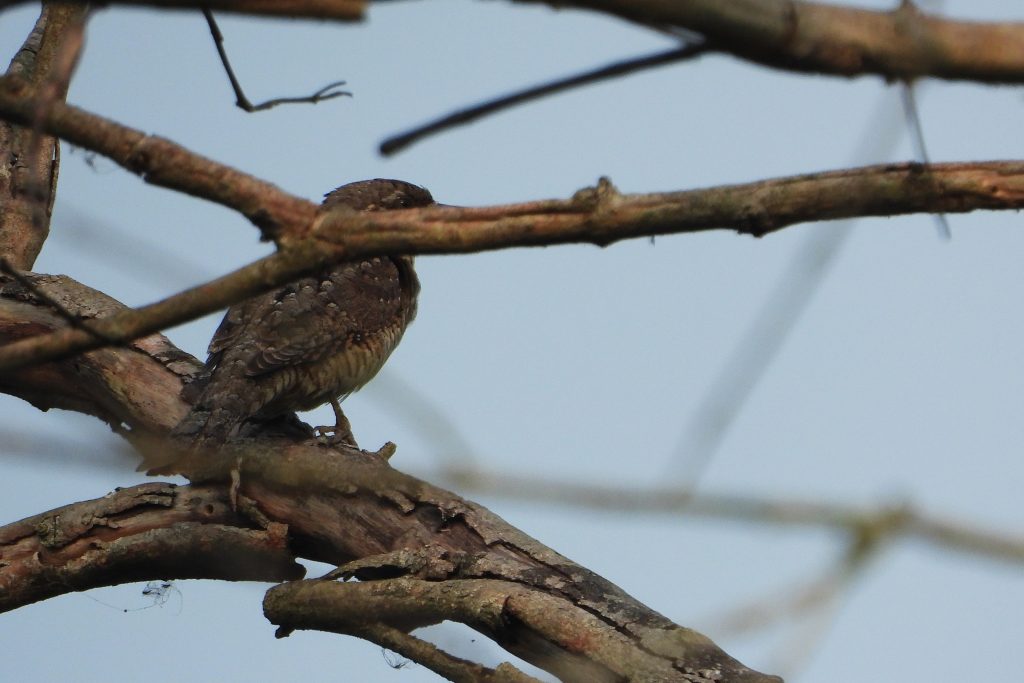
Eurasian wryneck (Jynx torquilla)
The Eurasian wryneck (Jynx torquilla) is a species of wryneck in the woodpecker family. According to Greek mythology, Iynx (a nymph) was turned into a bird (the Eurasian wryneck) by Hera for casting a mischievous spell under the influence of which Zeus fell in love with Io. The medieval Latin term ‘torquilla’ comes from the word ‘torquere’, which means ‘to twist,’ which is similar to ‘wryneck’ in English, referring to the bird’s uncanny ability to twist its neck 180 degrees.
Manas is one of the crown jewels of India’s protected area network, owing to the immense biodiversity it supports. The significance of Manas National Park can be gauged from the rare distinction of being designated a national park, a Project Tiger reserve, a biosphere reserve, and an elephant reserve. While the world often looks to Manas for its megafauna, its birds remain the most delicate measure of the park’s health.
Story and photographs by Suranjita Roy, Biologist, Forgotten Cats of Seinthuk Project