Wings for likes – the viral black kite of Instagram
The story begins with a fallen tree.
The young man at the heart of this story did not see himself as a criminal. His story began when a nearby tree fell, bringing down a nest with two kite chicks. Believing he was “rescuing” them, he brought the chicks home. His family, known in the neighbourhood for rearing pigeons, did not find this unusual. Training and keeping birds had always been a part of their livelihood. What began as an act of compassion soon morphed into something far more troubling.
With enthusiasm and curiosity, he began hand-rearing the chicks. Feeding them, keeping them alive, and watching them grow stronger gave him a sense of purpose. But survival alone was not enough. As they grew, he started training them, teaching them to obey commands, take flight on cue, and return at his call. To him, this was not exploitation but an extension of what his family had always done with pigeons.
Yet, the difference was stark. Pigeons, domesticated and selectively bred over centuries, have adapted to life alongside humans. Black kites, on the other hand, are wild raptors– apex hunters, and vital threads in a delicate ecological web. Their place was never meant to be in a human courtyard or a subject for a smartphone camera.
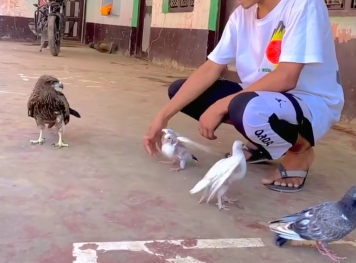
Feeding the black kite alongside pigeons | Source: Instagram
The allure of “Content”
The young man, like many of his peers, was drawn to the allure of social media fame. He realised that the unusual sight of raptors performing tricks could earn him views and in the age of reels, views quickly translate into likes, followers and eventually fame and money.
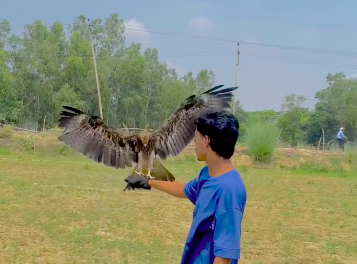
He began posting videos of the kites swooping in like falcons, flying on command and perching obediently for the camera. His audience was captivated and his followers grew steadily. Comments poured in, celebrating his “bond” with the birds, applauding his “talent” in training them. Each notification became a small hit of dopamine, affirming his new identity as a wildlife influencer.
The black kites, majestic beings of the sky, were reduced to circus animals. What mattered was not the bird, but the content.
When freedom Is framed
This might have continued unnoticed, but wildlife does not belong in captivity, and eventually, law enforcement agencies caught up and intervened. The kites were seized and moved to safety.
The young man’s response, however, told a different story. Instead of remorse, he turned again to social media, posting videos of grief and loss, portraying himself as the victim. In a bitter twist, his followers surged by 3,000, his grief became content and another opportunity to grow his viewership.
This moment revealed the deeper problem: not just an individual’s choices, but a society that cheers for exploitation when it comes packaged in filters, trending music, and hashtags.
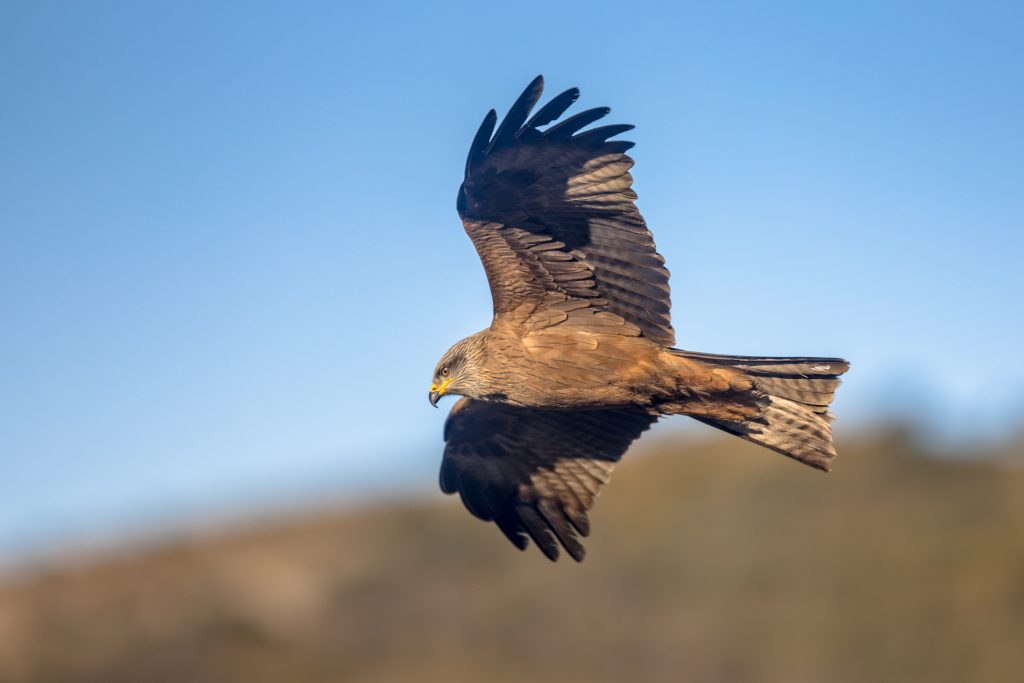
representative image of a black kite (Milvus migrans) flying in its natural environment.
The thin line between care and control
To the young man, hand-raising the chicks was an act of compassion. He had, after all, saved them from certain death, but compassion becomes control when it denies an animal its nature. The line between saving life and shaping it for applause is fragile and too often crossed in silence.
In India, black kites are protected under Schedule I of the Wild Life (Protection) Act, 1972, the highest level of protection, same as afforded to species like tigers. This means that capturing, keeping, training or trading them is a serious offence, regardless of whether one claims to have “rescued” them. Although the species is categorised as ‘Least Concern’ on the IUCN Red List, Indian law recognizes their ecological importance and guards them strictly. Ideally, in situations where people come across injured or displaced wildlife, the right course of action is to provide immediate veterinary assistance if needed and then hand the animal over to the Forest Department or an authorized rescue centre. What often begins as a well-meaning act of generosity can quickly slip into illegality and exploitation when wild animals are kept at home. This stems largely from a lack of awareness among the public, which highlights the urgent need for stronger outreach and education initiatives, so that people know how to respond responsibly when they encounter wildlife in distress.
Wildlife rehabilitation is a specialised science. Chicks that fall from nests are ideally cared for in wildlife rescue centres, where the goal is to always release them back into the wild. When cared by untrained hands, their instincts are also blunted. They may survive, but they never truly live.
A society of spectators
This incident raises an uncomfortable question: why do we as spectators, encourage such acts? Why do videos of captive owls, performing monkeys, or trained raptors draw millions of views? Why do we “like” them without pausing to consider the impact on the animal involved? Wildlife crime is often associated with ivory, tiger skins, or pangolin scales. Yet it also thrives in these quieter corners of the internet, where exploitation is masked by applause. Every like, every share, every subscription contributes, invisibly, to this cycle.
This is not just one young man’s story. Across India and beyond, youngsters are increasingly turning to wildlife as a quick path to digital fame. Exotic birds, reptiles held up for selfies, owls dressed in costume, and raptors flying on command — the internet is littered with such content.
For many of these youth, it begins with curiosity or misplaced compassion. But algorithms are unforgiving. They reward novelty and spectacle, and before long, the pursuit of followers overtakes the duty of care. What might have begun as “rescue” turns into lifelong captivity.
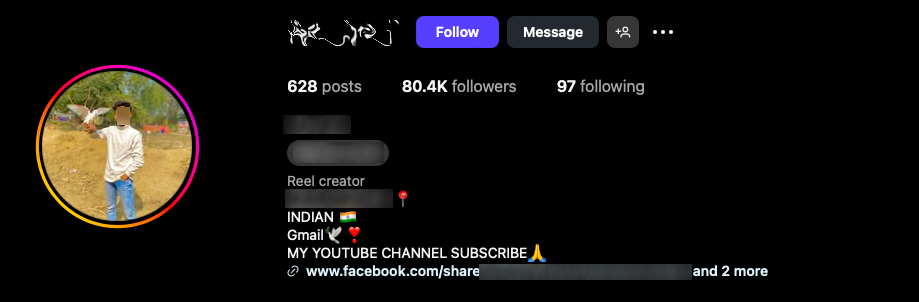
The social media fame from wildlife crime
Changing the script
Our fight against wildlife crime goes beyond seizures and prosecutions – it requires changing mindsets. It is about teaching that a bird is most beautiful when free, not when it’s caged and forced to perform for human entertainment. True connection with animals lies in protecting their habitats, not in taming their instincts.
As a society, we must stop rewarding exploitation disguised as entertainment. We must question the content we consume and call out those who turn wildlife into props. Digital fame should not come at the cost of wild animals’ freedom.
When the rescued kites finally took flight again, it was more than a moment of release. It was a reminder of what was stolen from them, and what must not be stolen from others. Their wings carried a message that no reel can capture.
“Let the wild be wild.”
By WTI’s Wildlife Crime Control Division.