Wings of Freedom: A journey to the Illegal pet markets of Chhattisgarh
If someone had told me a year ago that my MBA would lead me to work on wildlife trafficking investigations, I wouldn’t have believed it. Yet here I was, navigating the towns of Chhattisgarh and uncovering the ground realities of the illegal wildlife trade. Transitioning from spreadsheets and presentations to field investigations and wildlife rescues was unexpected, but it opened my eyes to a different challenge. This work wasn’t just about fighting wildlife crime—it was about understanding the delicate balance of life and the efforts needed to protect it.
On December 16, I found myself outside the house of a suspected bird trafficker in old Raipur city. Unfortunately, our person of interest was bedridden with a fever. We came to know it had been weeks since he had been in business. Disappointed but determined, we moved on to a popular pet shop, with a history of Illegal wildlife trafficking. We found two parakeets stuffed in a bag, offered to us for a mere rate. We set up a deal for the next day.
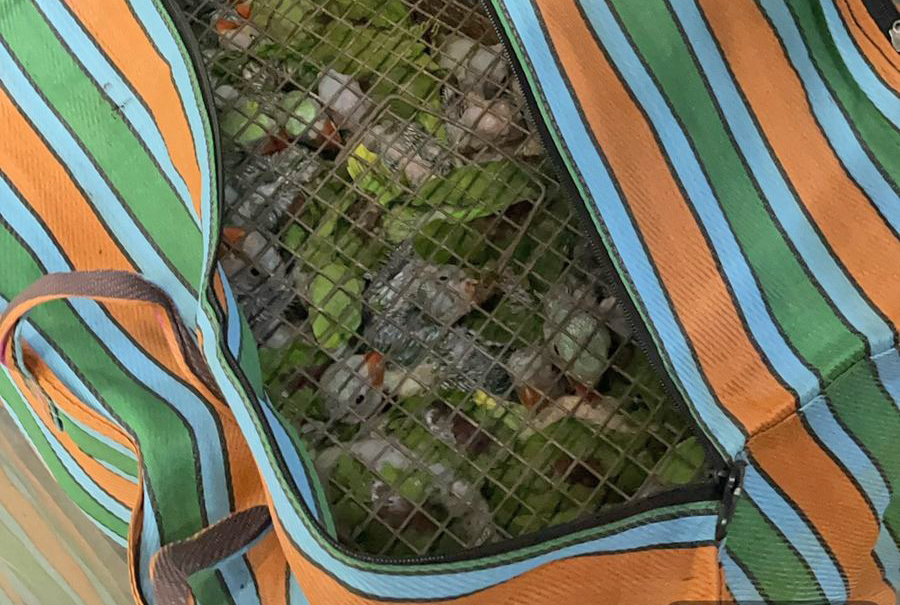
Parakeets cramped into a bag, seized in Raipur Railway Station | Photograph by Satvik Sharma/WTI
The next day, we were back at the shop. Walking in, I was like any regular customer, enquiring about the products on display. Rows of native and exotic colourful song-birds were cramped in small cages. I tried negotiating just like anyone else would, but once the deal was confirmed, the rest of our team joined in. The shopkeeper’s face drained of colour as the forest department personnel immediately arrested him and seized the parakeets. Following interrogation, this case also uncovered links to a larger trafficking network. A second seizure that day led us to another shop, where after investigating the owner, we learned about key details about supply routes along the Bilaspur Highway. This wasn’t just about a local business anymore.
The city of Bhilai was a different story altogether. Verified sources had earlier pointed to wildlife trafficking in the area, but when we visited the flagged shops, it became apparent that they already had the information about our team being in the area. Shopkeepers were cautious, and we found no evidence of illegal wildlife trade. Perhaps, we needed to be more cautious. It certainly was a learning experience this time around.
At the forest department headquarters, I was introduced to the process that follows wildlife seizures. From drafting reports to ensuring the chain of custody for evidence, each bird or reptile rescued carried with itself, a story of cruelty. Each trafficker caught, left behind many questions about the systemic failures enabling such acts.
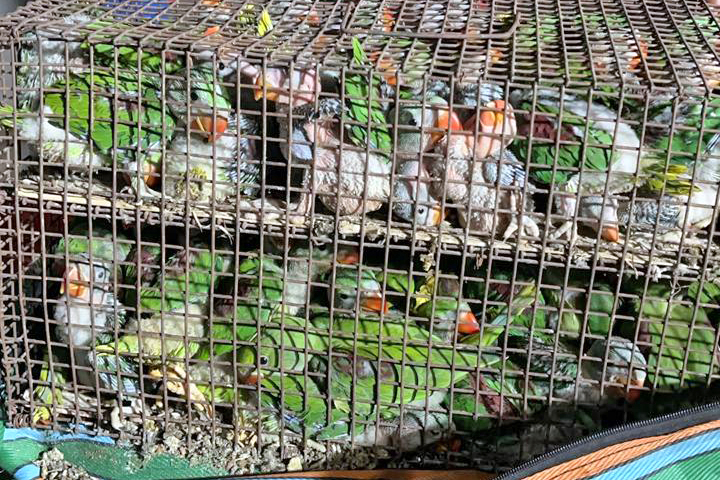
Parakeets seized at Raipur Railway Station | Photo by Satvik Sharma/WTI
My final day began with a tip-off that a large consignment of parakeets was heading to Raipur on a midnight train from Andhra Pradesh. Armed with just a photo and a train number of the suspect, we raced to intercept it. At 4:36 AM, we boarded the train and managed to identify the culprit. 105 parakeets were cramped into cages that were too small to house that many song-birds. This included 31 fledglings, trembling and injured, their feathers dulled by trauma. The sight was heart-breaking—life reduced to suffocation and despair for the sake of money. The trafficker was arrested by the forest department, and the parakeets were sent to a rehabilitation centre. The Forest Department veterinarians said It would take at least 45 days for them to heal enough to return to the wild.
At the end of the day, we need to understand that it is the demand that drives this cruelty. The ignorance, and the indifference attached to the illegal wildlife trade takes countless lives of birds and other animals. As I reflect on these cases, I’m reminded of the fragility of life and the responsibility we bear to protect it. I never imagined my MBA would lead me here. Wildlife trafficking isn’t just a crime against nature; it’s a crime against our shared humanity. And every life sent back to the wild is a small victory in a battle that must continue.
by Satvik Sharma, Intern, Wildlife Crime Control Division