Experts collaborate to devise strategies for Golden Langur conservation in Assam
Bongaigaon, 25th March 2025: The Wildlife Trust of India (WTI), in collaboration with the Primate Research Centre – NE, Bodoland Territorial Council (BTC) and the Assam Forest Department, organised an international workshop and consultation in Bongaigaon, Assam. Supported by the Royal Enfield Social Mission, the workshop aims to collaboratively build on the conservation strategies and action plans for the endangered Golden Langur (Trachypithecus geei). Leading primatologists and conservation practitioners from India and Bhutan participated and shared insights to secure the future of this species in its distribution ranges.
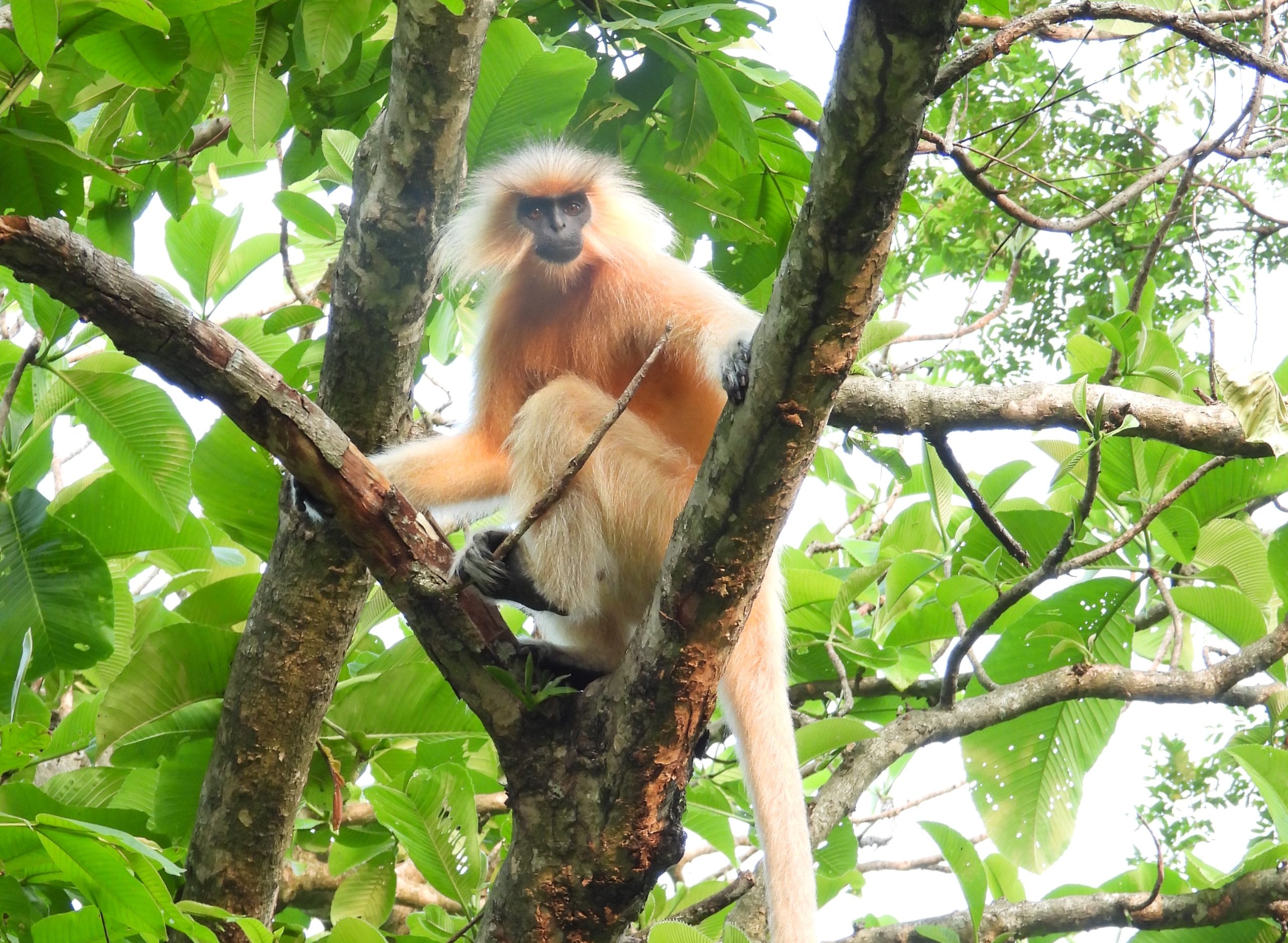
The Golden Langur is a strikingly beautiful primate endemic to western Assam and southern Bhutan and found only between the Sankosh and Beki rivers in the eastern Himalayan landscape. This species faces increasing threats from habitat fragmentation, road accidents, electrocution, and human-wildlife conflict. With only about 7,000 individuals remaining in the wild, this workshop aims to unite conservationists, community leaders, researchers, and policymakers to develop actionable strategies to secure the species’ future.
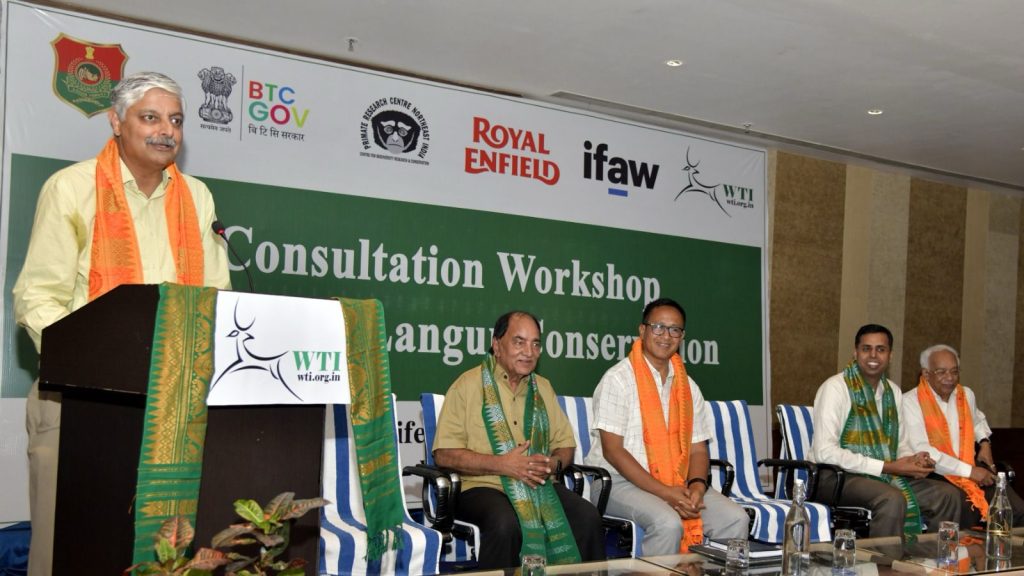
Mr. Vivek Menon, ED. WTI & IUCN Councillor chaired the workshop | Photo by Subhamoy Bhattacharjee
Vivek Menon, Executive Director of WTI and Councillor of the International Union for Conservation of Nature (IUCN), chaired the workshop. In his address, he emphasised that the golden langur’s survival hinges on innovative solutions and cross-border cooperation. The workshop served as a crucial step toward aligning conservation efforts in India and Bhutan to protect this endangered primate and its fragile habitat.
Hon’ble Chief Executive Member of Bodoland Territorial Council (BTC) Mr. Pramod Boro graced the occasion as the Chief Guest. He welcomed experts and primatologists to BTC for their efforts in developing a roadmap to save the golden langur. He expressed his appreciation for the initiative, acknowledging the species’ primary distribution in the BTC region. He also emphasised his commitment to implementing the action plan after discussions with the relevant implementing agencies of his government.
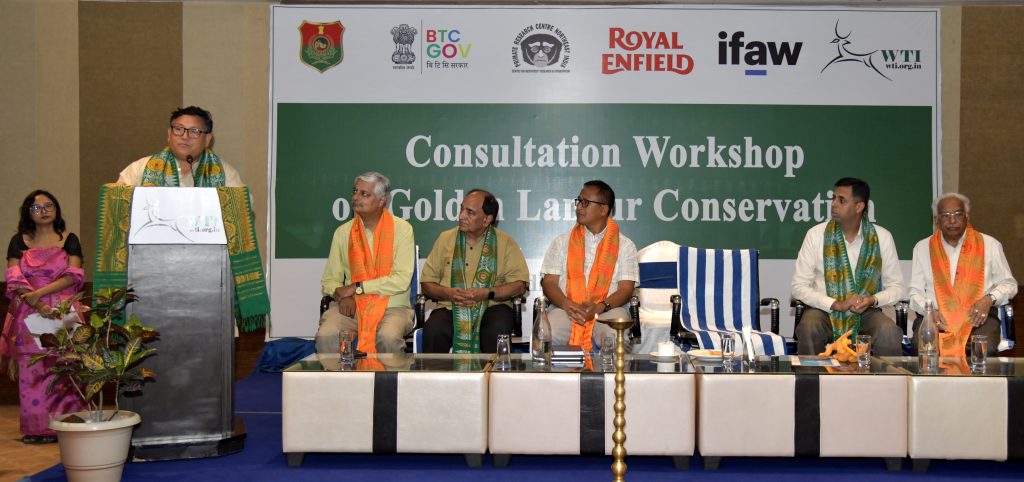
Mr. Pramod Boro, CEM, BTC, addressing the participants during the inaugural session | Photo by Subhamoy Bhattacharjee
The event was graced by Mr. Ranjit Basumatary, Hon’ble Executive Member of Bodoland Territorial Council (BTC) and Charge of Forests. In his speech, he stated, “The golden langur is a symbol of our region’s unique biodiversity, and its survival depends on collective action. The BTC government is committed to the protection and conservation of golden langur.” He highlighted recent efforts, noting, “The BTC has safeguarded nearly all habitats of this species within our jurisdiction by establishing new protected areas such as Raimona National Park and Sikhna Jwhwlao National Park apart from the existing Manas National Park and Chakrashila Wildlife Sanctuary.”
Mr. Ranjit Basumatary, Hon’ble Executive Member of Bodoland Territorial Council (BTC) and In-Charge of Forests emphasised the golden langur’s significance as a symbol of the region’s unique biodiversity and stressed the importance of collective action for its survival. He reaffirmed the BTC government’s commitment to the species’ protection and conservation, highlighting recent efforts to safeguard its habitats. He noted that BTC has strengthened conservation by establishing new protected areas such as Raimona National Park and Sikhna Jwhwlao National Park, in addition to the existing Manas National Park and Chakrashila Wildlife Sanctuary.
Dr. Mewa Singh, a revered primatologist with over five decades of experience in primate conservation in India, actively participated and offered valuable insights. He highlighted the need for a combination of scientific research and community engagement in protecting the golden langur. Further adding that the importance of strengthening habitat connectivity through canopy bridges and mitigating human-induced threats as crucial steps for conservation.
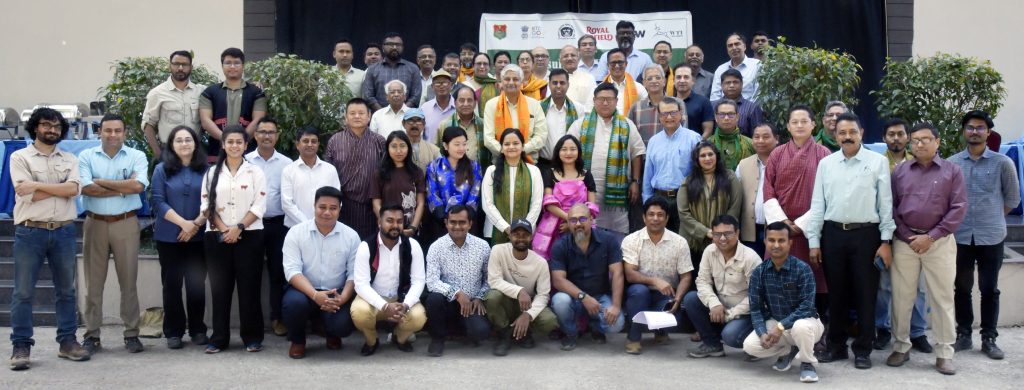
Forest officials from neighbouring Bhutan shared their ongoing efforts to conserve the golden langur and expressed enthusiasm for collaborating with their Indian counterparts to protect this species across its transboundary range. Experts from the Wildlife Institute of India (Dehradun), Salim Ali Centre for Ornithology and Natural History (SACON, Coimbatore), and other primatologists presented diverse suggestions for the conservation and management of the golden langur and its unique habitats in Assam and Bhutan.
Drawing on the input and recommendations from these experts, a vision document will be prepared outlining actionable steps and timelines. This document will serve as a guiding document for conservation organizations and governments to secure the golden langur’s future in Assam and Bhutan.