
Bagh Bondhus help relocate an adult tiger back to the Sundarbans forest
Kultali, Sundarbans, 15 June 2025: The West Bengal Forest Department, supported by village volunteers, safely relocated an adult male tiger from human habitation, back into the wild.
Deulbari is one of the most remote human habitations in the Sundarbans and the last village in the Kultali Block. This village shares its boundary with the Ajmalmari Forest Block of South 24 Parganas. Limited by its remoteness, the locals of Deulbari are heavily dependent on natural resources including fish, crab, honey and firewood. However, the landscape is also shared by Bengal tigers and consequently, interactions between tigers and humans have been frequent, often resulting in fatalities.
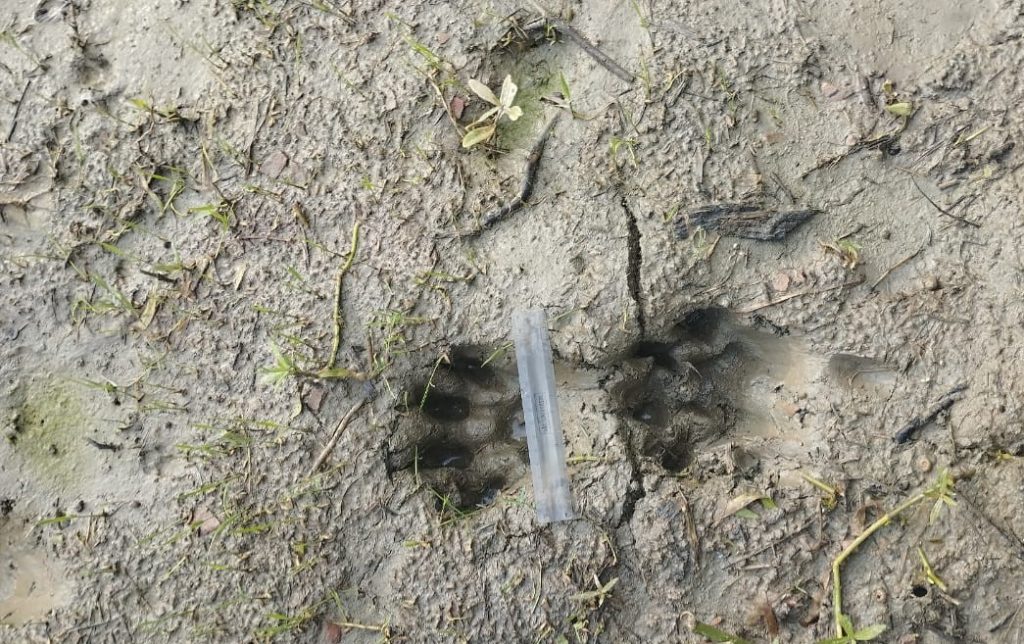
Pugmarks detected by PRT meter along the river channel near Deulbari Village | Photograph by Pulak Mondol/WTI PRT
On the morning of 14th June, 2025, a local fisherman had spotted a tiger during the low tide event, along the river channel separating the village and forest. A clear pugmark meant that the tiger had been inside the village recently. He immediately contacted the forest office in Kultali Beat under Raidighi Range. The information was also passed on to Wildlife Trust of India’s ‘Bagh Bondhu’ Mr. Pulak Mondol from Deulbari Village. Bagh Bondhus worked as village volunteers and have been on the frontline in both tracking tigers and ensuring that the villagers are safe. Within a few minutes, people had started gathering at the location where the pugmark had been found. The Forest Department organised foot and boat patrolling, and it was confirmed that the tiger was still around human habitation.
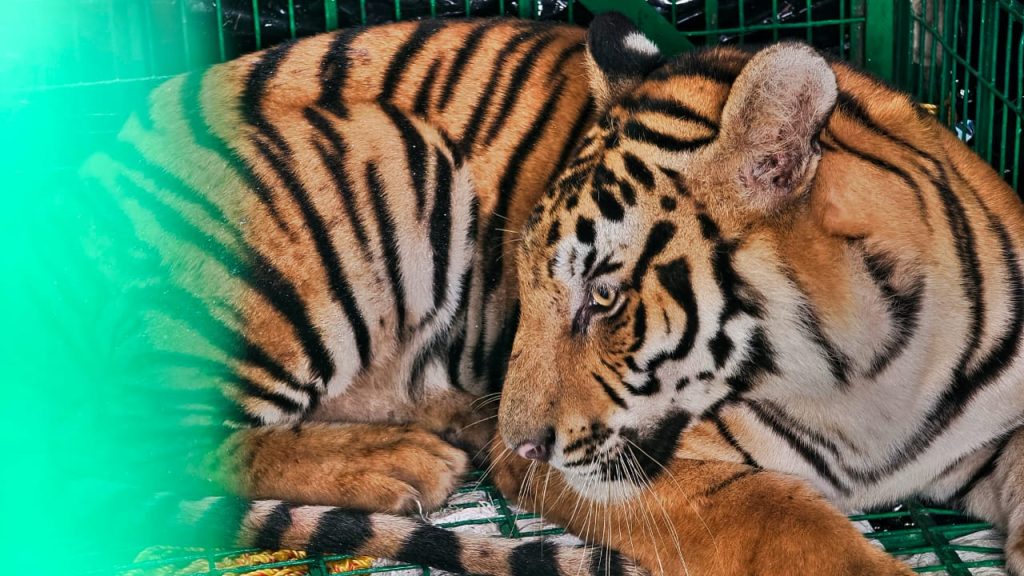
Bengal tiger captured in Deulbari | Photograph by West Bengal Forest Department
The soil farther to the river channel was drier and tighter and made it difficult to track the movement of the animal.Furthermore, with it being the rice harvesting season there was a high probability that the tiger was hiding in the bushes. However, after an hour of searching, the team finally encountered the animal, identified as an adult male. The area was immediately cordoned off and fenced to secure the villagers as well as the tiger. Since the tiger was inside the village, guiding it back to the forest was a risky solution. A trap cage was placed inside the fenced area, and at three in the morning of 15th June, an intense metal sound indicated that the tiger had been captured. While the rest of the village was sleeping, the forest department and Bagh Bondhus, the true ‘Guardians of the forest’ loaded the cage onto the boat. Theanimal was to be taken further into Sundarban Tiger Reserve (STR) where in Chamta-4 block, away from human habitation, it was released back to the wild.
Deulbari is the same village where a few years ago, a tiger had been killed due to public retaliation. This time however, with collective and timely efforts of the West Bengal Forest Department, the Bagh Bondhus and conservation NGOs like WTI, there has been a positive change in public attitude towards tiger conservation. The results were evident in the latest operation.
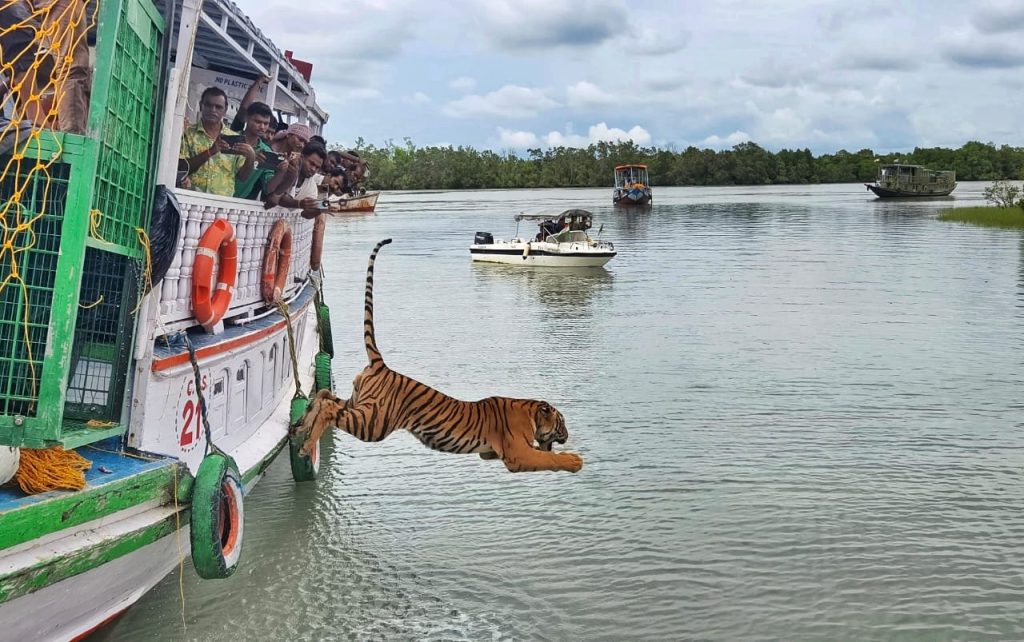
Tiger relocated away from human habitation in the Sundarbans National Park | Photograph by West Bengal Forest Department
WTI had formed two Primary Response Teams (PRT), led by Bagh Bondhus, in Kultali block back in 2019 in order to support the Forest Department to handle such incidents. As of today, the PRT has responded to 29 tiger-related incidents and more than 40 other wildlife emergency cases in the region. The team was recently recognised for their work by the State Forest Department.
WTI’s Sundarbans Tiger Project is supported by German Co-operation, Kfw, IUCN and West Bengal Forest Department under ITHCP (Integrated Tiger Habitat Conservation Program). The project aims at developing infrastructure to support the government in managing human-tiger conflicts as well as developing select village communities at various levels to address human-tiger conflicts.