Counter-wildlife trafficking orientation workshops for SSB Battalions in Bihar
Bihar, 30th June 2025: The Wildlife Trust of India (WTI) team based in Valmiki Tiger Reserve (VTR), recently conducted a series of Counter-Wildlife Trafficking (CWT) Orientation workshops for the four battalions under Bettiah Sector of the Sashastra Seema Bal (SSB) in West and East Champaran districts of Bihar. These workshops aimed to bolster the capacity of field personnel to detect, deter, and respond to wildlife crimes along the Indo-Nepal border, a known hotspot for wildlife trafficking.
SSB, one of India’s key Central Armed Police Forces (CAPFs), plays a critical role as the first line of defence along the Indo-Nepal and Indo-Bhutan frontiers. With jurisdiction across heavily forested landscapes of the Terai and Duars, the force is uniquely positioned to combat cross-border wildlife trafficking. Recognising this vital role, WTI partnered with the force under the aegis of the project “Strengthening India’s wildlife crime prevention and law enforcement measures along the India and Nepal Border”, supported by the INL (United States Department of State Bureau of International Narcotics and Law Enforcement Affairs).
The sessions, delivered through presentations and interactive discussions, were designed to address real-time challenges faced by field units. The orientation covered key topics such as wildlife trafficking trends in the Terai landscape, identification of commonly trafficked species and wildlife articles, introduction to Anti-Snare Walks (ASWs) and Anti-Electrocution Drives (AEDs), recognition of wildlife signs and cues in the field and safety protocols for patrolling in forested terrains. Participants included staff from five designation categories: Inspector, Sub-Inspector (SI), Assistant Sub-Inspector (ASI), Head Constables (HC), and Constables (CT), representing sub-units such as General Duty (GD) and Communications (Comms.).
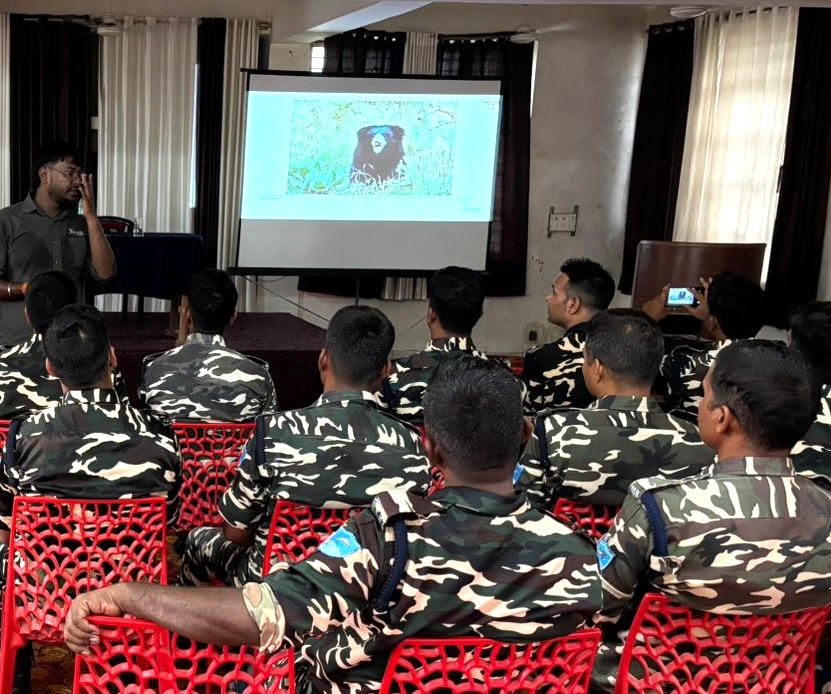
An interactive session during the CWT orientation workshop with SSB Battalions | Photo by Team WTI
Notably, around 42% of the participants were stationed at Border Outposts (BOPs), who are directly involved in field-based patrolling operations along the forested Indo-Nepal boundary. These personnel are now better equipped to detect signs of illegal wildlife movement and coordinate effectively with Forest Department staff, especially in areas where their jurisdiction overlaps with Valmiki Tiger Reserve (VTR)—Bihar’s only tiger reserve.
The entire workshop series was conducted under the supervision and guidance of Mr. Suresh Subramaniam, Hon’ble Deputy Inspector General, Bettiah Sector, SSB, whose active involvement underscored the strategic importance of integrating wildlife crime prevention into the core responsibilities of border security personnel. His leadership played a crucial role in ensuring the enthusiastic participation of all battalion units and in reinforcing the message that wildlife protection is an essential element of national security and ecological integrity.
The SSB battalion responsible for monitoring the Integrated Check Post (ICP) at Raxaul plays a pivotal role in border surveillance. As the largest ICP on the Indo-Nepal frontier within Bihar, Raxaul has reported seizures of leopard skins and live owls in the recent past—indicating its importance as a wildlife trafficking checkpoint. Located just 60 km from VTR, enhanced vigilance by this unit is crucial for preventing the movement of trafficked wildlife through formal trade routes.
Strengthening Collaboration for Long-term Impact
The workshops have proven instrumental not only in enhancing the operational knowledge and preparedness of SSB personnel but also in establishing a strong foundation for long-term collaboration between WTI and SSB. By equipping field-level enforcement staff with critical awareness about wildlife crime trends, species identification, and standard response protocols, the initiative has helped bridge the knowledge gap that often hinders swift and informed action in wildlife crime scenarios. The interactive format fosters open dialogue, clarifies the scope of responsibilities and offers practical tools to navigate on-ground challenges.
Since 2018, the Wildlife Trust of India (WTI) has been working in close coordination with the Sashastra Seema Bal (SSB) in the Terai landscape to strengthen wildlife protection efforts along the Indo-Nepal border. WTI has conducted Border Outpost (BOP)-based orientation workshops for 494 SSB frontline staff, including 21 workshops in Uttar Pradesh and 5 in Bihar. Additionally, 78 SSB personnel have received specialised training in Wildlife Article Identification to enhance their enforcement capabilities. Collaborative Anti-Snare Walks (ASWs) have further deepened field-level engagement, with 148 SSB jawans participating alongside Forest Department teams. As a direct outcome of these sustained capacity-building efforts, the SSB has actively contributed to wildlife law enforcement, registering 67 wildlife-related cases up to March 2024.

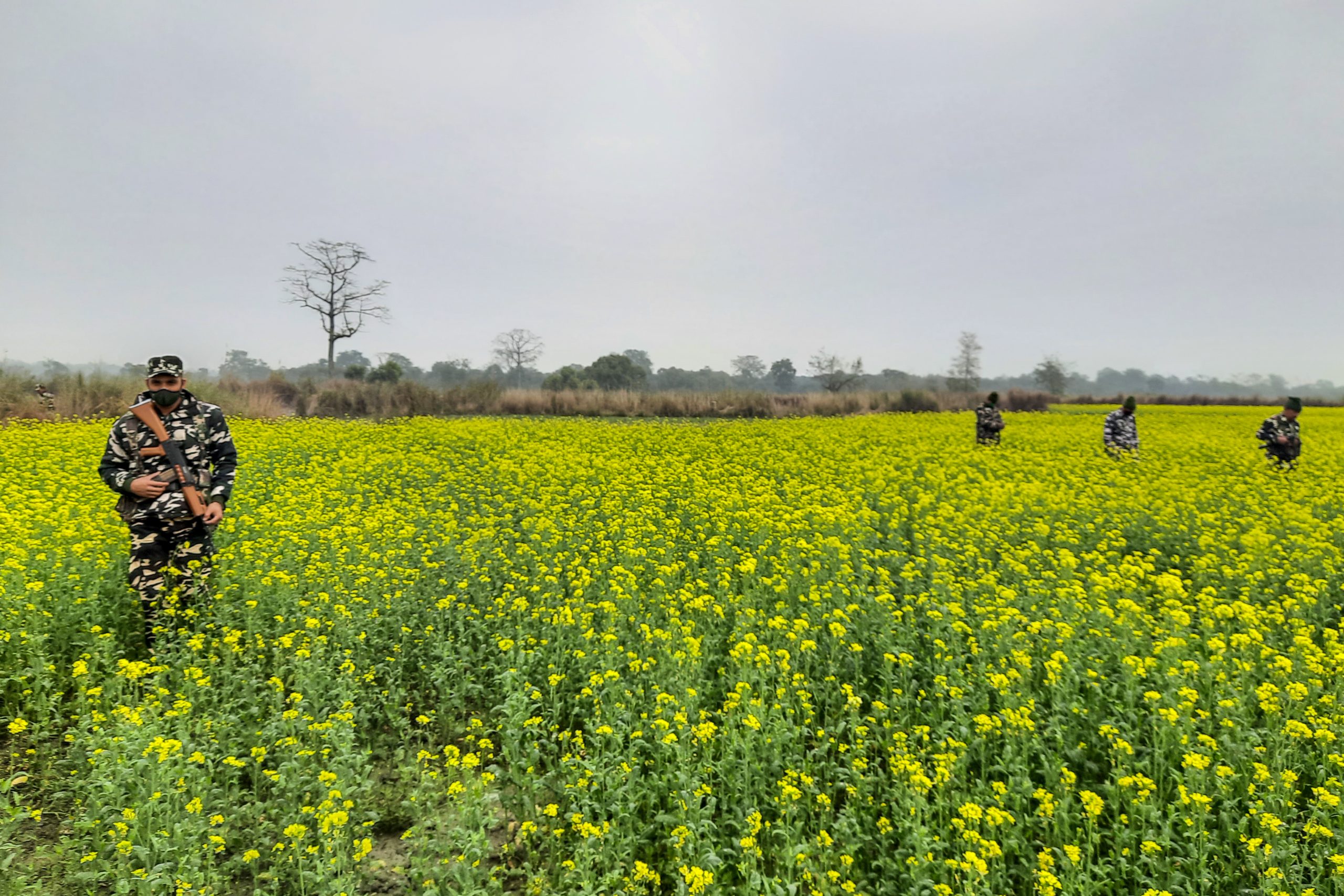
Anti-snare walk led by SBB and WTI in Valmiki Tiger Reserve, Bihar | Photo by Madhumay Mallik
This renewed synergy between WTI and SSB is particularly timely and strategic, given the increasing complexity of wildlife trafficking networks operating along porous international borders. With a large proportion of SSB personnel stationed at forest-adjacent Border Outposts and frequently engaged in field patrolling in sensitive ecological zones, their enhanced capacity significantly strengthens the first line of defence against transboundary wildlife crimes.
Beyond knowledge transfer, WTI is playing a pivotal role as a coordinator between the Forest Department and the Sashastra Seema Bal (SSB) by facilitating effective communication, collaboration, and capacity-building initiatives. Through its on-ground presence and technical expertise, WTI ensures that both agencies work in tandem to address critical conservation challenges, especially along sensitive border landscapes. By organising joint training workshops, knowledge-sharing sessions, and synchronised field operations, WTI bridges institutional gaps and fosters a unified approach towards wildlife protection and enforcement. This initiative marks a step towards a more integrated, multi-agency approach to wildlife crime prevention. Moving forward, regular refresher trainings and continued dialogue between agencies will be crucial to sustain momentum and further institutionalise wildlife protection as a core element of border security strategy.