
Elephant calf stuck in trench for over 24 hours, rescued and reunited with mother in Golaghat, Assam
Golaghat, 2 October 2025: An elephant calf was rescued after it fell into a trench in Gobindpur Tea Estate on the 1st of October 2025. The calf, its mother alongside, was found trapped inside the tea estate, located near Numaligarh in Golaghat district, Assam.
Earlier in the day, locals had spotted the calf stuck in a trench and had raised an immediate alarm. The female elephant (mother) had remained close by, her eyes wary, trumpeting distress signals to ward off intruders. The forest department, having been notified, called upon the IFAW-WTI team from the Centre for Wildlife Rehabilitation and Conservation (CWRC) for urgent assistance.
Upon arrival, WTI’s team, along with the forest department staff, swiftly put a strategic rescue plan into action. Under their direction, the calf was carefully lifted from the trench. The mother, visibly anxious but relieved, guided her young one towards the safety of the forest.
A Second Fall — New Urgency
However, after walking around 2–3 km, the calf slipped again — this time into another trench in a different tea garden. On witnessing the incident, local residents promptly informed the Assam Forest Department. Reports came in early on 2nd October from the beat officer alerting the CWRC team to the emergency. Upon arrival, our team found the calf stuck in a trench measuring roughly 2.5 ft in width and 3 ft in depth (measured later). The distressed elephant also bore signs of injury. The mother remained close, visibly defensive and aggressive.
Elephant calf and mother during rescue | Photo by Mohit Nyol/WTI
Compounding the challenge, a sizable crowd of onlookers had gathered, hooting, encroaching on the scene, and attempting to approach the mother. Their behaviour added to the stress and risk for both the animals and humans alike. With only five forest staff on the ground, the team was operating under intense pressure.
We urged restraint, and our keepers, who were also from the community, alongside the forest staff, worked to calm the crowd. We also appealed to the In-Charge beat officer, Mr. Mohesh Bauri, who, along with his team, laboured through the stressful hours. Soon, staff from other ranges arrived, helping manage and ease the crowd’s intensity.
Choosing a Rescue Strategy
Given the risks, tranquilizing the mother — who was lactating — was deemed too dangerous for both her and the calf. Instead, the team resolved to use a mechanical solution: bringing in an excavator to carefully lift the calf out.
As the excavator approached the trench, the mother aggressively charged at it several times, trying to defend her young. The operator, braving the danger, worked meticulously to remove the surrounding soil until the calf was finally freed. Exhausted and weakened, the calf was unable to stand at first. After several tense minutes, with gentle encouragement and assistance from the mother, the calf finally stood up.
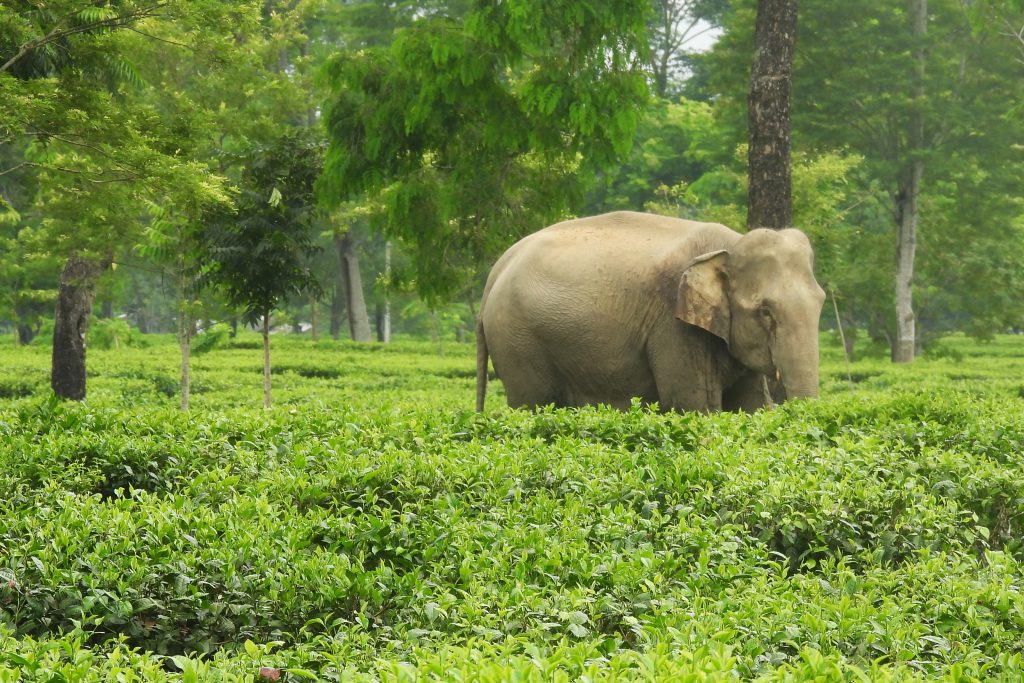
Female elephant in the tea garden during rescue operation | Photo by Mohit Nyol/WTI
We administered anti-inflammatory medication to ease the calf’s and reduce the swelling around its wound. Under the mother’s guidance, the calf began walking again, and the two made their way back into the forest — safe, reunited, and unharmed. The forest staff and community will continue monitoring the animals.
We are grateful to the incredible team of keepers at CWRC, including Raju Kutum, Lakhiram Das, Rhomen Das and Hemanta Das, whose dedication saw the calf through a challenging day and safely back into the calmness of the forest. This rescue stands as a powerful testament what can be achieved through empathy, coordination, courage, and swift conservation action–made possible by the unwavering support of the local communities living alongside elephants across Assam and similar elephant corridors across the country. The project is supported by the Assam Forest Department and International Fund for Animal Welfare.