Experts gather in Kolkata to discuss mitigating human-tiger conflict and promoting coexistence in Sundarbans
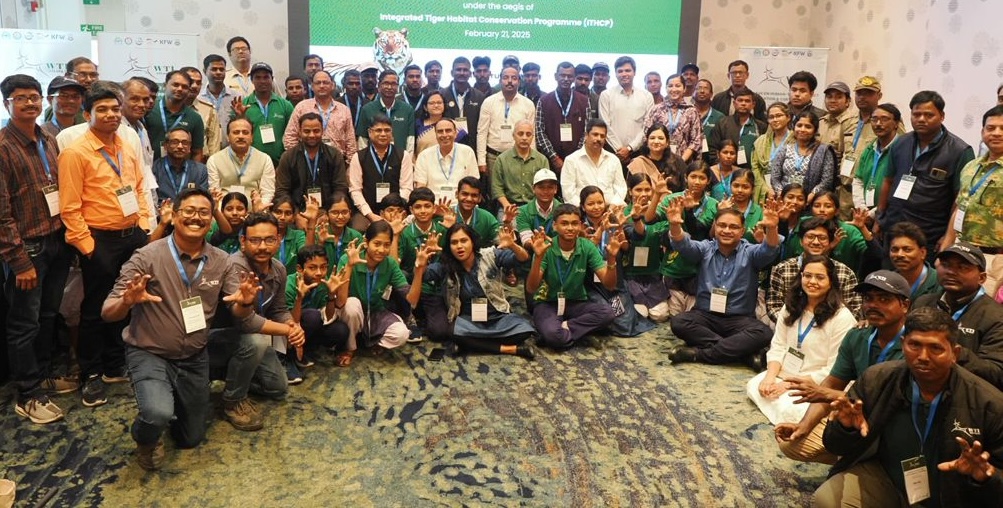
Kolkata, 21st February 2025: Conservation experts, government officials, and community representatives from India and Bangladesh gathered in Kolkata on February 21 to address human-tiger conflict and foster harmonious coexistence in the Sundarbans Biosphere Reserve and other conflict-prone areas of the country.
Organised under the aegis of the Integrated Tiger Habitat Conservation Programme (ITHCP), the meet was hosted by the Wildlife Trust of India (WTI) in partnership with the West Bengal Forest Department, Sundarban Biosphere Reserve, Government of West Bengal, Lokamata Rani Rashmoni Mission (LRRM), and WildTeam, Bangladesh. It was supported by the International Union for Conservation of Nature (IUCN), German Cooperation and the KfW Development Bank.
The high-impact gathering highlighted AI-driven monitoring, conflict mitigation strategies, community-led conservation initiatives, and cross-border cooperation to ensure the survival of Sundarbans’ tigers while safeguarding local livelihoods.
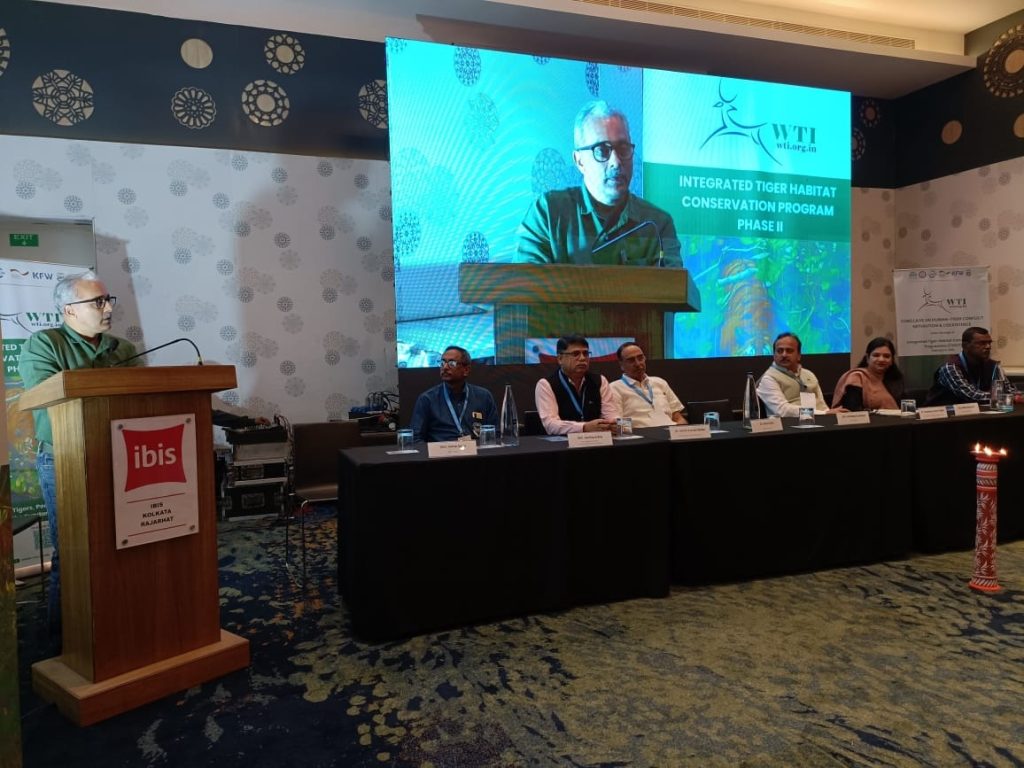
Shri Sandeep Sundriyal, PCCF-General, West Bengal Forest Department, addressing the attendees at the meet | Photo by Team WTI
The inaugural ceremony was presided over by Shri G.S. Bhardwaj, ADG (PT&E) & MS-NTCA, MoEF&CC, Govt. of India, Shri Sandeep Sundriyal, PCCF-General, West Bengal Forest Department, Ms. Archana Chatterjee, Program Manager, IUCN India, Dr. Rahul Kaul, Director, CCS- India, and Mr. Amitava Roy, Honorary General Secretary, Lokamata Rani Rashmoni Mission (LRRM), Dr. Sandeep Tiwari, Chief od Conservation, WTI, and Dr. Samir Kumar Sinha, Chief Ecologist, WTI.
Representatives from the IUCN HQ Geneva, Zoological Survey of India, WWF-India, WPSI, IUCN SSC Human-wildlife Conflict and Coexistence Specialist Group, IUCN SSC Cat Specialist Group and International Big Cats Alliance who were also present, will deliberate upon policy on conflict mitigation and coexistence.
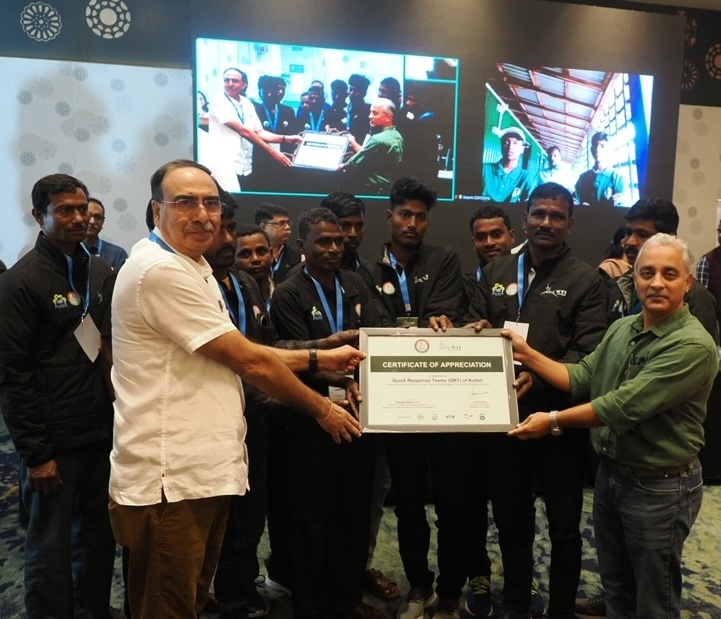
The event recognised the contributions of trained community volunteers known as the Primary Response Teams (PRTs) and Quick Response Teams (QRTs), in mitigating human-tiger conflicts. Presentations showcased initiatives by the West Bengal Forest Department, WTI, LRRM (India), and WildTeam (Bangladesh) to manage human-wildlife interactions in the Sundarbans.
Cultural performances and storytelling by Tiger Scouts (children) and Bagh Bondhus highlighted the deep-rooted connection between Sundarbans communities and their natural heritage.
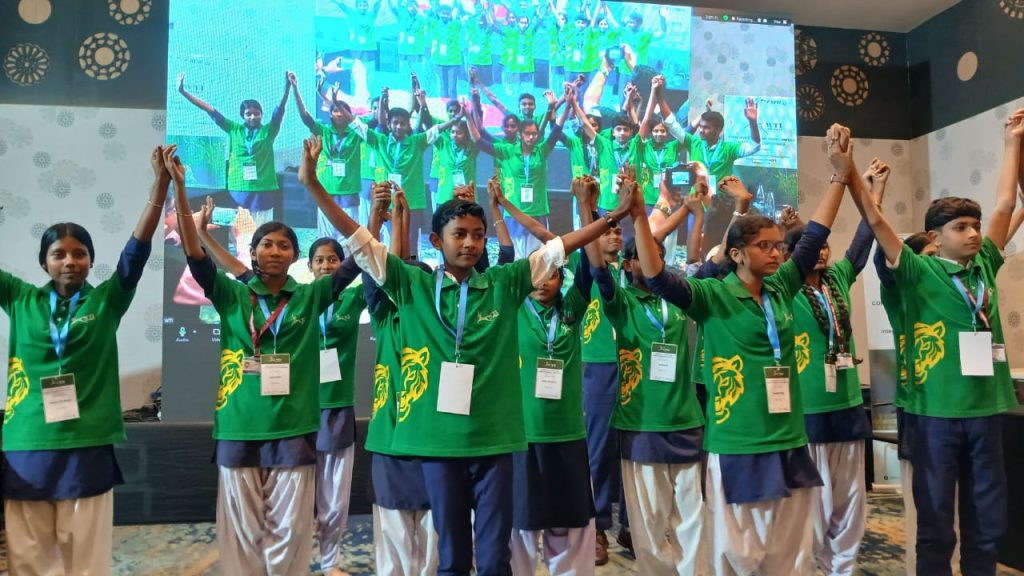
Cultural performances and storytelling by young Tiger Scouts | Photo by Team WTI
Dr. Rahul Kaul, Director, CCS-India, underscored the cultural significance of coexistence, noting that it fosters mutual tolerance, a core ethos of Indian culture and pride. This enduring value continues to play a vital role in sustaining India’s rich wildlife heritage.
Mr. Amitava Roy, Honorary General Secretary, Lokamata Rani Rashmoni Mission (LRRM), emphasised the significance of the event, stating that it is the first of its kind gathering, bringing together community representatives from both India and Bangladesh alongside experts and forest officials. The exchange of ideas at this meeting will be instrumental in shaping future conservation strategies for all stakeholders.
Dr. Abhishek Ghosal, Division Head, Human-Wildlife Conflict Mitigation, WTI, stated that the Sundarbans Biosphere Reserve, spanning India and Bangladesh, is home to the iconic Bengal Tiger. However, increasing human-wildlife conflicts threaten both conservation efforts and local livelihoods. By fostering dialogue, sharing best practices, and engaging local communities, this meeting aims to pave the way for a sustainable and peaceful coexistence strategy in this ecologically significant region.