World Elephant Day 2025: Celebrating Coexistence and Corridors
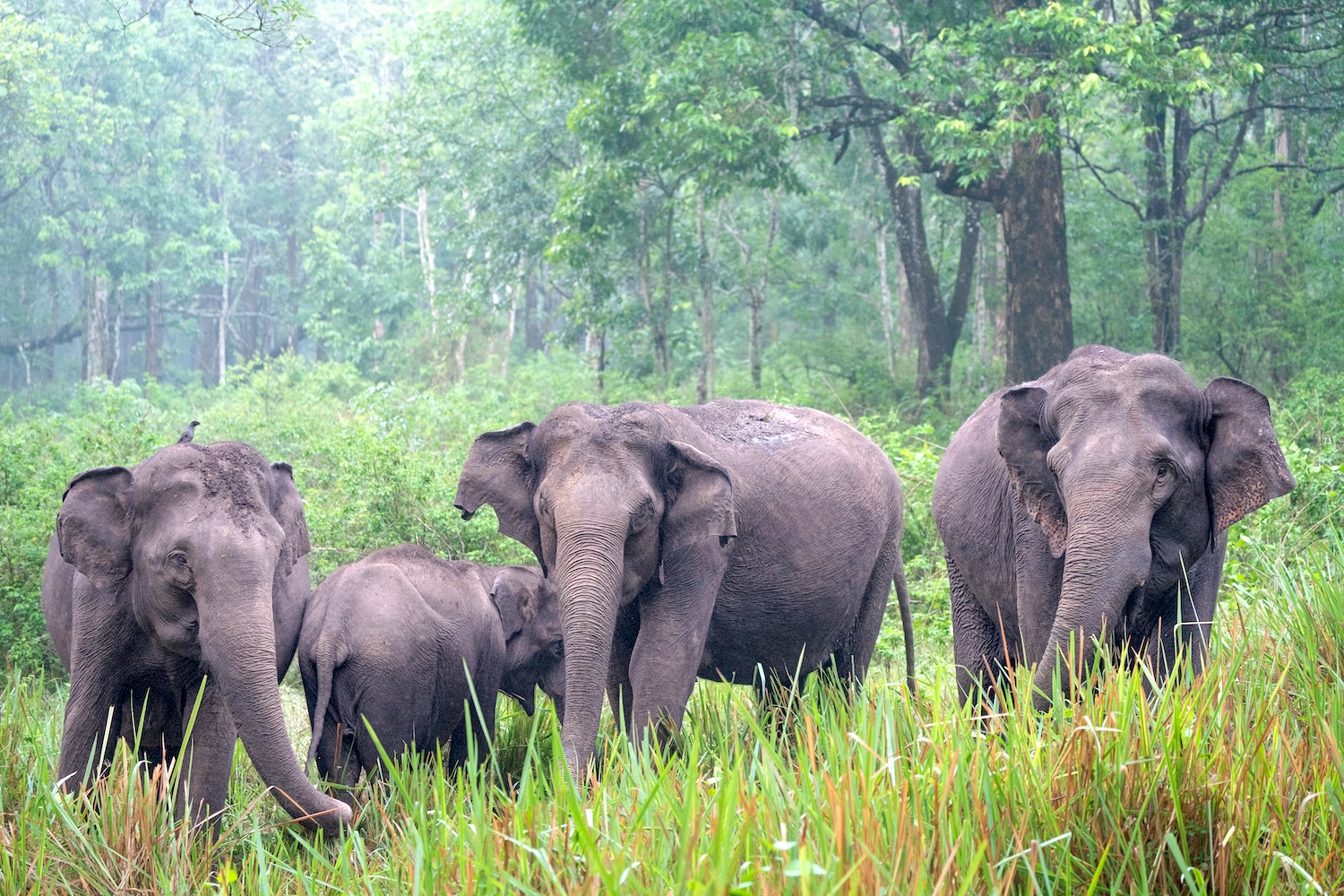
On 12th August 2025, India joined the world in celebrating World Elephant Day, a reminder of the extraordinary role elephants play in our ecosystems and the urgent need to protect them. Home to nearly 60% of the world’s Asian elephants, India shelters around 29,000 individuals—a responsibility and privilege that few countries share.
To secure their future, the Wildlife Trust of India (WTI), with the Government of India, conservation partners, and communities, has long been working to protect 101 identified elephant corridors across 11 states. This year, with the generous support of Rohini Nilekani Philanthropies, WTI and its Green Corridor Champion (GCC) partners marked the day with 19 events spread across 6 states, covering 27 corridors and reaching over 2,700 people—from children in village schools to frontline staff patrolling forests.
Riding for Elephants in Arunachal Pradesh
At dawn in Pakke Tiger Reserve, the rumble of motorbikes echoed through Seijosa. Led by its Green Corridor Champion (GCC), Mr Anil Tallang, over a hundred forest staff, youth, and community members rode together, carrying messages of coexistence. A five-kilometre rally, flagged off by Mr. Dhawan Kumar Rawat, IFS, Divisional Forest Officer, aimed to raise awareness about the importance of the Kameng Elephant Reserve, as part of the ongoing efforts to reduce conflict. A tableau by the Forest Department reminded everyone that elephants are not just icons of the wild but also neighbours whose space must be respected.
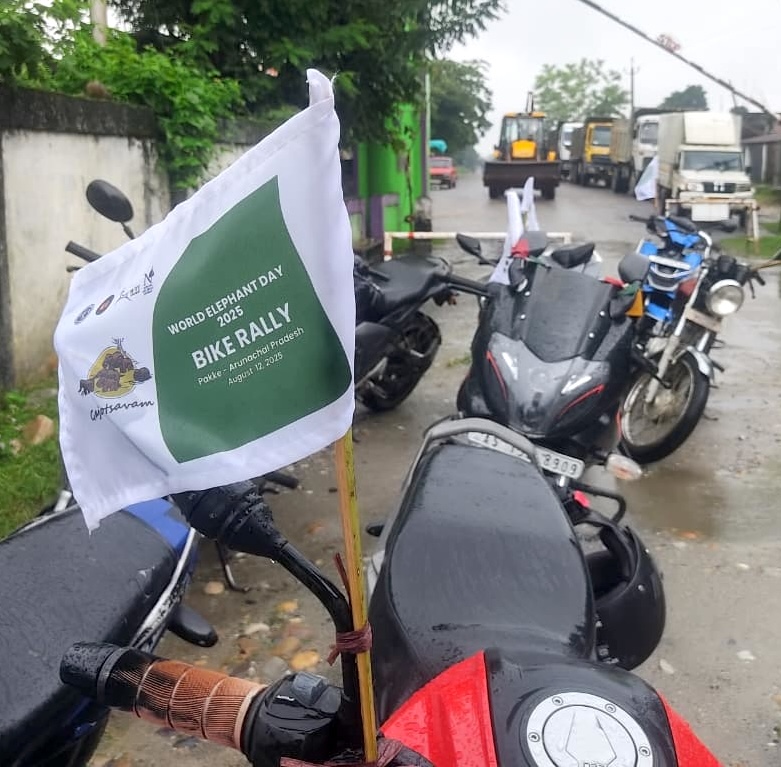
The rains did not deter participants from joining in the bike rally to celebrate World Elephant Day | Photo by Team WTI
Assam’s Young Voices for Elephants
In the classrooms of Tinsukia, students leaned forward as conservationists and community leaders spoke about the majesty of elephants and the ecologically fragile corridors they depend on. Wildlife writer Sumit Das spoke of coexistence, while local social leader, Mr Baikuntha Sonowal, shared experiences of living alongside elephants. For the ninety young participants, this was not just a lecture—it was an invitation to carry forward traditions of respect and harmony.
Bengal’s Call for Coexistence
In northern West Bengal, where tea gardens, forests, and human settlements meet, elephants often pass through narrow corridors shared with people. To mark World Elephant Day, WTI and its partners turned these landscapes into spaces for awareness and celebration. In Jalpaiguri, a motorbike rally organised by our GCC partner SPOAR (Society for Protecting Ophiofauna & Animal Rights) covered nearly 100 kilometres across five elephant corridors, drawing villagers to the roadside as the convoy passed. Along the way, street plays on Human–Elephant Conflict (HEC) mitigation brought messages of coexistence to more than 1,000 people, blending conservation with community theatre. Meanwhile, in Kurseong, a smaller rally with the Forest Department and local organisations reached about 150 residents, distributing leaflets and sharing practical tips on elephant safety in everyday life.
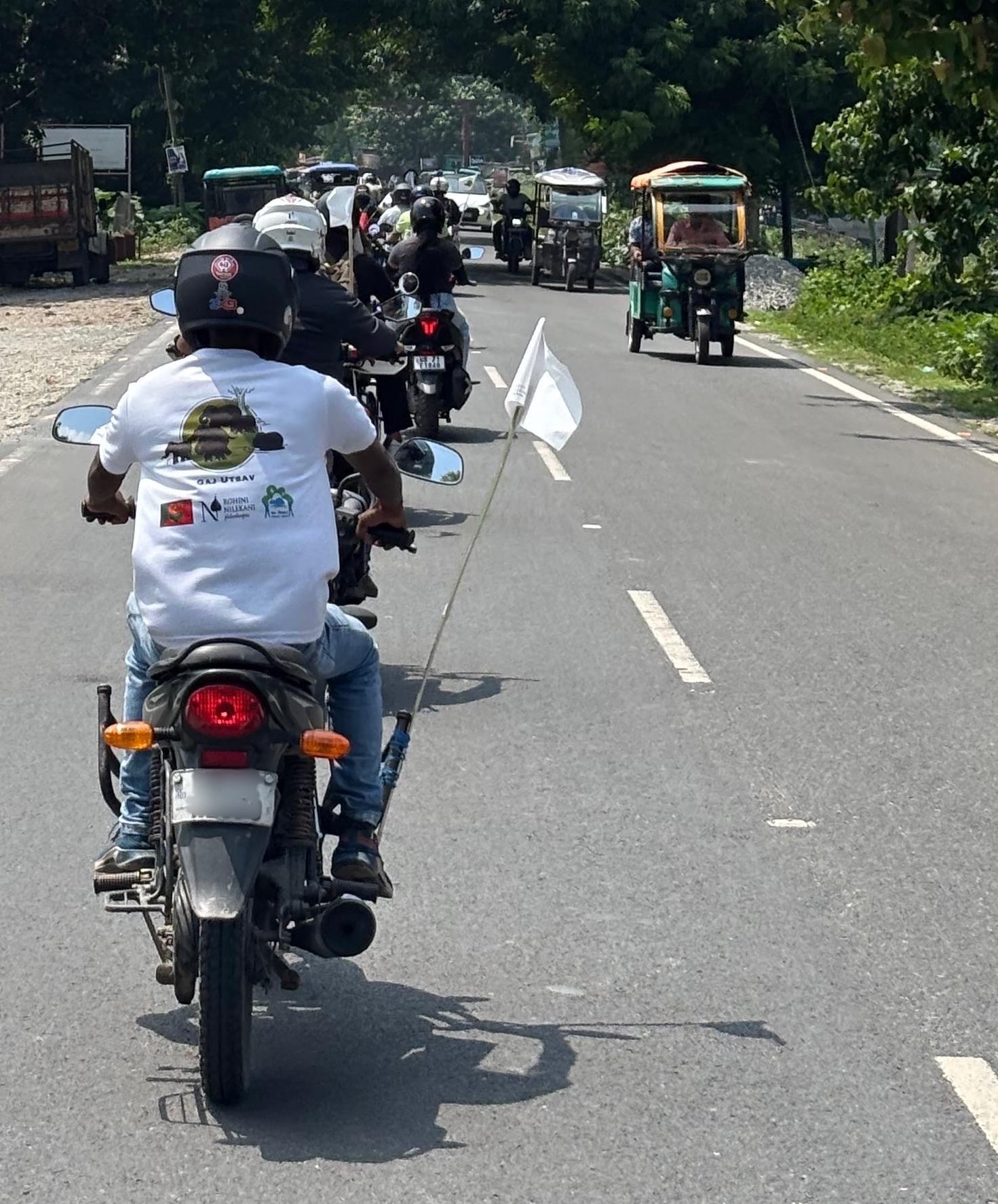
Another bike rally was organised in North Bengal by WTI’s Green Corridor Champion, NEWS | Photo by Team WTI
The largest gathering was in Siliguri, where over 300 participants—including forest staff, police, students, and conservationists—came together. A panel discussion on “Coexisting with Giants” highlighted different perspectives on conservation, while a documentary by National Geographic Explorer Sangita Iyer left the audience deeply moved. More than 100 frontline forest staff were also honoured for their tireless work in elephant rescue, underscoring that coexistence is built on courage, empathy, and collaboration.
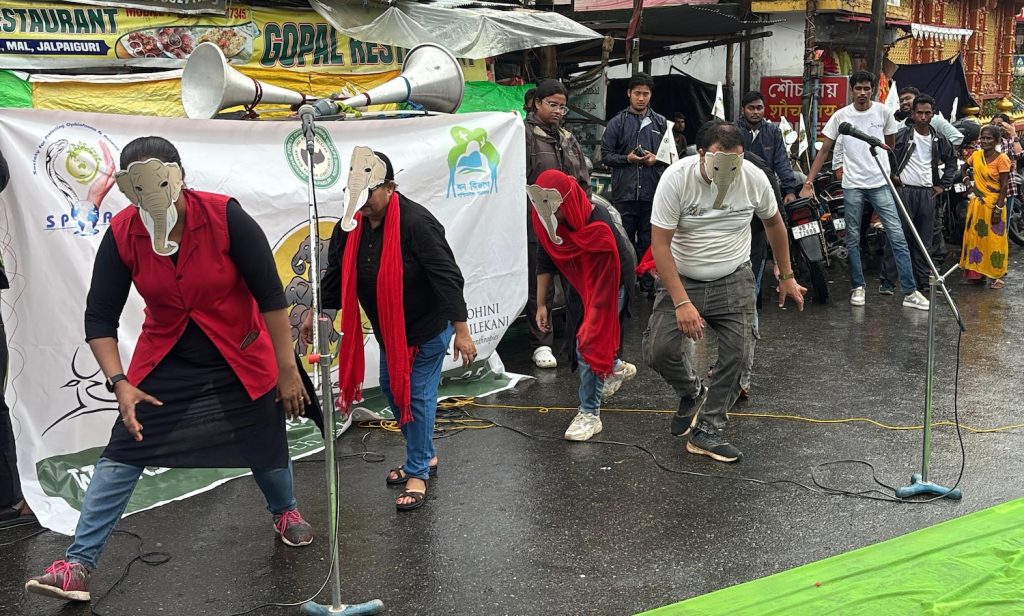
Street play to raise awareness about elephants organised by SPOAR and the Gorumara Wildlife Division | Photo by Team WTI
Rallying in Uttarakhand’s Corridors
In Corbett Tiger Reserve, over 50 people, including villagers, forest staff, and members of local development committees, joined hands for a motorbike rally through the Fatehpur–Gadgadia corridor, organised by our GCC partner, Corbett Gram Vikas Samiti. Meanwhile, in Rajaji Tiger Reserve, an event organised by our GCC partner MAEE engaged children in painting elephants, making masks, and exploring the importance of safe corridors for the majestic animals they occasionally spot near forest edges. Though modest in scale, these activities sparked meaningful conversations about coexistence and the everyday challenges shared by both elephants and local communities.
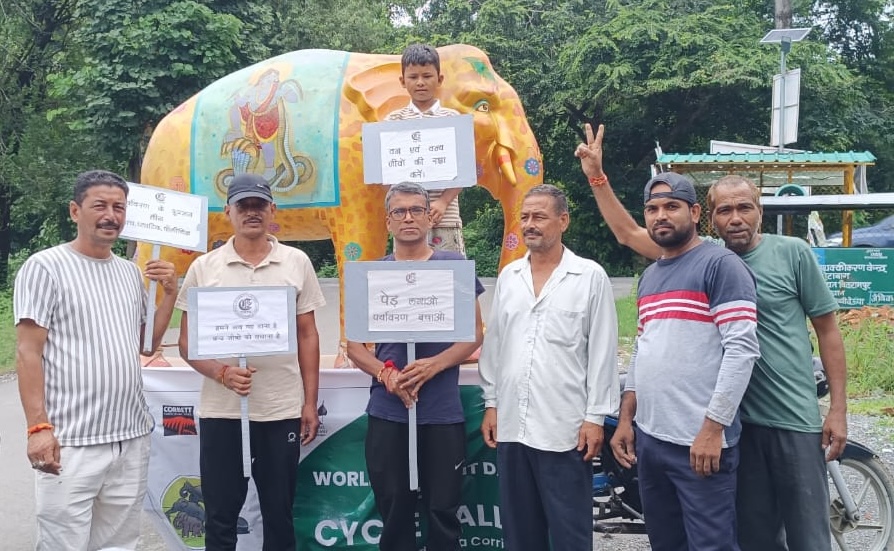
Active participation from students, villagers, committee members, and forest officials in Uttarakhand| Photo by Team WTI
Additionally, WTI and its Green Corridor Champion, Nature’s Buddy, met with the Forest Department, Barkote Range, to discuss elephant movement in Teenpani and Kansaru, with plans to boost corridor protection, raise community awareness, promote coexistence, and share frontline staff stories.
Tamil Nadu’s Pledges for the Future
From Sathyamangalam to the Nilgiris, schools and communities celebrated with colour and conviction. At Bhavanisagar, hundreds of students raised their hands to pledge their commitment to protect elephants and their habitats in a programme organised by our GCC partner, Jungle NGO. In Masinagudi, nestled at the edge of the Mudumalai Tiger Reserve, children listened to stories of elephants and their journeys through corridors, before joining teachers and forest staff in a rally through the village organised by GCC partner, Dr B Ramakrishnan. Each gathering, whether of twenty or two hundred, carried the same essence: elephants are part of our shared heritage, and their survival depends on our choices.
A sensitisation programme was organised by GCC partner, WAR, near the Srivilliputhur–Saptur elephant corridor, which included an elephant mask-making workshop and a drawing competition at Ramco Institute of Technology and the Government Primary School, Rajapalayam, engaging around 100 participants.
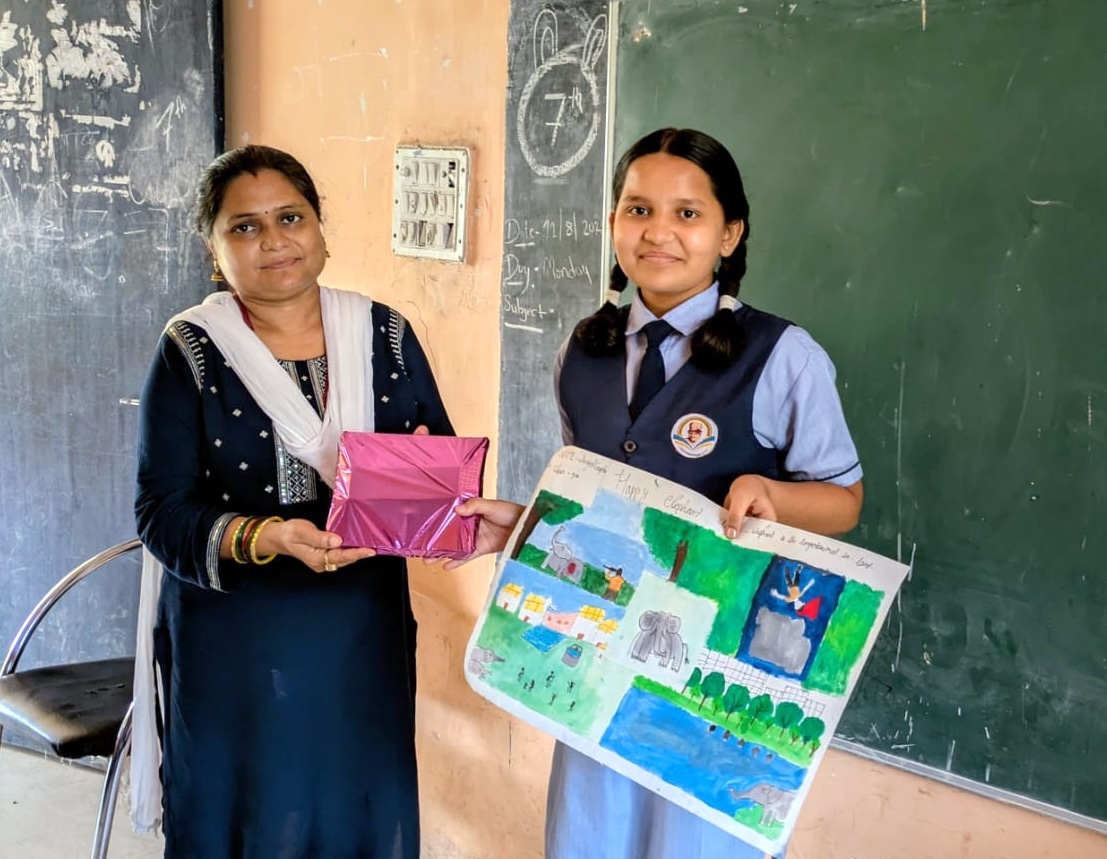
Students participated in drawing competitions to celebrate India’s gentle giants | Photo by Team WTI
Voices from Central and Eastern India
Further east, in Surguja, Chhattisgarh, schoolchildren sketched elephants, participated in quiz competitions, and brainstormed ideas for living more peacefully with these giants. In Dalma Wildlife Sanctuary, Jharkhand, senior forest officials, researchers, NGOs, and students came together for a one-day event on elephant conservation. Books on Dalma’s rich birdlife were released, and WTI’s team (Mr Shuvayu Modak) shared ongoing efforts under the Right of Passage programme. These sessions reinforced that conservation is both a grassroots effort and a science-driven mission.
A Collective Impact
Across India, the day resonated with a single truth: elephants cannot survive without secure corridors, and people cannot thrive without coexistence. From motorbike rallies thundering through forest-edge towns to quiet moments of children pledging in classrooms, World Elephant Day 2025 brought together communities, scientists, forest staff, and supporters in a shared commitment to give elephants their Right of Passage. Together, we are shaping a future where the giants of our forests continue to roam freely—reminders of balance, resilience, and the bonds between people and nature.