WTI and the Indian Coast Guard organise workshop on satellite tagging of whale sharks
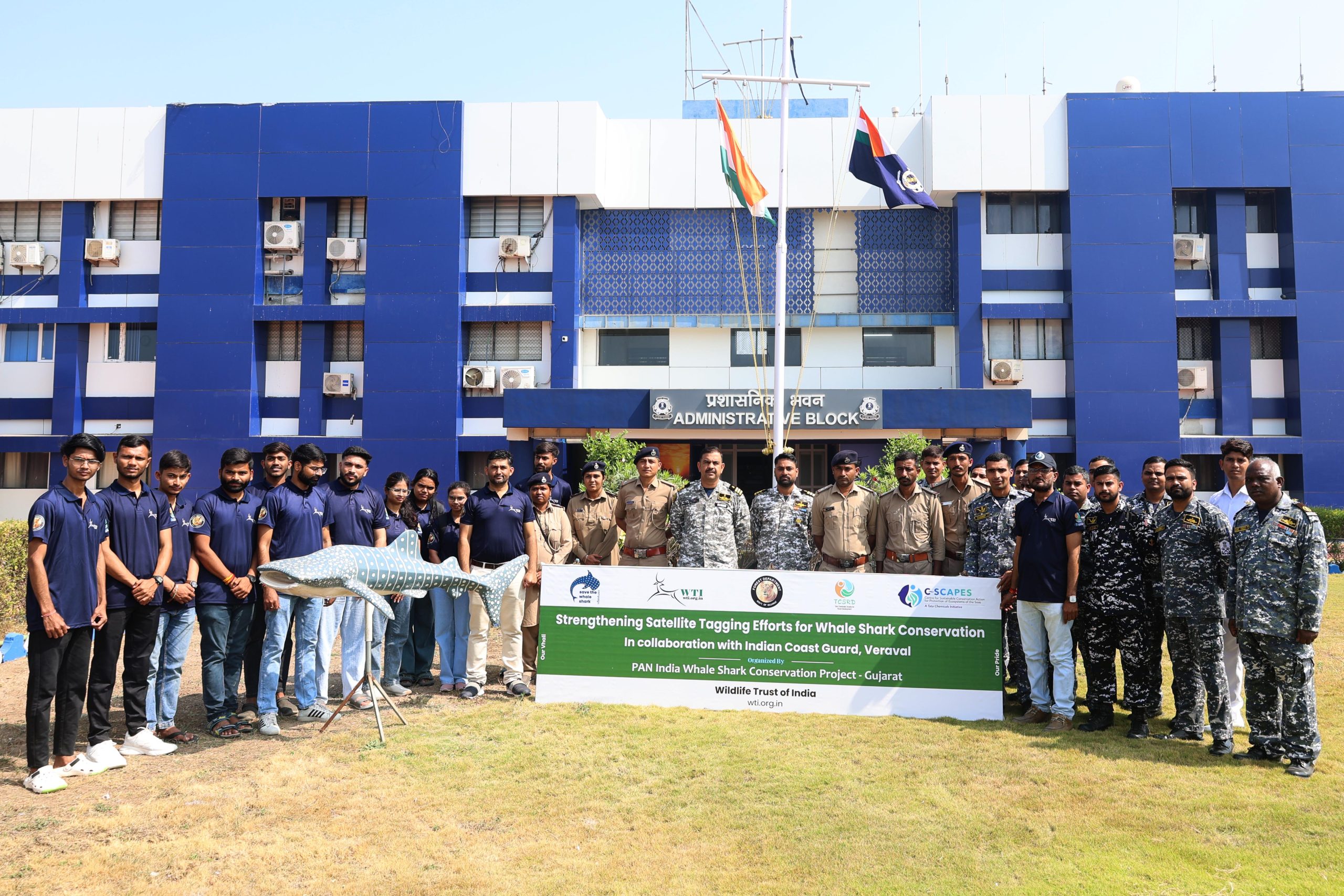
Veraval, 6th February 2026: Wildlife Trust of India, in collaboration with the Indian Coast Guard Station (ICGS), Veraval, organised a workshop on satellite tagging of whale sharks – the largest fish in the ocean. The event was envisioned as a platform to share experiences, build a common understanding of challenges, and identify practical solutions for improving satellite tag deployment through inter-agency cooperation.
46 participants, including officers and duty staff from ICGS Veraval, the Range Forest team of Veraval, research scholars from the College of Fisheries Science and members of WTI were part of the event. This diverse participation included representatives from enforcement, management, research, and field personnel – an essential mix for addressing the complexities of marine megafauna conservation, including species such as whale sharks.
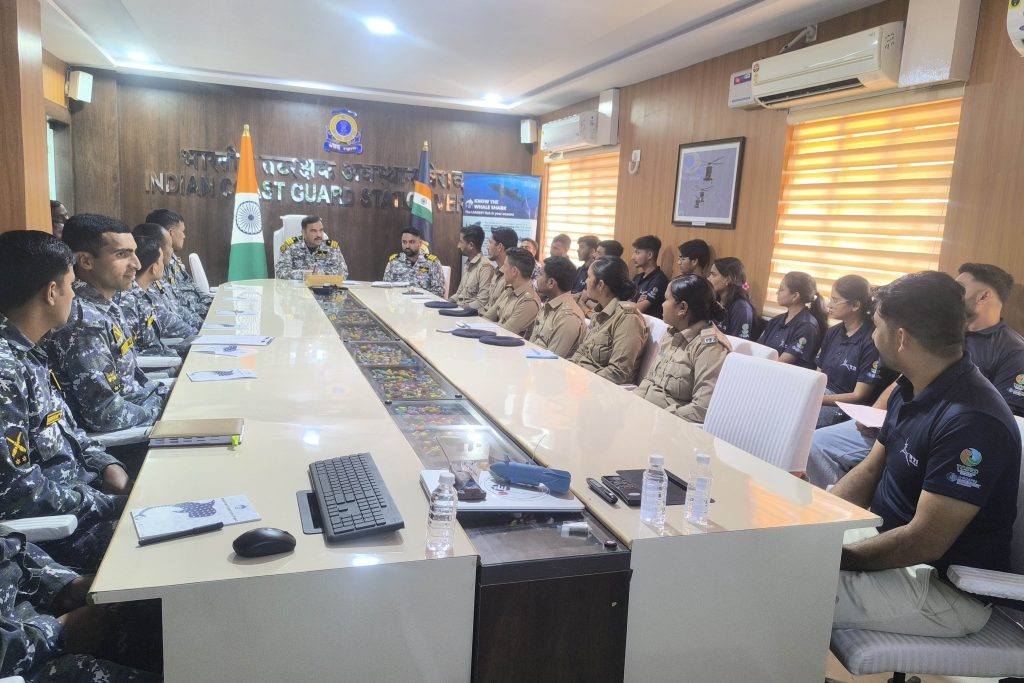
Workshop on satellite tagging of whale sharks at Indian Coast Guard Station (ICGS), Veraval | Photograph by Alfez Bhatti
(JG) Sanjay Kumar, Commanding Officer, ICGS Veraval, highlighted the Indian Coast Guard’s mandate and proactive role in safeguarding marine life. He emphasised the importance of coordinated efforts between conservation organisations, forest departments, and maritime enforcement agencies to ensure effective protection of threatened marine species like the whale shark. He stated that “the Indian Coast Guard would strengthen its information network with the Forest Department’s coastal range teams to help detect and respond to any illegal wildlife-related activities offshore, alongside its core responsibilities of maritime safety and security, thereby reinforcing enforcement and conservation efforts simultaneously.”
Leading the technical and contextual discussion, Mr. Farukhkha Bloch, Project Manager and Head of the PAN India Whale Shark Project at WTI, delivered a comprehensive presentation on whale shark conservation in India. Tracing the journey from historical exploitation to landmark conservation milestones, he provided insights into key strategies, scientific interventions, and community-based approaches that have shaped the success of the whale shark conservation programme. He placed particular emphasis on satellite tagging – its objectives, methodologies, challenges and the crucial data it can generate for understanding whale shark movements and habitat use across the Arabian Sea.
Mr. Bloch explained that “tagging of whale sharks involves a unique set of operational challenges that the team has encountered in past tagging attempts. These included unpredictable whale shark appearances, limited opportunities due to shifts in fishing grounds, a change observed in fishing trends among, rough sea conditions, equipment constraints, and the need for rapid offshore response”.
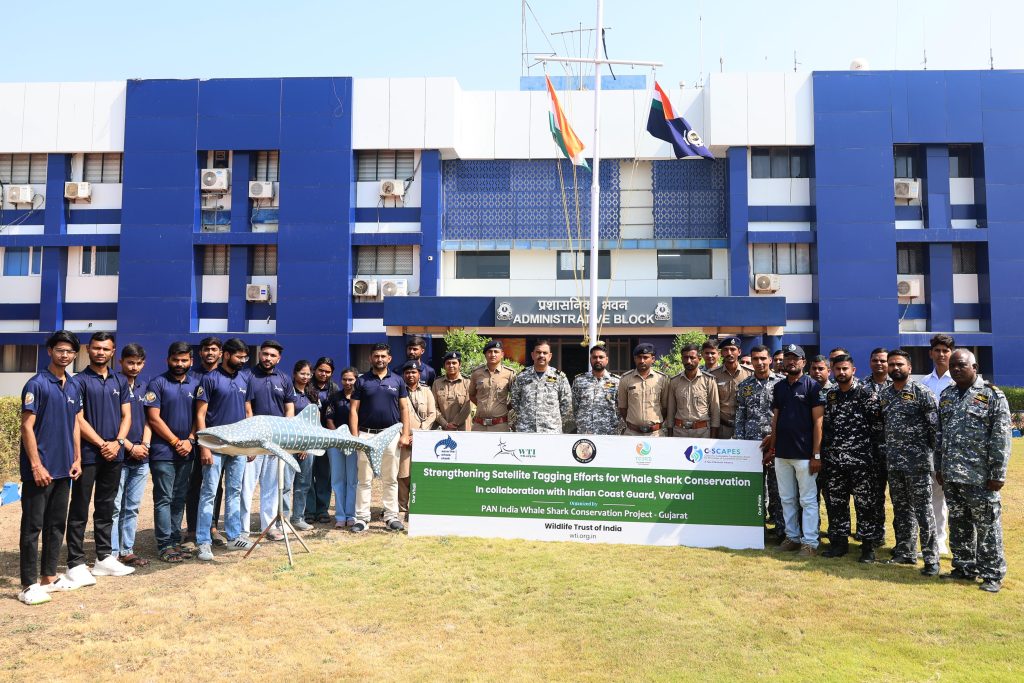
Participants at the workshop organised at the Indian Coast Guard Station (ICGS), Veraval | Photograph by Alfez Bhatti
Building on this shared understanding, the workshop encouraged participants to collectively explore ways to strengthen satellite tagging efforts along the Gujarat coast. Officers from ICGS Veraval, Forest Department staff, and fisheries research scholars actively contributed their perspectives, drawing from their field experiences and institutional strengths. Discussions focused on improving real-time information sharing, enhancing coordination during offshore rescue operations, and developing integrated field operations that could facilitate timely tag deployment without compromising animal health or the operational safety of the rescue teams offshore.
WTI, in partnership with the Gujarat Forest Department, pioneered satellite tagging of whale sharks in India in 2011, under its Pan-India Whale Shark Conservation Project. Since then, efforts have aimed at generating scientific evidence on whale shark biology and spatial ecology to inform long-term conservation strategies. However, conducting satellite tagging in the open seas of the Gujarat coast presents significant logistical, technical, and operational challenges. Over the years, despite persistent efforts, only 11 satellite transmitters have been successfully deployed on whale sharks off the Gujarat coast.