WTI and WCCB host workshop on combating cyber wildlife crime in Delhi
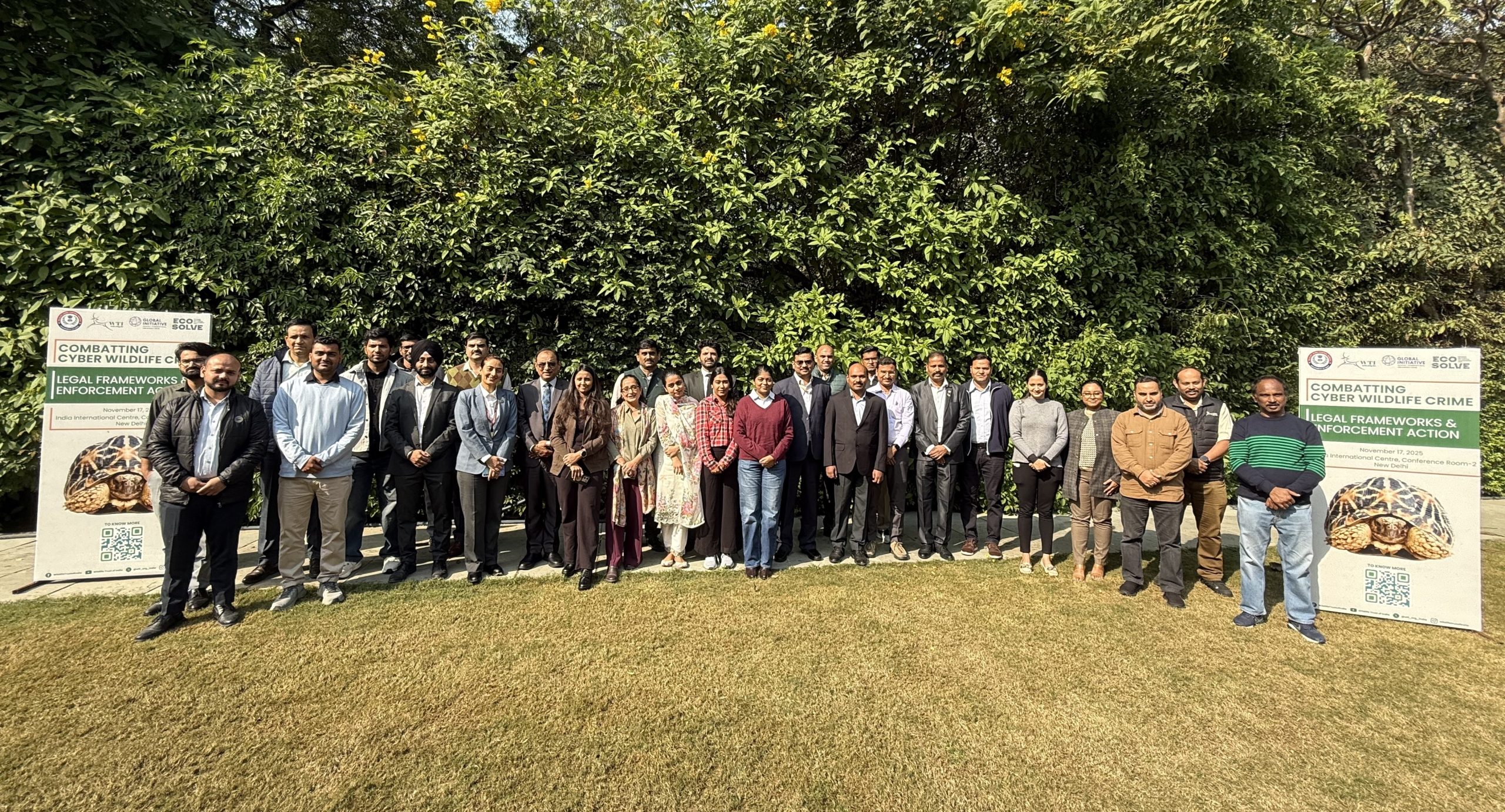
New Delhi, 18 November 2025: The Wildlife Trust of India (WTI) and the Wildlife Crime Control Bureau (WCCB), with support from the Global Initiative, jointly organised a workshop on “Combatting Cyber Wildlife Crime: Legal Frameworks and Enforcement Action” at the India International Centre, New Delhi, on 17 November 2025.
The event brought together a broad spectrum of law enforcement agencies and partner civil society organisations to discuss the nature and scale of wildlife cybercrime in India, while also drawing upon international experiences and best practices. The workshop further highlighted key provisions of the Wild Life (Protection) Amendment Act, 2022, which extends protection to all CITES-listed exotic species by placing them under Schedule IV of the Act.
Participants included representatives from the Central Industrial Security Force (CISF), Directorate of Revenue Intelligence (DRI), Sashastra Seema Bal (SSB), Wildlife Crime Control Bureau (WCCB), South Asia Wildlife Enforcement Network (SAWEN), Delhi Forest Department, Customs, and Delhi International Airport Limited (DIAL) Cargo. Key wildlife organisations included the International Big Cat Alliance (IBCA), Global Tiger Forum (GTF), and World Wildlife Fund (WWF).
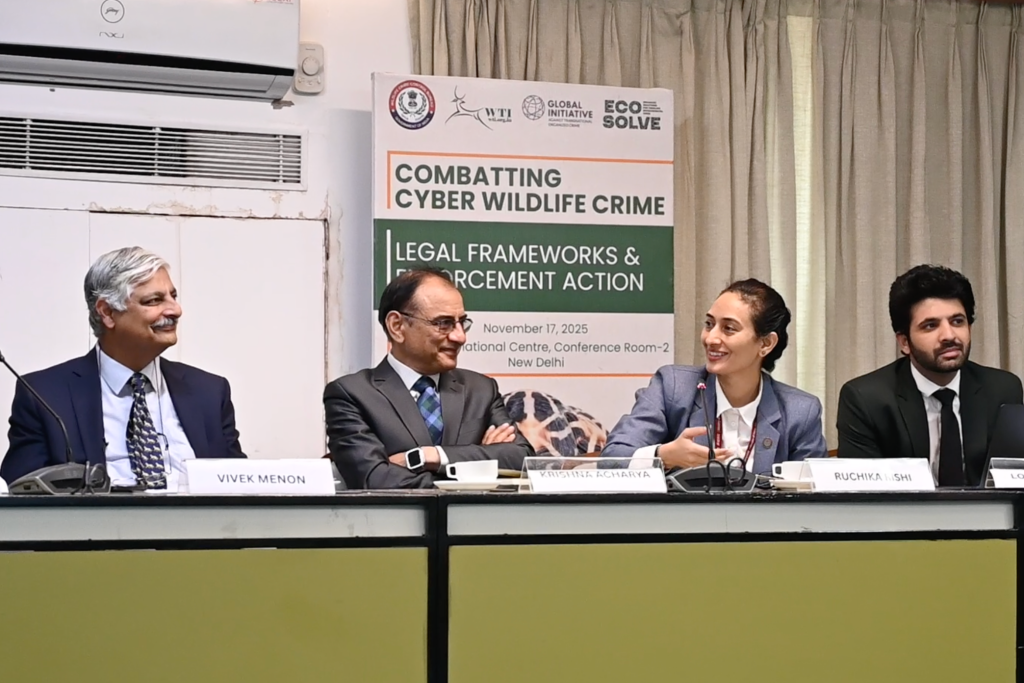
From (L-R): Vivek Menon, Founder Trustee & Executive Director of WTI, Krishna Prasad Acharya, Secretary General of SAWEN, Ruchika Rishi, IPS, Additional Director, WCCB and Lovish Sharma, Advocate, Delhi High Court | Photo by Adil Arif/WTI
The workshop featured an interactive session in which participants evaluated real-world case studies covering trafficking, smuggling, illegal hunting, and crimes requiring wildlife forensics. The discussions highlighted the importance of evidence-based investigations, including species identification and forensic analysis of wildlife products, alongside comprehensive intelligence gathering and robust inter-agency cooperation.
The inaugural session was led by Vivek Menon, Founder Trustee & Executive Director of WTI, and Chair of the IUCN Species Survival Commission. Emphasising the need for unified action, he stated that the fight against emerging wildlife crime demands that agencies such as the police, forest, and revenue services work together with shared purpose and coordinated action.
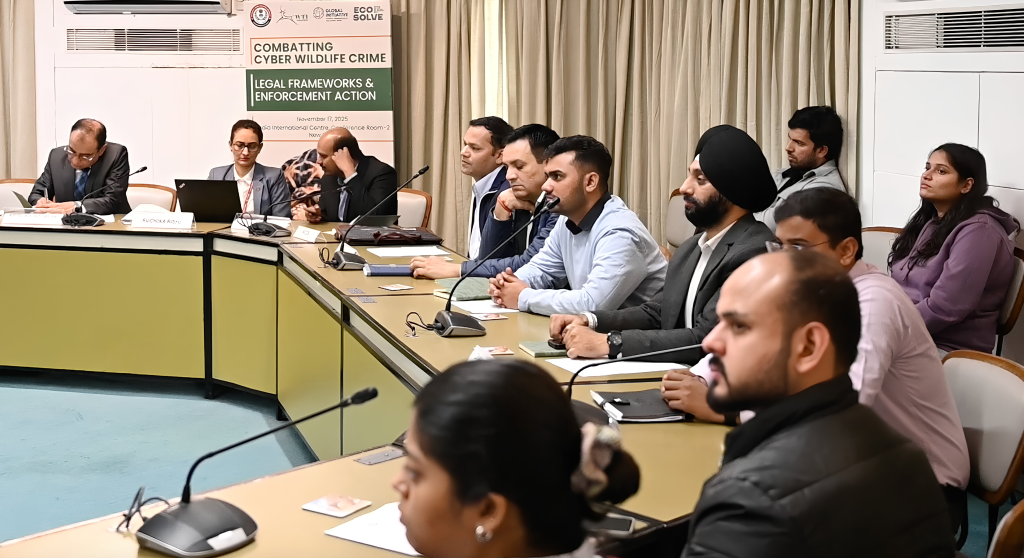
Jose Louies, CEO, Wildlife Trust of India, recounted one of India’s earliest wildlife cybercrime cases from 2008 and stressed how digital footprints often cross borders. Calling for timely intervention from social media platforms to curb illegal wildlife content, he emphasised that cyberspace has become a major enabler of wildlife crime, and without responsible cooperation from social media platforms, our efforts to track and stop these offences remain severely hindered.
Mrs Pradipty Bharadwaj, Legal and cyber analyst from Langland Conservation presented on global case studies on collection and analysis of open source intelligence.