
WTI celebrates World Environment Day 2025 across its project landscapes
WTI celebrated World Environment Day 2025 across its project landscape, focusing on this year’s theme of minimising plastic pollution. The team organised activities ranging from a bicycle rally to plantation drives and awareness events in schools and local neighbourhoods.
In Sundarbans, West Bengal, saplings of indigenous fruit plants, including mango, areca, hog plum and sapodilla were distributed among the locals, JFMC members, as well as our Tiger Scouts (student volunteers) and Primary Response Team (PRT) members. The Tiger Scouts team further organised cultural events in two schools, spreading awareness about wildlife and nature conservation through song, drama and mime acts.
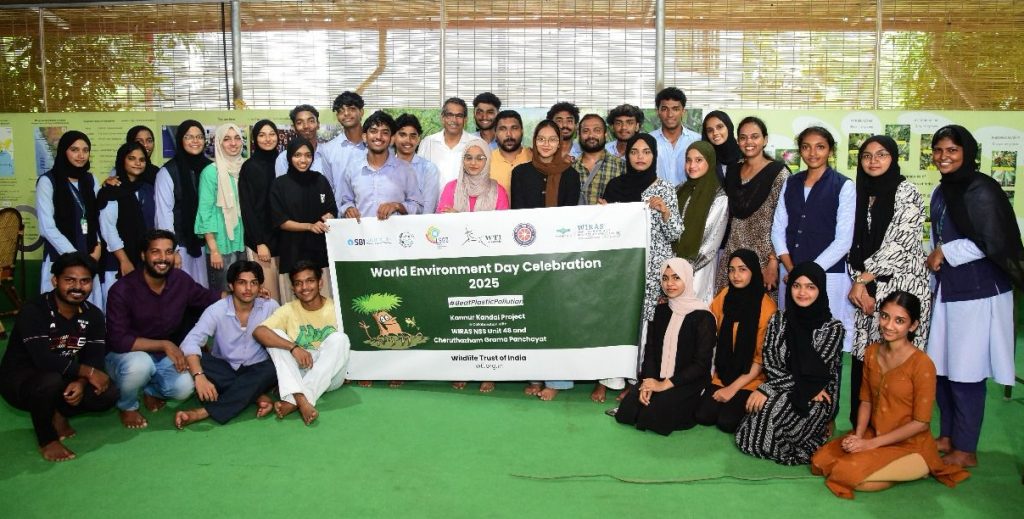
World Environment Day 2025 celebration in Kannur, Kerala
In Pakke, our team at the Centre for Bear Rehabilitation and Conservation (CBRC) led a 15-member bicycle rally that covered 107 kilometres, spreading awareness around conservation along the way. WTI biologist, Subhashish Arnadhara, who led the event, said, “On today’s highway rally, we’re highlighting how cycling offers a straightforward solution to urban challenges. By ditching cars for bikes, city dwellers can beat congestion, improve their health, and reduce pollution. As a cyclist, I see daily how my choice makes commutes smoother for everyone, proving that two wheels truly make a difference.”
In Uttar Pradesh, our human-wildlife conflict mitigation team organised a community-led environmental awareness event in Anwar Ganj Village, Pilibhit. Representatives from the local forest department also joined the locals, members of the Village Development Committee (VDC) and WTI Primary Response Team (PRT) members joined the celebration that commenced with screening of films like Kinara, Tiger Song and a documentary on Jadav “Molai” Payeng – also known as the Forest Man of India.
The Terai Tiger team, in collaboration with the Forest Department and 22BN SSB, organised a 3-kilometre rally in Baithwaliya village, situated in the Nichlaul Range of Maharajganj district, Uttar Pradesh. The initiative aimed to raise community awareness about the harmful impacts of plastic pollution, the environmental and health risks of littering, the importance of tree planting, and the use of bio-repellent plants for natural crop protection as an alternative to snaring. The rally concluded with the planting of saplings at the local stadium, which serves school students and hosts community sports events.
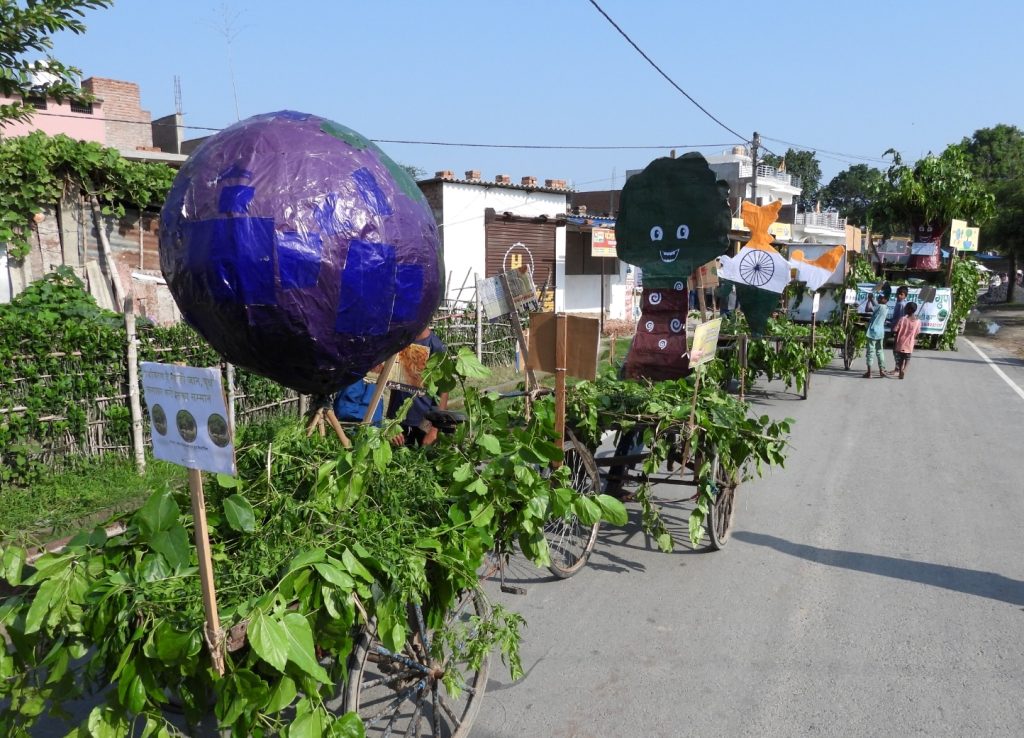
The colourful rally aimed at sensitising the local community about plastic pollution
Down south, in Kerala, our team at the Kannur Kandal Project, in collaboration with the WIRAS College and Cheruthazham Grama Panchayat, led drives to collect plastic waste that regularly gets washed up into the mangrove landscape. About 14 kilograms of plastic were removed from the mangrove habitat. Furthermore, the team collected more than 3,500 propagules of the Rhizophora mucronata species, which would later be used in the restoration of degraded mangrove habitats. About 60 students from two schools took part in the activities.
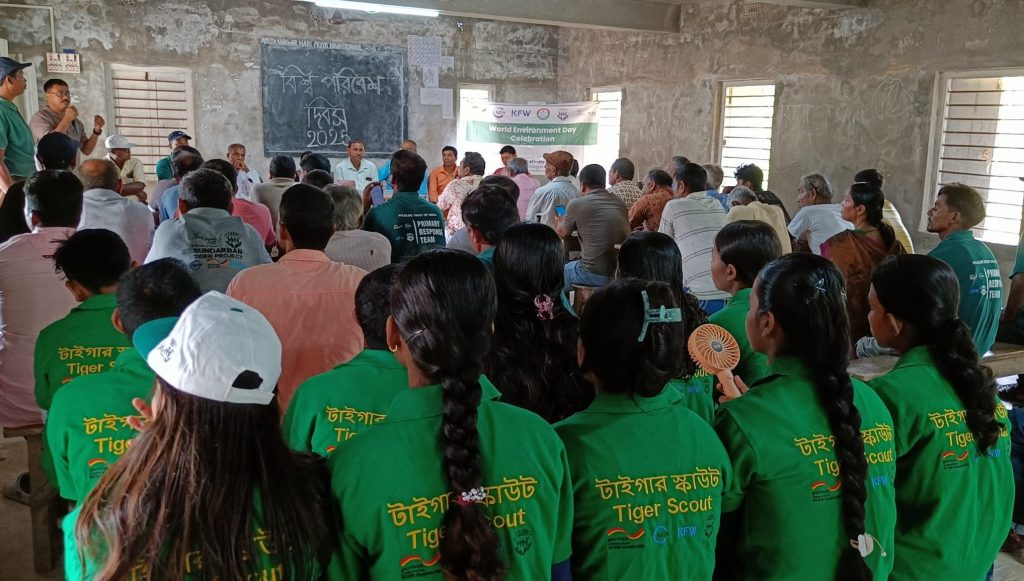
World Environment Day celebration with Tiger Scouts in Sundarbans, West Bengal
Our grassroots partners, including members of Green Corridor Champions (GCC) and Emergency Relief Network (ERN), spread across the country organised a series of plantation and clean-up drives, foot rallies and awareness events to celebrate the day.
Lastly, WTI’s team at the Greater Manas Recovery Project in Assam were part of the inauguration event and ceremonial opening of the Sikhna Jwhwlao National Park, the latest addition to the protected area landscape for the country. In collaboration with the Bodoland Territorial Council (BTC) and the Assam Forest Department, this addition to the protected area ensures our goal of a secure Greater Manas landscape.
At WTI, we aim towards securing our natural heritage in collaboration with communities and governments. Our year-long efforts aim to secure at least 20,000 hectares of critical habitats outside the traditional Protected Area Network, under the big idea of Wild Lands. We also aim to improve the existing functionality of six selected Protected Areas and restore their ecological integrity, under our big idea of Protected Area Recovery.