WTI conducts Wildlife Crime Prevention Training for frontline staff of NNTR
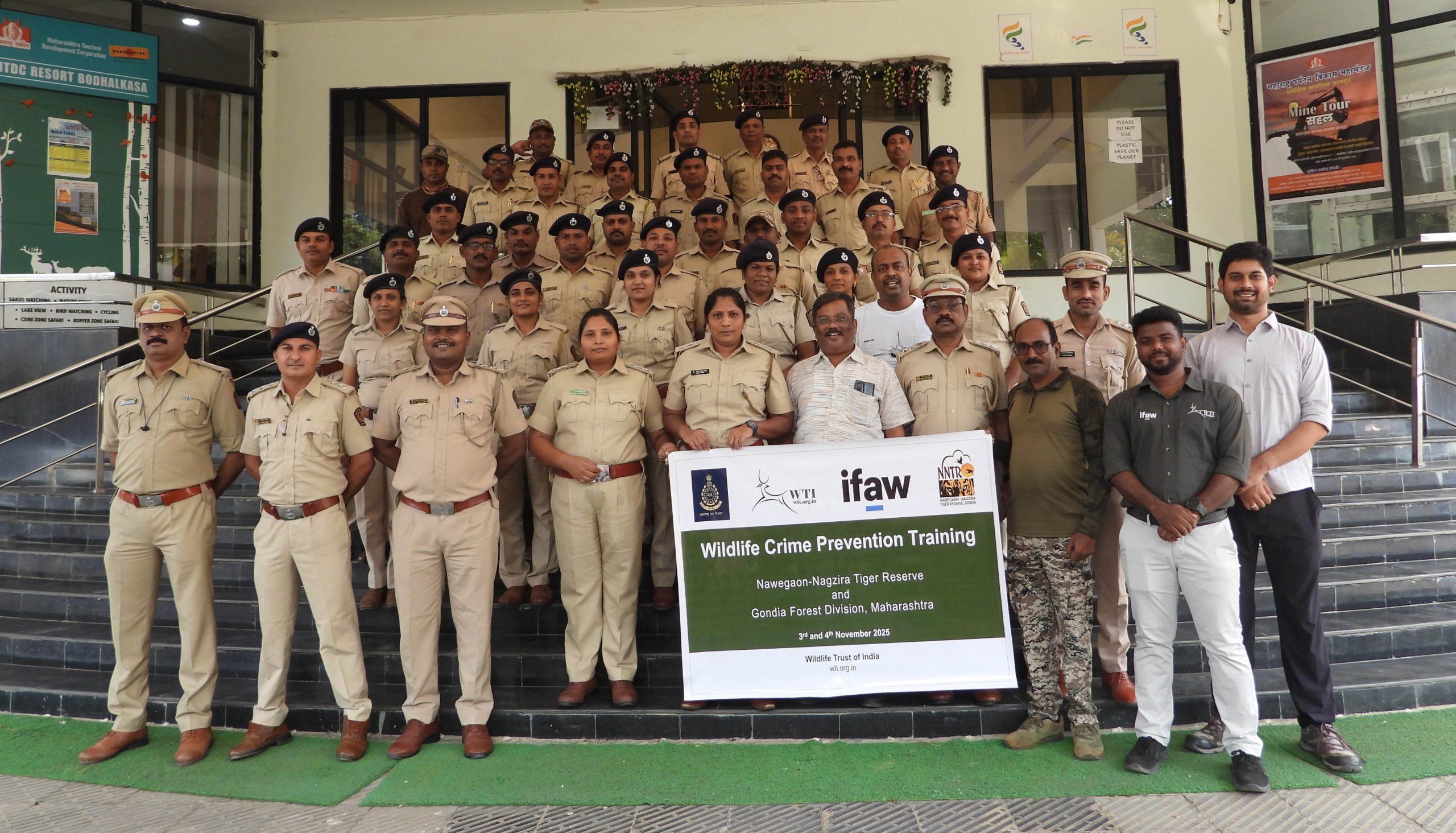
Maharashtra, 6th November 2025: Wildlife Trust of India (WTI), under its Van Rakshak Project, which aims to train, equip, and motivate India’s frontline forest staff, conducted a two-day refresher ‘Wildlife Crime Prevention Training’ for the frontline staff of Nawegaon–Nagzira Tiger Reserve (NNTR) and Gondia Forest Division. The programme hosted from 3rd to 4th November 2025, was organised in collaboration with the Maharashtra Forest Department and supported by the International Fund for Animal Welfare (IFAW).
The initial training sessions for the same divisions were held earlier in September 2023, February 2024, and September 2024. A total of 40 participants, including seven Range Forest Officers (RFOs), four Round Officers (ROs) and 29 Forest Guards attended this refresher session. The training was led by Mr. Milind Pariwakam, Joint Director and Head of WTI’s Training Cell, and Adv. Yash Kumar Soni, Senior Advocate and a legal consultant with WTI.
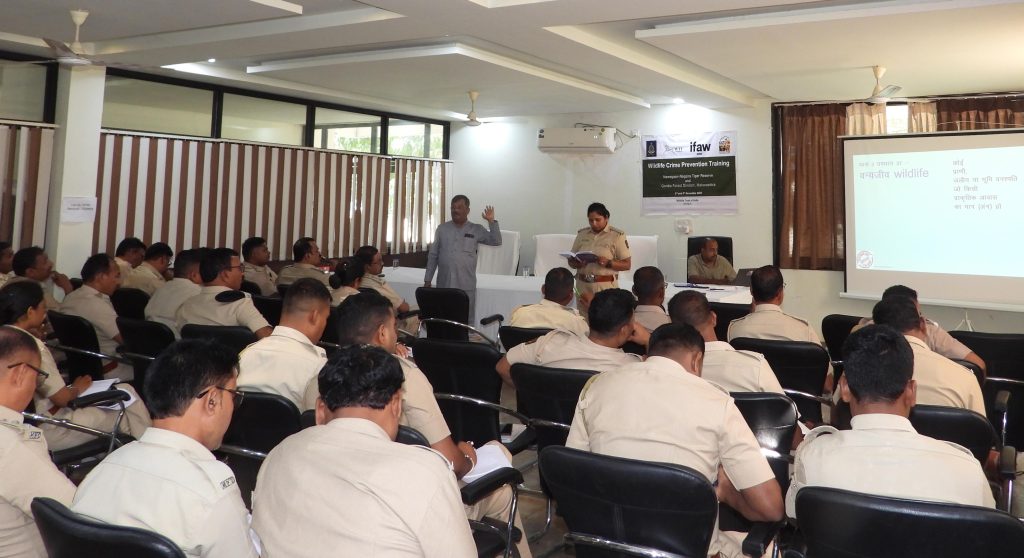
Session on legal framework of wildlife conservation by Adv. Yash Kumar Soni
The training began with an introductory session by Mr. Pariwakam, who also shared WTI’s work across India and outlined the objectives of the training. A pre-test was conducted to assess the participants’ baseline understanding of wildlife laws and related procedures.
Adv. Yash Kumar Soni conducted an in-depth session on the legal framework of wildlife conservation, emphasising on “convictions also being a tool in conservation.” He discussed the stages of wildlife crimes, the Wild Life (Protection) Amendment Act, 2022, and key legal definitions, highlighting the necessity of understanding these concepts clearly. His session also addressed case documentation, wildlife offence reporting, and common errors made during the investigation process. Participants were introduced to relevant sections of the Code of Criminal Procedure (CrPC) and the Indian Evidence Act, emphasising the importance of maintaining detailed case diaries.
Mr. Pariwakam’s session provided an overview of the wildlife crime scenario in India, touching upon both national and global perspectives. He discussed the illegal trade in various species, including both flagship species and lesser-known ones such as plum-headed parakeets, sea fans, tortoises, and mongoose hair. Additionally, he spoke about the superstitions and cultural beliefs associated with wildlife hunting as well as the rise of cyber-enabled wildlife trade and illegal pet trade, particularly after the Covid-19 lockdown. Participants also explored the role of CITES in regulating wildlife trade and gained skills in identifying wildlife derivatives and commonly traded species.
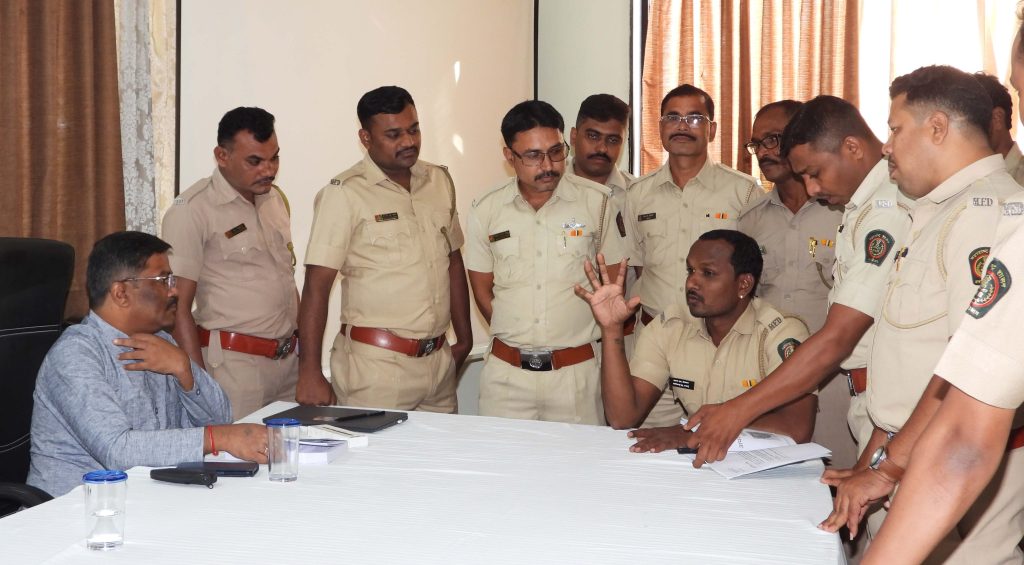
Session on case documentation by Adv. Yash Kumar Soni
Another presentation by Mr. Idris Ahmed, WTI Field officer, elaborated on prevalent poaching and hunting practices in India, with a specific focus on Anti-Snare Walk and Anti-Electrocution Walk initiatives. The training concluded with a post-test and feedback session, followed by the distribution of participation certificates.
“When we compare the average scores of participants from the pre-test and post-test, we see an improvement: the initial average score was 64%, which increased to 78%. This indicates a 14% increase in the knowledge levels of the participants”, explained Mr. Pariwakam.
Reflecting on the training, M.D. Tarone, a participant in the workshop and the local RFO, said, “This training helped us understand the basic mistakes we often make while filing a case, especially the importance of correctly using definitions from the Wild Life (Protection) Amendment Act, 2022.”
M.M. Bawankar, Forest Guard, shared, “ Although I attended this training last year, I still learned many new things. I request WTI to conduct such refresher trainings every year to help us be updated.”
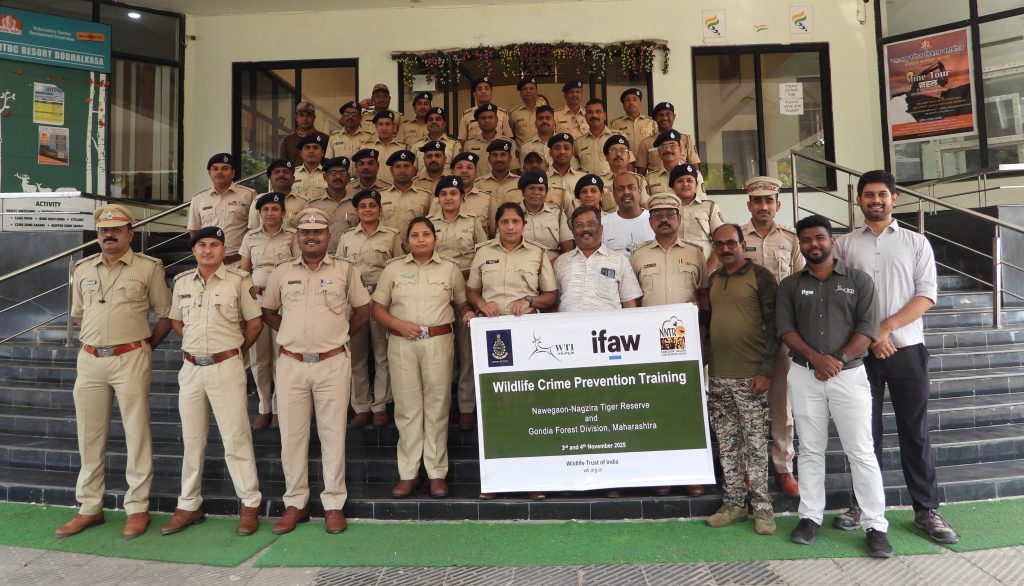
Participants in the workshop
Launched in 2000, WTI’s Van Rakshak Project aims to assist government agencies in developing a strong, well-equipped and motivated force of frontline field staff in PAs. To date, more than 24,000 frontline forest staff have been trained and equipped across more than 150 PAs.