
WTI faciliates workshop on compensatory measures in wildlife crime cases in Kerala
Ernakulam, 15th March 2025: The Wildlife Trust of India, in association with The Kerala Judicial Academy and the Lancaster University, UK along with Defra IWT Challenge Fund conducted a one-day workshop on “Compensatory Measures in Wildlife Crime Cases” on 15.03.2025 held at TAJ Cochin International Airport, Kerala.
Mr. Sujith K.N, Director of the Kerala Judicial Academy, commenced the event with his opening remarks, welcoming the guest speakers, resource persons, and participants. He set the tone for the workshop by emphasising the significance of wildlife law, climate change, and the evolving environmental landscape, highlighting the urgent need for action in the present scenario.
The workshop was inaugurated by Hon’ble Chief Guest Mr. Justice K. Babu, Judge of the High Court of Kerala, during which he and the Member of the Board of Governors, Kerala Judicial Academy addressed the persistent challenge of wildlife crime in India, shedding light on the critical role of legal frameworks and the judiciary in wildlife conservation. He stressed that the judiciary’s objective should not only be to increase conviction rates but also to tackle the issue at the grassroots level, ensuring that justice leads to real-life impact. His address left a lasting impression on the participants.
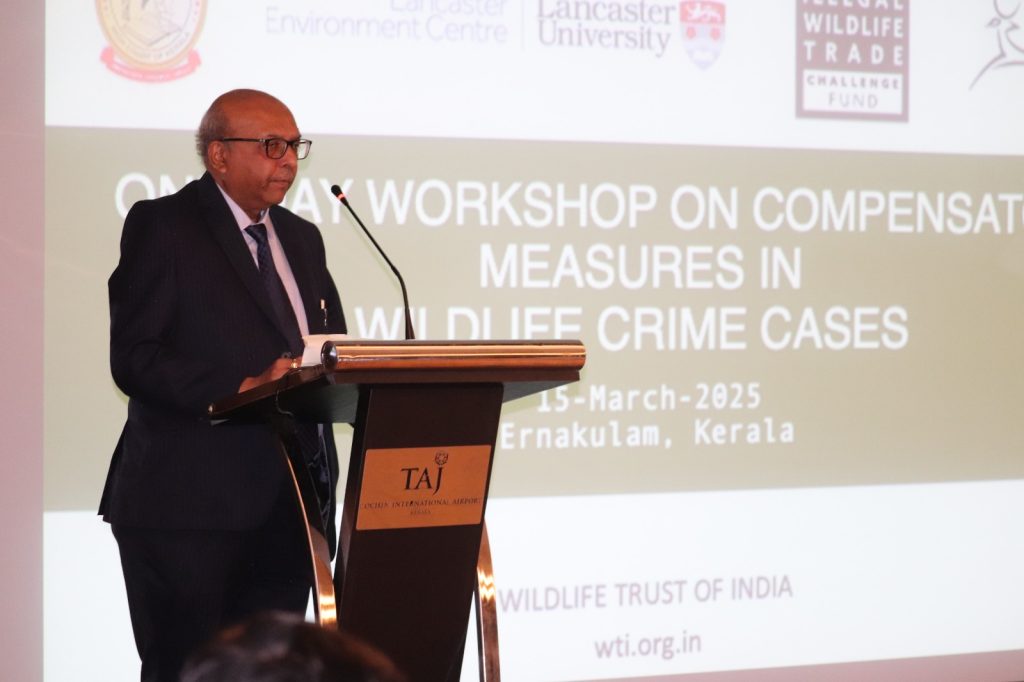
Hon’ble Chief guest speaker Justice Sh. Sunil B Shukre addressing the participants | Photo by Team WTI
Following the inauguration, Mr. Jose Louies, CEO of the Wildlife Trust of India, felicitated the guest speakers and resource persons including Hon’ble Chief Guest Speaker Justice Sh. Sunil B. Shukre (retired Justice of the Bombay High Court and Chairman of the Maharashtra Backward Class Commission), Hon’ble Chief Guest Mr. Justice K. Babu, Mr. Darak Ullah, Mr. Sujith K.N, Mr. Jacob Phelps (Senior Lecturer at Lancaster University, UK), and Mr. Lovish Sharma.
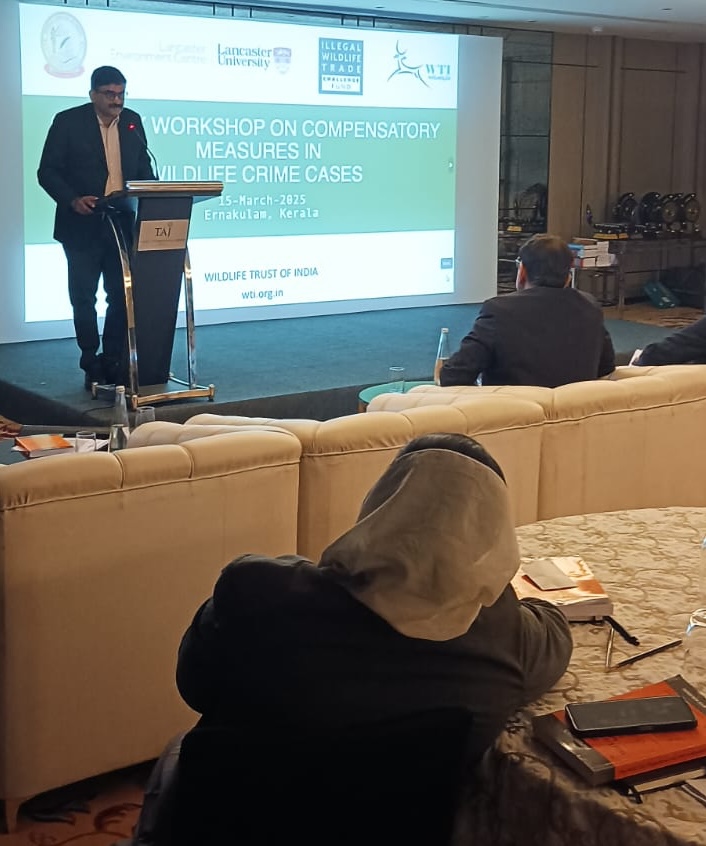
WTI CEO, Jose Louies leading a technical session on the Wildlife Protection Act and overview of wildlife crime | Photo by Team WTI
The first technical session commenced with Mr. Jose Louies providing an introduction to the workshop and an overview of wildlife crimes in India. Following this, Hon’ble Justice Sh. Sunil B. Shukre took the dais to deliver a lecture on “The Judiciary’s Proactive Engagement in Wildlife Conservation.” Mr. Lovish Sharma, Advocate at the High Court of Delhi, conducted a session on the overview of wildlife laws and compensatory measures in wildlife offences. He conducted an interactive session, where participants engaged in differentiating two scenarios of animal deaths on the highway. This discussion facilitated a deeper understanding through real-life examples and active participation.
The next session, led by Dr. Jacob Phelps, Senior Lecturer at Lancaster University, UK, focused on the global scenario and best practices in wildlife conservation. As a conservation social scientist, he provided insights into international wildlife crime, illegal trafficking, and conservation efforts. Shri Justice Darak Ullah, retired District and Sessions Judge, Assam Judicial Service conducted the concluding session which discussed the judicial approach and critically analysed laws on victim compensation in wildlife cases, while also introducing the concept of whistleblowers in wildlife laws.
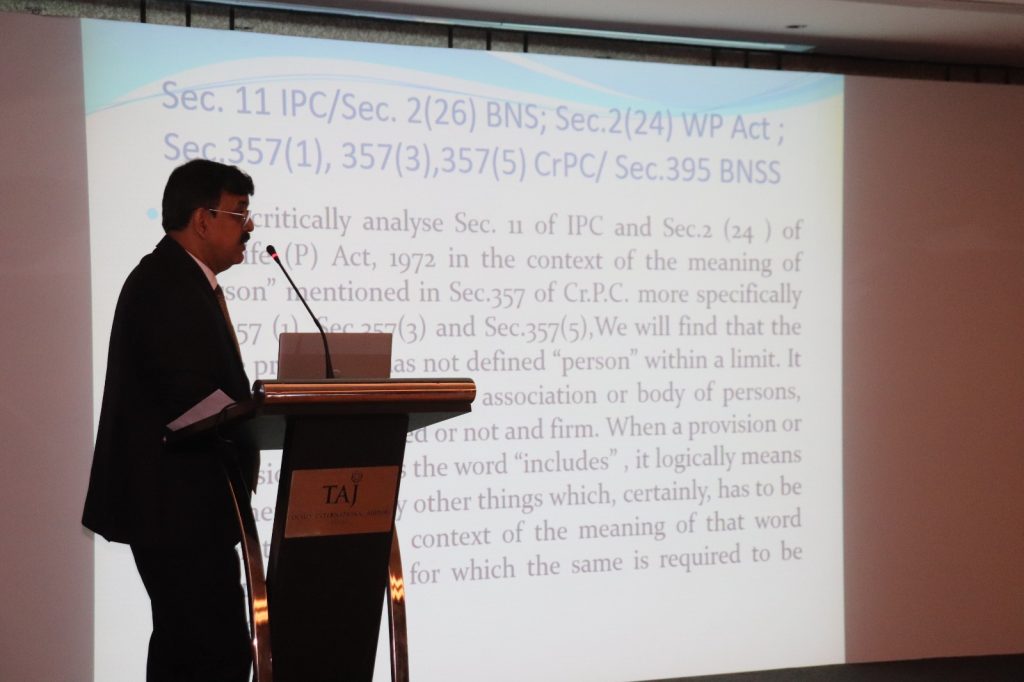
Shri Justice Darak Ullah, retired District and Sessions Judge, Assam Judicial Service conducted the concluding session | Photo by Team WTI
The workshop also covered key aspects of the Wild Life (Protection) Act, 1972, including an analysis of existing laws related to victim compensation in wildlife crime cases. The one-day session witnessed technical discussions and case studies on the overview of wildlife crimes, Indian wildlife laws, compensatory measures in environmental crimes, the legal approach of foreign jurisdictions in wildlife crime cases and critical analysis of the Indian laws pertaining to compensation awards for the loss/injury to wild animals and its habitat on account of wildlife and forest crimes.
Wildlife offences pose significant and cascading threats to biodiversity, ecosystems, and human well-being, yet they often go unnoticed or are underestimated. There’s a growing need for stronger actions to hold offenders accountable, beyond penal actions. As wildlife crimes continue to harm wildlife and its habitat, legal experts and conservationists are urging for a more pragmatic judicial approach to protect and conserve wildlife for future generations.
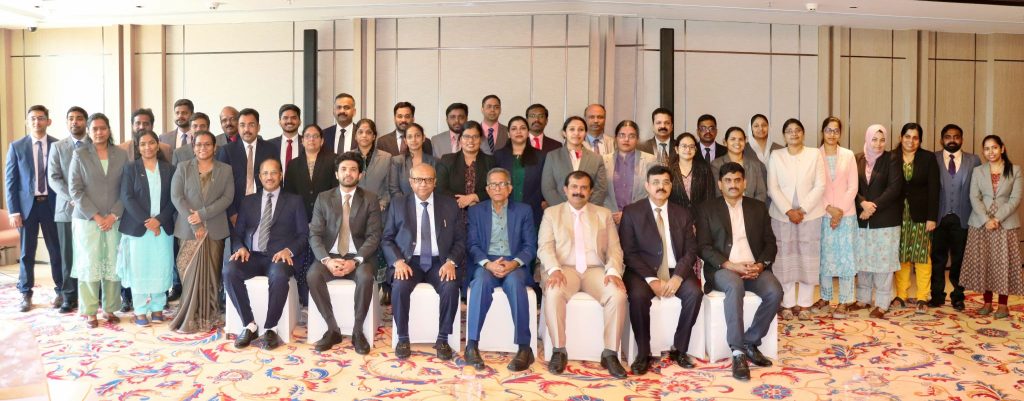
35 magistrates took part in the workshop hosted by WTI in collaboration with the Judicial Academy, Kerala| Photo by Team WTI
To address this, experts are calling for a shift in how we approach wildlife offences. Instead of just focusing on punishment, there is a need for legal measures that require offenders to monetarily compensate for the harm/injury caused to wildlife and its habitats by their criminal acts. This will ensure that offenders are held accountable not only through penalties but also by monetarily contributing to the restoration of the wildlife and protected forest covers.
Existing criminal laws already have compensation provisions to attach liabilities to offenders, compelling them to monetarily pay for the ecological and environmental damage caused by their criminal actions. By adopting this approach, the judicial system can better balance punitive measures with restorative justice, ensuring a fairer outcome for both wildlife and society as a whole.
Justice Shri Sunil B Shukre from Bombay High Court focussed on the participatory management of the forest and wildlife and talked about balance and responsible interpretation of laws and the importance of conserving nature which is of utmost importance for human existence. He also highlighted the importance of improving the provisions of wildlife forensics in this field.
Jose Louies, CEO, WTI thanked the Judicial Academy for hosting the event and the judges for their proactive involvement in the workshop.