
WTI’s RAP aiding the conservation of Blyth’s Tragopan in Shirui village, Manipur
Manipur, 8th May 2025: The largest pheasants in the Tragopan genus, Blyth’s Tragopan is characterised by strikingly-coloured males with an orange-yellow facial skin and a sandy-grey breast and belly. In contrast, the females are dull coloured, similar to other pheasants, which helps them to camouflage with their surroundings. The species is named after Edward Blyth, a zoologist who worked as a curator at the Royal Asiatic Society of Bengal in Calcutta, British India. This species typically inhabits temperate and sub-tropical evergreen oak and rhododendron forests with a dense understory and is distributed across Nagaland, Arunachal Pradesh, Manipur, and Mizoram in India, as well as in Bhutan, north Myanmar, southeast Tibet, and northwest Yunnan in China.
Owing to a fragmented distribution and dwindling population, the species is classified as ‘Vulnerable’ in the IUCN Red List. In northeast India, it faces major threats from habitat loss driven by unregulated slash-and-burn agriculture and submergence by multi-purpose hydroelectric projects. Hunting for meat is another significant concern, despite the protection granted through hunting prohibitions by certain indigenous communities, for instance, in Khonoma, Nagaland. In Shirui village, located in the Ukhrul district of Manipur, this species is primarily threatened by hunting and habitat degradation. The threats are exacerbated by an expanding road network in the region, which is likely facilitating an increase in hunting activities, thereby putting the population under increased risk.
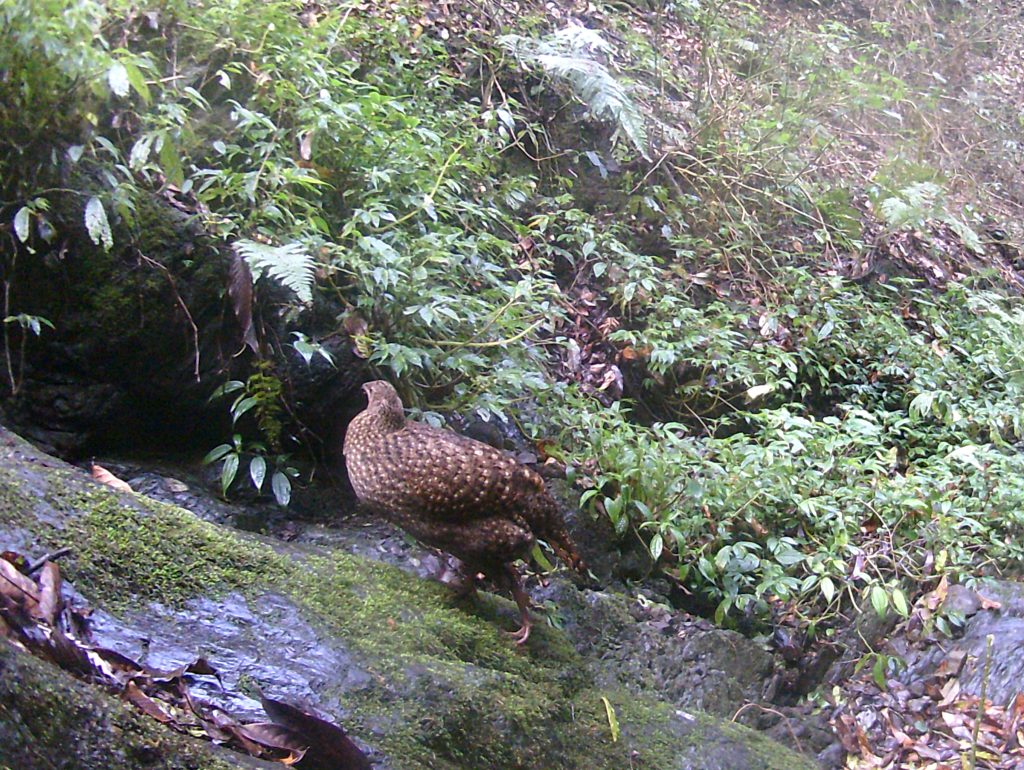
A female Blyth’s Tragopan captured on camera trap in Shirui village, Manipur
In March 2025, WTI sanctioned a Rapid Action Project (RAP) to Shunchui Kharei, a local youth conservationist from Shirui village, to document the distribution of Blyth’s Tragopan and identify specific threats in the area. Additionally, Shunchui and his team from the local NGO, Environmental Force At Grass Root Level (ENFOGAL), are trying to raise widespread awareness about this species through a series of offline and online initiatives such as online awareness campaigns, birdwatching events, storytelling sessions, and community pledges. The team recently placed camera traps in the forests adjoining the village and has now successfully recorded one male and one female Blyth’s Tragopan. This photographic evidence not only confirms the persistence of this threatened species in the region but also highlights the urgent need to protect such populations. Through this RAP, the proponent aims to address the threats posed by hunting by generating greater public support and engaging the community through pledges to protect this species.
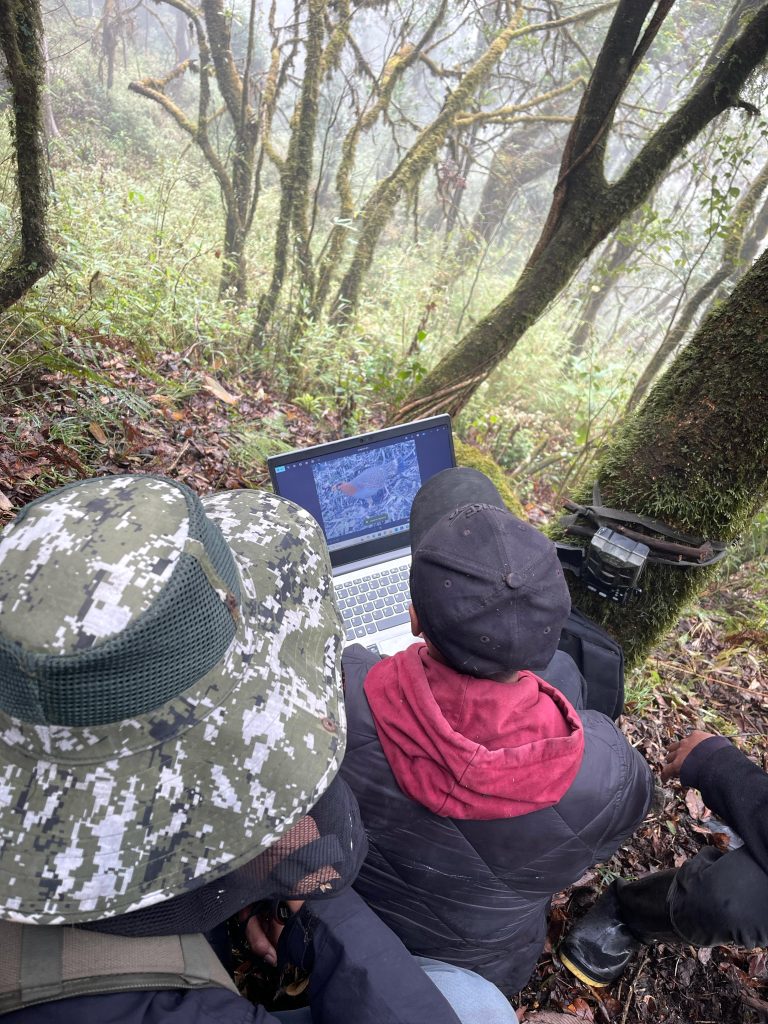
The team checking camera trap images that were installed in the forest | Photo by Shunchui PK, ENFOGAL
RAPs such as this provide urgent aid to grassroots conservationists, individuals, and frontline forest staff to address wildlife emergencies. This allows us to nip emerging threats in the bud and prevent them from transforming into larger issues that may require greater efforts and resources to tackle. Initiated in 2001, this is one of WTI’s longest-running initiatives. To date, we have supported over 700 RAPs across the country through which we have addressed a range of emerging threats and conservation issues. In Manipur, we have sanctioned 5 RAPs, including the one by Shunchui, to conserve the Blyth’s Tragopan. If you know of a deserving individual such as Shunchui or come across a wildlife emergency anywhere in India that requires urgent support, get in touch with us at rap@wti.org.in