Project Info



Project Description
India has a multitude of wildlife rehabilitators and animal welfare personnel attending to animal emergencies across the country. Many of them work independently or through organisations, often in a scattered manner without any technical communication with experts or opportunities to share experiences with other rehabilitators across the country.
To bridge this gap and enhance wildlife rehabilitation efforts in the country, the Emergency Relief Network (ERN) was launched by the Wildlife Trust of India (WTI) in partnership with the International Fund for Animal Welfare (IFAW). ERN serves as a platform for both expert and amateur rehabilitators, as well as those involved in wildlife conservation, including wildlife veterinarians, forest officials, and biologists, to exchange, share and contribute their knowledge and professional skills in the care of animals in crisis. Launched in 2004 as the Wildlife Rehabilitators Exchange Network (WREN), it was renamed ERN in 2007.
ERN in Action
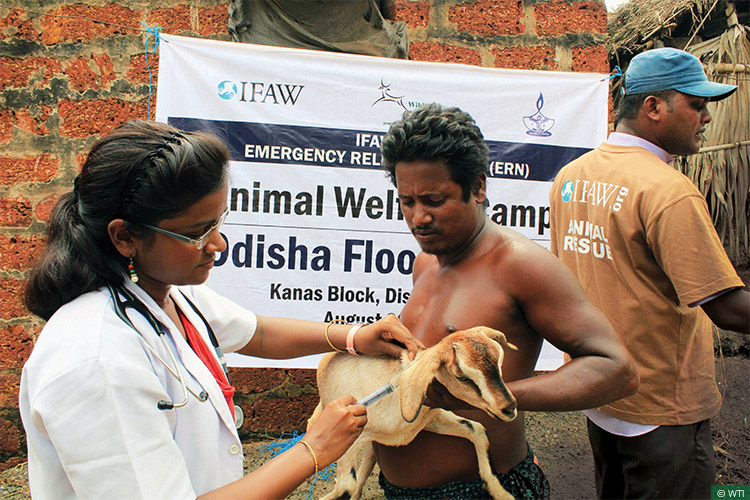
Floods: Bihar, Assam, Rajasthan, Odisha, Tamil Nadu and Gujarat
Through ERN, IFAW-WTI has provided immediate relief to livestock in flood-affected areas to prevent the spread of infectious diseases through immunization and quarantine. The team also provided fodder to livestock stranded in villages that were cut off from the rest.
Tsunami: East Coast of India
During the 2004 tsunami that killed over 10,000 people and several thousand livestock, the ERN team was actively involved in providing relief to animals all along the coast of Tamil Nadu and Andhra Pradesh.
Cyclone: Odisha, Andhra Pradesh and Tamil Nadu
During cyclones, the ERN team provided veterinary and husbandry support to over 13,000 animals.
Man-made disasters: Gujarat and Rajasthan’s Kite-flying festival
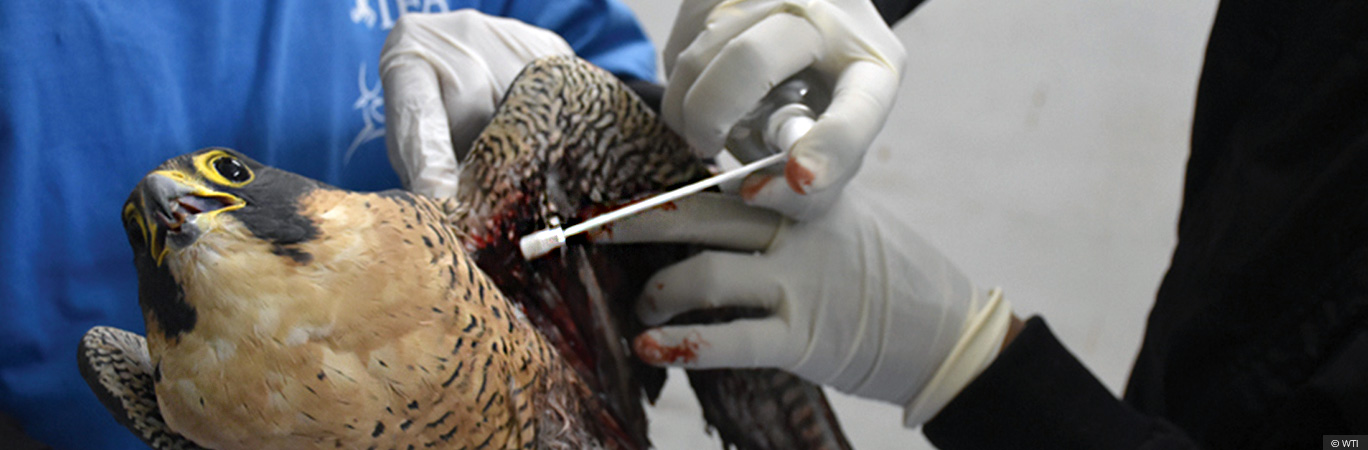
ERN vets also helped with the treatment and rehabilitation of birds injured during the kite-flying festival (Makar Sankranti) in Gujarat and Rajasthan. The bird injuries were caused by the glass-coated thread used for flying kites. Affected birds included cranes, pelicans, seagulls, kites, egrets, storks, eagles, ducks, owls, parakeets, pigeons, doves and even crows.
Wildlife Rehab: Rehab of repatriated Indian Star tortoises in Tamil Nadu and Kerala
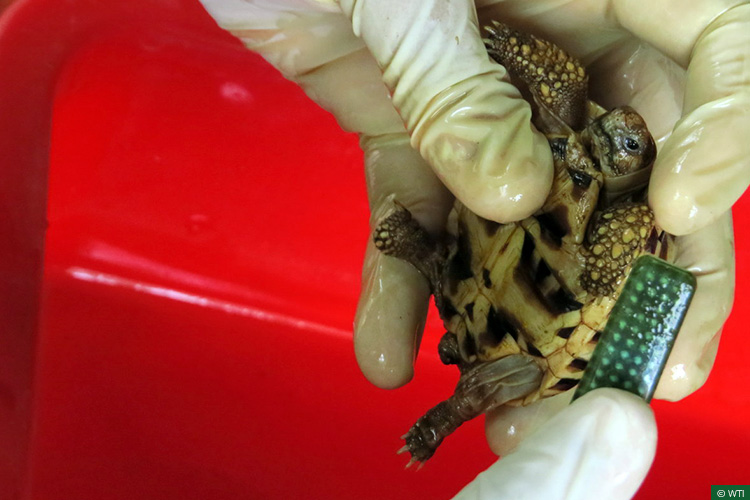
IFAW-WTI was involved in four successful rehabilitation programmes of repatriated Indian star tortoises in Andhra Pradesh, Tamil Nadu and Kerala. The rehabilitation was carried out by trained personnel who, besides taking care of the confiscated animals, also monitored their range use post-release.
Ennore oil spill disaster: Tamil Nadu
During the 2023 oil spill incident in Ennore Creek, nearly 20 sq.km of the waterbody were affected, severely impacting the livelihoods of more than 2000 families dependent on the region’s aquatic resources. The spill also caused significant harm to local wildlife, particularly aquatic bird species. In response, our ERN partners actively supported the rescue, treatment and rehabilitation of affected birds, contributing substantially to the emergency response and conservation efforts in and around the affected areas.
Avian botulism: Sambhar Lake, Rajasthan
Sambhar Lake, India’s largest inland saline lake and a designated Ramsar Site of international importance, forms an extensive shallow wetland ecosystem spread across the districts of Jaipur, Nagaur and Ajmer in Rajasthan. The lake comprises a mosaic of saline water bodies, mudflats, brackish pools, catchment streams and seasonal freshwater inflows, creating diverse habitats that support a rich assemblage of resident and migratory bird species, including flamingos, pelicans, ducks, waders, coots, ruffs, stilts and several other wintering avifauna. Since 2019, Sambhar Lake has witnessed repeated large-scale avian mortality events associated with avian botulism, a severe neurotoxic disease caused by Clostridium botulinum, an anaerobic bacterium that proliferates in decomposing and oxygen-depleted wetland environments. In response to these recurring incidents, our ERN partners have consistently been engaged across the Sambhar landscape in the rescue, treatment and rehabilitation of birds affected by botulism, playing a critical role in ongoing emergency response and conservation efforts in the region.
Wildlife Rehab: Rehab of repatriated Indian Star tortoises in Tamil Nadu and Kerala
IFAW-WTI was involved in four successful rehabilitation programmes of repatriated Indian star tortoises in Andhra Pradesh, Tamil Nadu and Kerala. The rehabilitation was carried out by trained personnel who, besides taking care of the confiscated animals, also monitored their range use post-release.
Who Can Become an ERN Member?
- The membership is open to individuals and local organisations (both Governmental and Non-governmental).
- Individuals applying for membership should demonstrate to the ERN coordinator their past commitments in the field of animal welfare, rescue-rehab or disaster relief.
How to Become an ERN Member
- Fill out and submit the membership form, which is available for download here. This can be done by sending a soft or hard copy of the duly filled-up application form to WTI by email to ern@wti.org.in or by post to WTI. A recent passport-size photograph is a must.
- Once the merit of every applicant is assessed, an ERN membership card is provided to the applicant, which is renewed every three years based on the performance of the member in the group.
- The membership does not guarantee financial support from the IFAW-WTI, but individuals/organisations are welcome to submit proposals seeking small grants to attend to wildlife emergencies across the country.
- Besides the photo ID membership card, members will also be inducted into the online “Google Groups” for ERN members. The photo ID card is not a license to practice wildlife rehabilitation. Members should obtain permission from the Chief Wildlife Warden (CWLW) of the respective states for this.
How Can Members Contribute?
- Report instances of natural and man-made disasters and sporadic wildlife emergencies occurring in the respective regions to the ERN coordinator/moderator on ern@wti.org.in. IFAW-WTI can then decide on the need to provide relief to such animals in distress and crisis.
- Make themselves available as volunteers or interns to attend to animal emergencies reported from their respective regions. This could be for making an assessment of the situation or the condition of the animal, or even the coordination of the relief operation.
- Share and exchange information on wildlife welfare, wildlife rescue &rehabilitation, conflict mitigation and disaster relief amongst ERN members (individuals and organisations) through online “Google Groups” and the IFAW-WTI ERN Facebook page.
For more information, contact: ern@wti.org.in or phone: 0120-4143900.
PARTNERS: IFAW
PROJECT LEAD: Dr. Bindu Raghavan