Two hand-raised leopard cats shifted for release at Raimona National Park
Raimona NP, 28 July 2026: Two orphaned leopard cat (Prionailurus bengalensis) kittens are under the rehabilitation at Raimona National Park following months of care. The kittens were rescued from Bedlangmari village in Dhubri district in April 2026 after they were found as orphans.
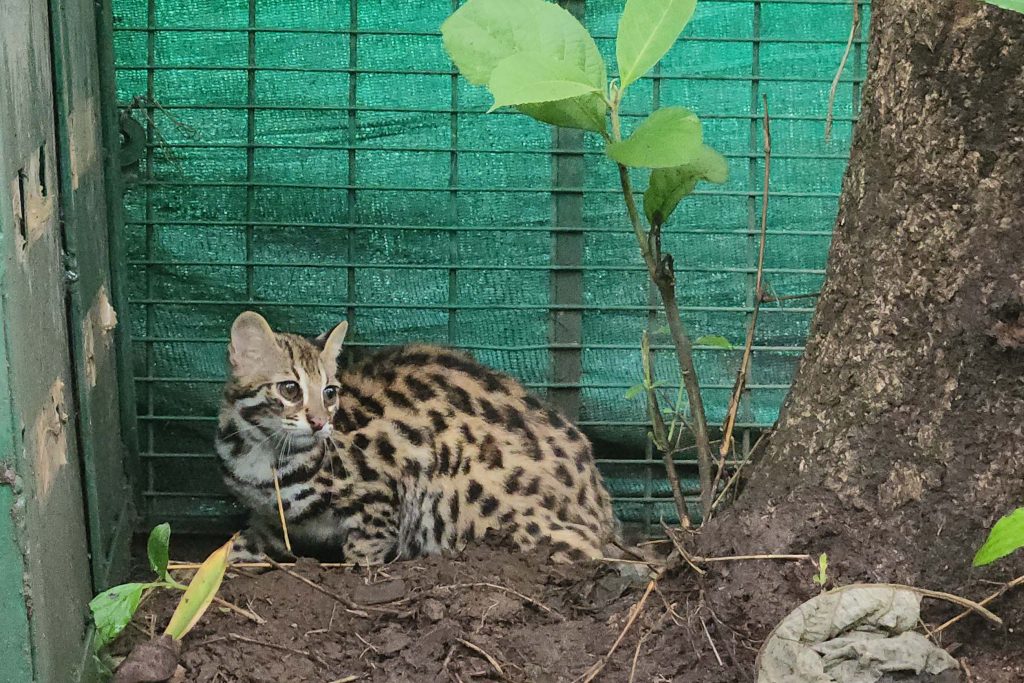
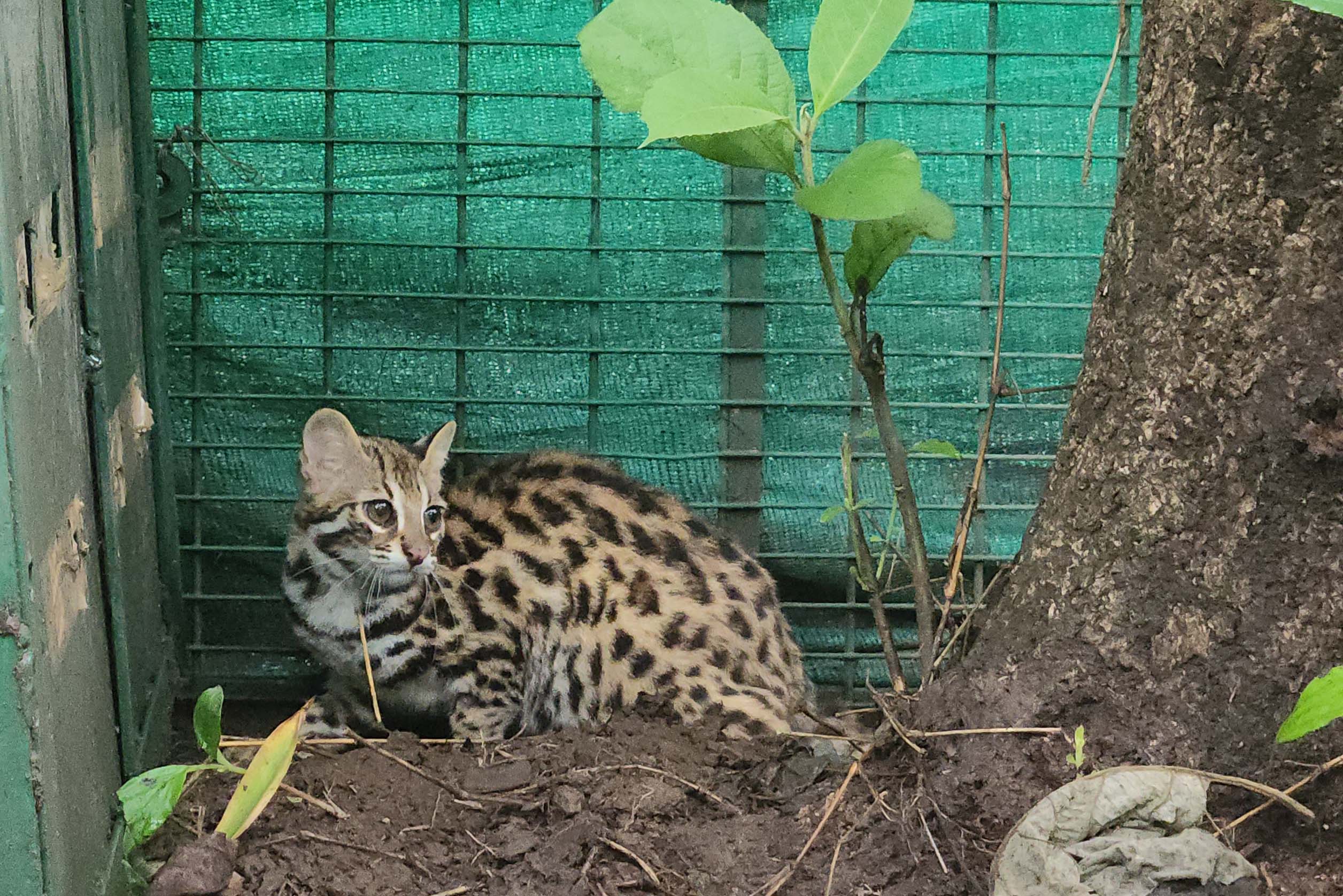
Leopard cat kitten at the acclimatization site | Photograph by Dhanjit Baruah/WTI
After rescue, the leopard cat kittens were promptly admitted to the Wildlife Trust of India’s (WTI) MVS Western Assam Unit at Charaikhola, Kokrajhar. Here, they were being hand-raised under the veterinary supervision. Throughout the nursing period, the animals routinely received veterinary check-ups, appropriate nutrition, and behavioural monitoring to ensure they developed the necessary physical fitness and natural instincts required for survival in the wild. “At approximately five months old, the leopard cats, a male and a female were considered fit for soft release in the wild. As part of the protocol, both animals have been transferred to an in-situ acclimatization facility (a temporary holding enclosure) at the release site in Raimona National Park”, explained Dr. Daoharu Baro, the lead veterinarian from WTI. The acclimatization phase is a crucial step in the rehabilitation process wherein the animals gradually adapt to the natural habitat and develop site fidelity. Both the individuals will remain in the acclimatisation facility for approximately one month, after which the door of the temporary holding enclosure will be opened for final release. Nazrul Islam, WTI’s biologist under the Greater Manas Recovery Project is leading the monitoring of the animals.
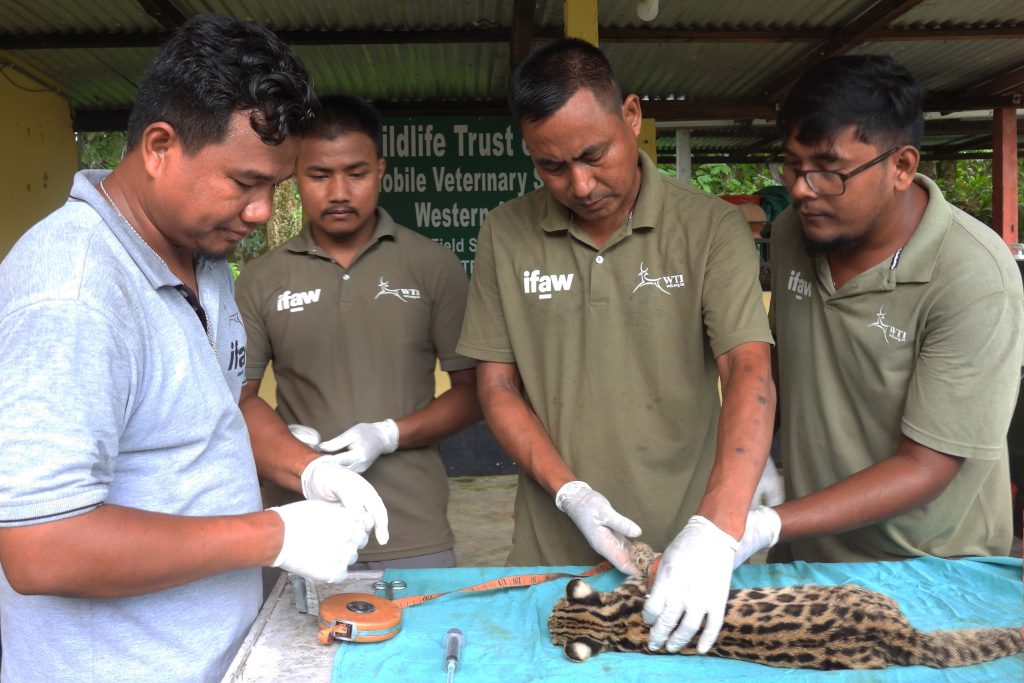
Health examination and body morphometry recording by the team | Photograph by Dhanjit Baruah/WTI
“The leopard cats will be kept at the release site for about one month for acclimatization before being released into the wild. Since we do not have radio or satellite collars for post-release monitoring this time, we will rely on direct sighting records and indirect evidences including camera trap photographs to assess their survival and dispersal after release in the wild”, adds Dr Baro. The project has handled more than 100 cases of small cats, including leopard cats, clouded leopards and jungle cats, till date and has achieved a 62% release success.