Project Info



Project Description
The Greater Manas Recovery Project (GMRP) aims to restore the ecological integrity and functionality of the Greater Manas Landscape in Assam, through integrated conservation actions under the umbrella of Wildlife Trust of India’s (WTI) Big Ideas, namely Protected Area Recovery, Wild Rescue, Wild Aid, Enforcement & Law, and Conflict Mitigation & Coexistence.
The Manas landscape lies at the confluence of three biogeographic realms – the Lower Gangetic Plain, the Eastern Himalayas and the Brahmaputra Valley, making it one of the most biologically diverse landscapes in the Indian subcontinent. The Manas National Park consists of five main forest categories: the Sub-Himalayan High Alluvial Semi-evergreen Forest, the Eastern Bhabhar type Forest, the Moist Mixed Deciduous Forest, the Assam Valley Semi-evergreen Forest, and the Eastern Wet Alluvial Grassland. Its diverse habitat supports at least 61 species of mammals, 477 species of birds, 42 species of reptiles and over 200 species of butterflies (UNESCO IUCN 2011).
Manas National Park was declared a UNESCO World Heritage Site in 1985 under criteria (vii), (ix), and (x) for its “Outstanding Universal Value”. The landscape also holds multiple conservation designations, including Tiger Reserve, Elephant Reserve, Biosphere Reserve, and National Park, highlighting its global ecological significance.
However, decades of socio-political unrest, habitat degradation, encroachment and poaching took a heavy toll on the wildlife population and conservation efforts throughout the region. In 1992, Manas was included in UNESCO’s List of World Heritage in Danger. In 2006, with the restoration of peace and the formation of the Bodoland Territorial Council (BTC) in 2003, WTI, with the International Fund for Animal Welfare (IFAW), the Assam Forest Department, BTC and local communities, launched the Greater Manas Recovery Project to support ecological recovery and strengthen wildlife conservation efforts in the region.
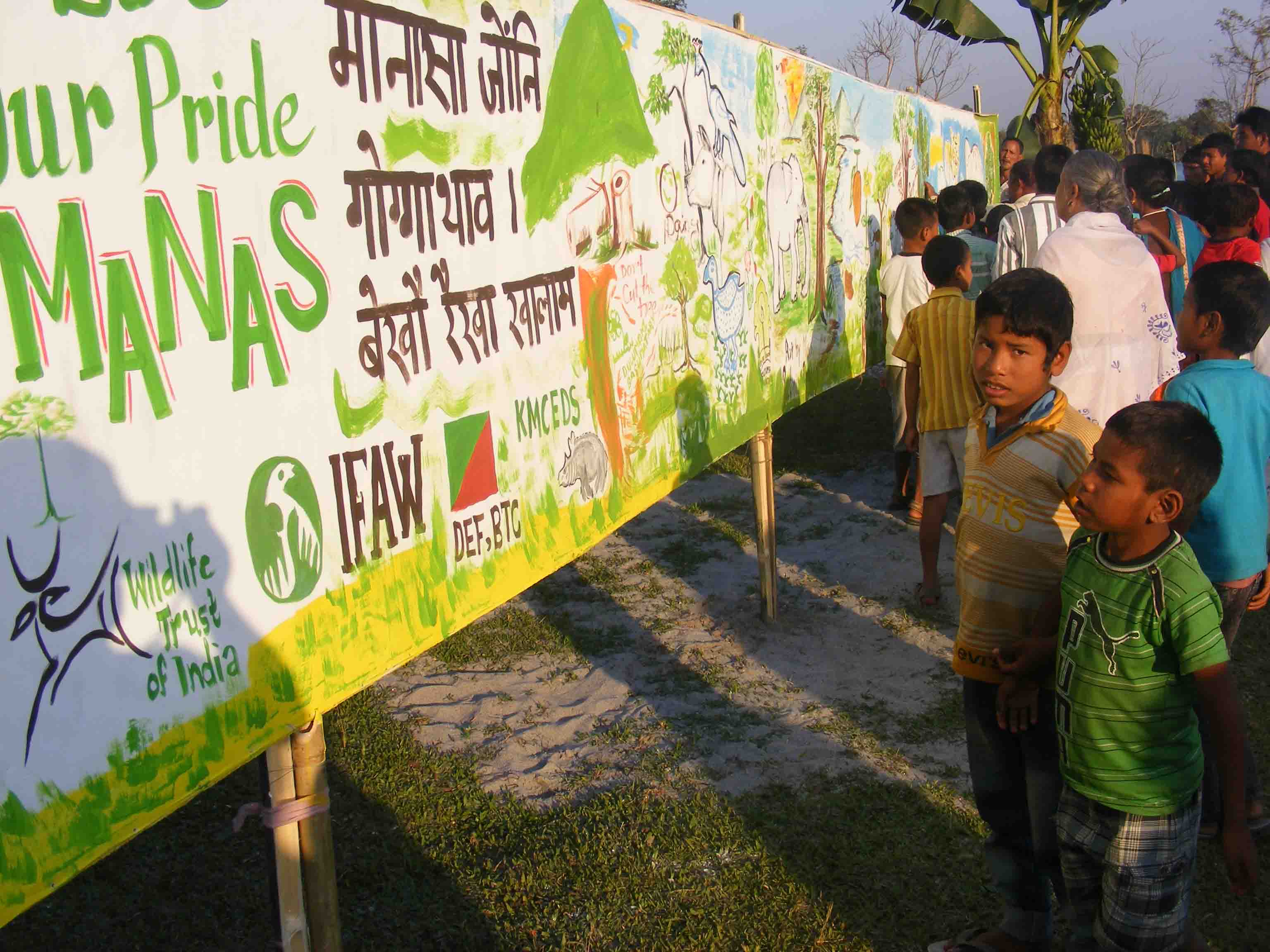
The term “Greater Manas” reflects a vision for conservation that extends beyond the boundaries of Manas National Park to the larger, interconnected forest ecosystem. WTI played an integral role in advocating this landscape-level conservation approach, which was formally recognised by the territorial council in 2007. These collaborative conservation efforts contributed significantly to the removal of Manas from the UNESCO World Heritage in Danger list in 2011. The project has also received long-term support from partners such as Chester Zoo and the Eicher Group Foundation.
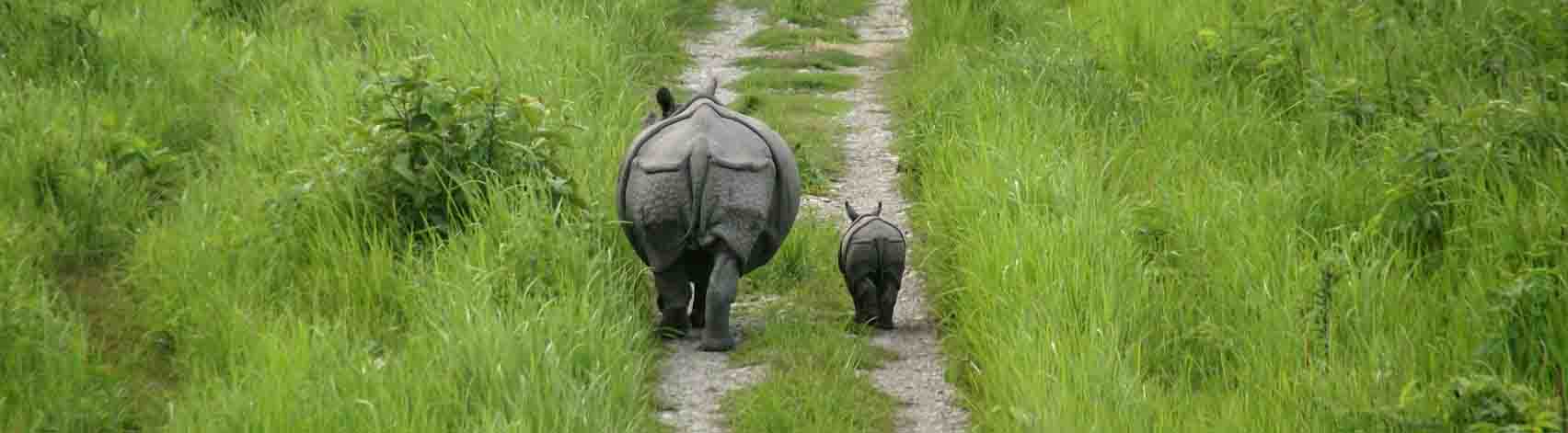
The rhino monitoring team of the Greater Manas Recovery Project located the released rehabilitated rhinos in the wilderness near Sidhajhar under the Bansbari Forest Range on 28th December 2019. The two rhinos are gradually adopting the landscape. Photo by Subhamoy Bhattacharjee/WTI-IFAW
The Greater Manas Landscape covers approximately 1,588 sq. km, including the “Greater Manas Landscape” spreading from Manas National Park (500 sq. km), First Addition to Manas NP (350 sq. km), Raimona National Park (422 sq. km) and Sikhna Jwhwlao National Park (316 sq. km) and adjacent forest areas. For more than two decades, WTI has been working in this region to strengthen and restore habitats, wildlife protection, and aid in the recovery of key species such as the greater one-horned rhinoceros, Asian elephant, swamp deer, wild buffalo and clouded leopard.
In addition to habitat and species recovery efforts, the project works closely with local communities to promote sustainable livelihoods, promote community-based conservation and reduce human-wildlife conflict. Interventions include the establishment and strengthening of Eco-Development Committees (EDCs), support to eco-tourism initiatives, livelihood enhancement programmes, conservation awareness activities and enhanced access to government welfare schemes. The project also promotes habitat restoration via grassland management, water bodies’ restoration, community nurseries and ecological monitoring. Scientific assessments, wildlife surveys, and habitat-use studies are regularly conducted to guide conservation planning and adaptive management across the landscape.
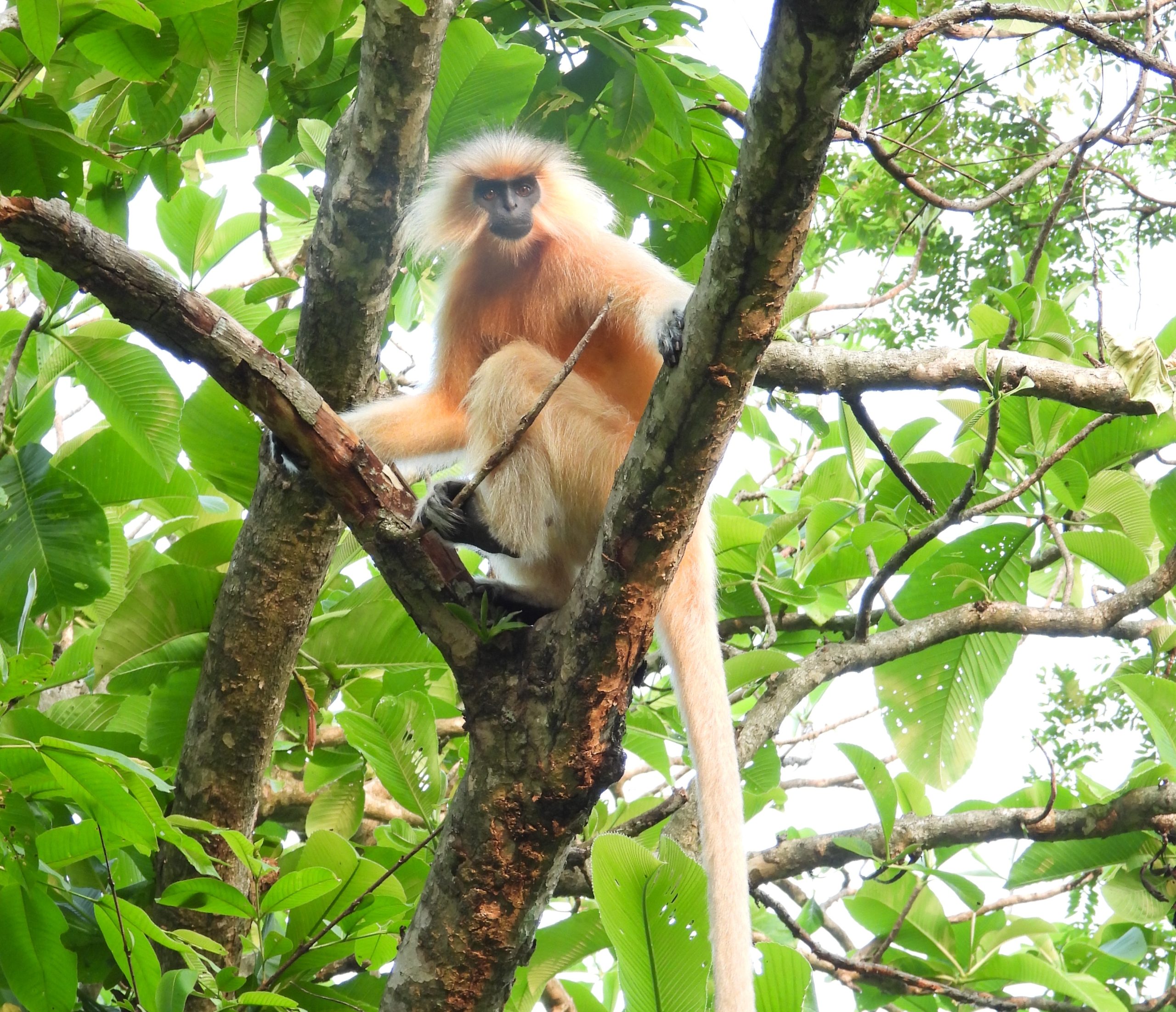
Golden Langur in Raimona National Park | Photo by Sanatan Deka/WTI
The project also places special emphasis on the conservation of the endangered golden langur through habitat restoration, awareness programmes, mitigation of electrocution risks, community engagement, and scientific assessments. Conservation planning and stakeholder collaboration are being strengthened to secure viable habitats and improve long-term protection for the species across the Greater Manas region.
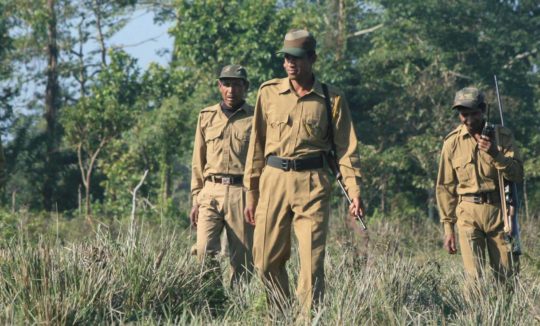
Human-elephant conflict mitigation remains a key focus area under the project. Interventions include solar fencing, rapid response support, community engagement initiatives (Baba Bandhus /Primary Response teams), and awareness programmes aimed at reducing conflict and improving coexistence between people and wildlife. To strengthen wildlife protection, the project supports anti-poaching efforts, frontline staff training, legal support for wildlife crime cases, and infrastructure development such as anti-poaching camps and field equipment. Wildlife rescue, rehabilitation, and veterinary support are also provided through Mobile Veterinary Service units, including disease surveillance, emergency response, rescue operations, and scientific documentation.
The Greater Manas Recovery Project continues to work towards securing a connected, resilient, and biodiverse ecosystem while strengthening community participation and long-term conservation stewardship across the Greater Manas Landscape.
Project Factsheets:
- Spine Gourd cultivation around Manas National Park
- Abundance and diversity of butterflies in Raimona National Park, Assam
- Avian diversity of Raimona National Park, Assam
- Flowering plants of Raimona National Park, Assam
- Richness and relative abundance of mammalian fauna in Raimona National Park, Assam
- First record of melanistic Rhesus macaque (Macaca mulatta) from the First Addition to Manas National Park, Assam
- Record of Himalayan serow (Capricornis sumatraensis thar) in Manas National Park, Assam
- Revival of Eastern Swamp Deer (Rucervus duvaucelii ranjitsinhi) (Groves, 1982) in Manas National Park of Assam, India
- Rehabilitation of Greater one-horned rhinoceros (Rhinoceros unicornis) in Manas National Park, Assam
- A new species of Cyrtodactylus Gray, 1827 (Reptilia: Squamata: Gekkonidae) from Kokrajhar District, Assam, India
Also read: Manas National Park officially becomes “Greater Manas” here.
PARTNERS: IFAW, Assam Forest Department, Bodoland Territorial Council, Eicher Group Foundation and Chester Zoo (UK)
PROJECT LEAD: Sanatan Deka