Empowering Young Nature Guides to Strengthen Wildlife Conservation at Pakke – Nameri Landscape
Pakke Tiger Reserve, 23–25 October 2026: The forests and wetlands of the Pakke–Eaglenest–Nameri landscape in north-eastern India support an extraordinary diversity of wildlife, including several threatened species that depend on these ecosystems for survival. Protecting this natural heritage requires not only effective conservation measures but also the active participation of local communities. Recognising the important role young people can play in this effort, the Wildlife Trust of India (WTI), in collaboration with the Arunachal Pradesh Forest Department, organised a three-day workshop titled “Nature and Nature Guides” at Pakke Tiger Reserve from 23 to 25 October 2026, under the White-winged Duck Recovery Project.
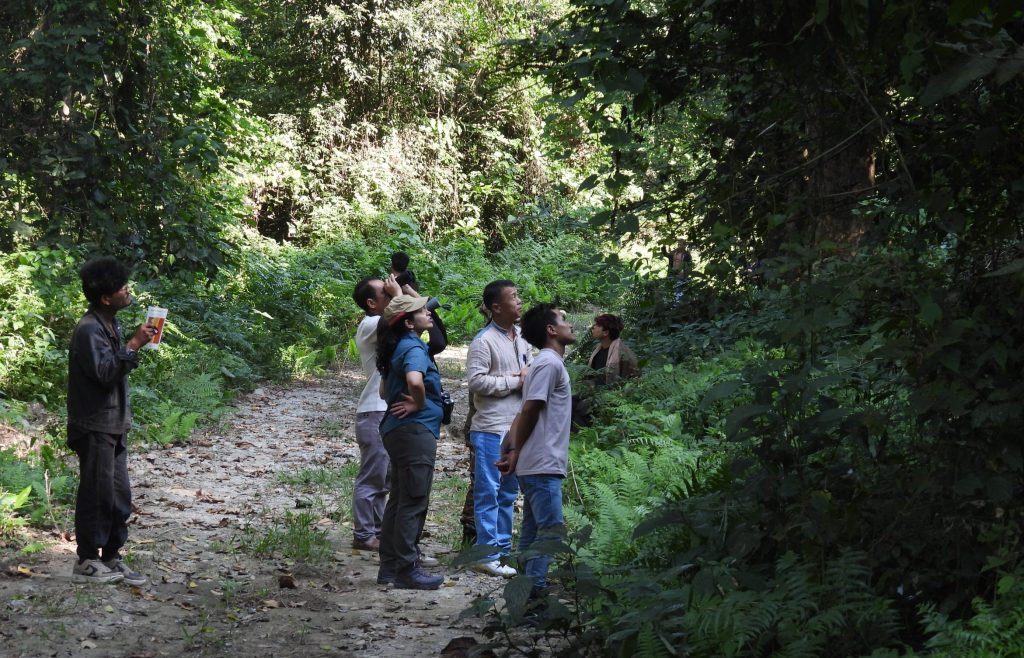
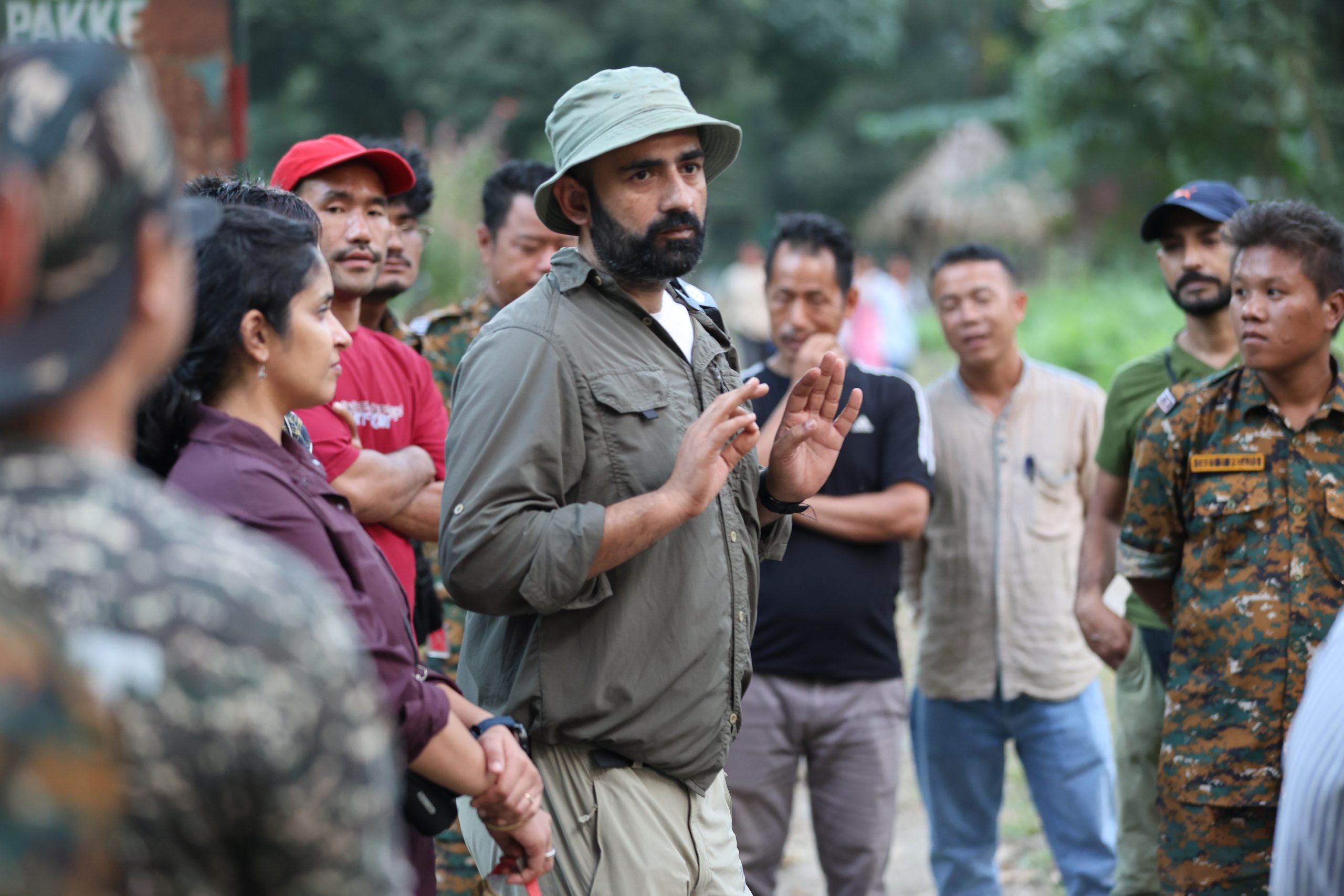
Nature guide training at the Pakke TIger Reserve | Photograph © Aftab Ahmed/WTI
Learning to Observe, Interpret, and Guide
Moving beyond the classroom, the workshop introduced participants to the fundamentals of nature guiding, including the roles and responsibilities of guides, professional ethics, visitor engagement, and the principles of responsible wildlife tourism. Participants explored how knowledgeable and effective guides can enrich visitors’ experiences while fostering appreciation for local biodiversity and respect for wildlife and its habitats.
Early-morning birdwatching sessions and nature walks offered opportunities to practise bird identification, recognise bird calls, use binoculars and field guides, and develop guiding and group-management skills. Participants were also introduced to digital tools such as Merlin, iNaturalist, and eBird to support bird identification and wildlife documentation. Sessions on wildlife detection and animal-sign surveys, followed by practical field exercises, further familiarised participants with techniques for recognising signs of animal presence and understanding wildlife activity in the landscape.
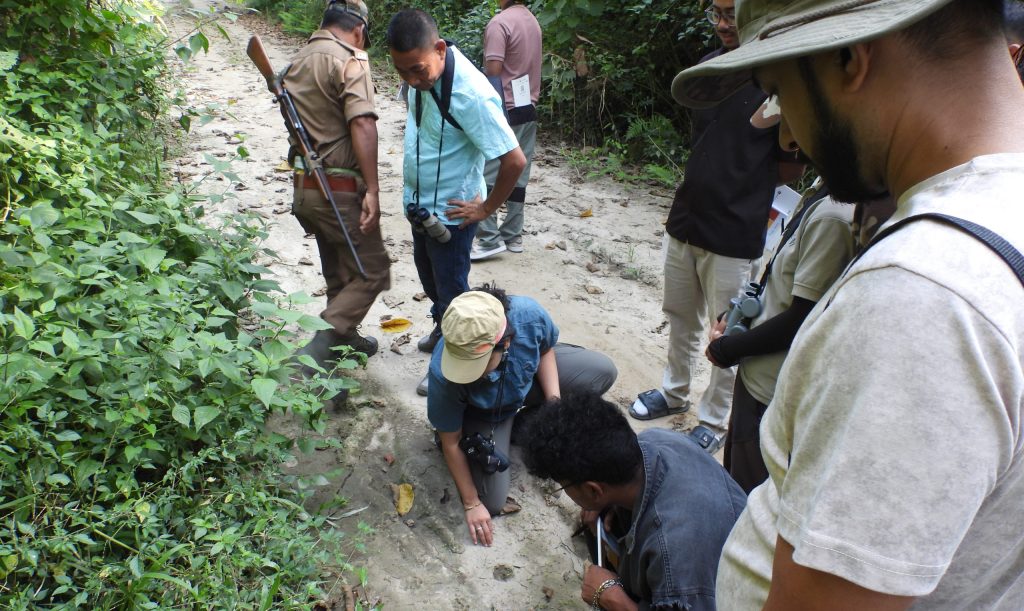
Participants learning to identify animal signs | | Photograph © Aftab Ahmed/WTI
Connecting Nature Guiding with White-winged Duck Conservation
At the heart of the workshop was the broader connection between nature-based tourism and wildlife conservation. The Pakke–Eaglenest–Nameri landscape encompasses diverse forest and wetland habitats that sustain a rich assemblage of wildlife. These ecosystems are also important to the conservation of the White-winged Duck, a globally Critically Endangered species whose survival depends on the protection of suitable wetland habitats.
By developing local expertise in birdwatching and nature interpretation, the workshop aims to help young guides communicate the ecological importance of these habitats and the conservation challenges faced by threatened species. Skilled nature guides can encourage responsible birdwatching, help visitors appreciate the need to protect sensitive wildlife habitats, and potentially contribute valuable local observations to conservation efforts.
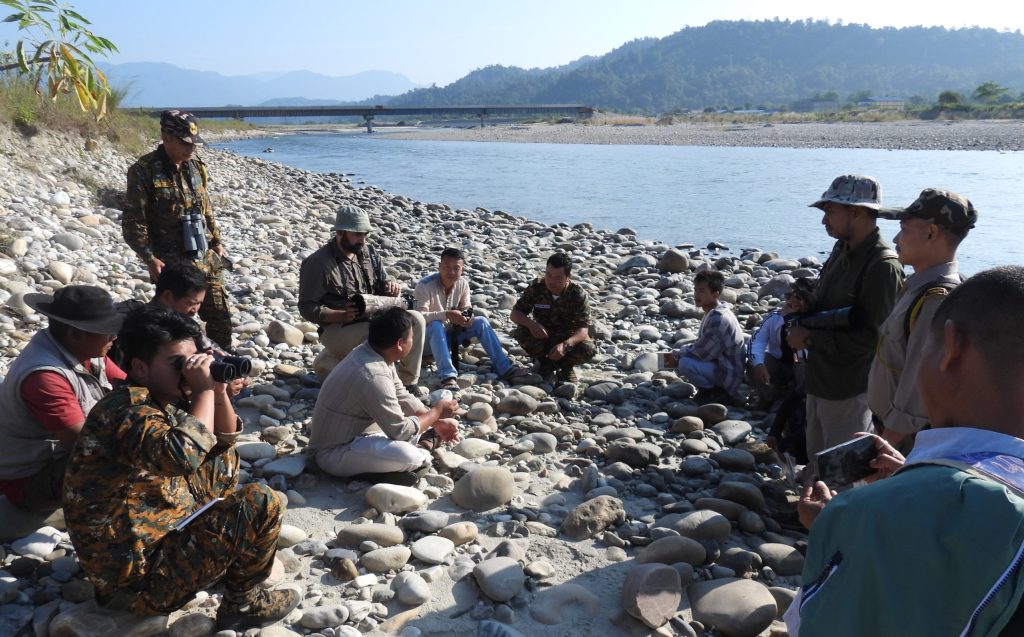
Outdoor session for young nature guides by the Pakke River | Phoograph © Uday bhaskar Padmapati