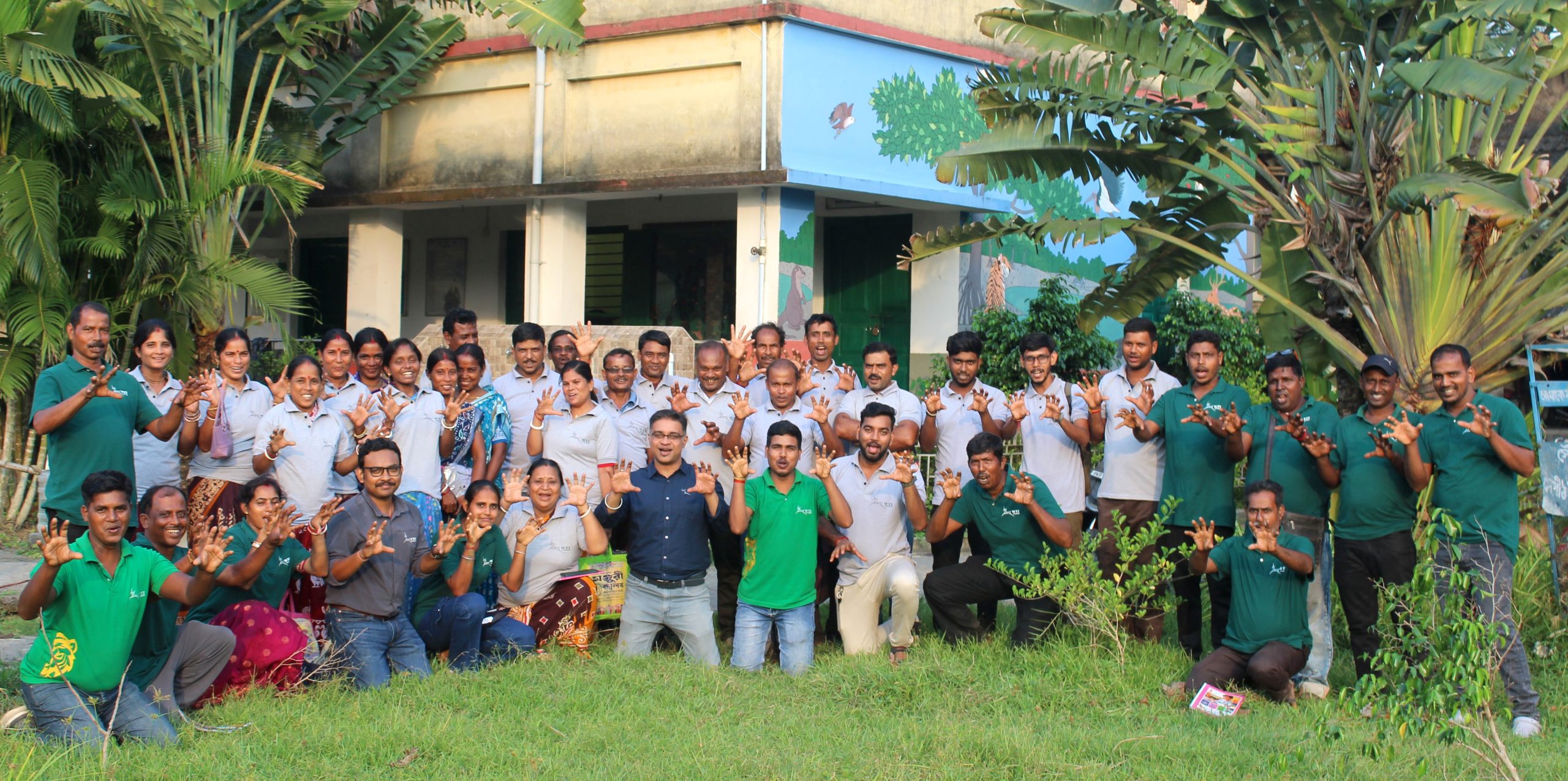
PRT members in Sundarbans receive training to manage human-tiger interactions
Sundarbans, West Bengal, 24th October 2026: A training workshop on human-tiger conflict mitigation and coexistence was organised on 24th October 2026 for 33 newly engaged Primary Response Team (PRT) members, including 10 women, from Kultali Block in South 24 Parganas District, West Bengal. Conducted by the Wildlife Trust of India (WTI), the workshop was held at the Sundarban Prakritishala (also known as Sundarban Education Centre) of Ambikanagar Haripriya High School, Ambikanagar Village. The training was jointly facilitated by Dr. Abhishek Ghoshal, Manager and Head, Conflict Mitigation and Coexistence Division and Mr. Prosenjit Sheel, Project Head, with technical support from Mr. Samrat Paul, Field Officer (Biologist). The initiative was supported by the International Union for Conservation of Nature (IUCN) through the Integrated Tiger Habitat Conservation Program (ITHCP) and the West Bengal Forest Department.
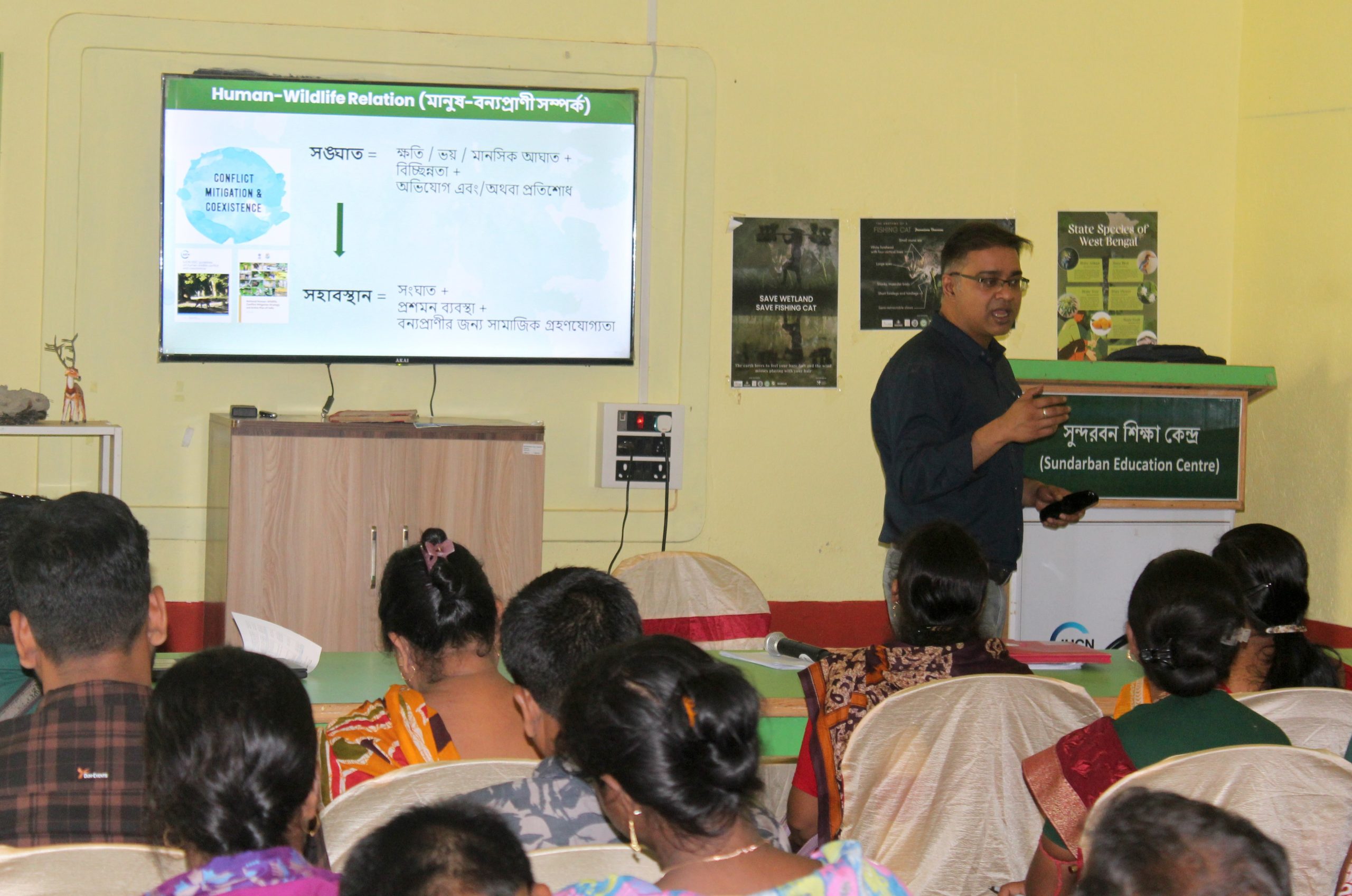
Dr. Abhishek Ghoshal conducted a session on human-wildlife interactions
The sessions covered concepts of human-wildlife conflict and coexistence; the role of PRT members as the first responders and stewards of conservation; tiger monitoring and tracking; and tools for monitoring and conflict mitigation, e.g. conventional and artificial intelligence-enabled camera traps, Animal Intrusion Detection and Repellent System (ANIDERS), quad-copter, etc. The training also focused on community engagement and sensitisation, human behaviour, and approaches such as coexistence meetings (alochona sabha) and post-conflict reconciliation meetings.
Bagh Bondhu (Friend of the Tiger) Shri Ajay Kumar Das, a veteran PRT member, remarked, “We are the local guardians of the tigers and mangrove forests of the Sundarbans, and at the same time, we are equally responsible for the safety of villagers when a tiger enters a village.”
“PRT members play the role of voluntary stewards in fostering human-tiger coexistence in the landscape. They act as the bridge between local people and the forest department. A basic understanding of conflict, along with regular capacity-building, is essential to enable them to manage situations of tiger ingression in villages on their own without having to depend on external support in most cases”, said Mr. Prosenjit Sheel.
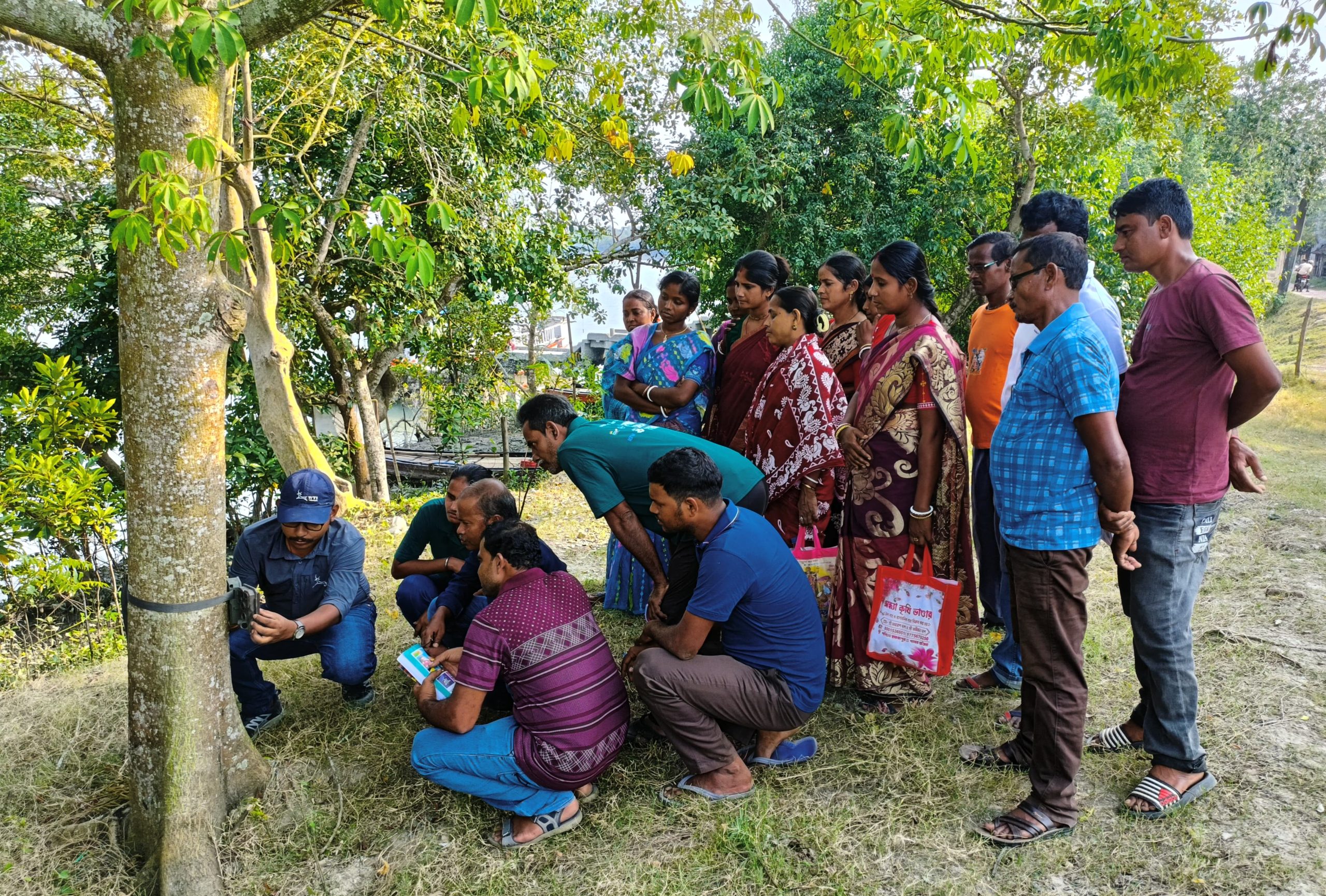
Field demonstration of conventional and AI-enabled camera traps for PRT members
Dr Abhishek Ghoshal explained, “There are many myths and misconceptions about tigers in the Sundarbans among local people, which often shape their responses when a tiger inadvertently enters a village from the surrounding forest areas. For example, some locals believe that Sundarbans tigers are man-eaters and that their saliva is poisonous. Our training familiarises PRT members with the basic concepts of conflict and coexistence, the natural history and behaviour of tigers, and scientific mitigation measures. This knowledge enables them to respond effectively, humanely, and respectfully, ensuring the safety of both people and tigers.”
Since 2018–19, WTI has established a team of 98 PRT members, including 18 women, in Kultali Block through its project, “Fostering Human–Tiger Coexistence in the Indian Sundarbans,” supported by IUCN’s ITHCP. The initiative aims to improve the management of human–tiger interactions and strengthen coexistence in the landscape.
The PRT members voluntarily support local communities and the Forest Department in preventing conflict situations involving tigers. They also assist in monitoring and maintaining approximately 24 km of nylon net fencing installed along the eastern coast of Kultali Block by the Forest Department and WTI.