Project Info



Project Description
The Kashmir Markhor Recovery Project aims at improving the population status of the once thought to be extinct species, the Pirpanjal Markhor (Capra falconeri) in Jammu and Kashmir. The team aims to achieve the objective by implementing focused activities in the landscape, such as exploration of new and protection of critical markhor habitats, assessing the effects of anthropogenic pressure and livestock grazing on markhor and its habitat. The project fits under the big idea of the organisation-Species Recovery.
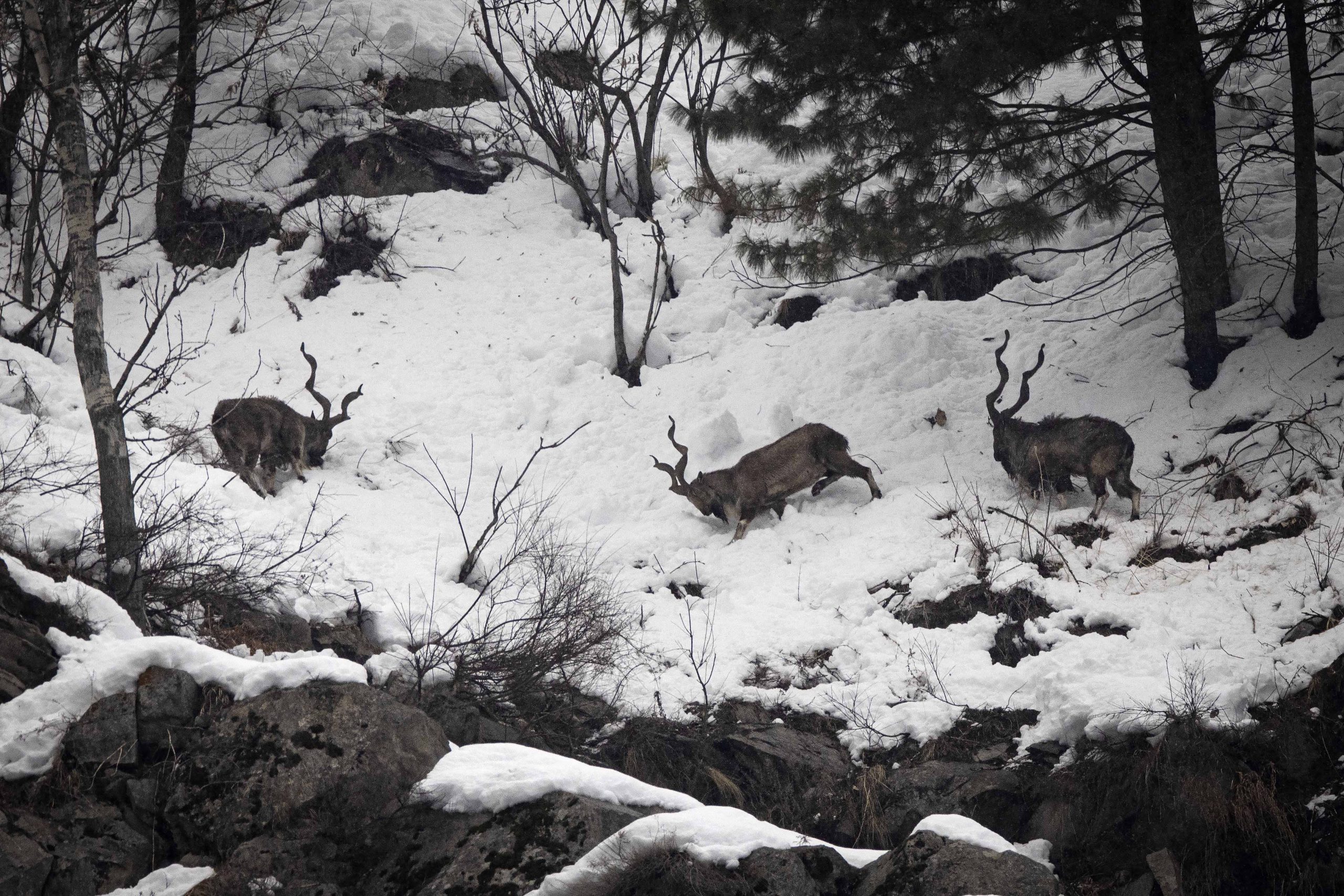
The Markhor is the largest wild goat in the world, and in India, the subspecies is found only in the Union Territory of Jammu and Kashmir (J&K). The species is listed in Schedule I of the Wildlife (Protection) Act, 1972 and categorised as ‘Near Threatened’ under the IUCN Red List of Threatened Species. In 2004, WTI, along with the Department of Wildlife Protection, J&K, the Environment and Ecology cell and the Indian Army undertook extensive surveys within the past distribution range of markhor and established a scientific baseline, replacing the previous guess estimates. Subsequent surveys in the following years revealed only two markhor populations, i.e. Kazinag and Pir Panjal, totalling around 250 individuals. Additionally, the surveys also highlighted the threats this critically low population species was facing, ranging from loss of habitats due to encroachment, illegal grazing inside Protected Areas (PAs), linear infrastructure development, anthropogenic pressures, lack of awareness, lack of manpower for protection, hunting for bush meat, and lack of stringent enforcement of the law.
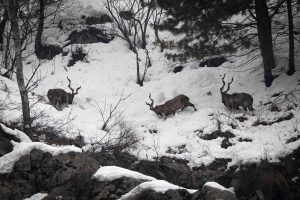
In the last couple of years, WTI has been monitoring different sites and working with the local communities and herders to conserve the markhor and its habitat. The project team has also conducted occupancy surveys, assessed the impact of livestock on markhor habitat, held consultations with migratory herders and locals to reduce pressure on markhor habitat and linked locals and migratory herders with different welfare schemes of the government and other agencies. Additionally, informer networks were developed to control the poaching of this species.
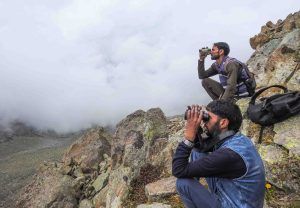
Participatory management involving local communities is central to the project’s conservation strategy. Community members are actively engaged as volunteer Markhor Watchers, monitoring and protecting Critical Markhor Habitats (CMHs) while fostering a sense of stewardship. This is complemented by ongoing skill development and livelihood diversification efforts supported by government schemes, reducing dependence on CMHs. Structured surveys, focus group discussions, and ethnographic methods are being used to guide and assess these community-based initiatives.
Apart from these activities, the project lists a number of other urgent interventions to secure the Markhor population in Kashmir. Previous consolidated efforts have enabled the declaration of a National Park exclusive for markhors, an extension of the Hirpora WLS and a declaration of the Tattakuti WLS for the species. Further interventions are now required to reduce grazing pressure and wildlife crime in order to mitigate threats to Markhor habitats and improve their population in J&K.
PARTNERS: Astral Foundation, Department of Wildlife Protection, Jammu & Kashmir
PROJECT LEAD: Dr. Tanushree Srivastava