Project Info



Project Description
Nilgiri Biosphere Reserve, A UNESCO-designated Biosphere Reserve located in the Western Ghats of southern India, covers an area of around 5,520 sq.km. and spans across three states – Tamil Nadu, Kerala, and Karnataka (UNESCO, 2018). It is known for its rich biodiversity, with many endemic species. The reserve is home to several endangered species, including the Nilgiri tahr, Lion-tailed macaque, Bengal tiger and the Asian elephant. In addition to its natural beauty and ecological importance, the Nilgiri Biosphere Reserve is also known for its cultural significance, with several indigenous communities residing in and around the reserve.
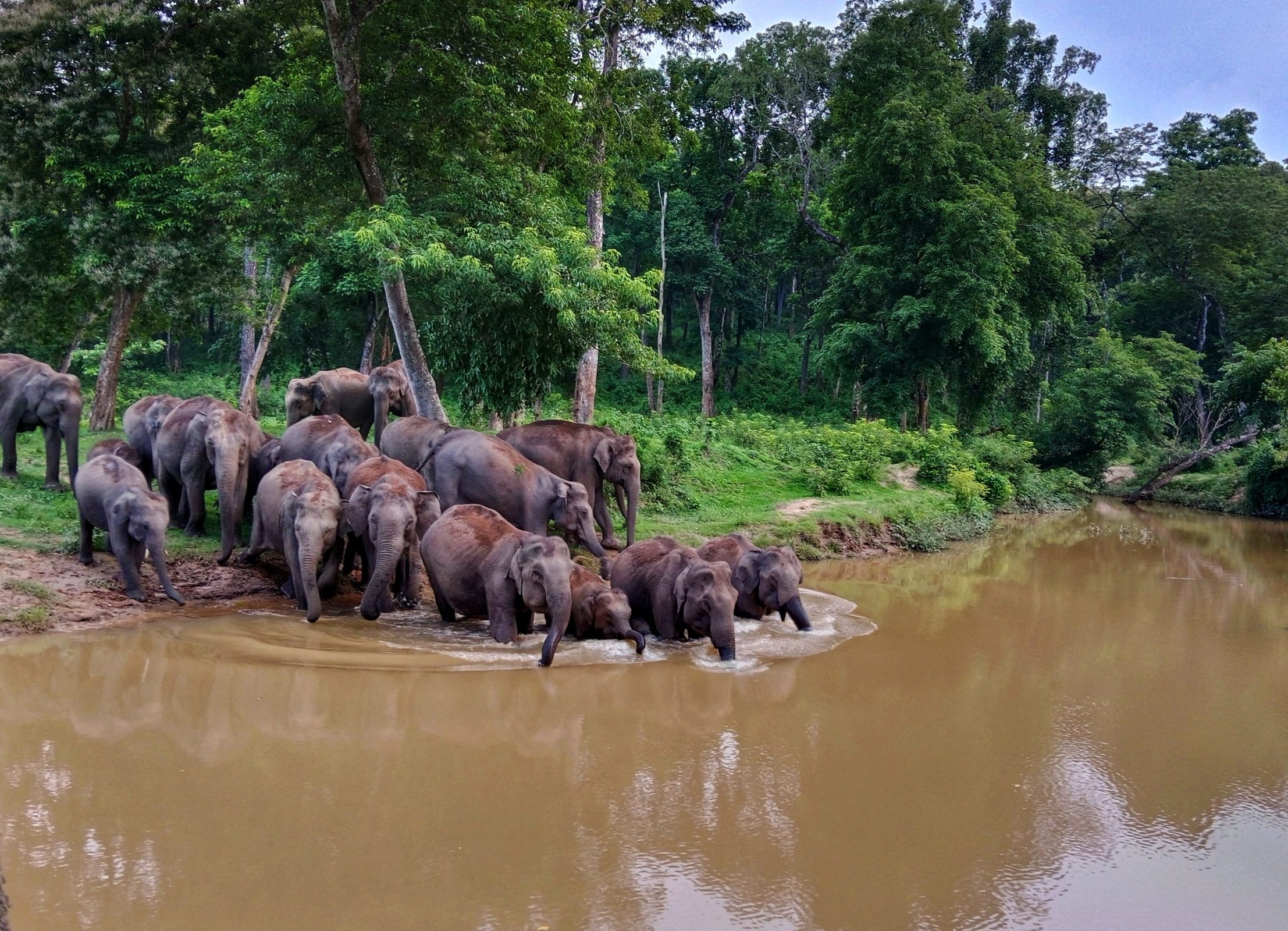
The focus area for this project includes the Nilgiri Plateau comprising Wayanad, Aralam, Nagarhole, Bandipur, and Mudumalai, an important habitat complex for Asian elephants and Tigers. Wayanad (2,132 km2) area comes under global biodiversity hotspots, and it supports a mosaic of agricultural areas, plantations of tea, coffee, rubber and spices, and predominantly moist deciduous teak forests.
Wayanad’s landscape is also a prime habitat for large-bodied wildlife like Asian elephants and Bengal tiger. The latest population estimate of elephants in Wayanad is 178 (Kerala Forest Department, 2024; 29% decline from 249 elephants in 2018). Wayanad Wildlife Sanctuary has an estimated population of 84 tigers as of 2023 (in 2018, the estimate was 120), with a density of about 8 tigers per 100 km2 across the Wayanad landscape. The strong overlap of human habitations, plantations/estates and forested areas often leads to human-wildlife conflict. The damages due to these interactions include human deaths, crop damage and cattle-killing. One of the main reasons for human-wildlife conflict in the reserve is the loss and fragmentation of natural habitats due to human activities like deforestation, agricultural expansion, and infrastructure development (Shameer, et.al, 2012; Nelson, et.al, 2003).
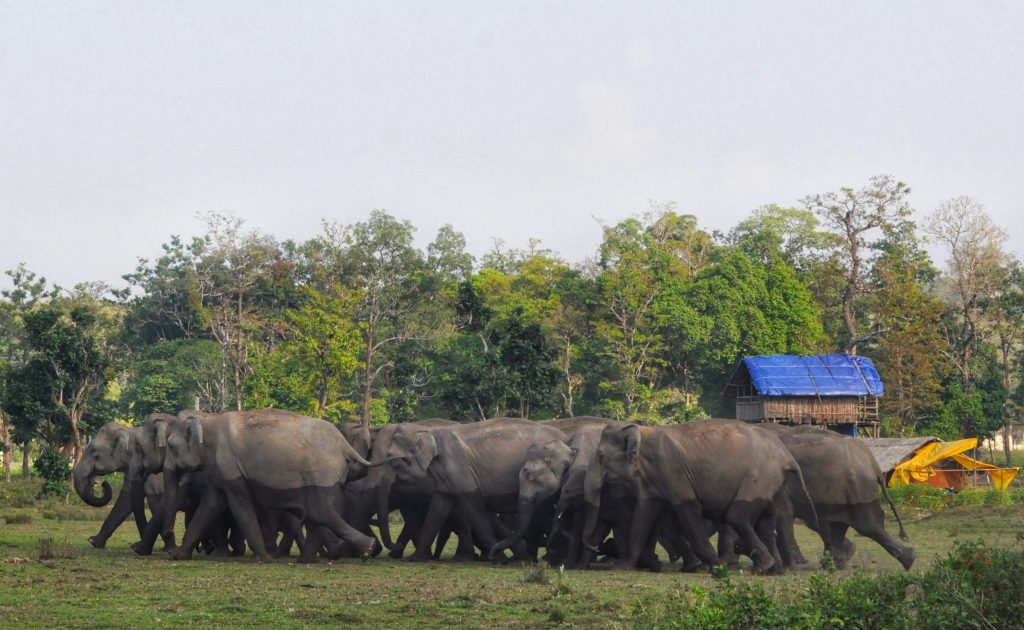
Herd of wild elephants in a village in Wayanad | Photo © Prashant
Given this situation in Wayanad, the Wildlife Trust of India (WTI) has been actively involved in human-wildlife conflict mitigation and coexistence since 2003-2004. WTI, in collaboration with the Kerala Forest Department, has facilitated the establishment of the Thirunelli – Kudrakote elephant corridor connecting the Brahmagiri Wildlife Sanctuary of the neighbouring state of Karnataka with the Wayanad Wildlife Sanctuary. The establishment and securement of this corridor ensured connectivity between the two landscapes for about 6,500 elephants.
Following the securement of the corridor, since 2021, WTI has been implementing a human-wildlife conflict mitigation project in Wayanad District with our field station located at Kattikkulum. Through this project, WTI has established baselines on key potential drivers and causes of conflict, viz., land-use changes, agricultural pattern, linear infrastructure, waterholes, estates and plantations, human and wildlife demography, etc.
As a reactive measure to mitigate human-wildlife conflict, 15 teams of local community volunteers comprising 69 members have been established as Primary Response Teams (PRT). The PRT members provide quick response to conflict situations, supporting the local people and forest department across the main conflict-prone areas in Wayanad. The Kerala Forest Department has now incorporated WTI’s PRT members into the government framework as part of the State’s mission to manage human-wildlife negative interactions.
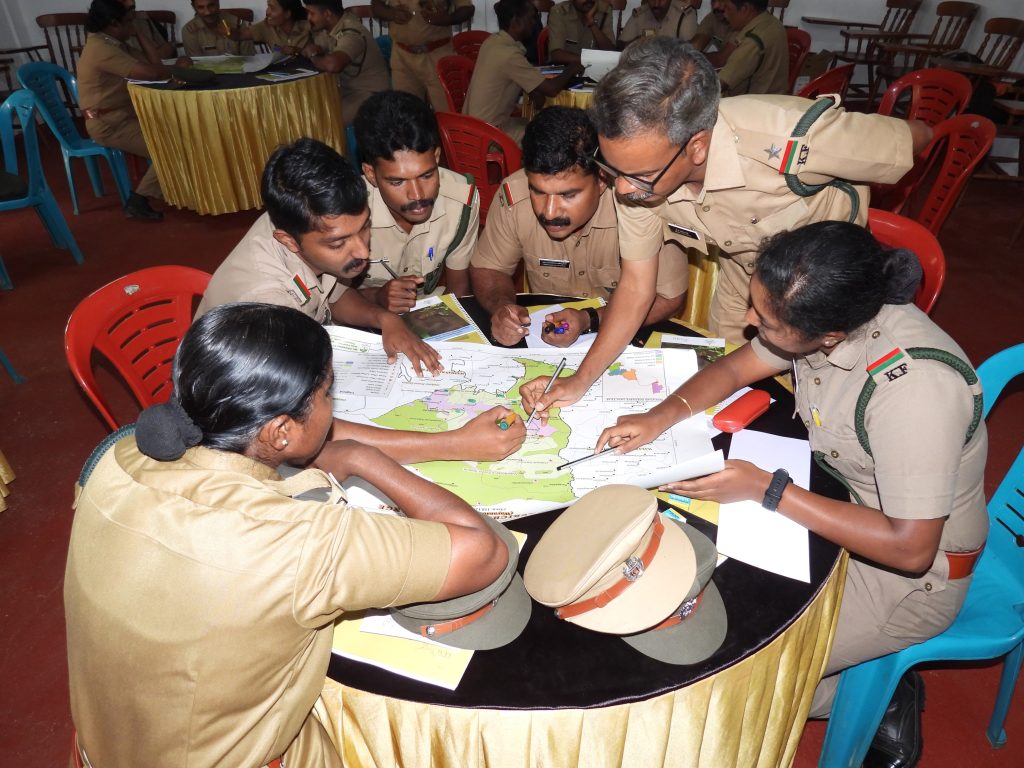
Training of front-line forest staff of Wayanad on conflict mitigation tools and techniques | Photo ©Anurag VM
WTI has also imparted basic training on human-wildlife conflict mitigation to 124 frontline forest staff during 2023-2024 and another 133 frontline forest staff during December, 2024 and January, 2025 (257 staff out of a total of 541 staff covering 47.50% of all frontline forest staff of Wayanad) to improve capacity in managing conflict situations. Given the intense level of conflict, social and political sensitivity around the issue of conflict, and inherent turnover among frontline staff, recurrent training is a necessity in the landscape. WTI is also providing support to local people living in forest fringe areas in select human-tiger conflict-prone villages in protecting livestock through predator-proof shelters. We are closely working with village panchayats to support development and implementation of annual human-wildlife conflict mitigation and coexistence plans at local levels.
PARTNERS: Kerala Forest Department
PROJECT LEAD: Saneesh CS