Big Idea: To secure 2,00,000 hectares of critical habitats outside the traditional PA system, especially habitat linkages, wetlands, grasslands, community reserves, Important Bird Areas and sacred groves.
Land securement is a unique strategy that aims to secure critical habitats outside the traditional protected area system. The secured lands include important habitat linkages, wetlands, mangroves, grasslands, Important Bird Areas (IBAs), sacred groves, etc. The focus of this Big Idea is to secure critical habitats and restore degraded and fragmented ecosystems like coral reefs, wetlands and mangroves.
At present, the division comprises five projects: the Garo Green Spine Conservation Project in Meghalaya, the Kannur Kandal Project in Kerala, the Sarus Habitat Securement Project in Uttar Pradesh, the Mithapur Coral Reef Recovery Project in Gujarat, and the latest addition, the Forgotten Cats of Seinthuk Project in Arunachal Pradesh.
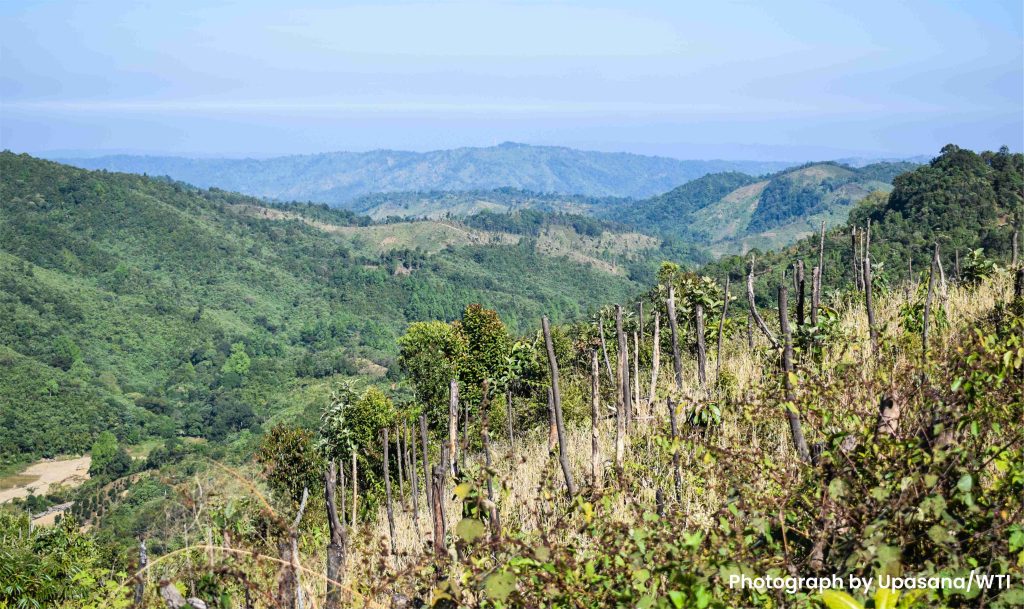
The Garo Hills of Meghalaya are home to several species of flora and fauna and support a rich biodiversity. With the support from World Land Trust, IUCN NL, HCL Foundation, Dr. Reddy’s Laboratories, the GHADC and the Forest Department, WTI has been working for nearly two decades to restore forest patches and connect important habitats of Garo Green Spine, Garo Hills, to ensure the smooth passage of elephants and other wildlife. The project follows the community securement model, under which community-owned lands are set aside through easements or bilateral benefit-sharing models as Village Reserve Forests (VRFs).
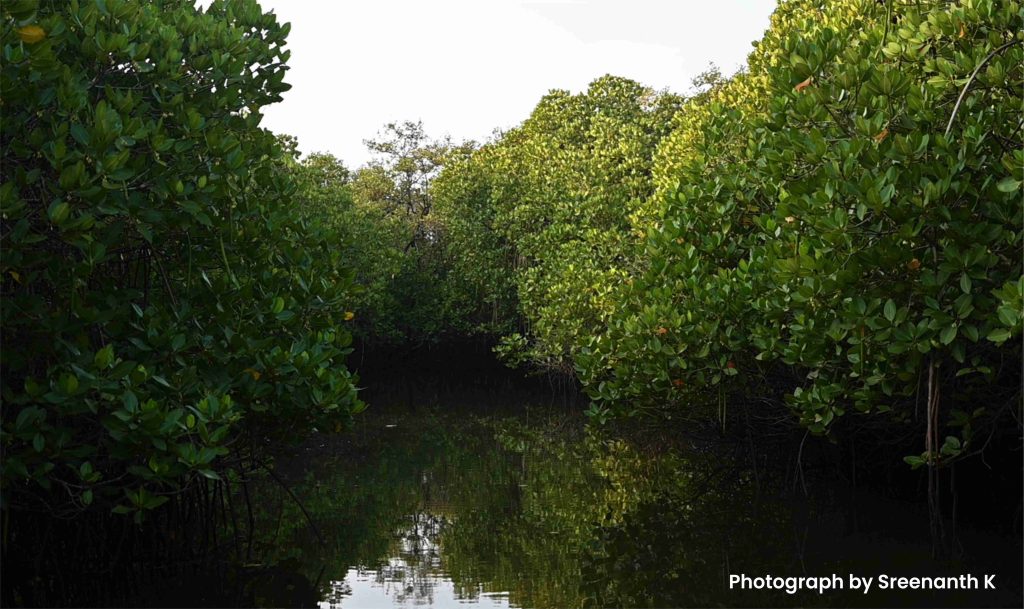
The Kannur Kandal Project aims to restore the species-rich mangrove habitat in the district of Kannur, Kerala, which holds more than 50% of the state’s mangrove cover. To ensure the long-term survival of existing mangroves and increase the acreage of such habitats, WTI has been focusing on the purchase of mangrove lands and the ecological restoration of degraded mangrove habitats through community and government participation, outreach and awareness, as well as research. With the support of World Land Trust, Apollo Tyres, SBI Foundation and individual grants, WTI has acquired a species-rich mangrove habitat in Kunhimangalam village in Kannur as the hub of the project.
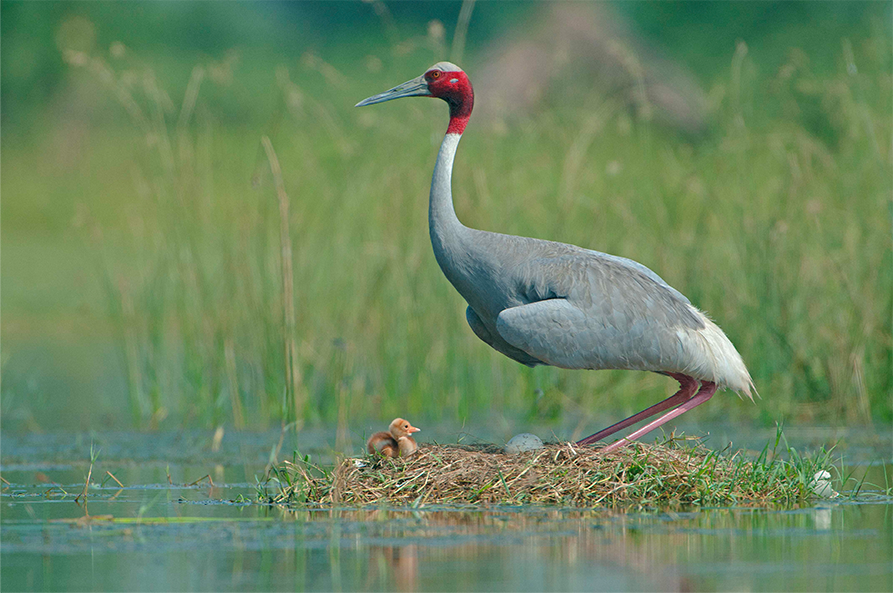
Uttar Pradesh is a stronghold of the Sarus Crane, India’s only resident breeding crane and the world’s tallest flying bird. With the support from Tata Trusts and the World Land Trust, WTI has been working across 10 districts of Eastern Uttar Pradesh for nearly a decade to protect and conserve the State Bird of U.P., the Sarus Crane, as well as its key habitat – the wetlands. Before 2019, the project’s primary objective was to conserve sarus cranes inhabiting agricultural fields and mosaics of wetland habitats outside protected areas. Since 2019, however, the project has adopted a broader vision, with a greater focus on the securement of wetlands in eastern Uttar Pradesh. These wetlands are not only vital habitats for the sarus crane but also critical ecosystems that support rich biodiversity and sustain local communities.
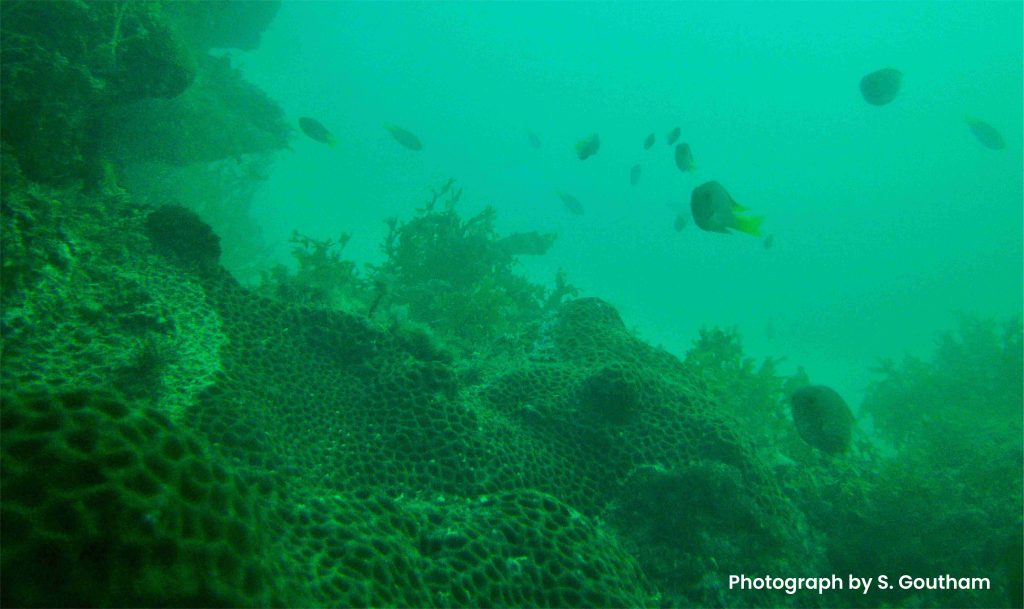
The Coral Reef Recovery Project, launched in 2008, is a joint venture of WTI and the Gujarat Forest Department, supported by Tata Chemicals Limited (TCL) / C-SCAPES. It seeks to develop and implement appropriate conservation strategies for the Mithapur Reef, situated 12 kilometres south of the Gulf of Kutch in Gujarat. With initial support from the World Land Trust, the project is also working to recover coral reefs in Gujarat’s Marine National Park. At Mithapur, the project envisions creating a model public-private-managed coral ecosystem of international standards by adopting global benchmarks to restore degraded reefs through activities including coral transplantation and natural recruitment.
The latest addition to the Wild Lands programme is the Forgotten Cats of Seinthuk project in Arunachal Pradesh. With support from Royal Enfield Social Mission (EGF), Fondation Segre and Garung Thuk, WTI aims to secure key habitats for small cat species in and around Shergaon village in Arunachal Pradesh.
Division Lead:

Aditi Dhillon holds a Master’s degree in Environment and Development from the School of Human Ecology, Dr. B.R. Ambedkar University, Delhi. Prior to joining WTI, she worked as a Research Assistant at the Centre for Urban Ecology and Sustainability, Ambedkar University, where she contributed to the restoration of an urban wetland. Since joining WTI in 2022, she has been supporting and managing community-driven restoration and land securement projects across multiple states, working in collaboration with diverse stakeholders. Her interests include ecological restoration, urban ecology, and community and stakeholder engagement.
Current Projects:
- Garo Green Spine Conservation Project, Meghalaya
- Kannur Kandal Recovery Project, Kerala
- Sarus Habitat Securement Project, Uttar Pradesh
- Mithapur Coral Reef Recovery Project, Gujarat
- Forgotten Cats of Seinthuk, Arunachal Pradesh