
Project Info



Project Description
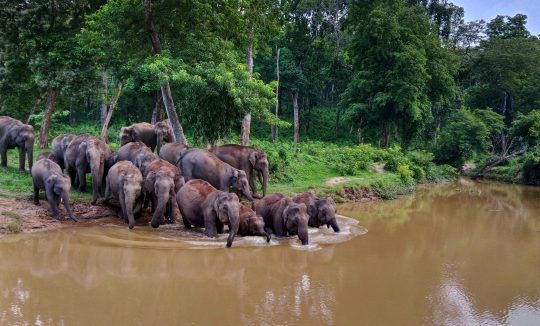
The D’Ering-Dibru Saikhowa elephant corridor between Assam and Arunachal Pradesh is one of the vital corridors that provide safe passage for approx.150 elephants and other wildlife like Asiatic water buffalo, Assamese macaque, dhole, feral horse, leopard etc. found in the landscape. This interstate corridor spans 16 km in length and 2 km in width, linking the D’Ering WLS in Arunachal Pradesh with the Dibru-Saikhowa NP in Assam.
Elephants use this corridor to traverse a diverse landscape that includes riverine grasslands, community lands, settlement areas, agricultural lands and the floodplains of the Siang, Dibang and Lohit Rivers, facilitating their movement between these two Protected Areas. However, increasing anthropogenic pressure like cattle grazing, timber felling and expansion of human settlement has resulted in the fragmentation and degradation of habitat, thus hindering elephant movements and threatening the D’Ering-Dibru Saikhowa corridor.
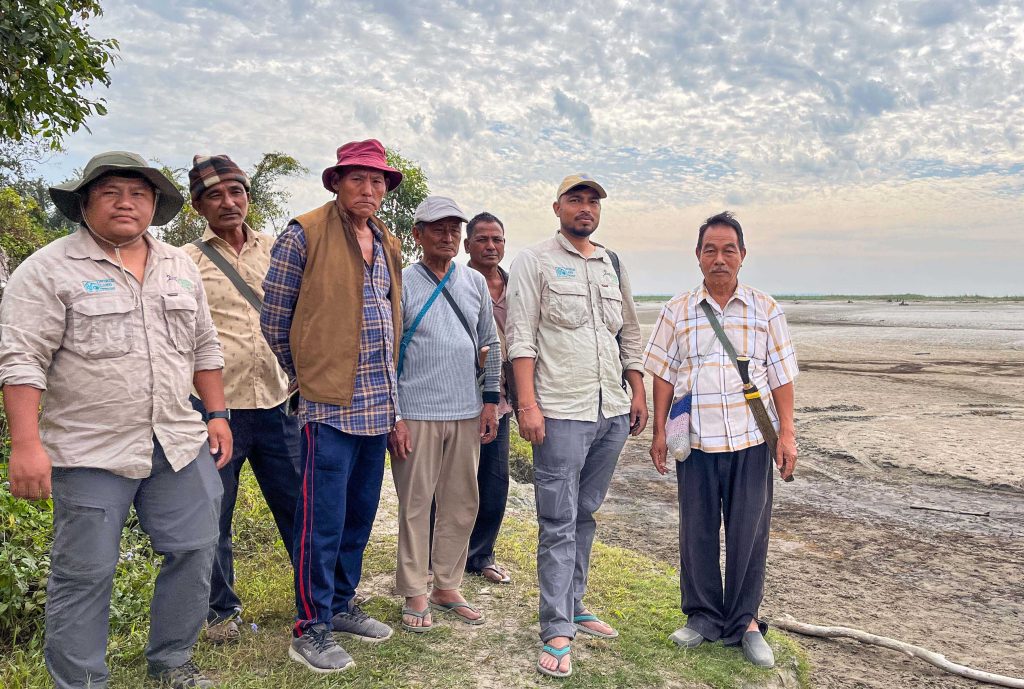
Kotgahgorah Restoration Committee representatives with the WTI team near Siang River, Paglam, Arunachal Pradesh | Photograph by Madhumay Mallik/WTI
Key initiatives carried out by WTI to secure the D’Ering- Dibru Saikhowa elephant corridor:
- “Community Reserve” creation: Approx. 900 hectares of community forest land have been set aside by the local community of Namsing, Mer and Paglam villages to secure a critical part of the DDS corridor for notification as ‘Community Reserve.’
- Corridor Restoration: The project aims to restore at least 200 hectares of the degraded patches of the corridor through Active Restoration (AR), Assisted Natural Regeneration (ANR) and engaging local communities to minimise the anthropogenic activities in the corridor passage. The corridor restoration is a pivotal aspect of the project, aiming to maintain safe corridor passage for elephants and other wildlife in the landscape. A total of 144,000 saplings of 34 indigenous species have been planted to restore 180 hectares of degraded patches of the DDS corridor to date.
- Human-Elephant Conflict Management: To address this issue, the project has installed a 7.7 mm solar fence in HEC-affected project villages in Assam and Arunachal Pradesh as an effective HEC mitigation measure. The solar fence is managed and maintained by the community management committee in these villages to foster engagement and a sense of responsibility to ensure collaborative actions for coexistence. The effectiveness of the solar fence has witnessed around a 75% reduction in crop loss by elephants in the beneficiary villages. Primary Response Teams (PRTs) have been formed and trained to manage negative encounters with elephants and raise awareness about elephant behaviour, movement patterns, and the importance of coexistence. With incessant changes in land use patterns, the incidents of human-elephant conflict (HEC) have been increasing in the region. Due to the degraded nature of the corridor, the pachyderms forage into fringe villages, posing a significant threat to both wildlife and the communities.
- Community Engagement in Securing D’Ering- Dibru Saikhowa Elephant Corridor: Collaboration with local communities is crucial to garner support and raise awareness about wildlife conservation. Community engagement in conservation activities ensures the success and sustainability of elephant corridors. At least 400 families in project villages have accrued benefits from additional livelihood opportunities supported by WTI. Along with that, two community nurseries have been established where approx. 60,000 native species saplings have been grown. More than 15,00 students have been engaged in elephant and wildlife conservation actions in the landscape through the project.
- Seasonal Survey and Corridor Monitoring: Through seasonal survey and corridor monitoring, the project aims to assess the functionality of the D’Ering-Dibru Saikhowa elephant corridor and document the seasonal and spatial movement of elephants across the corridor landscape. The indicators of direct and indirect elephant movements are observed through trail walks, surveys and camera trapping activities. Species like Asian elephant, leopard, Asiatic black bear, leopard cat etc, have been recorded through the camera traps set up during monitoring.
- Equipping and capacity-building training for frontline forest staff: The project aims to empower frontline forest staff of Assam and Arunachal Pradesh Forest departments with the necessary field gear and skill training to facilitate effective monitoring and management of Protected Areas (PAs). More than 150 frontline staff of the Assam and Arunachal Pradesh forest departments have been trained and equipped on aspects of Wildlife Crime Control and Prevention and Human-Wildlife Conflict Mitigation.
The D’Ering–Dibru Saikhowa Elephant Corridor project is a model of collaborative conservation, securing vital wildlife passage while supporting local communities. Through habitat restoration, conflict mitigation, and community-led initiatives, the project ensures safe movement for elephants and promotes coexistence. It highlights how inclusive, grassroots efforts can effectively protect biodiversity and sustain ecological balance in shared landscapes.
Partners: World Land Trust (WLT), State Forest Department.
Project Lead: Upasana Ganguly