
Uniting for the Wild – A step towards the conservation of Shergaon community forest
Around the world, indigenous communities have long protected their land and water with a deep-rooted respect for the environment. Their connection to the earth runs deeper than mere survival – it’s a living, breathing relationship woven into their culture, stories, and way of life. For them, every tree has a tale, every river a memory, and every mountain a spirit.
Tucked away in the misty mountains of the West Kameng district of Arunachal Pradesh, the village Seinthuk (now known as Shergaon) is a shining example of this sacred bond. Surrounded by lofty mountains carpeted with dense forests, Shergaon is home to the Sherdukpen community – whose history and culture are woven into the very fabric of the land they call home.

Shergaon is located in the West Kameng district of Arunachal Pradesh| Photo by Suranjita Roy/WTI
Legend traces the Sherdukpen lineage back to Asu Gyaptong, their forefather, who is believed to have descended from the bloodline of Gyalpo Songtsan Gampo, the 7th-century ruler of Tibet, who married an Assamese princess. Their spiritual world is a blend of Buddhism and local Bonpoism beliefs. Like many indigenous communities, the Sherdukpen hold deep-rooted beliefs in local deities – Sungkhit (guardian mountain deity), Chhu Rinchin Bonpo (river deity), Chhip (vehicles of deities in the form of animals and birds) and more. In the community, hunting cat species is considered taboo. Similarly, glimpsing wild cats – tiger, leopard etc. – is considered an auspicious sign. The community elders recall a time when tigers roamed these forests in their youth, but over time, these majestic big cats have vanished from the land.
Festivals like Kro-chekor – a month-long celebration, brings activities like hunting, fishing, and even butcher shops to a complete standstill, honouring the sanctity of life. “Sure enough, an untold tradition of conservation has been practised for generations” – I mused.

Traditional performance during the Kro-chekor festival | Photo by Suranjita Roy/WTI
Adding to their unique way of life is the community’s annual winter migration to the foothills of Doimara, where they once engaged in a barter system with neighbouring Assam.
If you ask me what makes the Sherdukpen unique, I would say: that the delicate balance between progress and preservation is what makes them remarkably unique — a community that moves forward without losing sight of its rich heritage.
But what sets the Shergaon community forest spectacularly apart?
The rich biodiversity of flora and fauna in these undisturbed community forests makes them a perfect refuge for wildlife – a living testament to the community’s time-honoured conservation practices.
In northeast India, forests are more than just landscapes; they are lifelines intricately woven into the very fabric of community life. Here, forests are mostly owned and managed by the communities. Among north-eastern states, Arunachal Pradesh is known for its highest forest cover and is recognised as a crucial segment of one of the world’s global biodiversity hotspots. Also, large parts of the forested area – almost 60% – are categorised as unclassified state forests. Far from being unregulated, these forests are under the careful community custodianship of local communities, managed by clans and village council laws, reflecting a deep-rooted commitment to sustainable living.
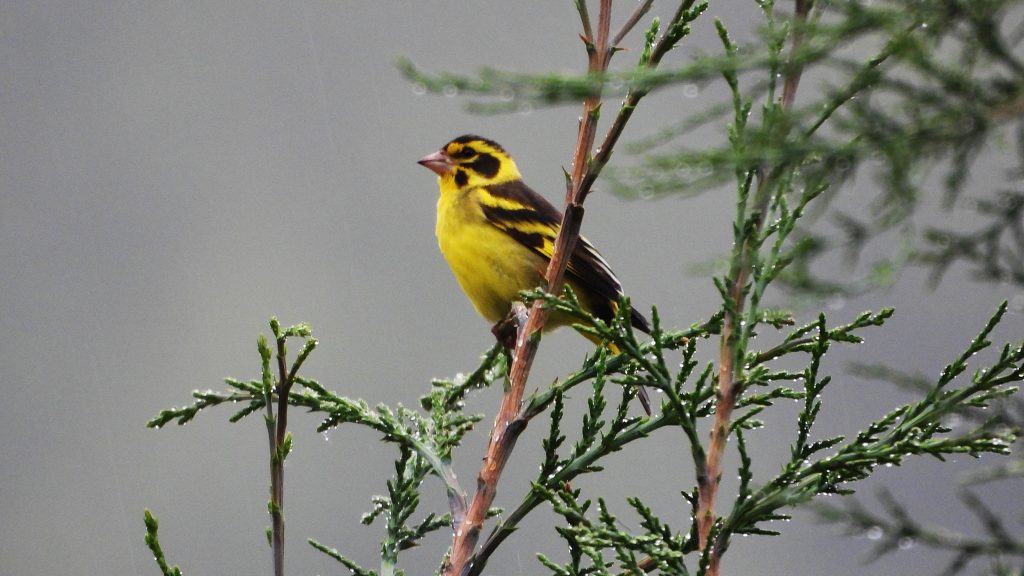
Yellow-breasted greenfinch | Photo by Suranjita Roy/WTI
Shergaon forest – a hidden treasure – is home to mammals of immense ecological importance such as small cats, clouded leopards (Neofelis nebulosa), dholes (Cuon alpinus), Asiatic black bear (Ursus tribetanus), and many more; thus carries even more weight in the conservation narrative. Its continuity with the Eaglenest Wildlife Sanctuary (EWS) and shared international boundary with Bhutan amplifies its ecological importance, as the forest might serve as a critical buffer, ensuring the gene flow remains uninterrupted.
“There is a tradition of contribution and service in our village, but it was usually done on an individual capacity or as a family effort. Here community living is more prevalent. Since individual giving is already part of our culture, we thought—why not create an organisation that allows us to give back as a community, for the community? – Dorjee Kandu Thungon, Vice-chairperson of Garung Thuk.”
And that is how Garung Thuk (which means our village) came to life in October 2014—an initiative sparked by a group of dedicated community members, and friends who grew up together, united by a shared mission to serve their village. This NGO champions both the upliftment of the community and the protection of its rich biodiversity. Among their many achievements, one remarkable initiative was the adoption of a stretch of river known as Choskorong Kho for five years. As part of this effort, they conducted a fish riverine ranching program, releasing 500 fish fingerlings into the water with the support of the fisheries department. To aid in the river’s natural regeneration, fishing and tree felling along the riverside have been strictly prohibited. Each year, in collaboration with Eaglenest Wildlife Sanctuary, Garung Thuk organizes a nature camp for schoolchildren to create awareness and appreciation for the region’s rich biodiversity. The goal is not only to educate the younger generation but also to inspire them to take pride in their natural heritage and actively work toward its preservation. Experts from various institutions and organizations are invited to deliver insightful talks, broadening the perspectives of the local community. This year, the WTI was also a part of the workshop, further enriching the experience.
With this vision at its core, Garung Thuk joined hands with the Wildlife Trust of India (WTI) forging a powerful alliance for conservation and community development.
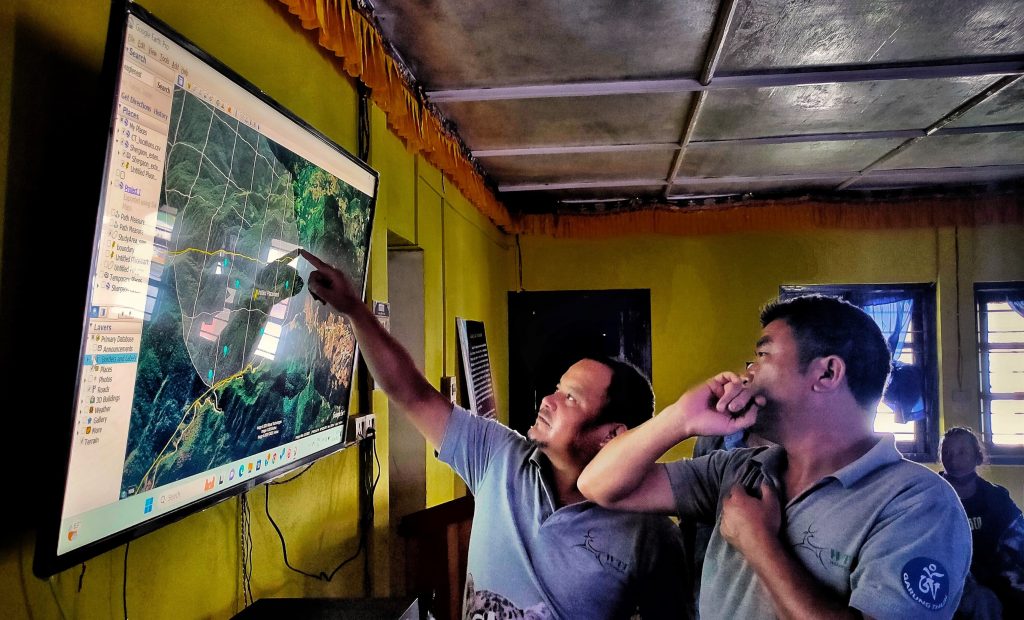
Discussion on survey area with Garung Thuk in Shergaon | Photo by Amrit Menon/WTI
With the mission of protecting wild cats, WTI’s Forgotten Cats of Shergaon Project, supported by Felis, Eicher Motor Foundation (EGF), and Shapoorji Pallonji Pandoh Takoli Highway Pvt. Ltd, aims to secure key habitats for small cat species within the Shergaon community forest. To achieve this, a scientific approach has been adopted, involving systematic grid-based sampling of the forest using camera traps. This method will help assess the diversity, distribution, and habitat preferences of key species in the area, contributing to its conservation. The community was also trained in deploying camera traps and collecting data. Additionally, they learned how to use GPS devices in the field and were provided with basic field gear for the survey.
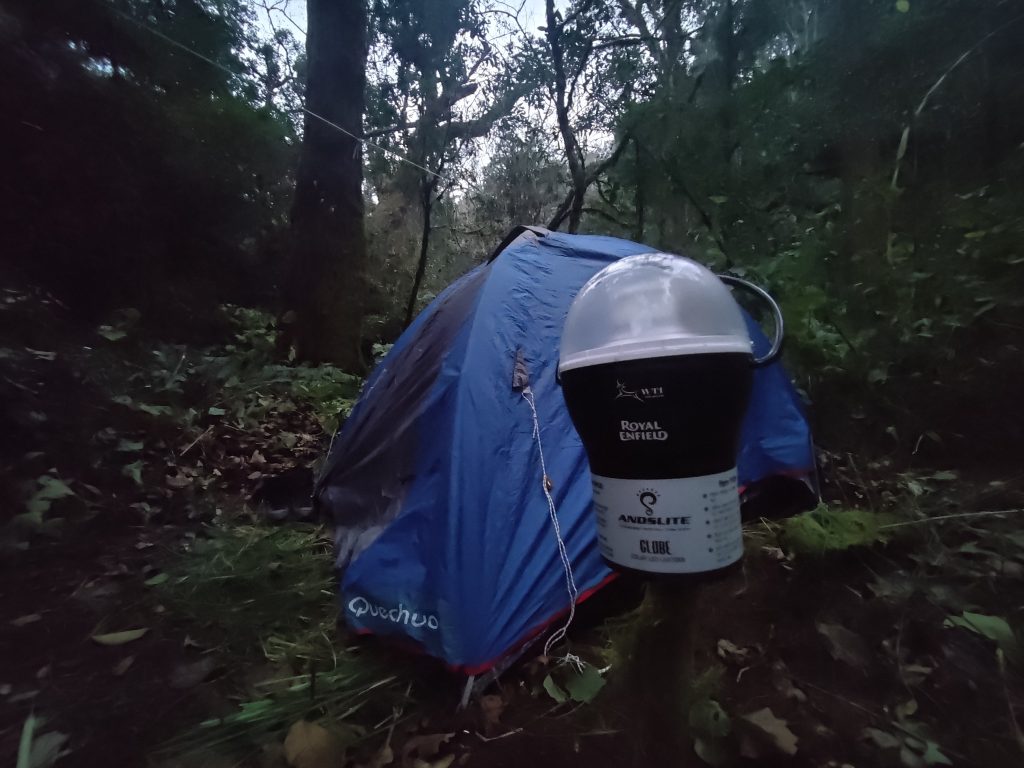
Camping inside the forest to cover the inside grids | Photo by Suranjita Roy/WTI
Furthermore, the project seeks to understand the community’s perception of wildlife and foster greater awareness of conservation efforts. Capacity-strengthening exercises equip them with the skills and knowledge needed to take an active role in preserving the region’s biodiversity and natural resources.
In collaboration with the Garung Thuk, the ultimate goal is to transform the community into dedicated guardians of small cats and their habitat in these community forests, ensuring that conservation becomes an integral part of their identity and legacy.
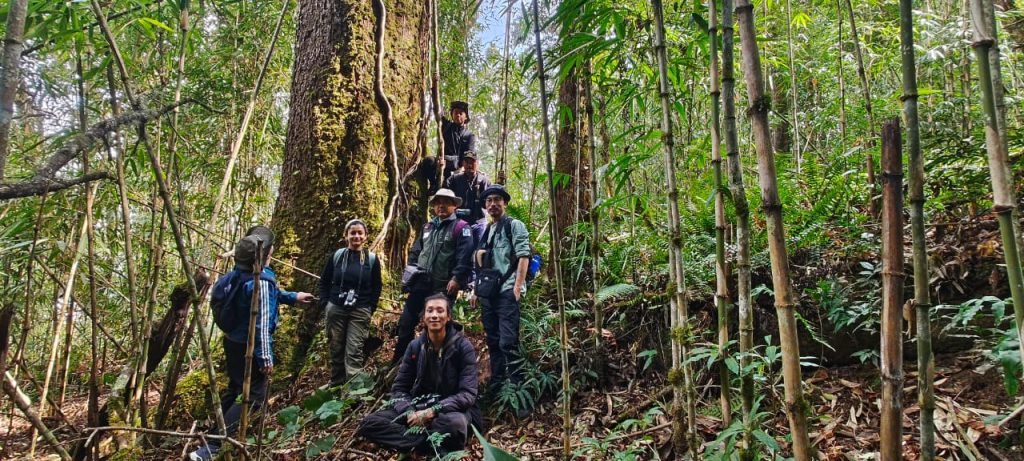
The team conducting a survey inside the forest | Photo by Dorjee Khandu Khrimey
But beyond the statistics and ecological significance lies a story of deep cultural ties. In an era where environmental degradation is rampant, Shergaon stands as a beacon of how community-driven conservation can create a harmonious balance between people and the planet. Even the smallest steps can have a lasting impact—like banning machines for tree cutting, following an age-old calendar to guide agricultural practices, and restricting fishing or harvesting on specific days of every month. These carefully observed practices allow the land and wildlife time to rejuvenate, reflecting a deep understanding of nature’s rhythms. To ensure this legacy continues, it is crucial to strengthen and pass down these conservation practices to future generations.