
Leopard in Peril: A case of rescue turned to community mobilisation
In the early hours of 11th March 2025, a distress alert reached the Wildlife Trust of India’s (WTI) Pilibhit Field Station. On the other end of the line was a member of the Primary Response Team (PRT) – a group of community volunteers trained to be first responders to wildlife-related emergencies in the region. The message was urgent: an adult male leopard was reported to have fallen into a jaw trap in Bhagchuri Farm, situated in the Khatima Range of Uttarakhand, near the Indo-Nepal border. Jaw traps are deadly hunting devices that can cause severe lacerations, joint dislocations, fractures, and even death to wild animals.
The region, forming a tri-junction between Surai, Khatima (Uttarakhand), Barahi (Uttar Pradesh) and Dodhara (Nepal),is a known hotspot for wildlife crime. Limited patrolling and easy cross-border access have been catalysing such illegal activities.
Acting swiftly, the WTI team packed essential rescue gear—khabbar (a specialized rescue net used on the field for rescuing mammal species), a stretcher, a metal detector and torches. The team had handled similar rescues before, but with each case bringing its own unique set of challenges, they were prepared, drawing on experience.

Jaw trap that the unfortunate leopard was caught in | Photograph by Raghavendra Pratap Singh/WTI
By 9:00 AM, the team had reached the site and joined the forest officials. The leopard, trapped in the middle of an open dirt road, had long been under the harsh sunlight and was at a high risk of dehydration. The first step was to providewater to the distressed animal. Fortunately, the leopard managed dragging itself far enough to find shelter beneath a eucalyptus tree.
It was crucial to secure the leopard as quickly as possible for immediate treatment. A transport cage, already padded with elephant grass and sugarcane leaves for comfort, was brought in. Meanwhile, the crowd had flocked dangerously close. A significant part of the rescue effort—led by the PRT volunteers and the forest department focussed on crowd control. There have been past instances when such curiosity from onlookers had led to fatal consequences for both the animalsand humans. Fortunately, the team managed to move the crowd back to a safer distance.
It took six tense hours before the leopard – estimated to be four years old – was successfully tranquillized. Veterinarians from the Uttarakhand Forest Department treated and monitored the animal. Despite its left paw being trapped, the leopardshowed no other major injuries and was stable enough to be released later that evening in the Surai Range.
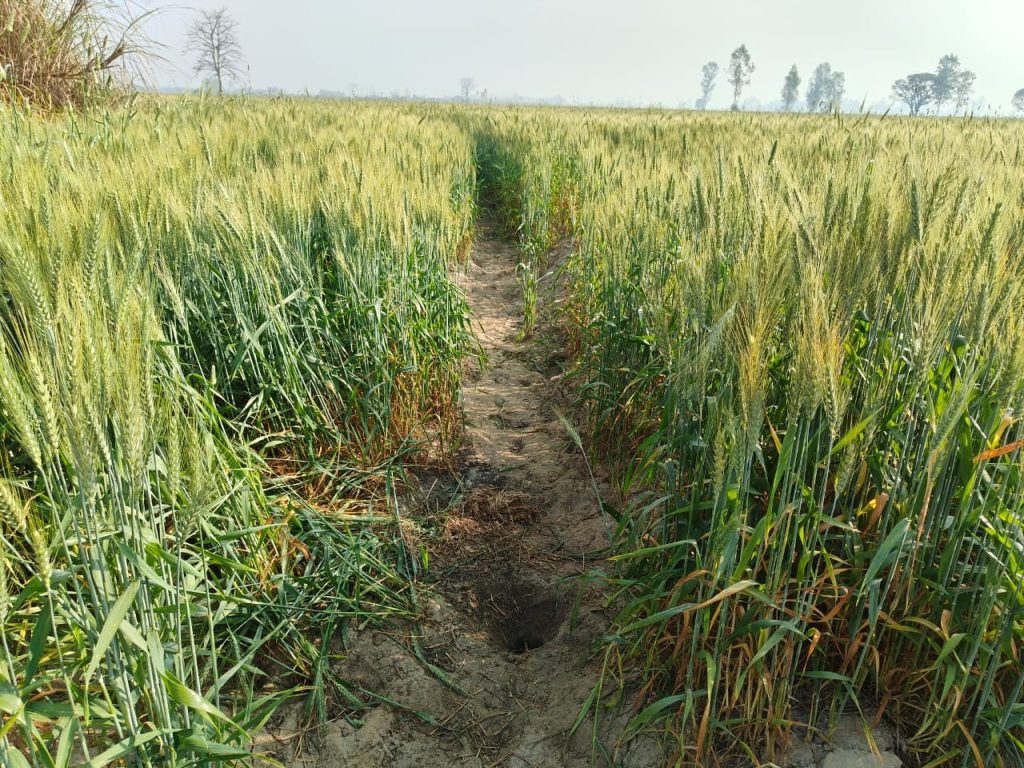
Farmlands in the Khatima Range of Pilibhit Tiger Reserve near the Indo-Nepal border | Photograph by Raghavendra Pratap Singh/WTI
What They Found Next Was Bigger
During the rescue, locals revealed that this was the first known case of a jaw trap in the area. However, persistent enquiries uncovered an alarming fact: there were more traps nearby. Our team reported these findings to the Sub-Divisional Officer and Range Officer, who promptly initiated a search operation along with an immediate investigation into those involved in the current case.
The following day, a villager led the team to the suspected snaring site, but the traps had been removed overnight, likely by poachers involved. Fortunately, the informant had captured video evidence of the traps. Due to its proximity to the Indo-Nepal border, fringe areas like Khatima have long been hotspots for poaching activities. This region has a history of illegal wildlife trade, including leopard and tiger skin, claws, and other derivatives. In 2022, the Uttarakhand Forest Department had seized pangolin scales from this region. A tiger skin was also confiscated from a truck transporting white sand in 2023. These various events underscore the urgent need for stricter monitoring and enforcement measures.
From Rescue to Reinforcement
This case also highlighted the critical need for a formal PRT network in Khatima. PRTs have been at the forefront of several rescues and human-wildlife conflict mitigation efforts. More importantly, they are local volunteers who help raise awareness within their communities. Following the rescue, the WTI team immediately began establishing the region’s first PRT unit, ensuring the local community would be equipped to report, respond and put a stop to future cases of wildlife crimes. The formation of PRTs has proven to be an effective tool, demonstrating the power of the collective action and shared commitment of the local communities and conservation organisations in mitigating human–large carnivore conflicts across various tiger reserves.
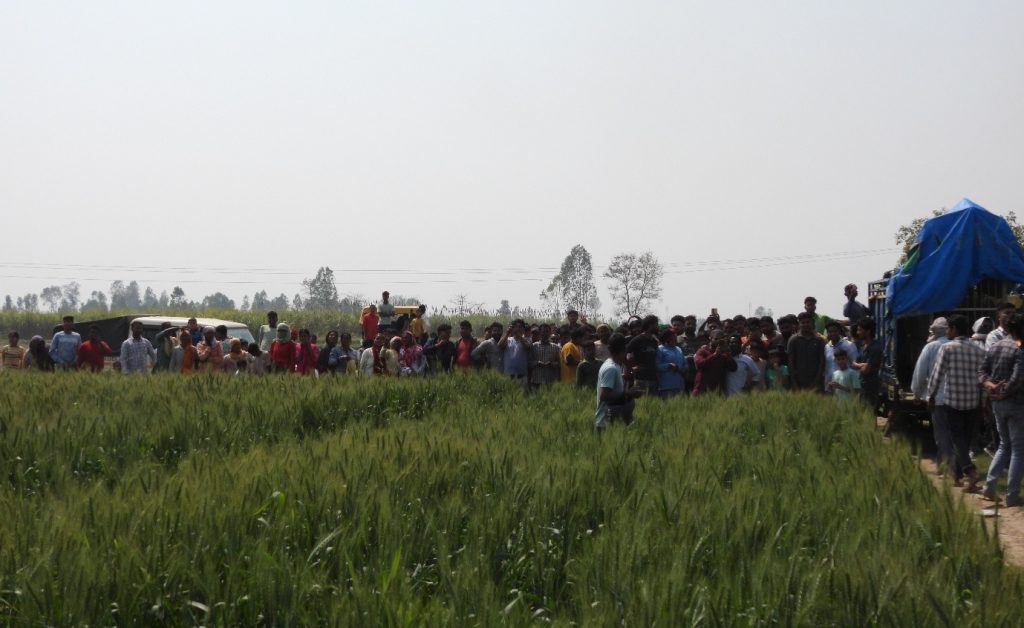
PRT and forest department staff working with locals to maintain a safe distance between people and the rescue site | Photograph by Raghavendra Pratap Singh/WTI
Between 2018 and 2024, PRT teams have reported 148 instances of wildlife crime across the Terai landscape. In collaboration with the forest department, WTI has been actively working to address and curb these crimes, playing a key role in protecting the region’s rich biodiversity.
At the end of the day, a leopard was saved from meeting a brutal fate, a poaching network was exposed and a community was mobilised. WTI’s efforts, backed by local knowledge and swift coordination with the forest department, highlight how frontline action and public engagement can turn the tide against wildlife crime. Every trained volunteer, every successful rescue, every dismantled trap is a step toward protecting India’s natural heritage.
The project is supported by the by the U.S. Department of State and International Bereau of International Narcotics and Law Enforcement Affairs.
by Raghavendra Pratap Singh, Wildlife Crime Control Division