CWRC admits two orphaned Asiatic black bear cubs
CWRC, 27th Feb 2025: In the month of February, two Asiatic black bear cubs, estimated to be 6-8 weeks old, were discovered by a resident of Morongial village, near the Dissoi Valley Reserve Forest on the Assam-Nagaland border, within the Mariani range of the Jorhat forest division. The cubs were found in the resident’s backyard and immediately handed over to the forest department.
Despite multiple attempts, the forest officials could not locate the mother bear, rousing suspicions that she may have fallen victim to poaching. As the cubs are too young to survive on their own in the wild, they have been shifted to the Centre for Wildlife Rehabilitation and Conservation (CWRC) in Borjuri, near Kaziranga National Park.
A second attempt at reunion was made on March 11, after the presence of adult bears was confirmed using camera traps and indirect signs, but it proved unsuccessful.
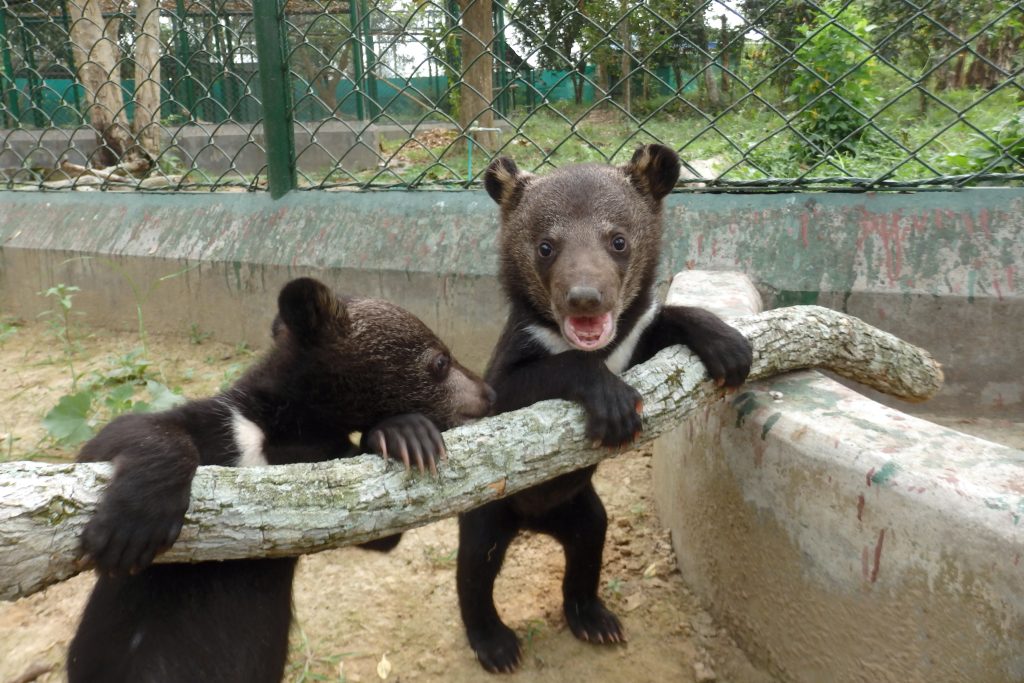
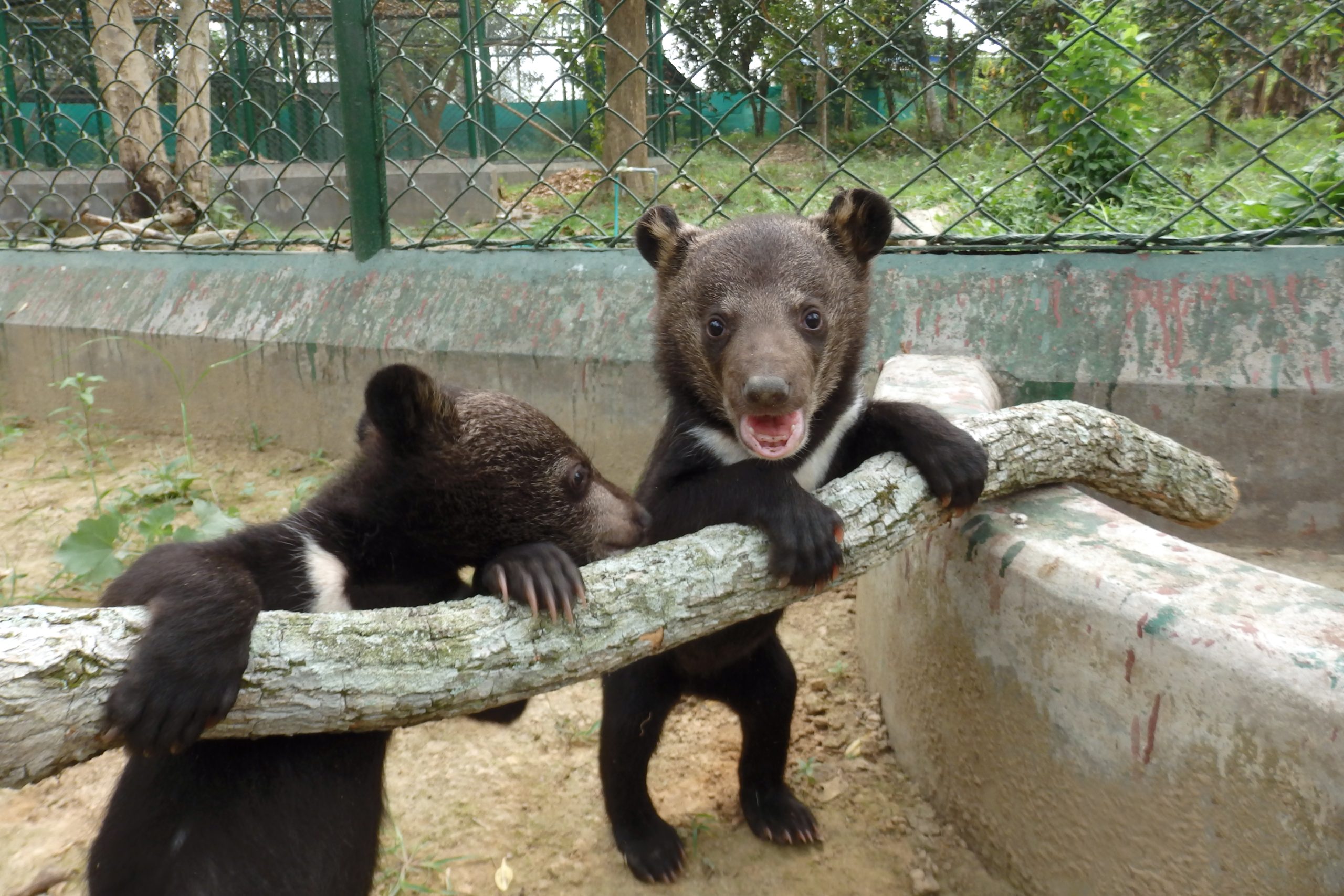
Asiatic black bear cubs at CWRC | Photograph by Dr. Bhaskar Choudhury/WTI
Currently, the bear cubs are being hand-raised at the centre and are reportedly showing healthy signs of growth and activity. Our dedicated veterinary team and animal keepers are monitoring their progress through regular health checkups and behavioural observations. The cubs have begun to explore their surroundings with curiosity, often seen playing and engaging with enrichments like tree bark and branches, which will help them develop essential survival skills such as climbing. As part of CWRC’s standard bear rehabilitation protocol, they will gradually move through phases of hand-raising, weaning, and acclimatisation, preparing them for an eventual return to their natural habitat.
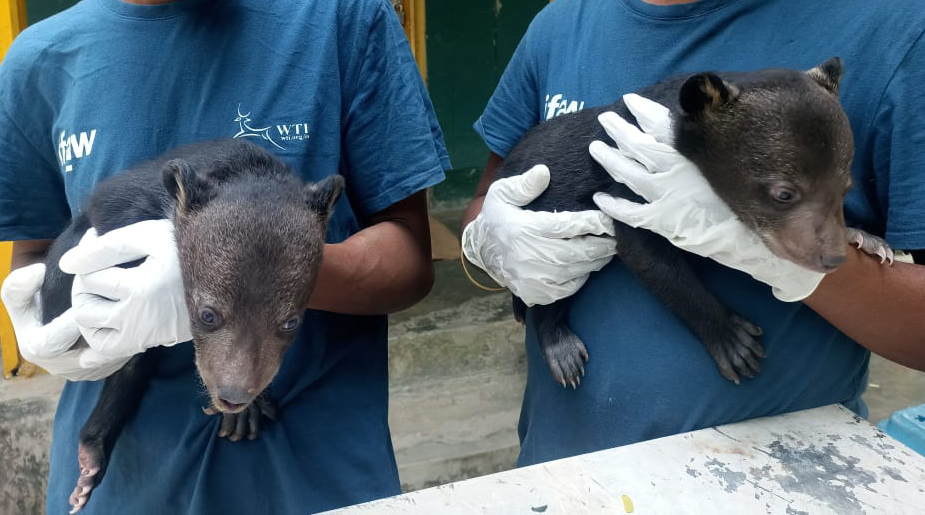
Asiatic black bear cubs being hand raised at CWRC | Photograph by Dr. Bhaskar Choudhury/WTI
The Asiatic black bear (Ursus thibetanus) is categorised as ‘Vulnerable’ by the IUCN Red List and is protected under Schedule I of the Wild Life (Protection) Act, 1972 in India. This species is threatened by climate change, habitat loss, habitat degradation and poaching for body parts.
CWRC was established in 2000 and is jointly run by IFAW-WTI and the Assam Pradesh Forest Department. It aims to provide food, shelter, veterinary care, and other rehabilitation measures to orphaned wildlife until they are fit to be released back into their habitat. The project is supported by the International Fund for Animal Welfare (IFAW) and HCL Foundation.