Red card for poachers: How the Pangolin Cup 2025 is scoring wins for pangolins
Hurtling down a bumpy mountain road into Senapati, a camera kit beside me, I was on assignment for the first-ever Pangolin Cup 2025. For the past month, we have been busy in setting the stage. Just past the town gate, huge banners and posters were already showing up. Despite the sense of turmoil that have been a norm in towns of Manipur for quite some time now, Senapati looked decked up. It was hard to not imbibe in the excitement around but at the same time, I found myself wondering – can a football tournament really make an impact? Can the community come together for an animal they might not have heard of or seen? Can people come out of their internal conflicts and celebrate nature the way it is meant to be?
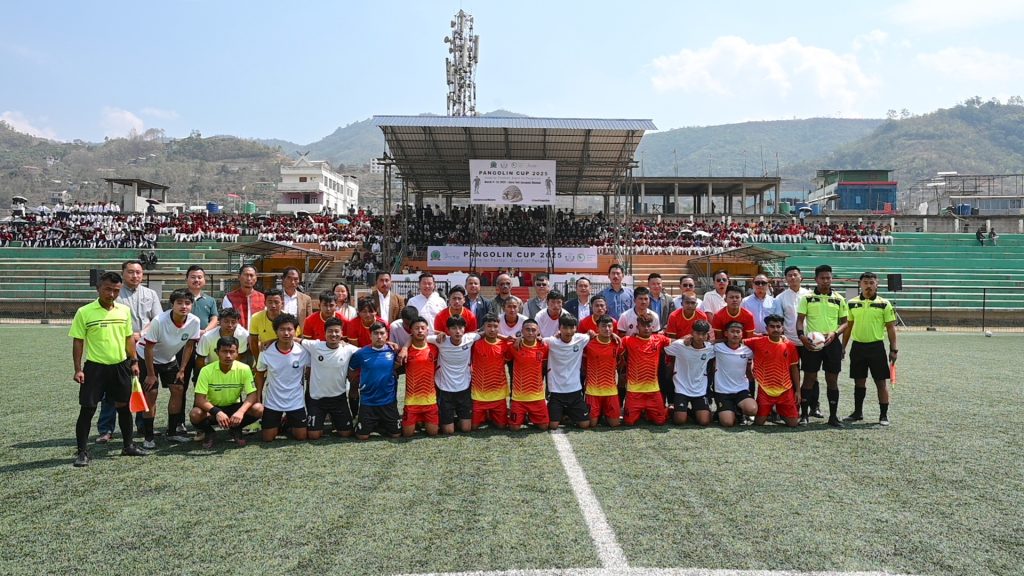
Pangolin Cup 2025 | Photograph by Adil Arif/WTI
A horn, not a whistle
The opening was announced by blowing into the “Nghakai Nghouyu”, made from buffalo horn, and Manipur’s traditional way of a stand-in for a referee’s whistle. Its deep note rolled across the AstroTurf football ground, as sixteen teams from Senapati and Kangpokpi districts took to the field—boots tight, jerseys crisp, and rivalries older than the bumpy road we had travelled. The prize? A trophy, bragging rights and an unlikely boost for an 80-million-year-old, scale-clad ant-eater – the Chinese Pangolin.
Why football for pangolins?
This tournament wasn’t just another sporting event. It was a bold and ingenious initiative to use the universal language of sport to spark awareness and inspire conservation action for pangolins with the slogan “Unite for Football, Stand for Pangolins”. Spearheaded by the Wildlife Trust of India (WTI) in collaboration with the Senapati District Olympic Association of Manipur (SDOAM) and the Manipur Forest Department, the tournament aimed to bring the community together in support of a species that has been losing grounds and hope.
Manipur’s proximity to the international border with Myanmar and Bangladesh has turned it into a busy corridor for illegal wildlife trade, particularly pangolin meat and scales. In fact, the state reports the maximum illegal trade of pangolins in the country. The population of the species has been on a steep decline and so has the awareness around it.
To come up with a solution, WTI, supported by the government and civil society leaders, decided to tap into something people here never ignore: football.
Curious spectators drifted onto the turf, eager to witness the first ever “Pangolin Cup.” On the pitch, players warmed up with one-touch passes, displaying their seasoned pro skills. Between their warm-ups, they peppered our team with curious questions, eager to learn more about the tournament and its purpose.
Do pangolins really curl up into a ball?” asked a young player
“Yes, they do, it is their defence mechanism”, answered a team member.
The young player said, “We should turn our defence into a pangolin wall and the strikers might as well go home.”
If biology classes were this imaginative, we’d all remember our Latin names.
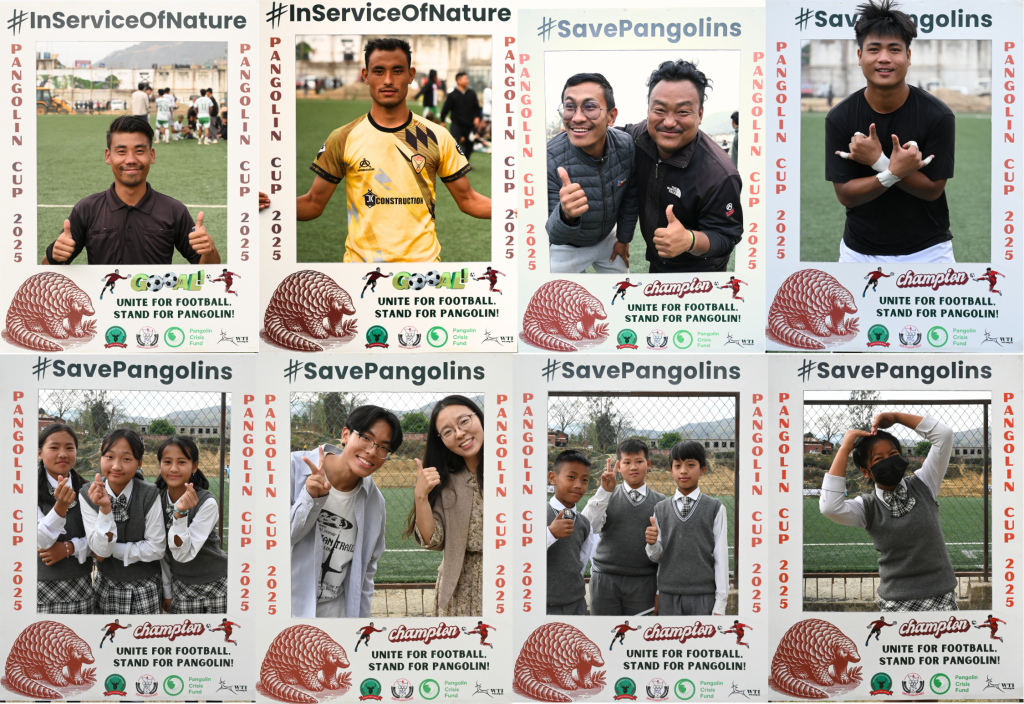
Players, students, and the public stand united for pangolins | Photo by Adil Arif/WTI
Pangolin Cup 2025 – When cheers turn into change
The tournament commenced with a simple appeal from the dais by: Carry today’s excitement home and speak up for the pangolin.
Smt. Mamoni Doley, IAS, the District Collector of Senapati, emphasised, “Being at the top of the hierarchy, civil society organisations (CSOs) must remember that younger generations, especially students, look up to us. If we treat hunting as a sport, they will follow suit. This is why collective action is essential—CSOs as leaders and students as changemakers. It is an honour for our district to host the first-ever “Pangolin Cup” in the state, an event that I hope will inspire similar initiatives across other regions. Football is the perfect way to bring people together, and this tournament is a brilliant step toward uniting communities for conservation.”
An assistant coach summed it up nicely: “Manipur has produced football stars for the national team — hopefully, this cup can champion the younger generation to help save pangolins.”
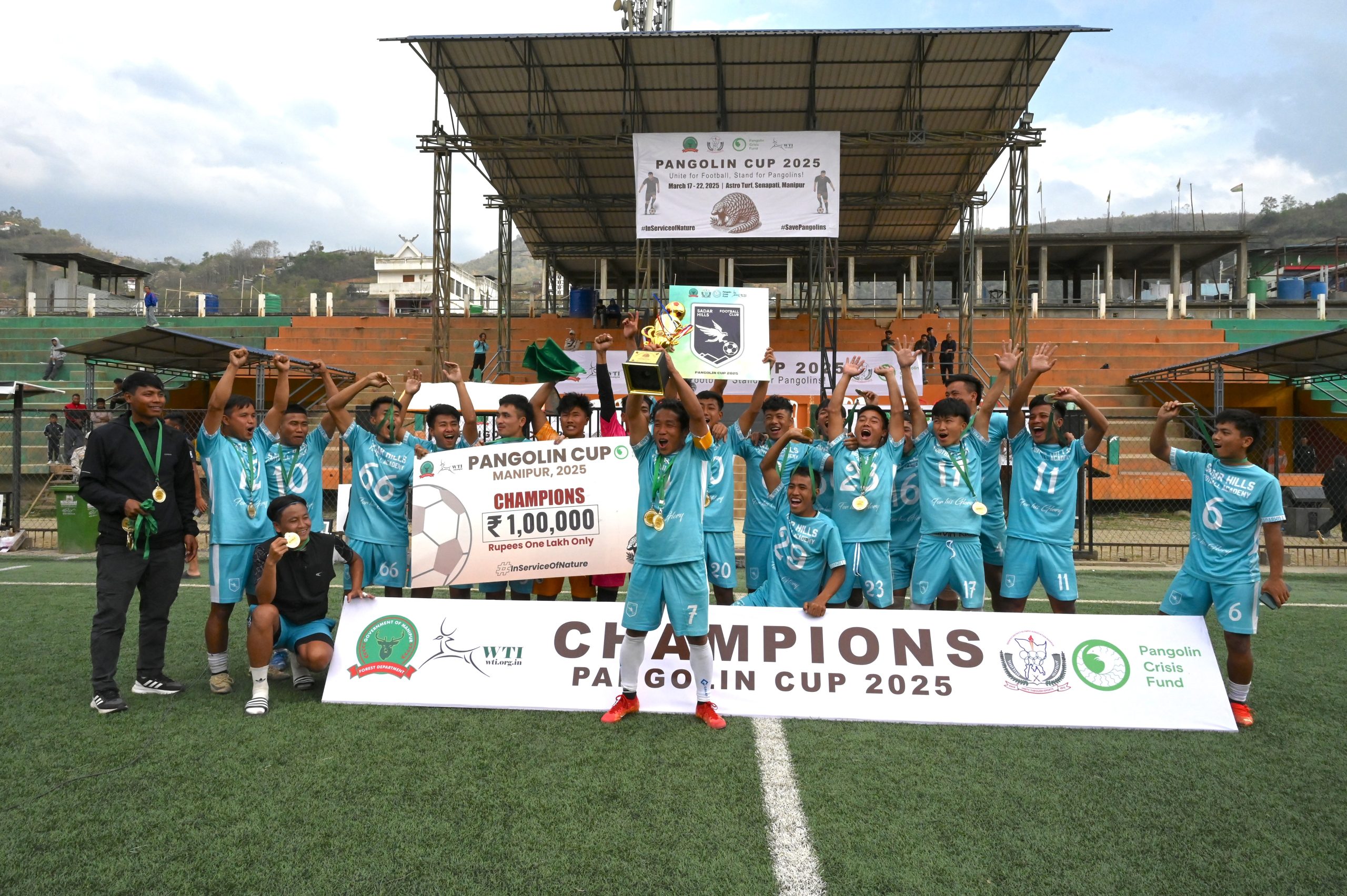
The players answered on the pitch. Over the next five days, every player emptied his tank, for every goal scored, the crowd erupted in cheers, clapping and celebrating in unison. When the winning goal finally came, the atmosphere was electric, as the crowd could hardly contain their excitement, swept away by a wave of collective happiness. In a stunning upset, Sadar Hills FC triumphed over Senapati FC, sealing the victory at 2–0 in the finals.
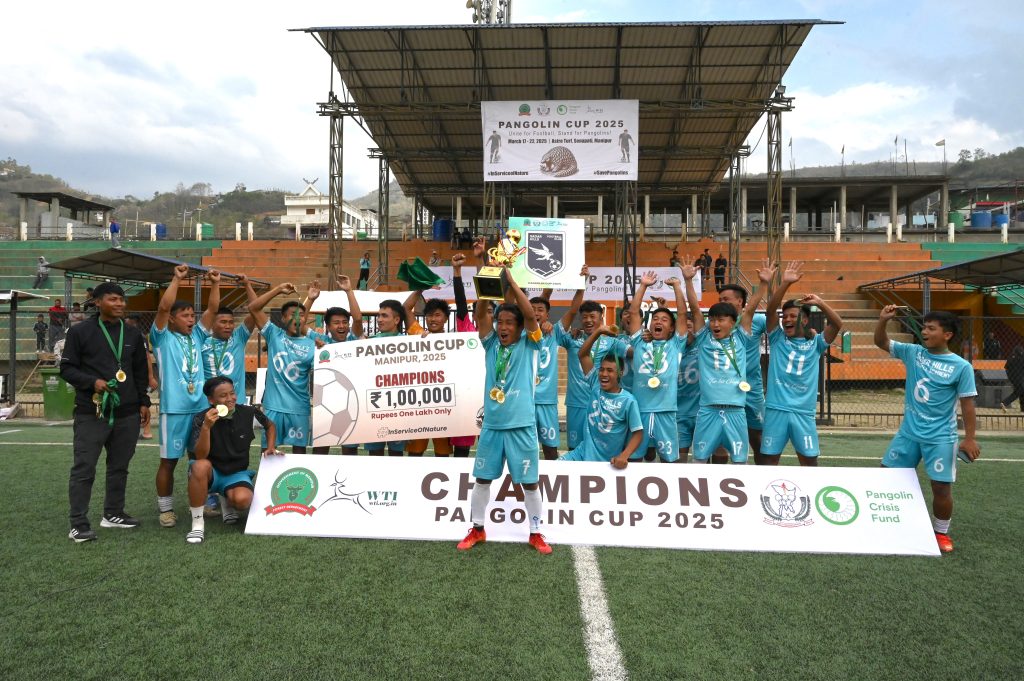
Sadar Hills FC raised the pangolin trophy high, celebrating their victory | Photograph by Adil Arif/WTI
For 18 months leading up to the match, WTI’s Countering Pangolin Trafficking Project had been working with forest officers, enforcement agencies and village councils to gather support and protection for this critically endangered species. The first milestone came on 22 August 2024, when the president of the Tangkhul Naga Awunga Long, representing 230 villages, outlawed the hunting and trade of pangolins. The buzz from the Pangolin Cup 2025 further helped turn the paper pledge into a momentum and within days of the final whistle, leaders of the Poumei Naga people too issued their own broad ban, extending community protection to pangolins and other wildlife.
Several players admitted they had known pangolins only from stories told by village elders. By the end of the trophy ceremony, they were vowing that their children would one day see the animal alive in the wild, not just hear about it at bedtime.
What happens next?
WTI’s team is continuously training enforcement officials, monitoring trade routes and guiding communities that choose conservation over trafficking. But lasting success needs more allies.
If one blast of the “Nghakai Nghouyu” centre-field can bring together a chorus of committed voices, the hope for good is not yet lost. Sports has always been a tool to bring people together and make their voice heard beyond human-made boundaries. Let’s hope that this win brings home the celebration for the species.
by Adil Arif, WTI Communications