Wildlife Crime Prevention Training for forest personnel in Kanha Tiger Reserve
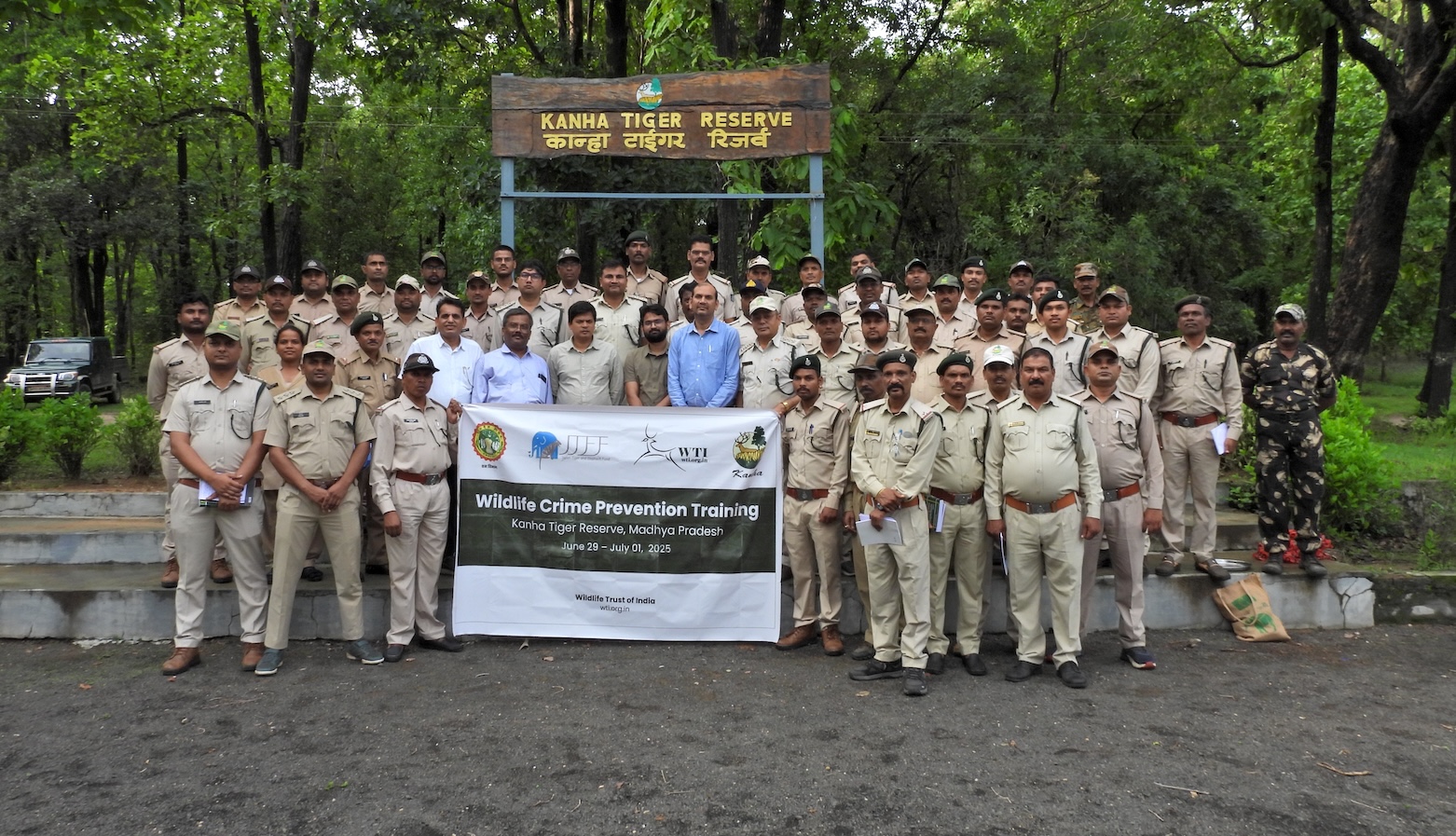
Kanha Tiger Reserve, 6th July 2025: The Wildlife Trust of India (WTI) conducted a three-day ‘Wildlife Crime Prevention Training’ at Khatia Ecocentre, Kanha Tiger Reserve, Madhya Pradesh, from 29th June to 1st July as part of a Rapid Action Project (RAP) supported by the Japan Tiger and Elephant Fund (JTEF). The training aimed to strengthen the capacity of 50 frontline forest staff in preventing and addressing wildlife crimes within the reserve.
The sessions were conducted by a team of experienced professionals – Dr. R. P. Mishra, Deputy Director and Regional Facilitator for Central India at WTI, Adv. Yash Kumar Soni, Legal Consultant for Madhya Pradesh Forest Department and for WTI in Central India, and Mr. Monesh Singh Tomar, Assistant Manager and Officer-in-charge of WTI’s Wildlife Crime Control Division.
The training was inaugurated by the Field Director of Kanha Tiger Reserve, Mr. Ravindra Mani Tripathi, IFS, in the presence of Deputy Director Mr. Punit Goyal, IFS, and Deputy Director (Buffer) Ms. Amita K.B., IFS. In his inaugural speech, the Field Director lauded WTI’s continued support in strengthening wildlife law enforcement and expressed his gratitude for conducting the training.
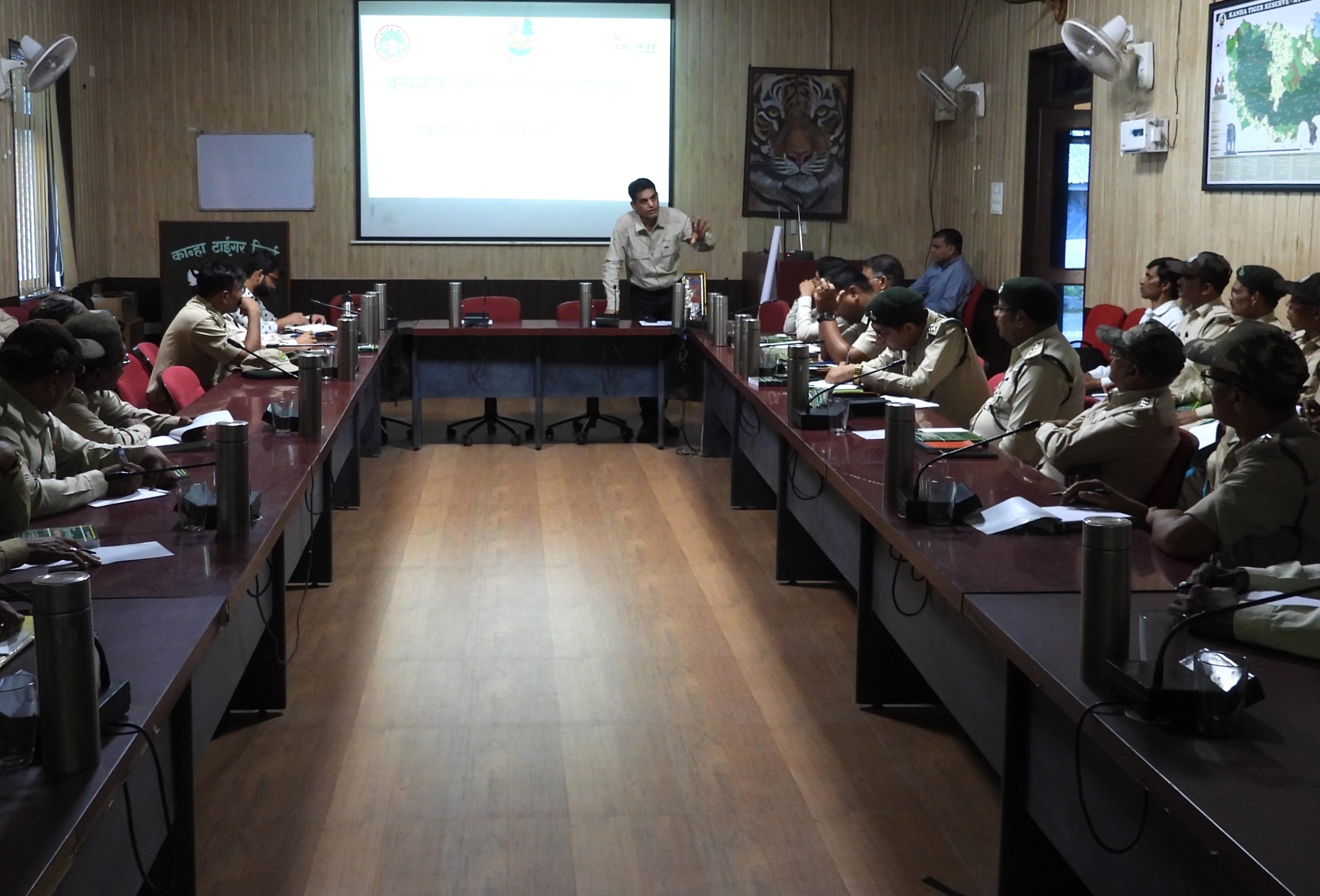
With decades of experience on his hands, Dr. R. P. Mishra of WTI provided an enriching session during the three-day training | Photo by Raihanul Sarkar/ WTI
The first day of training began with an introductory session aimed at familiarising participants with the objectives and schedule of the program. This was followed by informative sessions covering key concepts related to wildlife conservation and management, wildlife crimes, and the Wild Life (Protection) Amendment Act, 2022. The day concluded with an engaging talk on methods of hunting and anti-snare walks.
The second day focused on key provisions of the Wild Life (Protection) Amendment Act, 2022, particularly offences and enforcement mechanisms. Participants were taken through real-life case studies to contextualise theoretical knowledge. Additionally, a mock wildlife crime scene investigation trial was conducted, offering participants hands-on experience in applying techniques and protocols in a simulated field scenario. The session was highly interactive, with participants demonstrating eagerness to learn and improve their skills.
On the final day, the training focused on the documentation of wildlife crimes, procedures for evidence handling, and identification of prohibited wildlife articles. A dedicated open discussion provided a platform for participants to share their experiences and challenges faced in the field while combating wildlife crime. The trainers addressed their concerns and guided them on best practices for effective enforcement. The training programme concluded with each participant receiving certificates and training kits containing essential field tools and reference material.
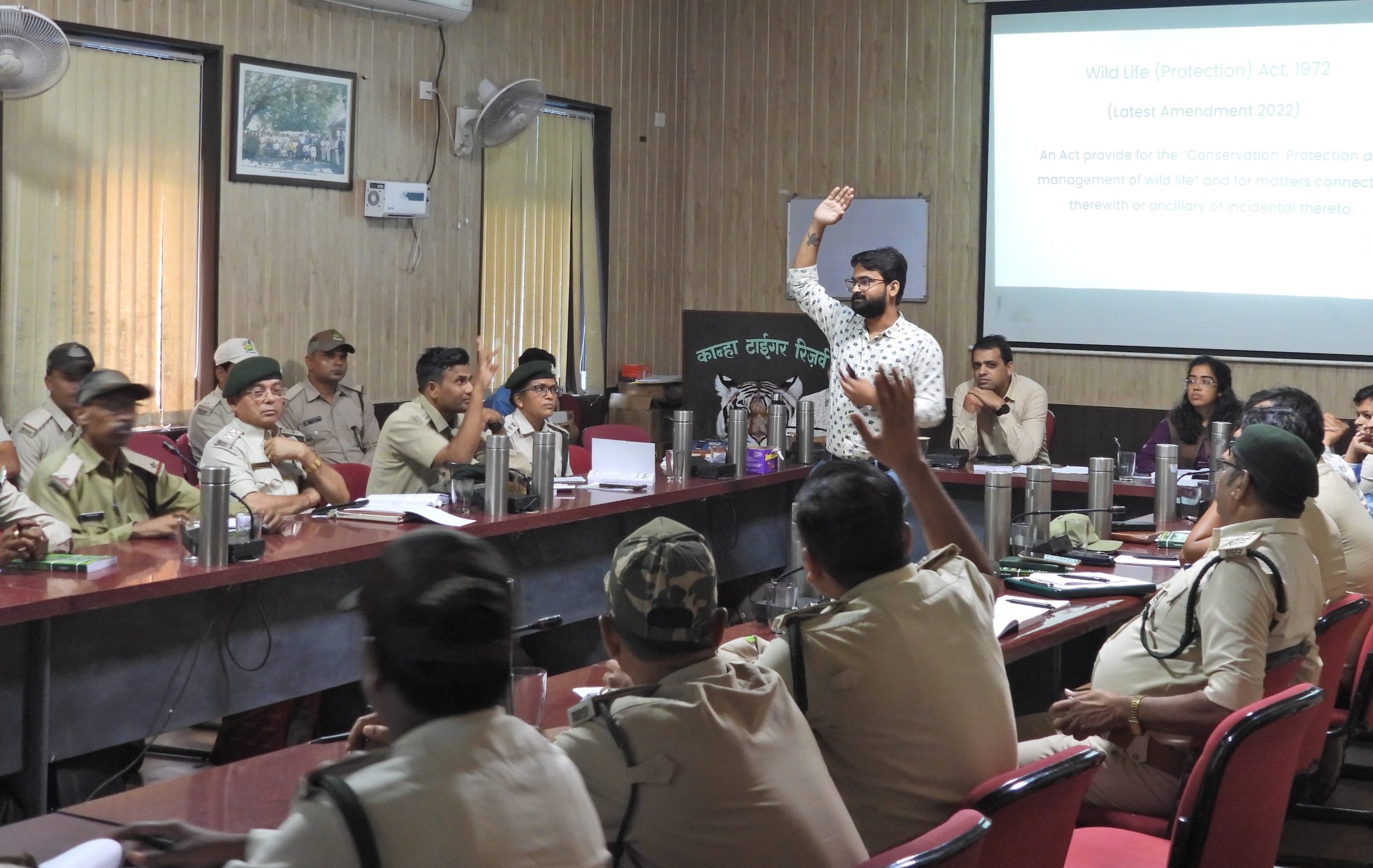
Monesh Singh Tomar of WTI led a session on the provisions of the Wild Life (Protection) Act, 1972 | Photo by Raihanul Sarkar/ WTI
Addressing the valedictory session, the Range Officer of Khatia Buffer Zone Mr. Virendra Kumar Jyotishi, thanked WTI for conducting the training. He said, “WTI is a prestigious organisation working towards the conservation of wildlife and its trainers, experts, and lawyers are well devoted to the organisation and their field of work. This 3-day wildlife crime prevention training was meaningful. However, more such trainings should be conducted from time to time.”
As a result of this training, it was observed that while the average knowledge level of participants before the training centred around 54%, their knowledge significantly increased, with one-third of participants scoring above 75% and all participants scoring 70% on average in the assessment post the training.
The Wildlife Crime Prevention Training at Kanha Tiger Reserve proved to be a valuable learning experience for frontline forest staff, enhancing their understanding of wildlife laws, improving their practical skills in crime scene investigation, and fostering a greater sense of responsibility in wildlife protection. The collaborative support from WTI and JTEF through the Rapid Action Project was instrumental in making this initiative a success.