Odisha Govt. and CSS Asian Elephant hosts International workshop on human–elephant coexistence
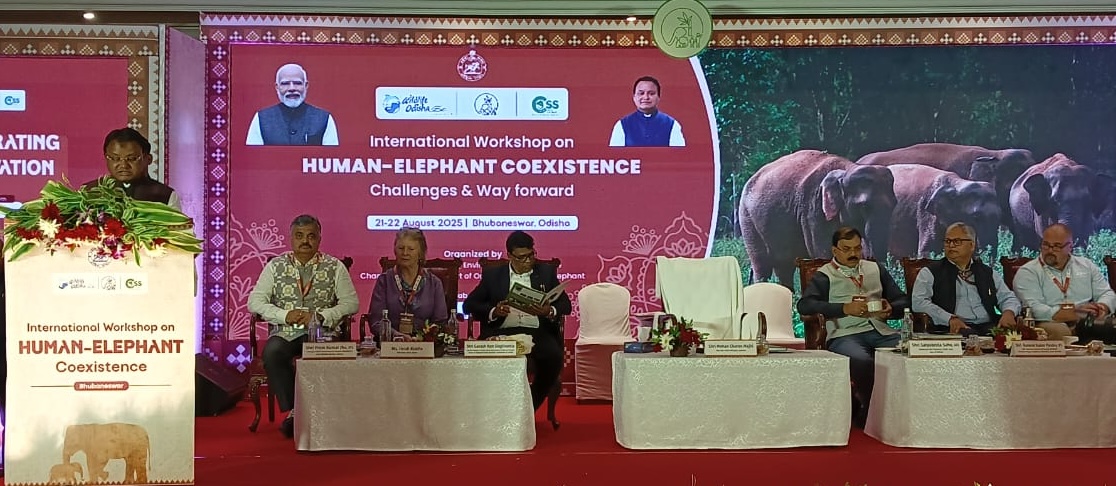
Bhubaneswar, Odisha, 25 August 2025: The International Workshop on Best Practices in Human–Elephant Coexistence: Challenges and the Way Forward was held in Bhubaneswar, Odisha, from 21 to 22 August 2025. Hosted by the Government of Odisha in collaboration with the IUCN SSC Center for Species Survival: Asian Elephant (CSS Asian Elephant), the workshop brought together government representatives, conservation practitioners, researchers, and civil society organisations from across Asia.
The inaugural session was graced by the Hon’ble Chief Minister of Odisha, Shri Mohan Charan Majhi, and Hon’ble Minister of Forest, Environment & Climate Change, Labour and Employees’ State Insurance, Govt. of Odisha, Shri Ganesh Ram Singhkhuntia, and other distinguished dignitaries, including Shri Ramesh Kumar Pandey, IFS, Addl. Director General of Forests, Wildlife, MoEF&CC, Govt. of India, Shri Satyabrata Sahu, IAS, Additional Chief Secretary, FE&CC Dept., Govt. of Odisha, Shri P. K. Jha, IFS CWLW, Odisha, Ms. Heidi Riddle, Vice Chair of IUCN SSC AsESG and Mr. Adam Felts, VP of Animal care, Columbus Zoo and Aquarium, member of core executive committee, CSS Asian Elephant.
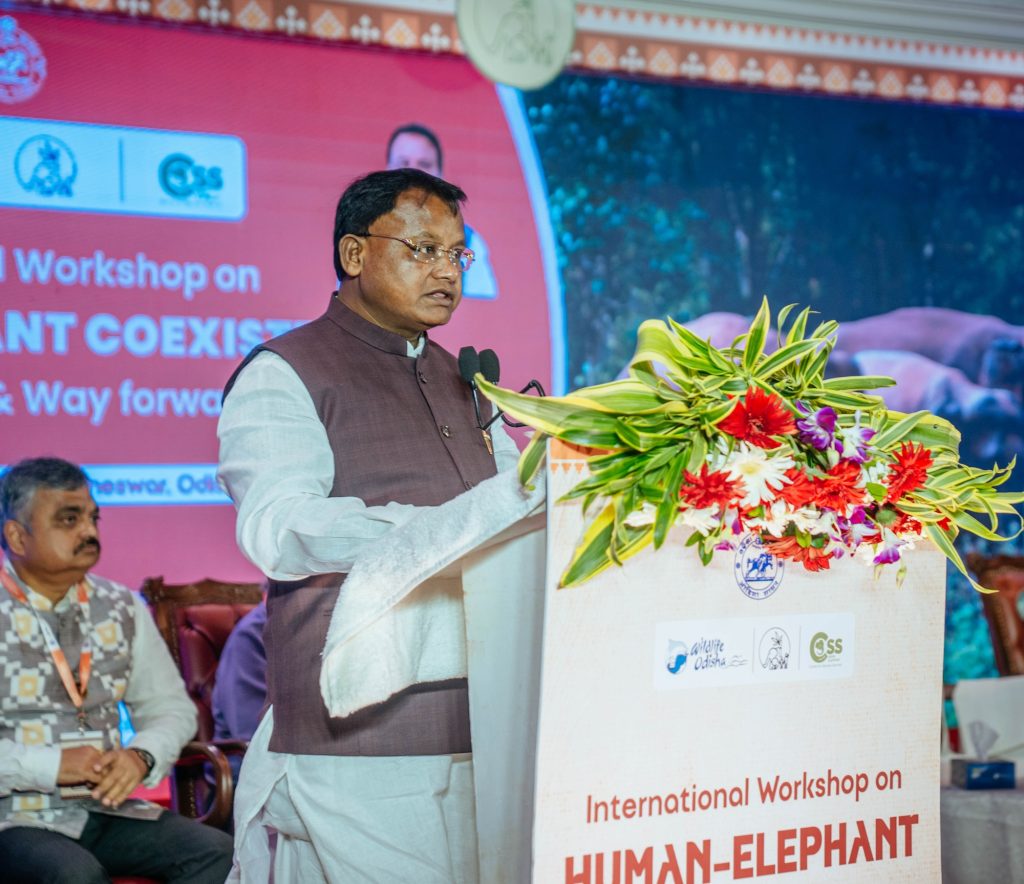
Hon’ble Chief Minister of Odisha, Shri Mohan Charan Majhi, delivering his keynote at the inaugural session
During the exhibition session, Dr. Sandeep Kr. Tiwari, Director & Chief of Conservation at Wildlife Trust of India (WTI), briefed the Hon’ble Chief Minister and Hon’ble Minister od Forest, Environment and Climate Change on the IUCN SSC Center for Species Survival Asian Elephant and highlighted the vital partnership between IUCN SSC, Columbus Zoo and Aquarium, Wildlife Trust of India, and the Forest, Environment & Climate Change Department, Government of Odisha.
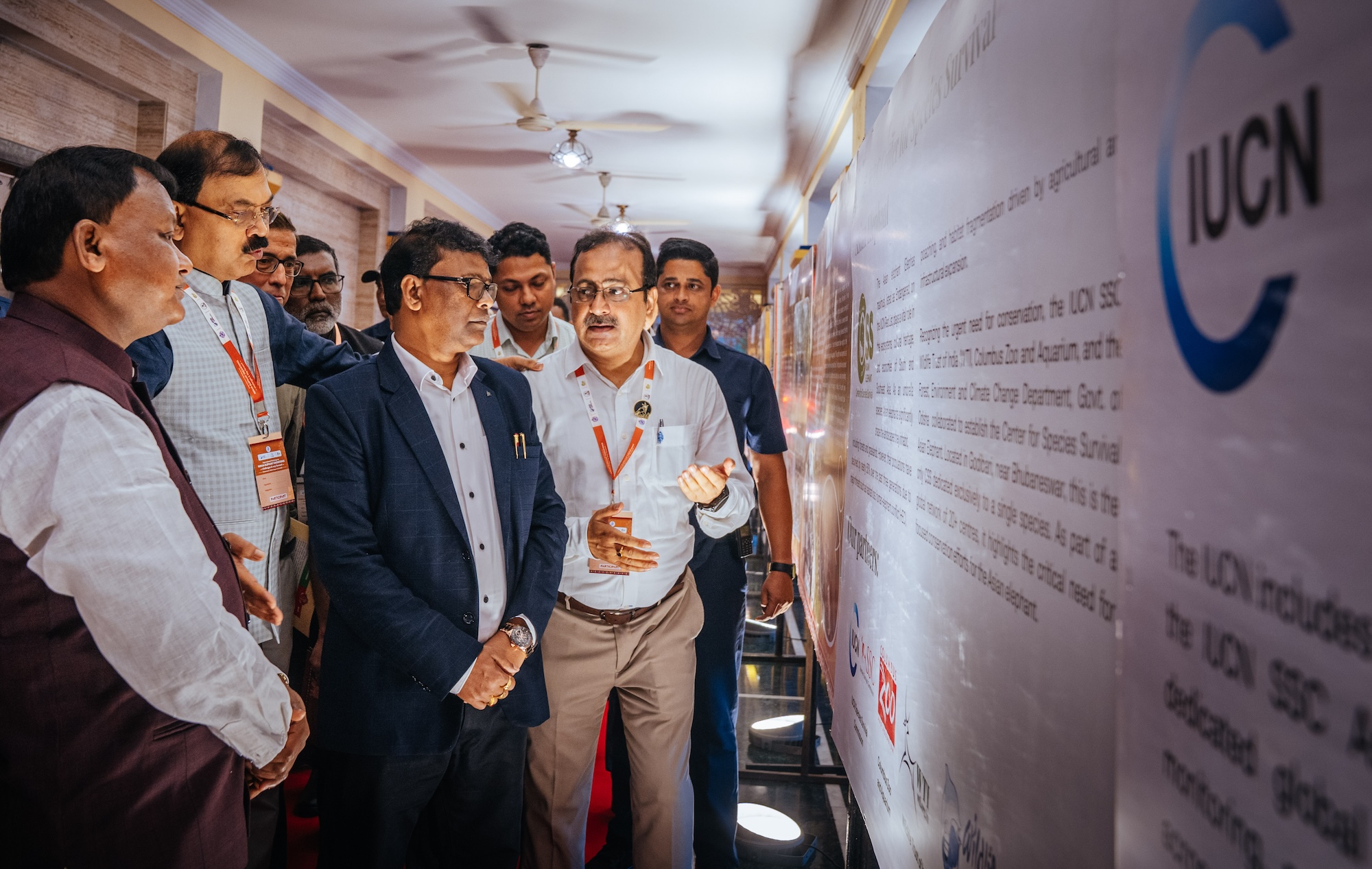 Dr. Sandeep Kr. Tiwari, Director & Chief of Conservation, WTI (R), with Hon’ble Odisha CM Shri Mohan Charan Majhi (L) and Hon’ble Forest Minister Shri Ganesh Ram Singhkhuntia (Centre).
Over two days, participants engaged in technical sessions addressing diverse dimensions of human–elephant conflict (HEC). Discussions explored innovative mitigation strategies such as crop protection measures, land-use planning, community stewardship programs, and the use of technology—including GPS tracking, infrared cameras, drones, and early warning systems. Sessions also highlighted community-led conservation practices, elephant corridor management, and policy frameworks that integrate coexistence priorities into broader development planning.
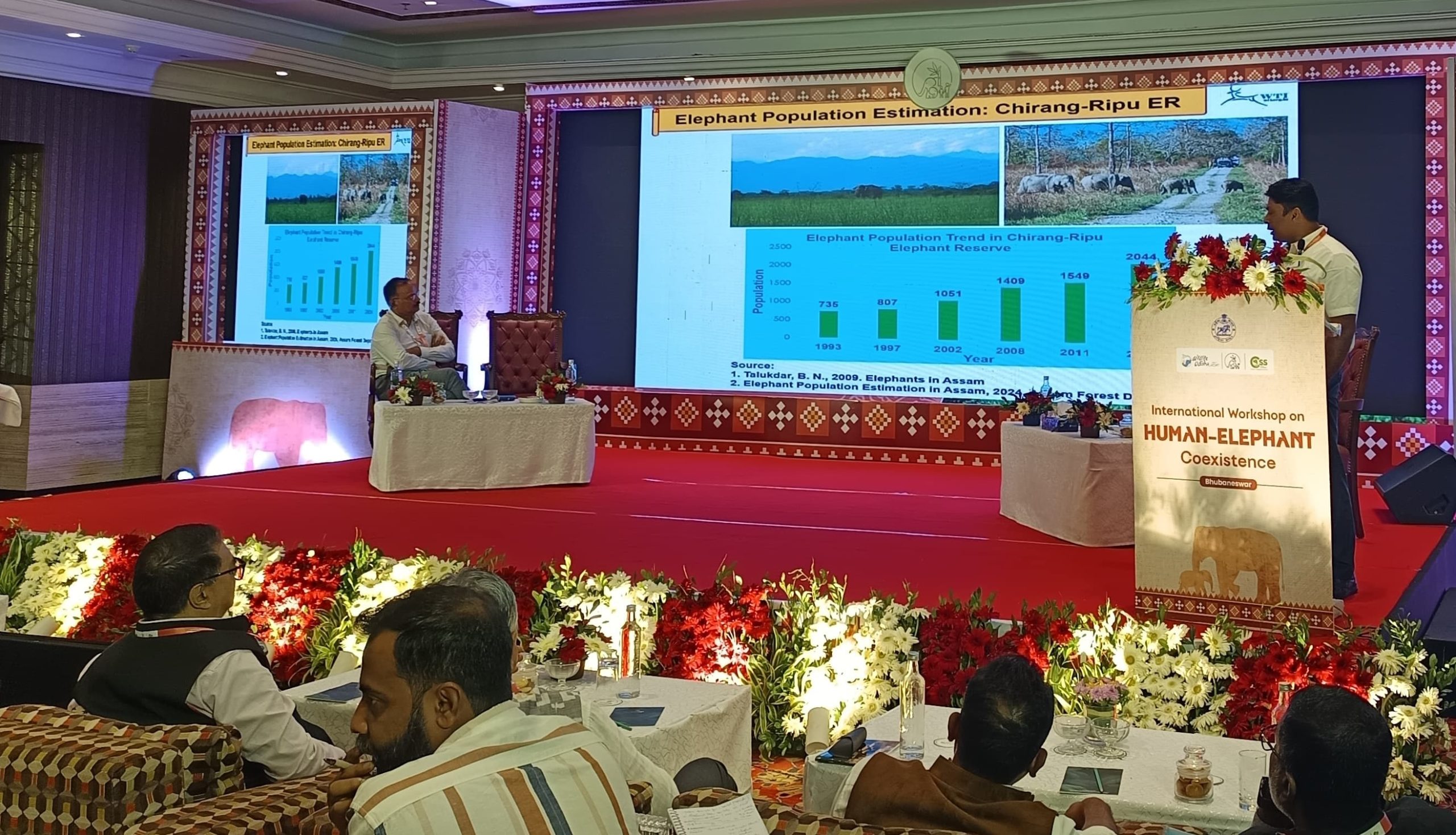
Sanatan Deka, Project Head, WTI’s Greater Manas Recovery Project, presenting on community engagement to reduce Human-Elephant Conflict | Photo by Abhishek Ghoshal/WTI
The workshop showcased Odisha’s pioneering coexistence initiatives alongside best practices from other Asian elephant range states. Participants emphasised the importance of combining scientific approaches with traditional knowledge, fostering community partnerships, and strengthening transboundary collaboration.
Key outcomes included shared recommendations to scale up early warning systems, promote community-based coexistence strategies, improve land-use planning for elephant corridors, and build stronger cross-sectoral partnerships. These outcomes contribute directly to the range-wide conservation goals outlined under the 2022 Kathmandu Declaration for Asian Elephant Conservation.