Whale shark conservation through community awareness across Kerala’s coastline
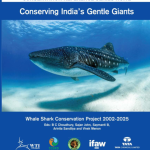
As part of the Pan India Whale Shark Conservation Project, the Wildlife Trust of India (WTI), with the support of Oracle, has been actively engaging with communities along Kerala’s coastline. Now in its seventh successful year, the project focuses on sensitising and capacity strengthening the key stakeholders, creating awareness and building capacity among key stakeholders—particularly fisherfolk, students, and local communities—to protect the endangered whale shark.
Over the past two months, the WTI team has intensified its outreach across Thiruvananthapuram, Kollam, and Thrissur districts through a series of sensitisation events. These included workshops, quiz competitions, colouring contests, and rescue and release training sessions. So far, the initiative has reached more than 7,795 fisherfolk and 3,745 students.
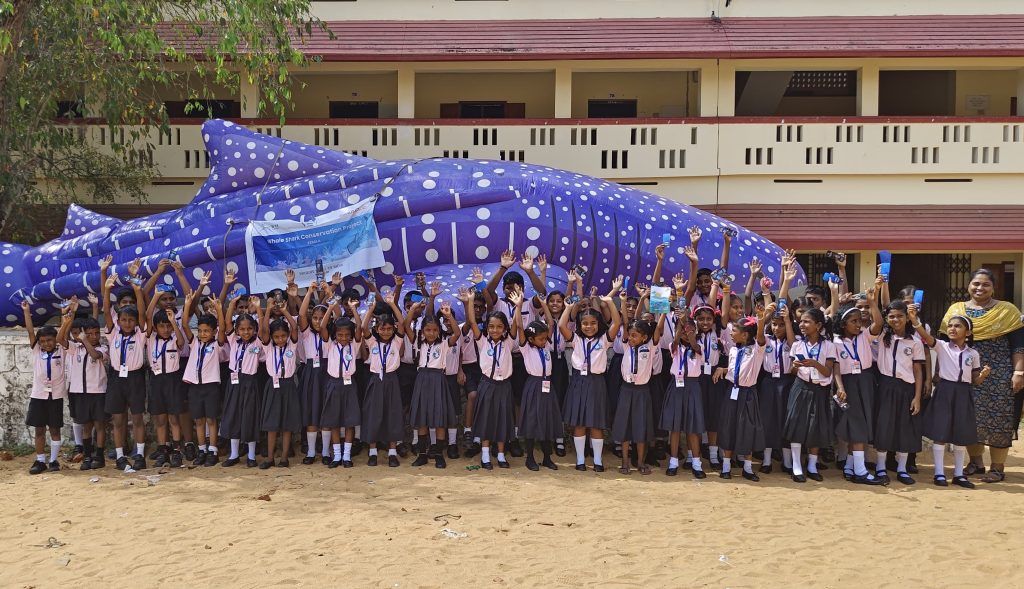
WTI has been conducting whale shark awareness programs for fisherfolk and students across Kerala’s coastline | Photo by Jithin Jose/WTI
Particular emphasis was placed on the Kollam district, where 10 out of 13 events were held across key fishing harbours and landing centres such as Kannimel Beach, Thirumullavaram Beach, Thangassery Beach, Vadi Fishing Landing Centre, Ponmana Fishing Landing Centre, Azheekkal Fishing Centre, Onambalam Fish Landing Centre, Jonapuram Fish Landing Centre, Neendakara Harbour, and Shakthikulangara Harbour. These locations were chosen in response to a recent incident involving the tragic death of a whale shark due to accidental entanglement in fishing gear. The sessions were led by WTI field staff Jithin Jose and Ajith, who highlighted the ecological importance of whale sharks and the urgent need for conservation.
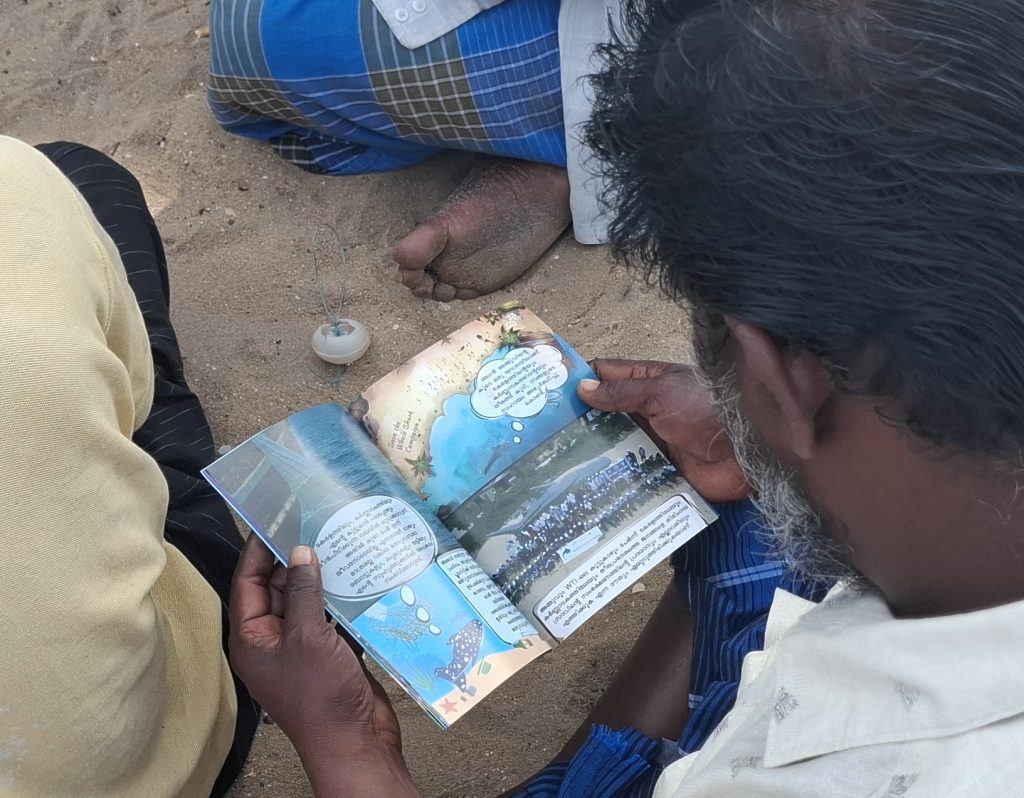
The team distributed comic books as awareness materials to fishers in Jonapuram fish landing centre and other sites | Photo by Jithin Jose/WTI
To support these ongoing efforts, WTI has developed the ‘Meenu Watcher’ app, a user-friendly digital tool designed to assist fishers in reporting and safely releasing accidentally entangled whale sharks. The app plays a dual role—it not only facilitates real-time documentation of rescues but also acts as verified proof of the conservation action. It works offline, which means fishers don’t need internet access to use it. The app captures a photo or video and automatically records geo-coordinates, date, and time of the rescue, making it tamper-proof and secure against duplication.
To encourage participation, WTI is offering partial support of ₹25,000 to fishers who successfully release an entangled whale shark and document the rescue using the app. This financial support serves both as recognition of the fishers’ conservation efforts and as motivation for others to follow suit. The collected data from the app will also help identify rescue hotspots along the coast, contributing to better policy and targeted conservation planning in the future.
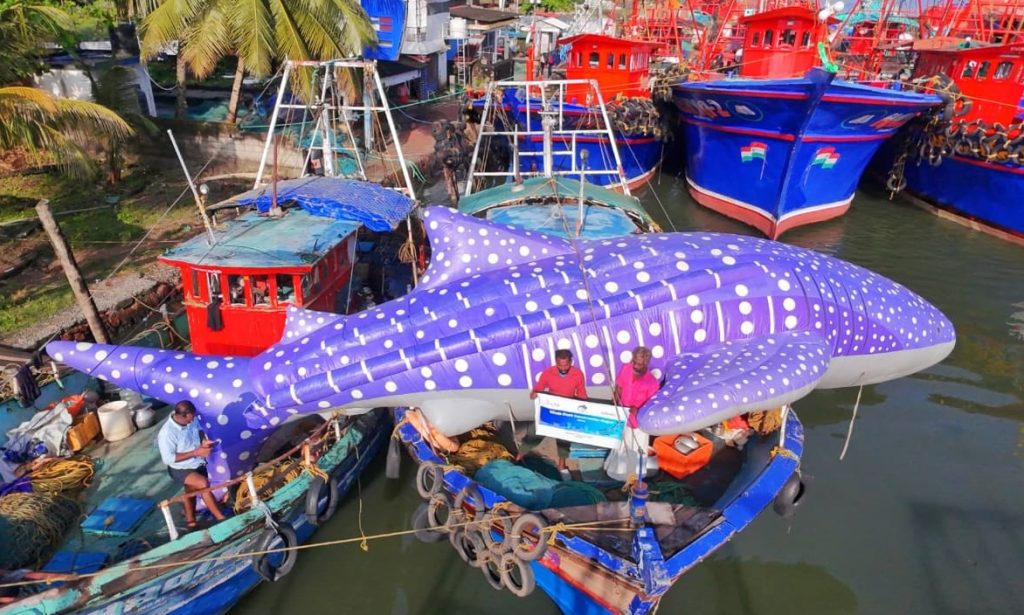
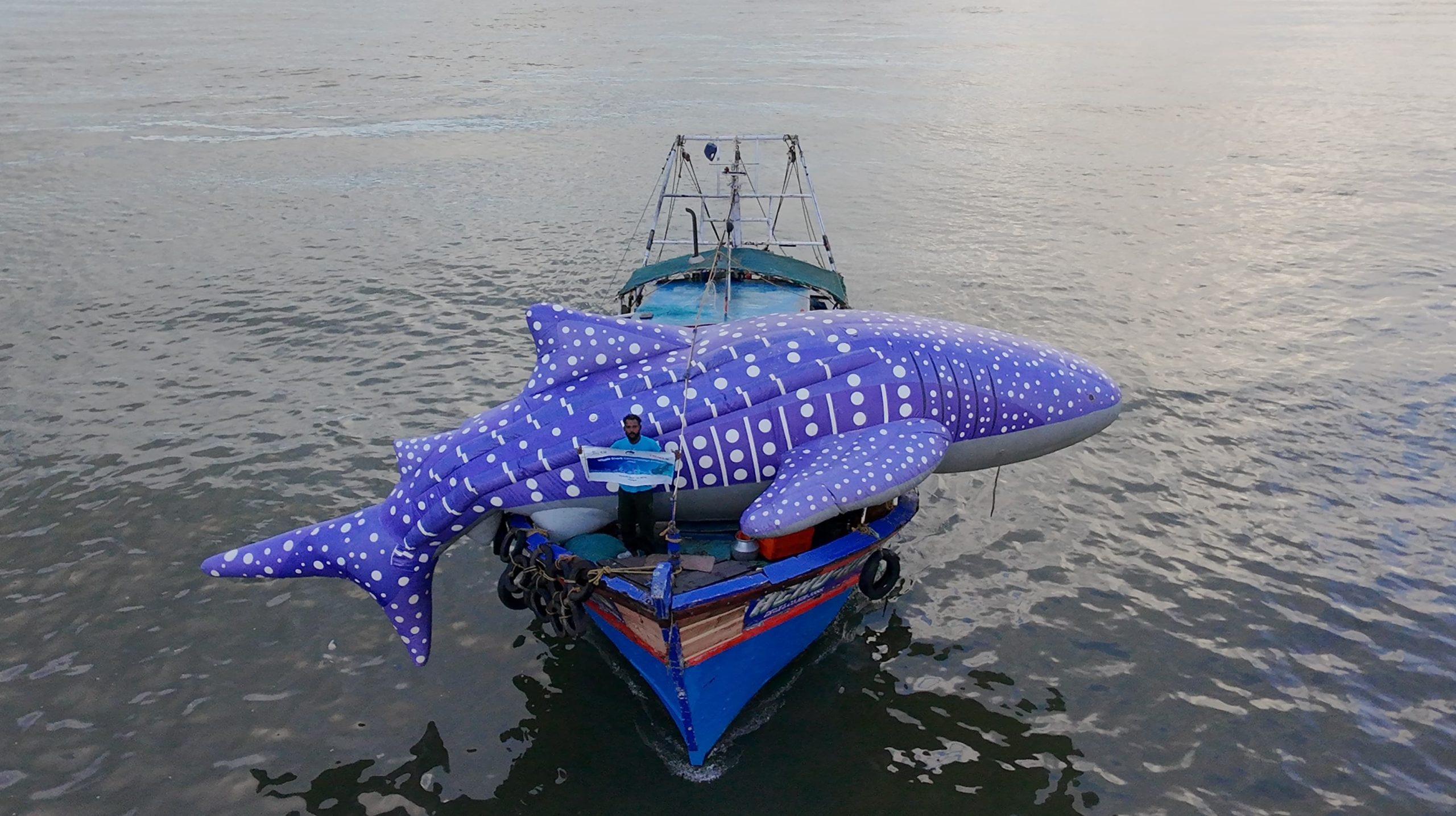
With the help of a boat, the life-size inflatable whale shark was taken across islands to sensitise people| Photo by Jithin Jose/WTI
The whale shark (Rhincodon typus) is the largest fish species in the world and is classified as Endangered by the IUCN. In India, it is protected under the Wild Life (Protection) Act, 1972, making its accidental capture a critical issue that requires urgent attention. Community initiatives like this one are essential to ensure their survival.
Together, with the help of technology, education, and strong community participation, WTI and Oracle are working towards a sustainable and hopeful future for whale sharks in Kerala and beyond.