
WTI documents four elusive small-cat species for the first time in Seinthuk, Arunachal Pradesh
Seinthuk, October 2025: For the first time, the Wildlife Trust of India team have documented the presence of four elusive felids moving silently beneath its forest canopy. Wildlife Trust of India’s field team, in partnership with Garung Thuk NGO members, initiated these camera trap surveys back in March 2024. Using a grid-based systematic design, the team installed the cameras in around 31 sq.km. area out of 40 sq. km. of forested habitat. The team hopes to cover the remaining area in the coming months.
In a quiet corner of north-eastern India, in Seinthuk, Arunachal Pradesh, where indigenous communities coexist with nature, camera traps have revealed something remarkable. In a major scientific finding, we have the first photographic evidence of four elusive cat species – the clouded leopard (Neofelis nebulosa), the Asiatic Golden cat (Catopuma temminckii), the Marbled cat (Pardofelis marmorata), and the leopard cat (Prionailurus bengalensis) from the community forests of Seinthuk. This finding is a remarkable achievement for wildlife research and conservation in the Eastern Himalayas and highlights the rich biodiversity of community forests of the region.

Marbled cat (Pardofelis marmorata) captured by the deployed camera trap in Seinthuk Community Forest
“It took months of field work, trekking through the forest and ridgelines, enduring thorny bushes and steep climbs, to finally confirm the presence of these elusive cats beyond the boundaries of the Protected Area Network” exclaims Suranjita Roy, the project biologist and field lead.
All four cat species were documented within a span of six months and are believed to be active in the area, albeit in low number. Adding to it, 14 other mammal species and 10 species of bird were also recorded in the survey – highlighting the rich biodiversity of the forest.
The feline diversity of Seinthuk, Aruncahal Pradesh
Among the cats documented is the mainland clouded Leopard (Neofelis nebulosa), belonging to the Pantheralineage, often known as the “small cat among the big cats” with its tail nearly as long as its body length (head included). Globally listed as Vulnerable on the IUCN Red List, this cat has been primarily threated by habitat loss, fragmentation, and illegal hunting. Also documented was the marbled Cat (Pardofelis marmorata), often referred to as the “mini clouded leopard” due to the many morphological similarities, but in fact more closely related to the Asiatic Golden Cat. though listed as “Least Concern” in the IUCN Red List, limited data is available on its status, population and distribution.
Other species documented were the Asiatic golden cat (Catopuma temminckii) with its striking colour morphs and also known as the Temminck’s cat, and the Leopard cat (Prionailurus bengalensis). The later has been known to often live close to the human settlements, making it the most adaptable of the group. The Asiatic golden Cat was recently classified as ‘Vulnerable’ by the IUCN Red List while the leopard cat is classified as “Least Concern”. All these species share the same threats in the landscape, including habitat loss and poaching.
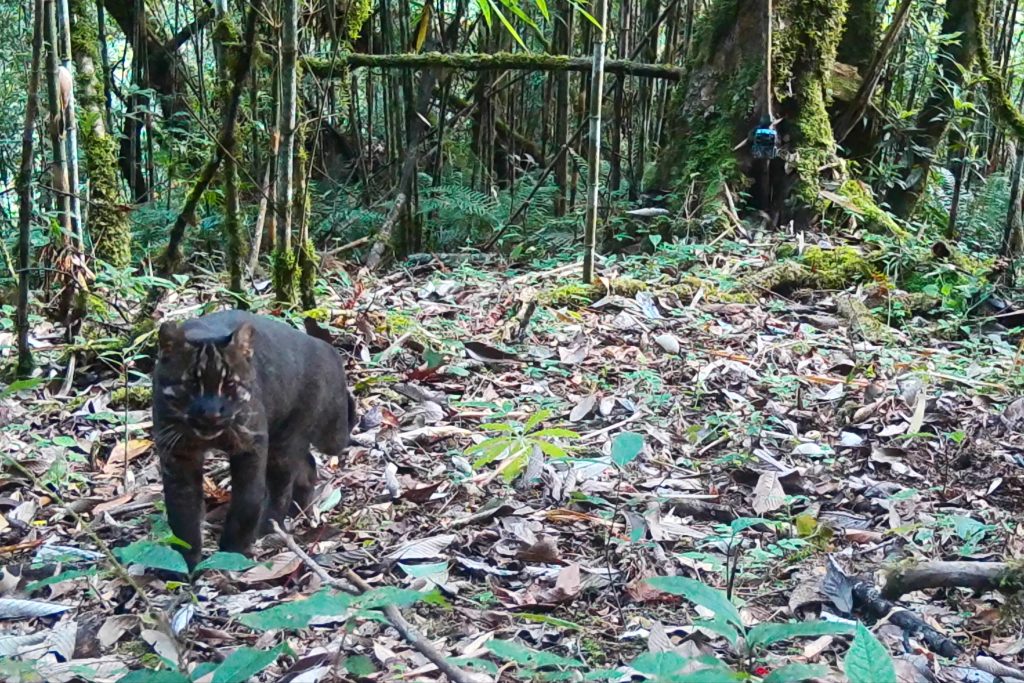
Asian golden cat (Catopuma temminckii) captured in the camera trap
Why this matters and what comes next
Northeast India, part of the biodiversity rich Indo-Burma hotspot, is also home to almost 10 small cat species. Within this landscape, the forests of Seinthuk, also known as Shergaon, holds a special significance. The region is connected with Eaglenest Wildlife Sanctuary, Sessa Orchid Sanctuary and Pakke Tiger Reserve, serving as a vital corridor that ensures the continuity of wildlife movement and gene flow. Adding to its uniqueness is the international boundary with Bhutan, making these forests not only biologically rich but also culturally significant.
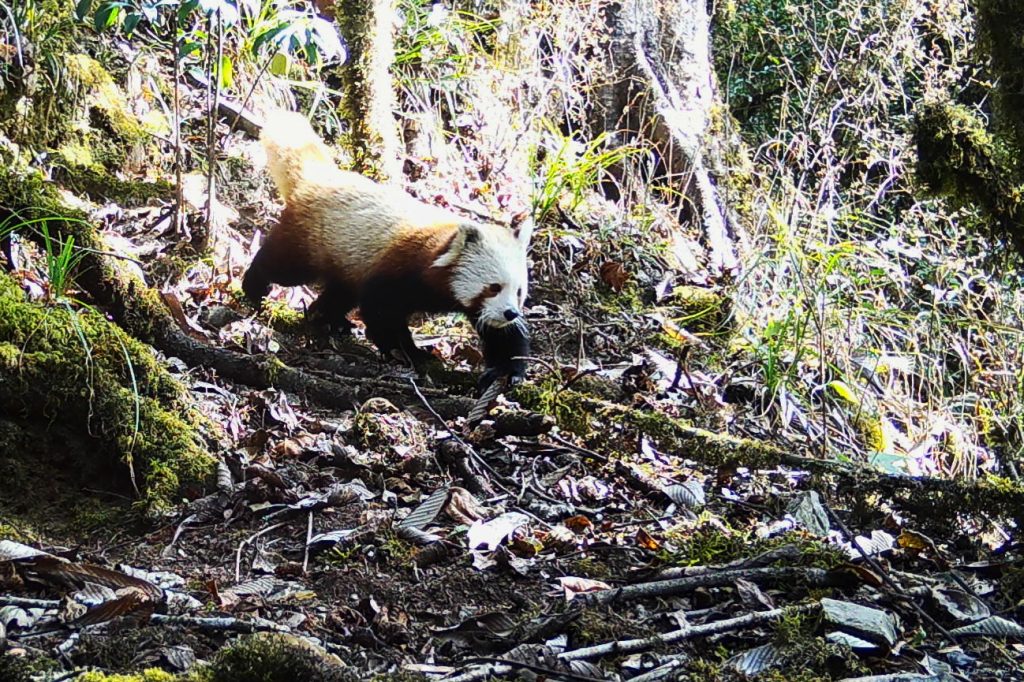
Red panda (Ailurus fulgens) in the forests of Seinthuk
This study by WTI offers the first systematic evidence of these cats from this region, filling a critical gap in their distributional range and expanding our understanding of the species range in India. Previous studies have also reported these species from community forests across Northeast India and neighbouring states, underscoring the ecological importance of these forests.
Further studies using modern scientific tools such as seasonal habitat-use studies, habitat modelling, corridor mapping and DNA bar coding will offer deeper insights into how these cats use the landscape. However, equally important would be weaving both Indigenous Traditional Knowledge (ITK) with science to achieve stronger conservation outcomes. Community engagement is the key for wildlife conservation in this region. “What Seinthuk community forest needs is a dedicated management strategy, monitoring team, and community-led initiatives – such as eco-tourism, youth trainings, and conservation-linked livelihoods ensure that these important species continue to thrive in the landscape”, adds Suranjita.
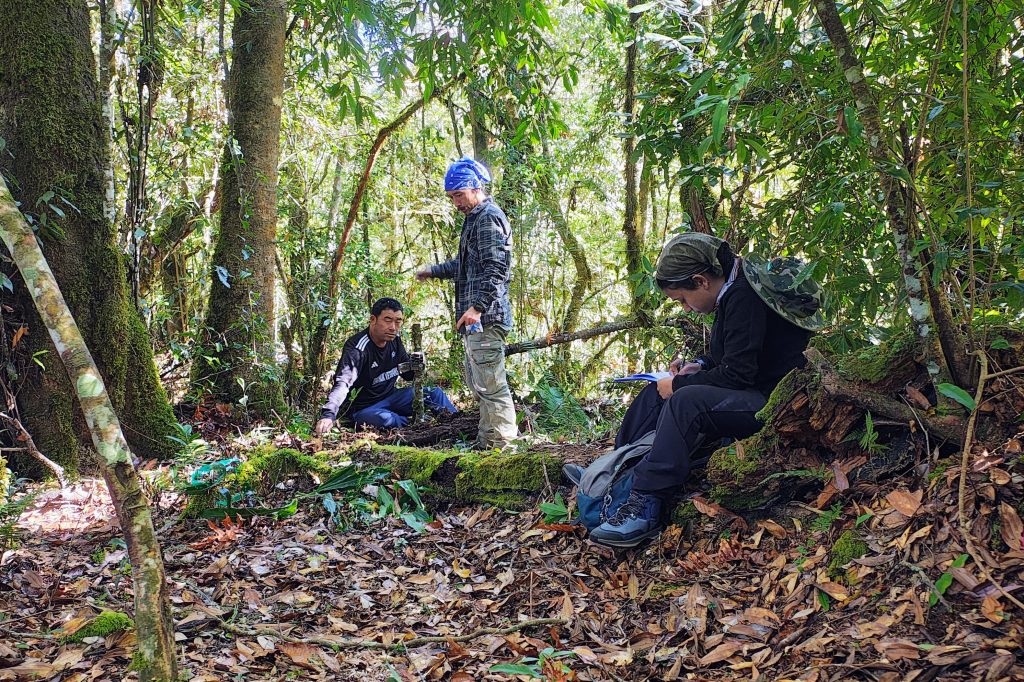
Team during field exercise in the community forest of Seinthuk
The hard work behind the result
Behind every photograph of a wild cat lies countless hours of sweat and determination. Our dedicated field assistants – Dorjee Khandu Khrimey, Pema Wangdi Thungon, along with Pem Norbu Thungon, Nikhil, Nana, Modi, Cheije, and Sange – endured aching muscles for months at stretch in pursuit of these shy, unseen cats. It is their persistence that has made this discovery possible.
Equally important was the support of the Garung Thuk NGO and Seinthuk Village Council who placed their trust in the team, opening their forests and hearts to the idea of community-driven conservation. WTI’s Forgoten Cats of Seinthuk Project is supported by the Eicher Group Foundation, Felis, and S. P. Pandoh and it aims to ensure secure this critical wildlife habitat outside the traditional PA system and offer the forests of Seinthuk, community led management and protection.