Wildlife Trust of India identifies a new population of white-flowered eastern mangrove (Lumnitzera racemosa) from Valiyaparamba, Kerala
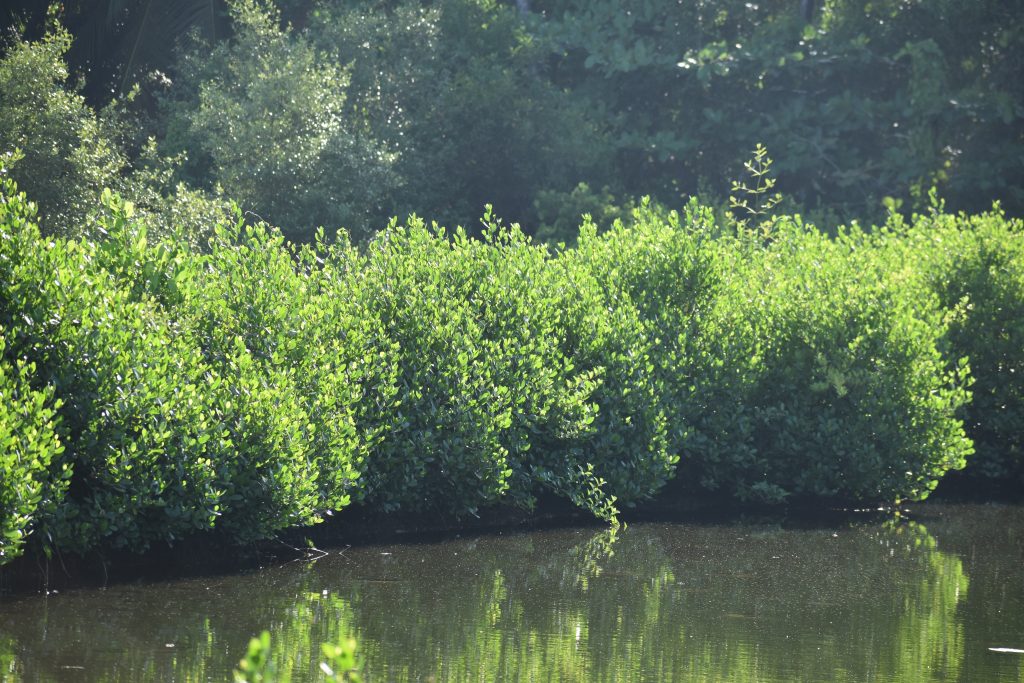
Eastern mangrove population located in Valiyaparamba | Photograph by Vimal Lakshmanan/WTI
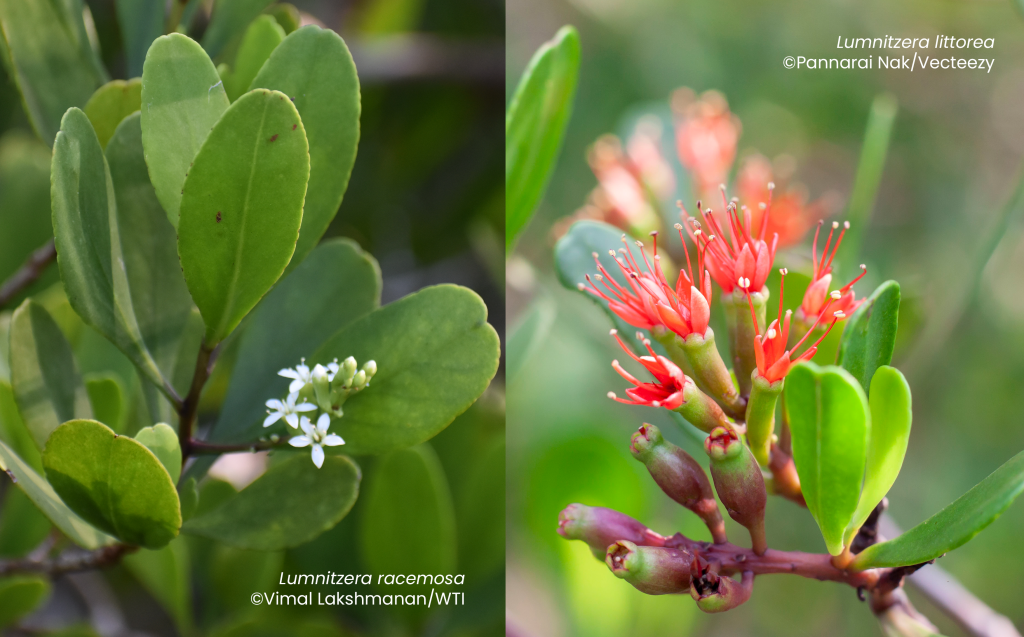
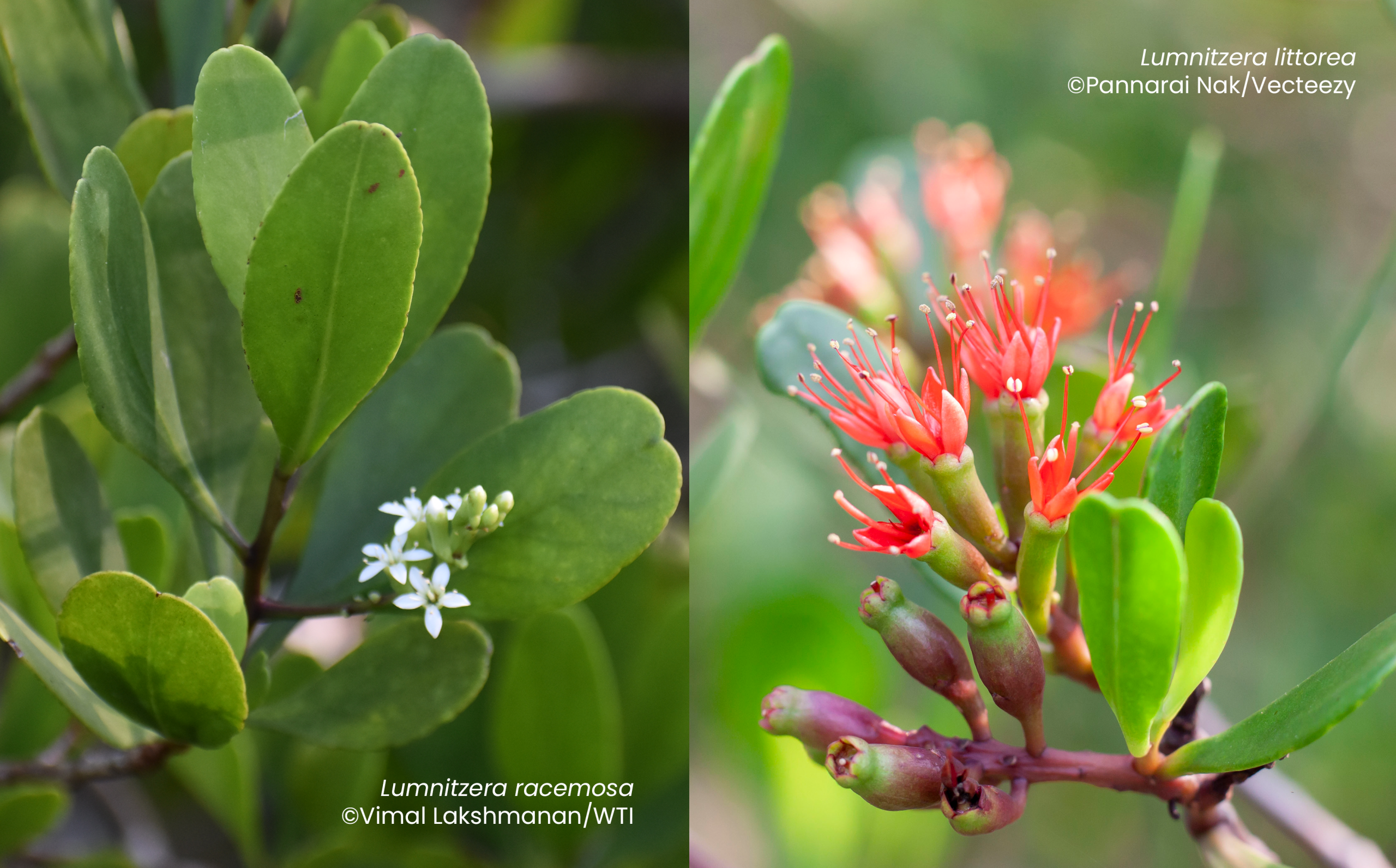
Flowers of L. racemosa and L. littorea
Once thought to be locally extinct, the population of the white-flowered eastern mangrove on Edayilakkad Island consists of 40 mature individuals. The species was located within a distance of 500 metres along with true mangroves such as Rhizophora mucronata, R. apiculata, Bruguiera cylindrica, Avicennia officinalis, A. marina, Acanthus ilicifolius and Excoecaria agallocha. As per the number of mature individuals, it is now the largest population of white-flowered eastern mangrove along the Malabar coast. However, the future of the population is unpredictable since this acreage of mangrove land is owned by local natives of Edayilakkad and lies in close proximity to the beach road. It is necessary that the land is promptly secured for conservation management.
Going forward, this population found by Dr. Sanal C Viswanath and Mr. Naveen Kumar at Edayilakakd will help the team in widening the conservation of the species by taking measures to protect the rarest mangrove species in the Malabar Coast. The healthy plants can also be used to collect propagules, thus helping in restoration projects of this mangrove ecosystem, ensuring both sustainable wetlandsand species conservation.
To ensure the survival of existing mangroves and increase the acreage of such habitats, Wildlife Trust of India’s Kannur Kandal Project has been focusing on mangrove land purchase, ecological restoration of degraded mangrove habitats through community and government participation, outreach and awareness as well as research.