Caught in the trade: April – December 2025
Wildlife crime, particularly the illegal wildlife trade, is one of the most lucrative criminal enterprises worldwide, surpassed only by drug trafficking, human trafficking, and counterfeiting. Between April and December 2025, a total of 202 incidents involving wildlife crime were documented from news and media reports by the Wildlife Trust of India (WTI). Of these, 151 cases involved hunting, attempted hunting and illegal entry into the protected areas or illegal trade of native wildlife species, and 51 involved attempts to smuggle live exotic wildlife for the pet trade mostly from Southeast Asian countries. Tigers were poisoned inside reserves. Exotic animals were smuggled through international airports. Endangered species were hunted for meat, medicine and trophies. This is not just statistics. It is a systematic assault on India’s natural heritage.
The numbers tell only part of the story. Behind each seizure lies a network of poachers, traffickers and buyers operating across state and international borders. From the forests of Assam to the airports of Mumbai, from the markets of Delhi to the ports of Chennai, wildlife crime has become a parallel illicit economy.
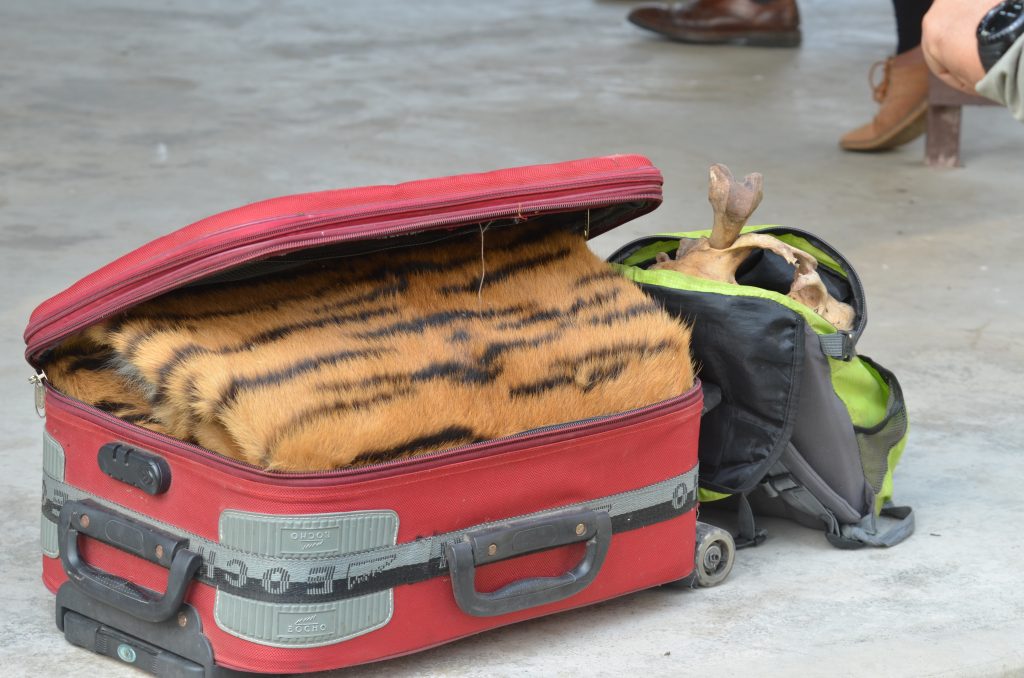
Tiger skin in a suitcase seized at an Indian airport | Photograph by Jose Louies/WTI
Wildlife Crime Involving Native Species
India’s iconic wildlife—tigers, elephants, leopards—face relentless hunting pressure. But the crisis extends far beyond these flagship species.
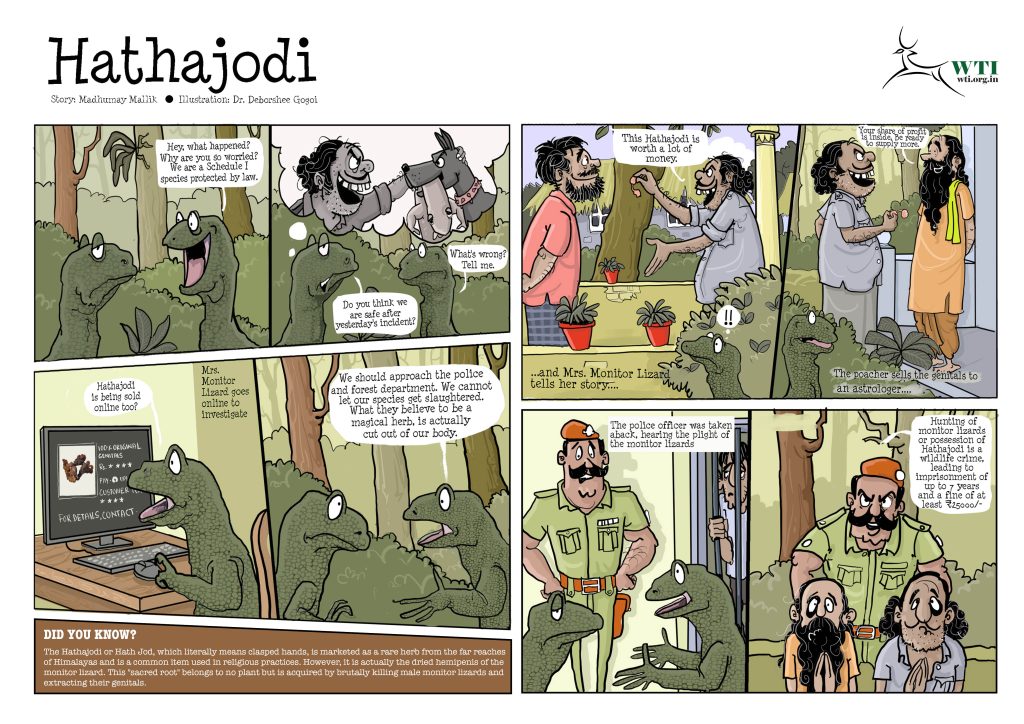
Over nine months, 29 tiger and leopard-related incidents were recorded, involving seizures of skins, claws and teeth across multiple states, including one case of poisoning that killed four tigers at once and even fake tiger skins surfacing on the black market. Cases were reported from Uttar Pradesh through central (Madhya Pradesh), across the west (Gujarat, Rajasthan), to the northeast (Assam, Sikkim) and south (Kerala, Karnataka, Telangana, Andhra Pradesh), underlining that no major region is spared. During the same period, 15 ivory seizures were reported, along with a case of an elephant electrocuted for its tusks. Pangolins, the world’s most trafficked mammal, were also targeted, with a mother and pup intercepted in Chennai en route to buyers in China, while monitor lizards continue to be hunted both for meat and for their body parts, which are sold as “Hatha Jodi” in certain spiritual practices.
Images of a slain Bengal Florican shared on social media starkly underscored the fragility of this critically endangered species, of which fewer than 1,000 individuals remain globally.
India’s botanical wealth was targeted too, with 10 tonnes of red sandalwood confiscated in Delhi before it could be illegally exported to China and Southeast Asia. An individual arrested in Aizawl for uprooting orchids, including rare species such as red vanda and blue vanda, further shows that, in addition to faunal species, wildlife offenders are also targeting floral species.
The most disturbing report perhaps was the apparent rise of ‘snake venom’ trafficking, reportedly linked to rave parties and marketed to affluent users, illustrating how wildlife crime is shifting from traditional poaching to more sophisticated, diversified criminal enterprises that serve multiple illicit markets.

Poaching of endangered Bengal Florican: Two detained in Assam’s Chirang | Source/Credits: India Today NE
Wildlife Crime Involving Exotic Species
India’s airports have become battlegrounds in the fight against exotic pet smuggling. Every month, customs officials intercept shipments of rare and endangered animals, mostly from Southeast Asian countries.
Of the 51 incidents documented between April and December involving exotic species, 46 were cases of exotic wildlife smuggling. Bangkok and Kuala Lumpur emerged as the primary launch points. Occasional transit routes were identified via Hong Kong, Singapore, Sri Lanka, and Dhaka. Together, these patterns underscore a highly concentrated Southeast Asian supply chain feeding India’s illegal pet and wildlife market. On the Indian side, most consignments were intercepted at major international airports, particularly Mumbai and Bengaluru, followed by Chennai, Kochi, Tiruchirappalli, Madurai, Hyderabad and Kolkata, indicating that high-traffic western and southern gateways serve as the principal entry points for smuggled exotic species. This may also reflect limitations in detection and interception capacities at other airports.
The remaining five exotic-species cases involved illegal possession of a few unidentified snakes, iguanas, a Pesquet’s parrot and a ball python, detected in the states of Haryana, Mizoram and Maharashtra. These incidents suggest that exotic animals are not only entering trade chains but are also potentially spilling over into local environments, where escapes or releases could threaten native biodiversity through competition, predation and disease transmission.
Seizure in focus: Two arrested for illegal frog hunting
Two men were arrested by Tripura Forest Department officials on 16 May 2025 for illegally hunting Indian bullfrogs. A total of 77 bullfrogs were seized (61 dead and 16 live individuals, which were subsequently released). The Indian Bullfrog (Hoplobatrachus tigerinus) is protected under Schedule II of the Wild Life (Protection) Act, 1972.
Consumption of frogs for meat and alleged medicinal value is rampant in many parts of northeast India where they are often sold openly in local markets. The trade has also been recorded in South India. Although serious concerns have been raised about the impact of collecting large numbers of breeding adults, only a handful of studies have examined this issue. Similarly, there are a few conservation initiatives aimed at raising consumer awareness about the ecological damage caused by the removal of amphibians.
Seizure in focus: Monitor Lizard
During the first week of August, the Goa Forest Department raided premises in Shelpem, Duler–Mapusa, and arrested a local resident for possessing 47 monitor lizard skins and 14 ghumats (a traditional Goan percussion instrument) made from the same. The raid, conducted following a tip-off, exposed the continued illegal trade in protected species. Notably, the arrested individual had been involved in a similar offence nearly 15 years ago, when authorities had seized 960 ghumats crafted from monitor lizard skin, highlighting his repeated involvement in wildlife crime. Further investigation is underway to uncover the wider network linked to the case. There are many, including local musicians, who are actively promoting alternatives to monitor lizard skins for ghumats.

Seizure of Bengal monitor lizard skin and ghumats | Source: Times of India
Species in the crosshairs: Striped rabbits
Three seizures involving striped rabbits were reported between April and June 2025; all originating from Thailand and intercepted at Mumbai International Airport. Media reports identified the animals as Sumatran striped rabbits (Nesolagus netscheri) rather than Annamite striped rabbits (Nesolagus timminsi); however, the identification remains uncertain, as distinguishing between the two species requires cranial or genetic analysis. N. netscheri, found in Sumatra, is listed as Data Deficient, while N. timminsi, occurring in the Annamite Range of Laos and Viet Nam, is listed as Endangered on the IUCN Red List. Both species are increasingly appearing in the live animal trade, driven by demand for exotic pets and facilitated by weak legal protections in Thailand and India, where non-native species are not protected unless listed under CITES. Conservationists have urged Indonesia and Viet Nam to list their respective species under CITES Appendix III to strengthen interdictions and close existing legal loopholes. Collaboration among relevant and competing authorities in Thailand, Indonesia, and Viet Nam is also needed to ensure proper care, identification, and repatriation of seized individuals.
Species in the crosshairs: Gibbon species
In July, Chennai airport customs officers seized an agile gibbon (Hylobates agilis) and an eastern grey gibbon (Hylobates funereus) concealed inside pet bags in checked luggage on a flight from Thailand. The smuggled animals were identified by the Wildlife Crime Control Bureau (WCCB), provided care, and deported back to Thailand, while the passenger was arrested. This marked the second attempt in two weeks to bring the same gibbon species into Chennai, suggesting a pattern of targeted demand within the illegal exotic pet trade making this city a key node in the illegal Gibbon trade.
In another gibbon-related case, Mumbai police arrested a 31-year-old Bengaluru-based delivery worker after seizing two baby gibbons (unidentified species) he was attempting to deliver to customers. Investigations revealed that he acted as a courier for a wildlife trafficking racket operating through WhatsApp groups, receiving flight tickets and instructions to transport endangered species. Both incidents highlight how organised networks are exploiting couriers and air routes to smuggle high-value primates into India, pointing to a growing and concerning demand for gibbons in the country’s underground exotic pet markets.
A Step Closer to Protecting the Wild
Law enforcement agencies are often the first line of interface with illegal wildlife trade. However, officers frequently face challenges in accurately identifying species and their derivatives during seizures, particularly in cases involving exotic species such as the striped rabbits discussed above. In response, the WTI has developed a Wildlife Identification and Post-Seizure Guide as a practical tool for frontline officers across forest, customs, police, and border security agencies. The guide offers quick-reference identification cards for priority species most frequently encountered in illegal trade, serving as a handy operational resource. It can also serve as an informative reference for wildlife enthusiasts and those seeking to deepen their understanding of species protection and illegal trade in India.
Though this story relied on news reports on wildlife crime between April and December 2025, it is intended to serve as a reference point for understanding the extent and nature of reported wildlife crime in India, rather than a comprehensive record of every incident. Therefore, the absence of reports or particular incidents from a particular area or period does not necessarily indicate that illegal hunting or trade is absent, but may simply reflect a lack of detection. These patterns remind us that what is visible in the media is only a glimpse of a much larger and often hidden crisis facing India’s wildlife.