Celebrating Elephants, Inspiring Coexistence: World Elephant Day 2026
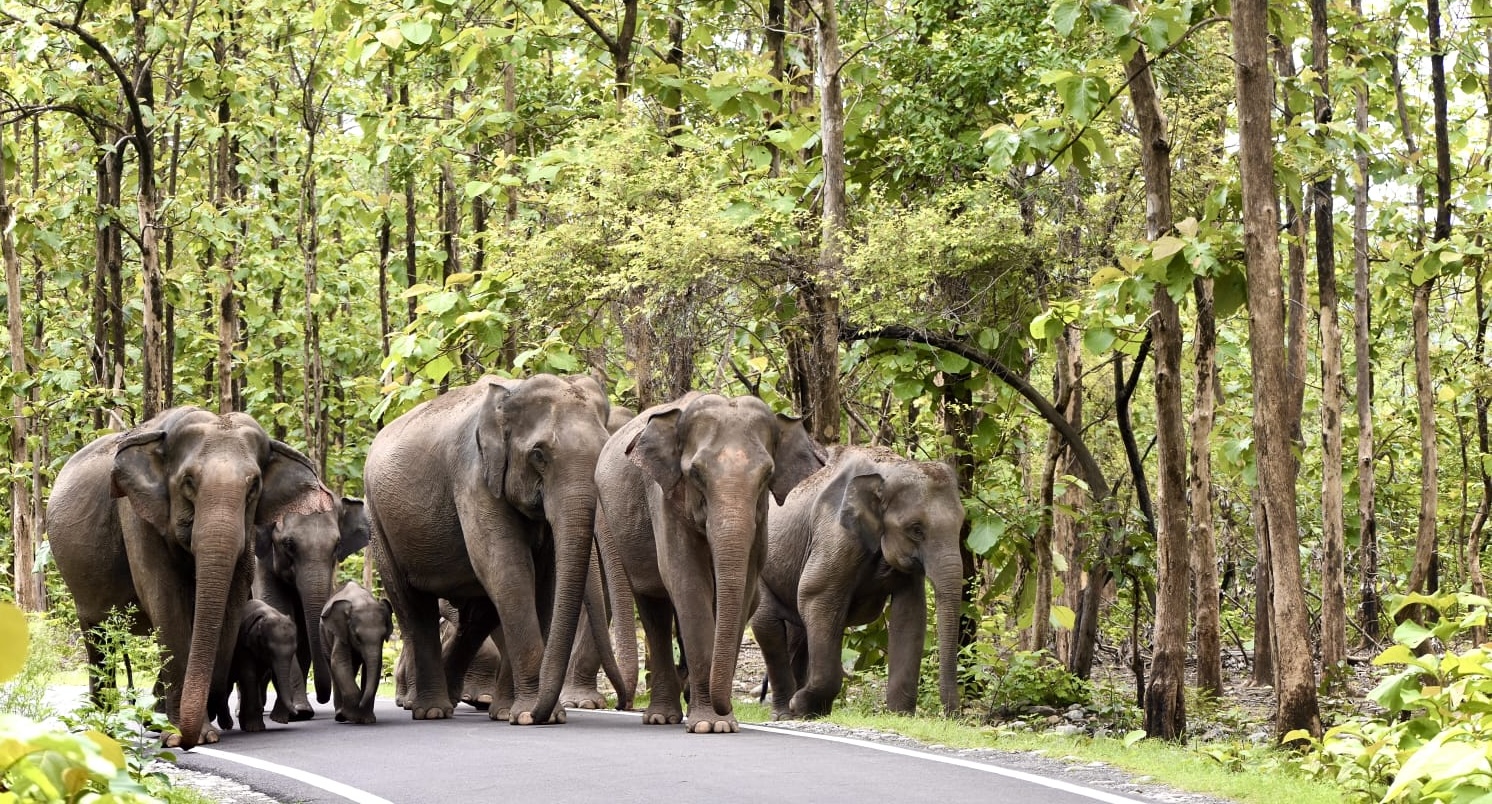
12th August 2026: World Elephant Day is an opportunity to celebrate elephants while also drawing attention to the challenges they face and the urgent need to protect their habitats and corridors. Across India, the Wildlife Trust of India (WTI), along with its partners, marked World Elephant Day 2026 through a series of awareness programmes, community engagements, sports events, elephant health camps and conservation activities.
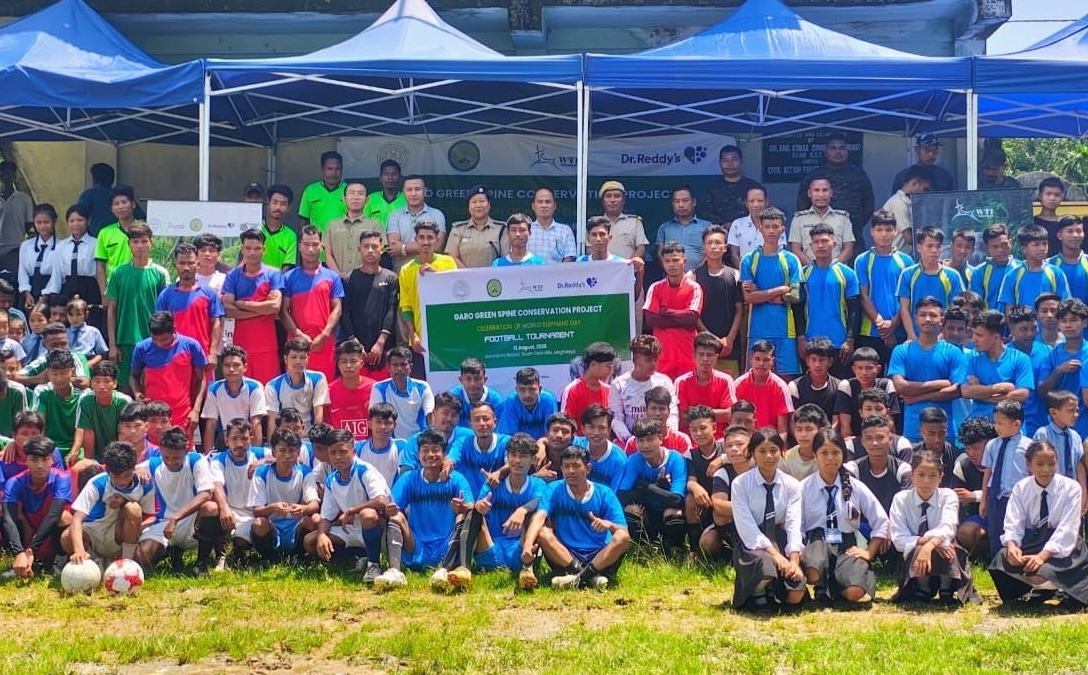
The Mongma Cup Football Tournament in South Garo Hills
Sports for Elephants
In South Garo Hills, Meghalaya, the spirit of World Elephant Day took to the football field at Mahadeo with the Mongma (Elephant) Cup Football Tournament. Organised by WTI in collaboration with Mahadeo Police Station, the Meghalaya Forest Department and the Garo Hills Autonomous District Council (GHADC), with support from Dr. Reddy’s Laboratories, the two-day tournament brought together 17 village teams.
For the young participants, the tournament was more than a sporting event. It provided an opportunity to celebrate local communities and build awareness about elephants and the importance of protecting the landscapes they share.
In Siliguri, West Bengal, the Nature and Wildlife Association and WTI, with support from Rohini Nilekani Philanthropies (RNP), organised ‘Run for Elephants,’ a 10K marathon from Air View More, Siliguri, to the Sukna Nature Interpretation Centre in Mahananda Wildlife Sanctuary. The event used the energy and reach of sport to bring people together and encourage greater public engagement with elephant conservation.
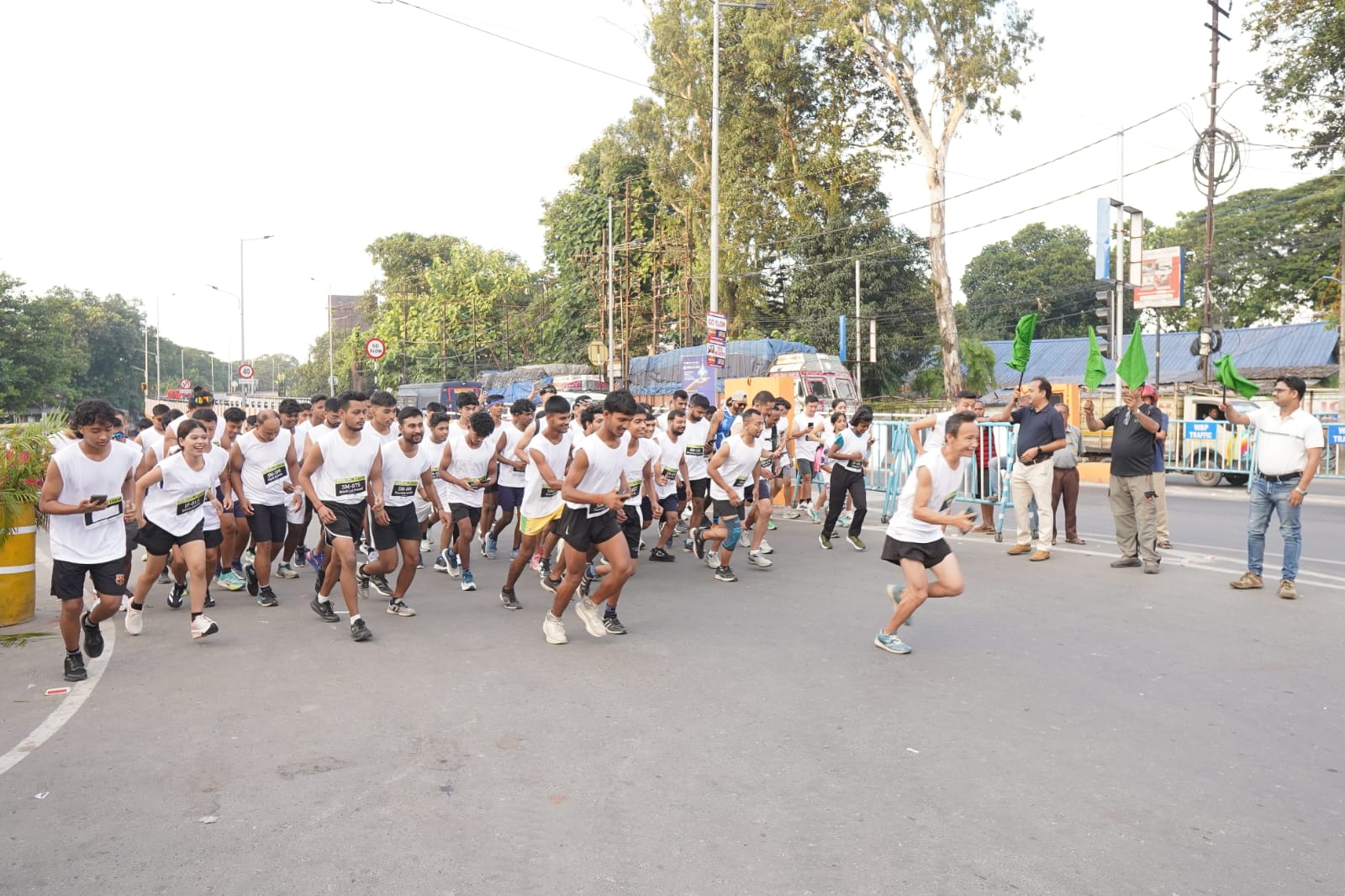
‘Run for Elephants’, a 10K Marathon organised in Siliguri
Call for Coexistence in North Bengal
A crucial consultative meeting on ‘Securing Right of Passage of Elephants through Tea Gardens, North Bengal’ was co-organised by WTI and Society for Protecting Ophiofauna & Animal Rights (SPOAR), with support from Rohini Nilekani Philanthropies (RNP), at Sinclair’s Hotels & Resorts in Chalsa, Jalpaiguri.
The meet was graced by Shri Manoj Kumar Oraon, Hon’ble Cabinet Minister for Forest Affairs & Environment, Govt of West Bengal, along with other stakeholders and dignitaries. He highlighted the urgent need to balance community safety with wildlife conservation, emphasising that addressing the challenges of human–elephant conflict requires collective action. With these concerns becoming increasingly pressing, the focus must now shift from recognising the problem to finding practical solutions that create space for people and elephants to coexist.
Caring for Elephants and Building Community Awareness in Assam
In Kaziranga, our team at the Centre for Wildlife Rehabilitation and Conservation (CWRC) participated in a cleanliness drive at the Panbari Wildlife Corridor. Keeping elephant corridors free from waste and other hazards is an important part of maintaining safe movement routes for wildlife.
An elephant health camp was also inaugurated by the Director of Kaziranga National Park and Tiger Reserve and the DFO, Kaziranga, along with WTI Trustee and Honorary Wildlife Warden Kaushik Barua. The initiative highlighted the importance of veterinary care and regular health monitoring in supporting elephant conservation.
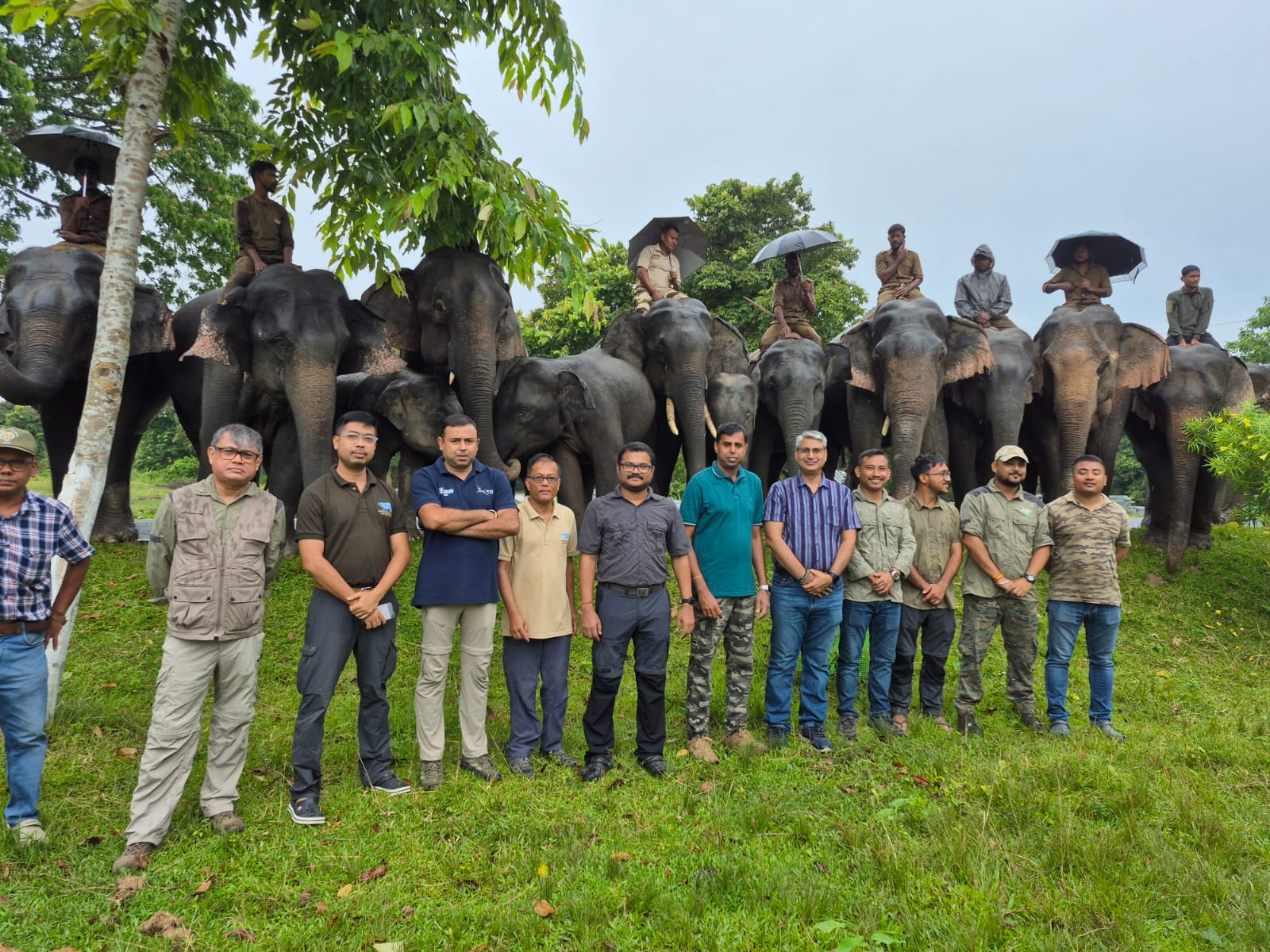
Elephant health camp in Kaziranga
At Manas Tiger Reserve, WTI and the park authorities organised an elephant healthcare and interaction session for around 60 mahouts at Mahal Camp, focusing on elephant healthcare, management and welfare. A separate sensitisation programme brought together students, villagers, forest staff and PRT volunteers in the First Addition to Manas National Park.
Inspiring the Next Generation
In Tamil Nadu, WTI’s Green Corridor Champion (GCC) partner, Dr V. S. Subramaniyan, conducted awareness programmes at five schools around the Talamalai–Guttiyalatur Elephant Corridor, near the Sathyamangalam Tiger Reserve. Students learned about elephant behaviour, the importance of corridors and the role elephants play in maintaining healthy ecosystems. As ecosystem engineers, elephants help disperse seeds and contribute to natural forest regeneration as they move through the landscape.
Another event was hosted at JKKM College of Technology in Erode, Tamil Nadu, where Mr. S. Gowtham, IFS, Deputy Director, Sathyamangalam Tiger Reserve, attended as Chief Guest and interacted with students on elephant conservation, protection of elephant corridors, human–elephant coexistence and the importance of safeguarding forests and wildlife.
In Pilibhit, Uttar Pradesh, the Rapid Response Team (RRT) of the Terai Tiger Project, in collaboration with the Uttar Pradesh Forest Department, organised a sensitisation programme at an upper primary school. The programme was chaired by Shri Bharat Kumar D.K., DFO, Pilibhit Social Forestry Division, and attended by Shri Vineet Shrivastava, Range Officer, Pilibhit, and Shri Ajay Kumar, Principal of the school. An art competition on “Elephants in Their Habitat”, along with a film screening and awareness session, helped students explore elephant ecology and conservation.
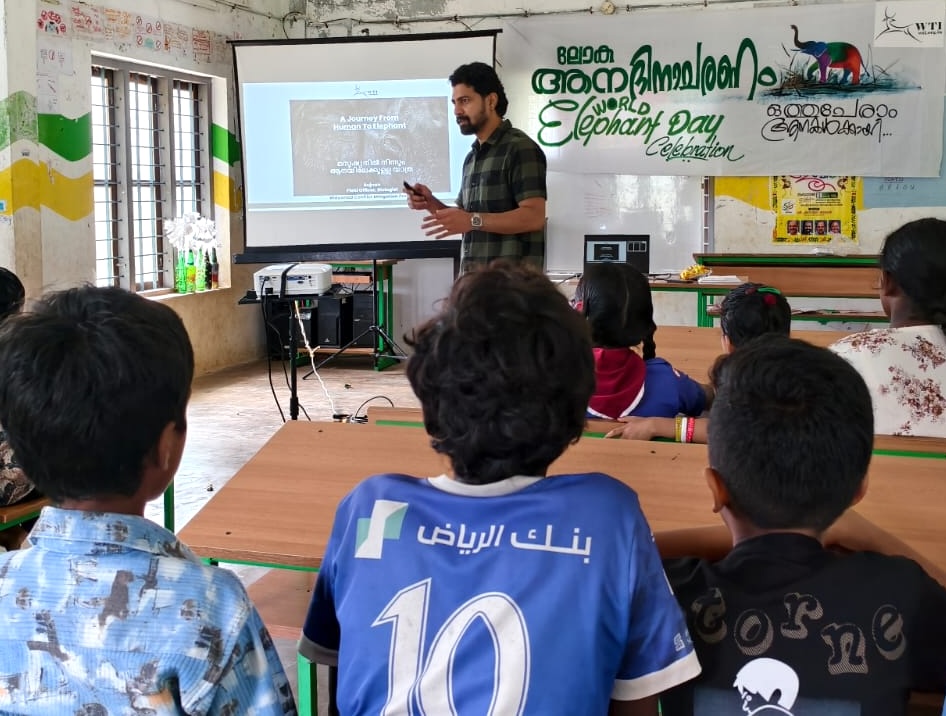
A storytelling session conducted by Sujnan MK from WTI
In Kerala, our team organised an interactive session with 20 lower-primary school students at the Padanamuri Tribal Development Department, Olanchery, Kattikulam. The session began with a storytelling activity titled “A Journey from Human to Elephant”, led by Sujnan M.K., Field Officer (Biologist), Wayanad Conflict Mitigation Project. This was followed by a drawing competition and a group activity, where the children were divided into three groups and assigned the tiger, elephant and leopard. Each group presented and enacted incidents highlighting the behaviour of their assigned species. The programme concluded with fun and interactive games.
In Arunachal Pradesh, Shri Talut Siram, Honorary Wildlife Warden and GCC of the D’Ering–Mebo–Sigar Nallah Elephant Corridor, hosted an interactive discussion on elephant conservation with community stakeholders and schoolchildren in Aohali, with support from the World Land Trust (WLT). Aohali is the first village in East Siang district to be declared a “Zero Hunting” village and is one of the key fringe villages of the D’Ering–Mebo–Sigar Nallah Elephant Corridor. The programme concluded with the distribution of kits to village councils and a plantation drive on the school campus.
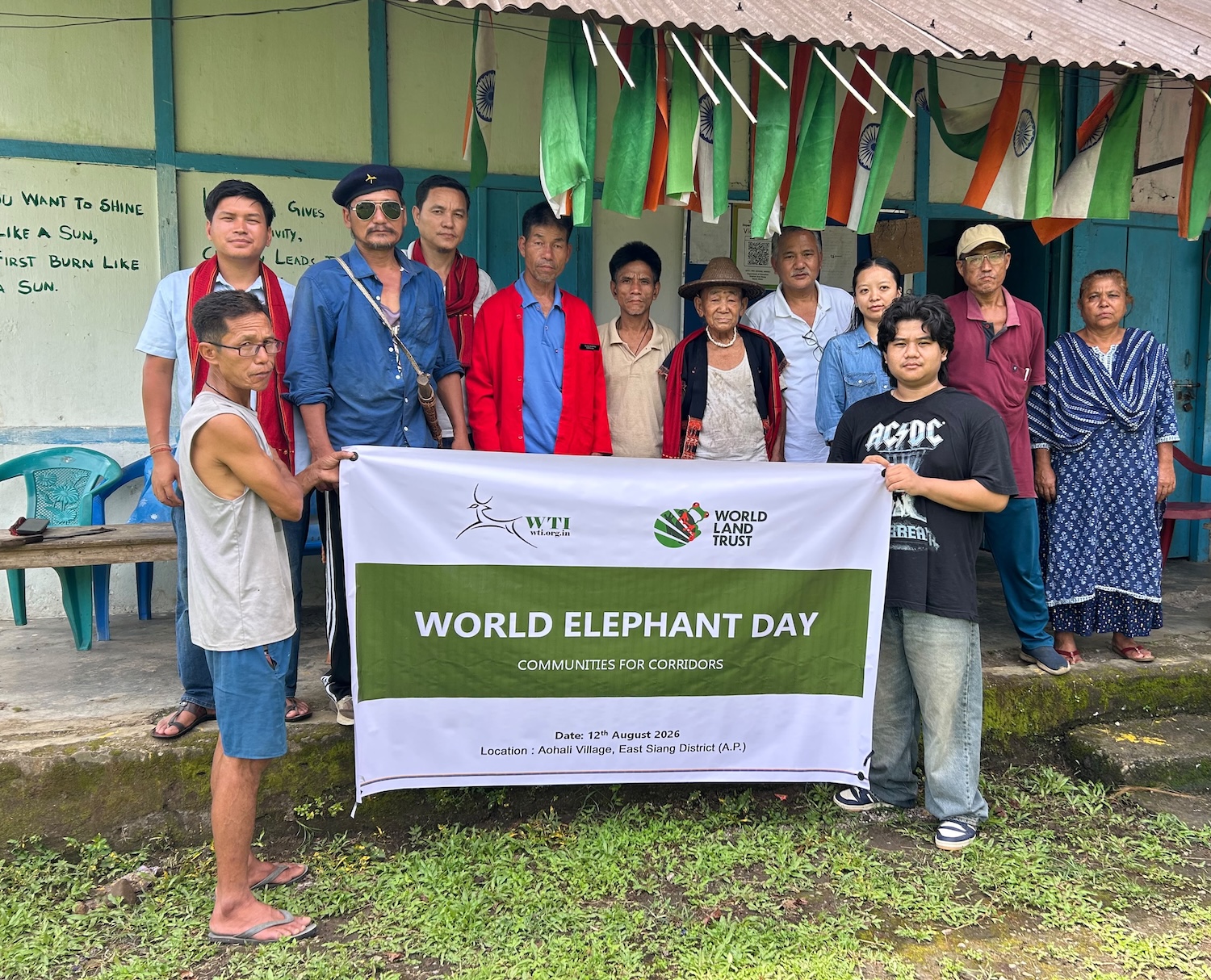
Communities for corridors iniatitive in Arunachal Pradesh
S.N. Acharya, a GCC partner from Orissa, conducted an awareness programme at Dhakota Government High School under the Similipal–Satkosia Corridor. The programme saw the participation of around 150 students, along with Forest Department officials and PRI members.
Awareness programmes were also conducted in schools located around the Chilla–Motichur Elephant Corridor in Uttarakhand in collaboration with Rajaji National Park.
Celebrating Elephants Through Art in Uttarakhand
In the Sona Nadi–Rawasan Elephant Corridor, WTI’s GCC partner Mr. Rajeev Bisht organised a drawing competition for Class 8 students of Saraswati Vidya Mandir and Heritage School. The event also included a film screening, followed by a quiz on elephants, their behaviour, conservation and the importance of protecting their habitats. The programme was attended by Ms. Anamika Bukerwal, Sub-Divisional Officer, Sona Nadi Wildlife Sanctuary, and Ms. Shipra Verma, Sub-Divisional Officer, Kalagarh Tiger Reserve.
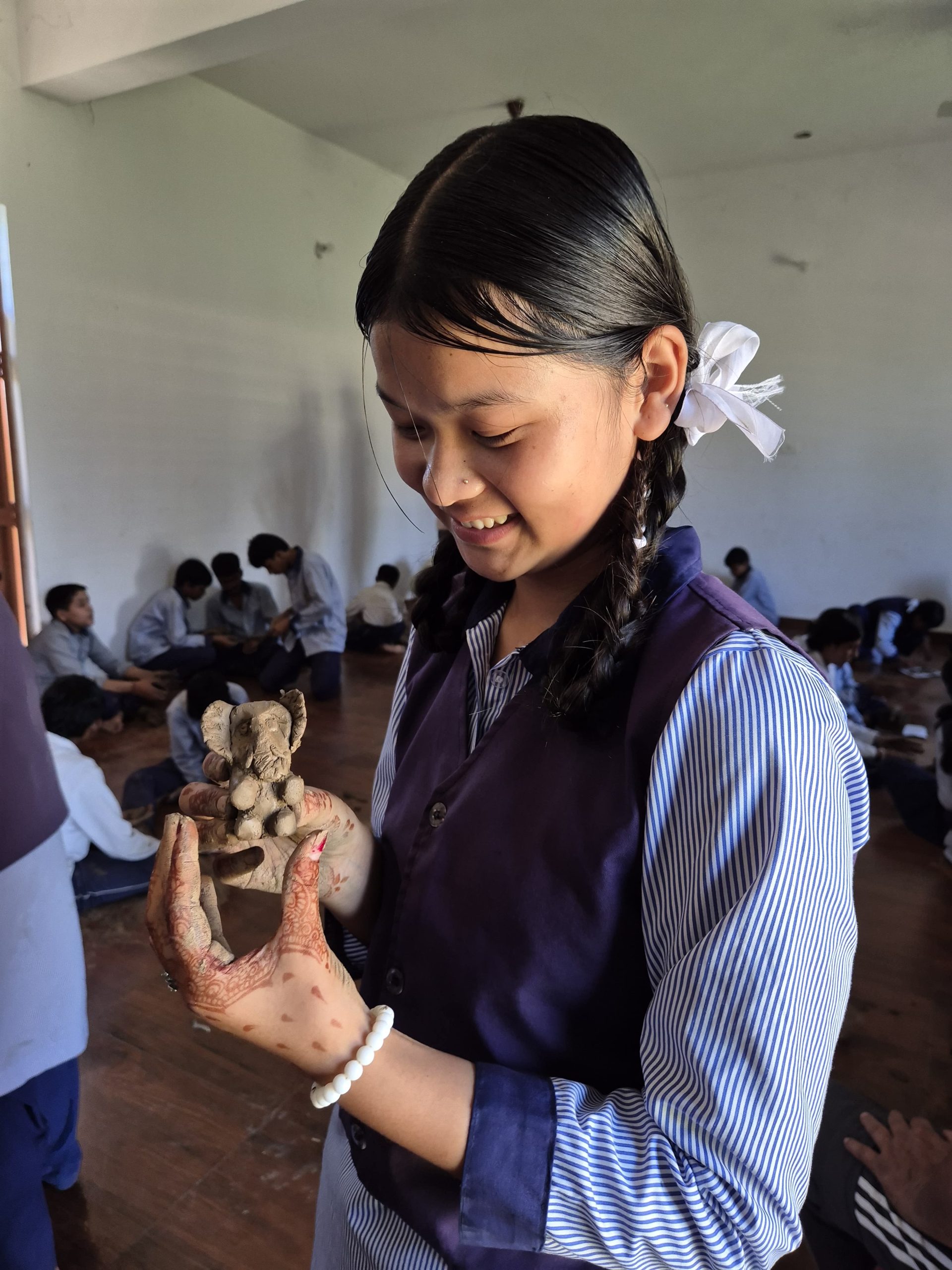
Students participated in a clay modelling session
Meanwhile, in Nawabwala, Uttarakhand, WTI’s GCC partner Nature’s Buddy, with support from RNP, organised a series of community-focused conservation activities. Located between the important Teen Pani and Kasurbhatkot elephant corridors, the village provided an important setting for grassroots engagement. Around 40 students from GIC Nawabwala School watched a short film on elephant conservation and participated in an elephant clay-modelling activity. The hands-on activity encouraged students to connect creatively with wildlife while building awareness and appreciation for elephants.
To address human-elephant conflict proactively, WTI and Nature’s Buddy have launched ‘Gaj Vaani’, a community-based elephant conservation communication initiative. Through village-level WhatsApp alert groups, local volunteer networks and student engagement, Gaj Vaani aims to connect communities, forest staff and local youth through verified elephant movement updates, safety alerts and conservation information.
Strengthening Community Participation in Arunachal Pradesh
The Department of Environment, Forest & Climate Change, Govt. of Arunachal Pradesh, WTI and Assam Wildlife Research and Rescue Organisation (AWRRO) came together with Gram Panchayat members, local communities, frontline forest personnel, mahouts and other stakeholders to mark World Elephant Day. As part of the celebrations, Gram Panchayat members were felicitated for their support and cooperation towards wildlife conservation and community participation.
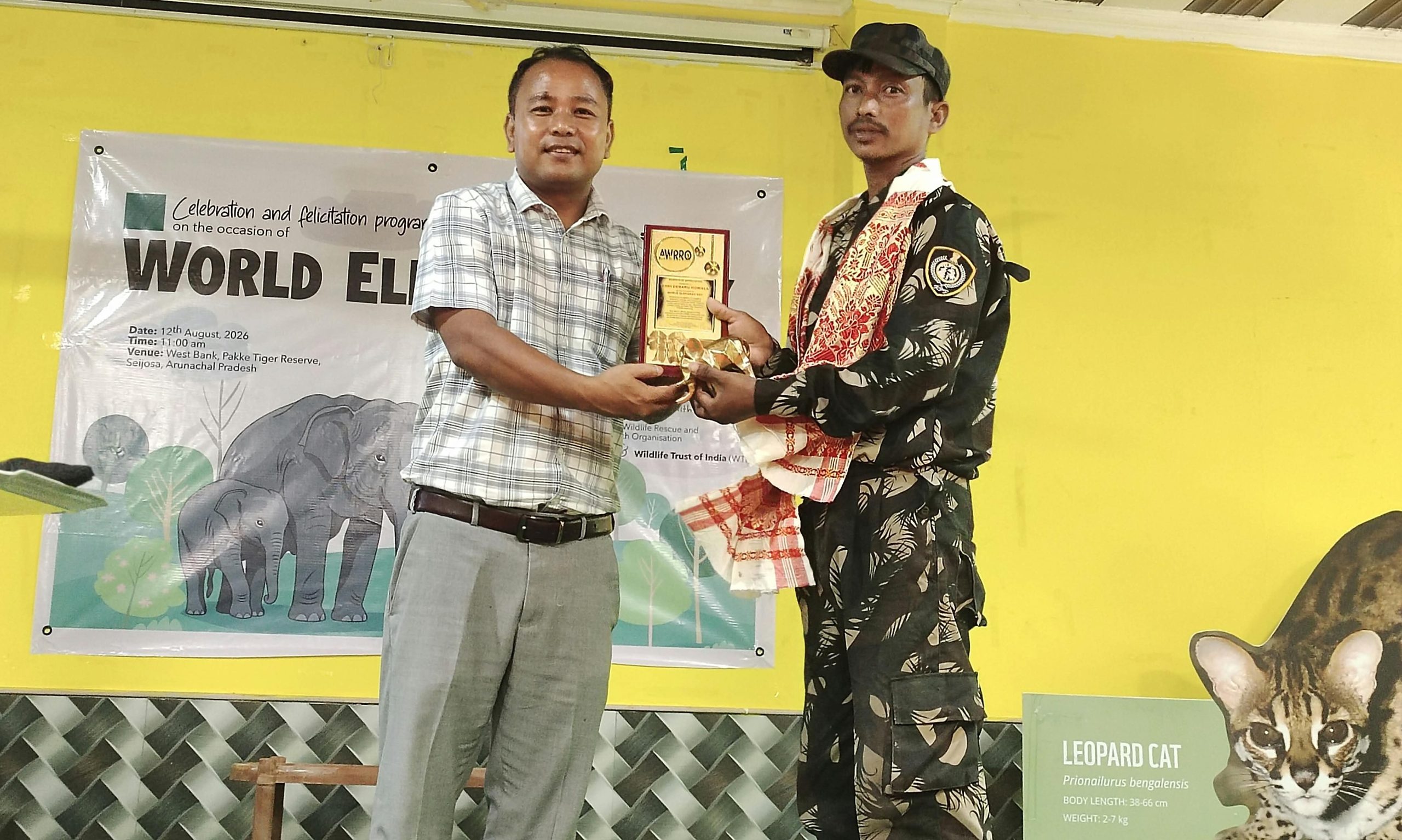
Dr. Panjt Basumatary from WTI felicitating a mahout for his dedication towards the care and management of camp elephants.
A special felicitation ceremony also honoured mahouts for their dedication to elephant conservation and their role in the care and management of camp elephants. The programme also included feeding of camp elephants, highlighting the importance of nutrition, healthcare and responsible management.
Across India, World Elephant Day 2026 brought together communities, youth, forest departments and conservation partners to celebrate elephants and address the challenges they face. Whether through sport, healthcare, corridor protection or community-led initiatives, these efforts reflect a shared commitment: protecting elephants means protecting the landscapes they depend on and creating safer spaces for people and wildlife to coexist.