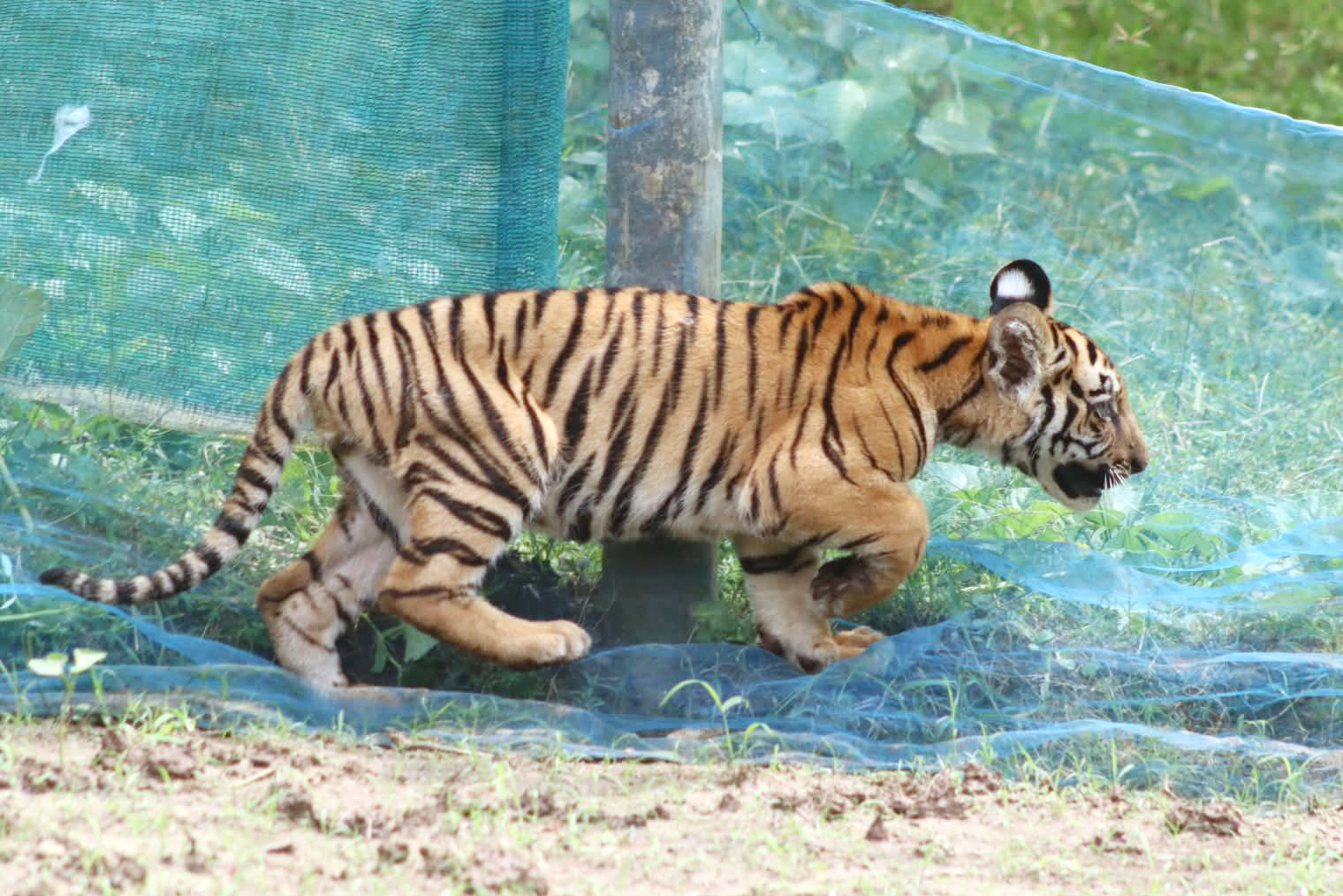
Juvenile tiger cub rescued and released back to the wild in Kaziranga, Assam
Biswanath, 17 September 2026: A juvenile tiger cub was recently reported inside human habitation in the early hours of 17th September in Natugaon Village. In collaboration with the police, forest and district administration, the Wildlife Trust of India team helped capture and relocate the animal for a possible reunion with the mother in the adjoining riverine islands of the Brahmaputra.
It was likely that the juvenile tiger, estimated to be around three months old, had been separated from its mother due to strong river currents. The animal had found itself in a kitchen garden of a household, trapped in the agricultural and fishing nets. The team had promptly secured the area while also surveying the neighbouring riverine islands to locate the mother. However, no evidence of an adult tigress was found. The rescue team strategically guided the animal into a transportation crate and shifted the individual to the Central Range Office for veterinary observation. “The rescue was accomplished without the use of chemical immobilisation, considering the young age of the animal,” stated Dr. C. Ramesh, Field Director, KNP & TR.
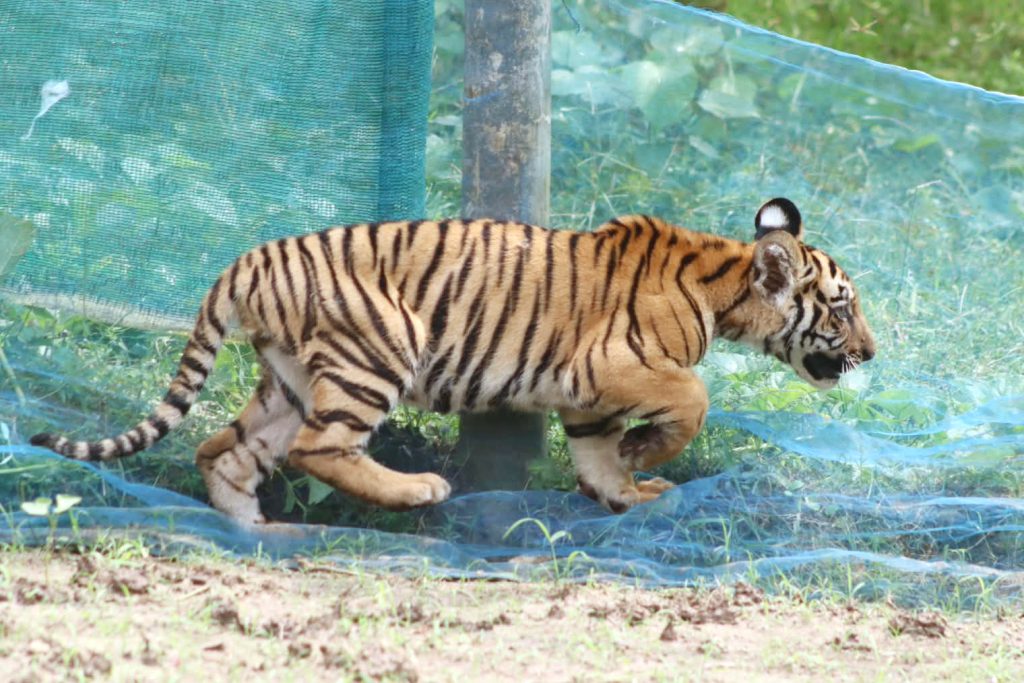
Juvenile tiger trapped in a kitchen garden in Biswanath, Assam | Photo by Kaji Jeidul Islam
Considering the possibility that the juvenile tiger might have become separated from its mother, a team comprising Dr. Subhasish Arandhra, Ecologist, WTI, Dr. Deepak Sarma, veterinarian and frontline staff also surveyed the nearby riverine islands upstream in search of tiger or juvenile pugmarks.
As per recent reports and evidence of a mother with cubs, an attempt at reunion was strategised late in the evening, led by Dr. Panjit Basumatary from Wildlife Trust of India’s Centre for Bear Rehabilitation and Conservation (CBRC). The tiger was shifted to an upstream riverine island in Murkhuwa and Bhawani using a mechanised country boat (bhut-bhuti). The team kept providing the animal with the necessary food and hydration. A camera trap was installed at the release site to obtain evidence of any adult tigress around the location before the team returned.
“As advised by Mr. Ritu Paban Borah, DFO Biswanath WL Division, a drone survey was conducted at approximately 4:00 PM the next day to assess the condition of the site and the surrounding area. The tiger was observed to still be present at the location. However, the survey also indicated that the water level of the river was rising, creating a risk that the cage and surrounding area could become submerged,” explained Shri. Nayan Jyoti Gogoi, AFS, Assistant Conservator of Forest, Biswanath Wildlife Division. This time, the tiger was moved to a more secure location that provided an opportunity for both distant monitoring and ease of access for necessary check-ups and supplementing its food. The choice of the site also followed assessment of the surrounding habitat and likely tiger movement routes. “The cage was positioned beneath a tree to provide shelter from direct sunlight and rainfall”, added Shri. Gogoi.
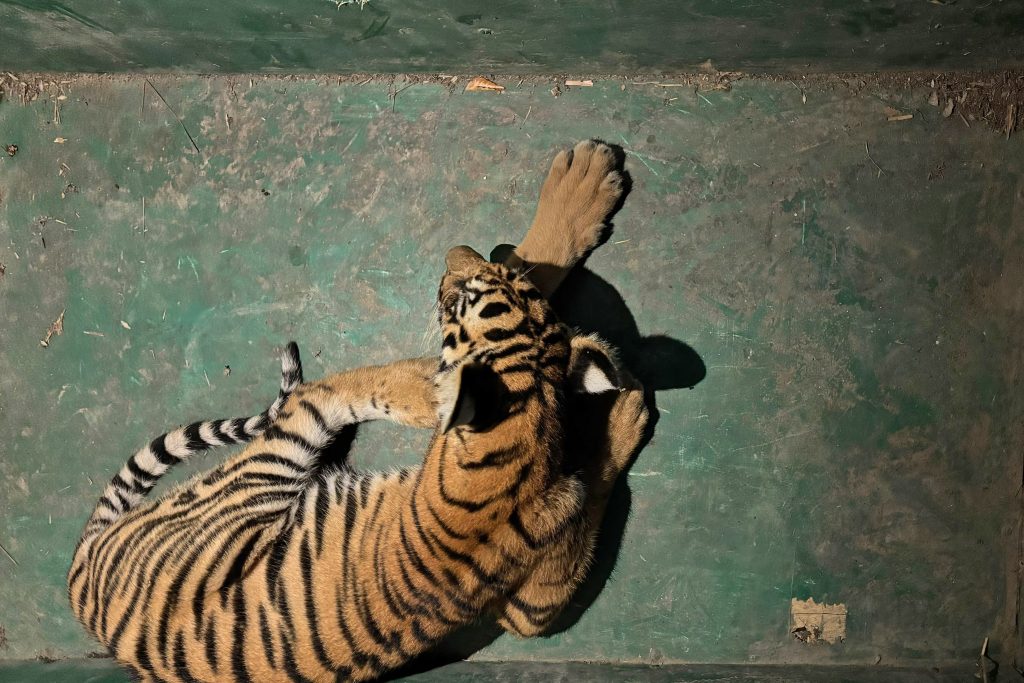
The tiger cub photographed inside the transport crate | Photograph by Nayanjyoti Gogoi
The following day, on the 19th of September, the tiger was reported to have left the cage on its own. “The area surrounding the cage was thoroughly searched for indirect evidence of the juvenile tiger’s movement, including pugmarks and other signs. However, no conclusive evidence was found at the site. The camera-trap footage was also examined, but no animal movement was recorded during the period of monitoring,” explained Shri. Gogoi. Based on the physical condition of the cage, the damaged ventilation openings and bamboo barrier, the consumption of the provided food and water, and the absence of evidence indicating the presence of another large predator, the juvenile tiger had most likely managed to escape from the enclosure on its own.
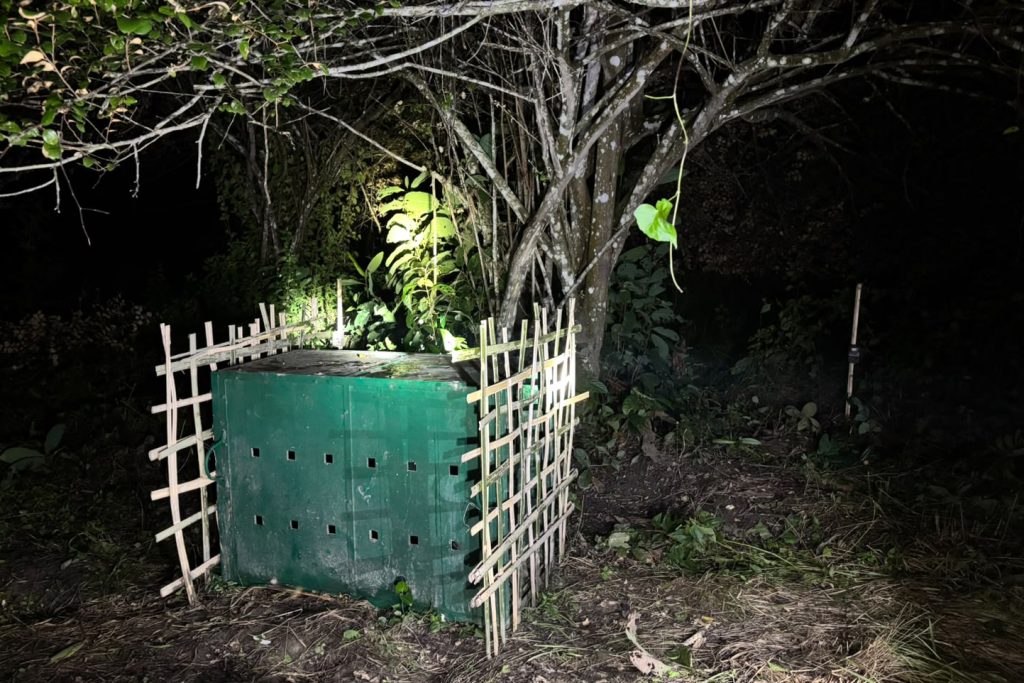
Camera traps have been installed around the release site, and surveillance is ongoing | Photo by Nayanjyoti Gogoi
The forest department is continuing with the monitoring and has placed camera traps around the release site. “While pugmark evidence was found on the 23rd of September, 200 meters from the release crate, we are still hopeful to get the pictures of the tiger cub in the coming days. The camera trapping exercise will continue in the coming weeks”, said Dr. Basumatary.
The Centre for Bear Rehabilitation and Conservation is operated jointly by the Arunachal Pradesh Forest Department and the Wildlife Trust of India, with support from the International Fund for Animal Welfare (IFAW). While it primarily focuses on the rescue and rehabilitation of Asiatic black bears, its Mobile Veterinary Service also addresses other wildlife emergencies in the landscape.