International Coastal Cleanup Day 2026: WTI Unites Communities for Cleaner Seas Across Gujarat, Goa and Kerala
On the occasion of International Coastal Cleanup Day 2026, the Wildlife Trust of India (WTI), through its PAN India Whale Shark Conservation Project, organised coastal cleanup drives across our project landscapes in Gujarat, Goa and Kerala. The initiatives brought together nearly 500 participants, including government officials, fishers, students, researchers, local communities, municipal representatives and volunteers, to address marine litter and strengthen awareness about the importance of healthy coastal ecosystems.
The coordinated efforts resulted in the removal of approximately 1,320 kg of waste and marine debris from the three states.
Marine debris, particularly plastics, abandoned fishing gear and other discarded materials, poses significant threats to marine wildlife through ingestion, entanglement and habitat degradation. The cleanup drives aimed not only to remove waste from beaches and coastal areas, but also to encourage communities to adopt responsible waste-management practices and participate actively in marine conservation.
Palolem Beach, Goa
At Palolem Beach in Canacona, South Goa, WTI, in collaboration with the Goa Forest Department and the Directorate of Fisheries, Goa, conducted a coastal cleanup involving 104 participants, comprising local fishers, Forest and Fisheries Department officials, shack owners, Safai Sathis, visitors and members of the local coastal community.
The programme began at 7:30 am with an introduction to WTI’s PAN India Whale Shark Conservation Project, followed by an awareness session on the importance of maintaining clean and healthy coastal ecosystems. Participants were sensitised to the growing threat posed by marine debris and how waste discarded on land or along the coast can eventually enter the sea, where it can be ingested by marine animals or cause entanglement.
Participants then worked along the Palolem coastline, manually collecting waste from the beach and adjoining coastal areas. By the end of the three-hour drive, approximately 260 kg of waste had been collected.
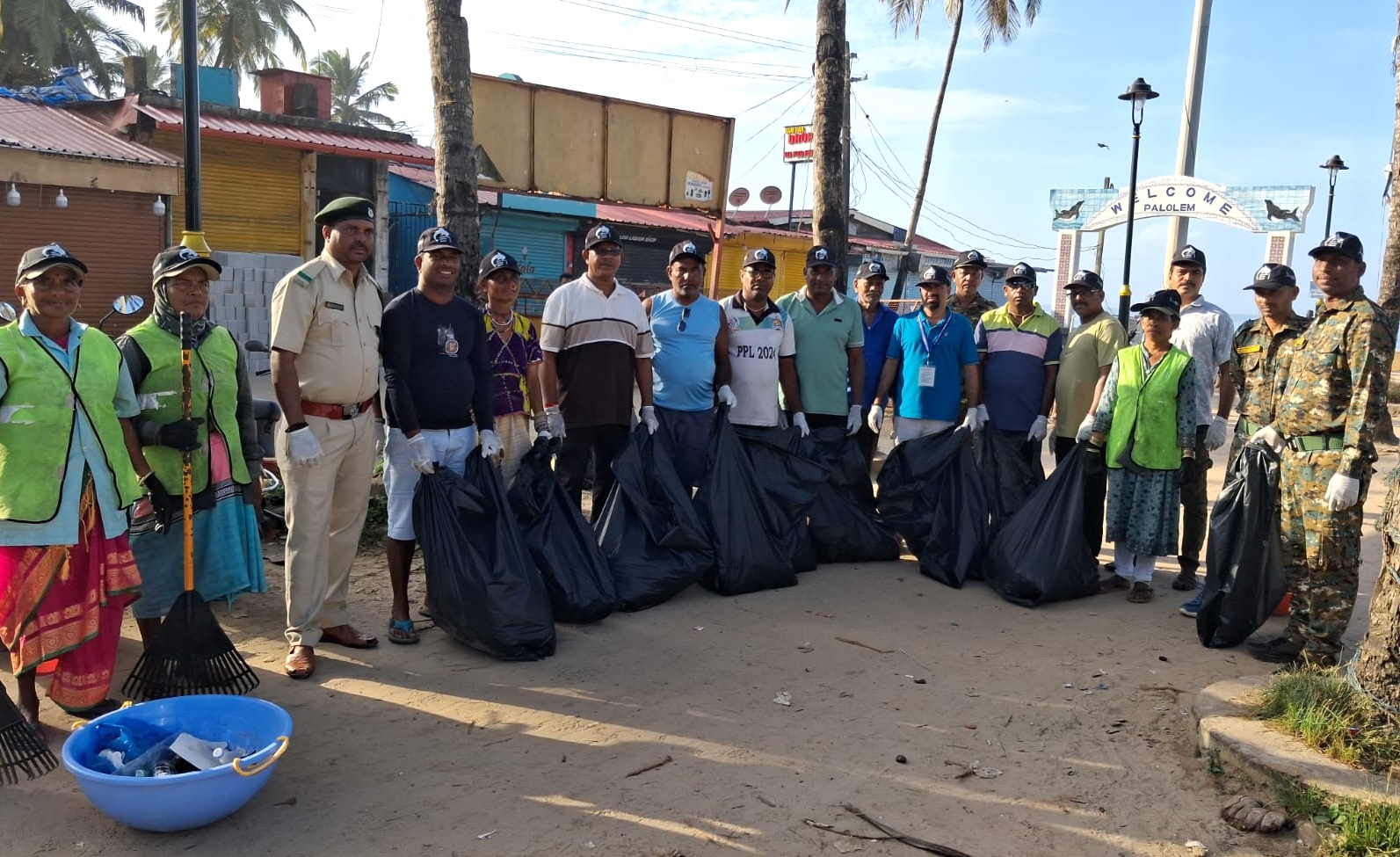
260 kg of waste collected during the beach clean drive in Palolem Beach | Photo © Karuna Pagi/WTI
The waste included plastic bottles, plastic bags, wrappers, nylon ropes, abandoned fishing nets and other discarded materials. A significant quantity consisted of beer bottles. The presence of abandoned nets and nylon ropes also highlighted the potential risks that discarded fishing-related materials can pose to marine wildlife through entanglement if they enter coastal waters.
Following the cleanup, the collected waste was handed over to the Canacona Municipal Council for segregation and appropriate disposal. After segregation, the waste will be sent to the Goa Waste Management Corporation for further processing. This ensured that the waste removed from the coastline was directed into the appropriate waste-management system rather than being left in the surrounding environment.
The participation of fishers and members of the wider coastal community highlighted the important role of people living and working along the coast in protecting marine ecosystems.
Vettucaud and Azhikode Beach, Kerala
In Kerala, WTI, in collaboration with local partners, conducted coastal cleanup activities at Vettucaud Beach in Thiruvananthapuram and Azhikode Beach and Harbour in Thrissur, engaging students and young people in efforts to protect coastal and marine ecosystems.
At Vettucaud Beach, WTI collaborated with Malayala Manorama’s “Nalla Padam” programme to organise a beach cleanup drive. The programme was inaugurated by Dimple Raju, Ward Member of Vettucaud. Following the inauguration, students from Rosa Mystica CBSE School actively participated in the cleanup, helping remove waste from the beach while learning about the importance of keeping coastal habitats clean and healthy.
A second cleanup was organised by WTI in collaboration with the Christ College ASCE Team at Azhikode Beach and Harbour. The programme was inaugurated by K. K. Valsaraj, MLA, Kaipamangalam Constituency, who highlighted the importance of coastal cleanliness, marine conservation and the active participation of young people in protecting the coastal environment.
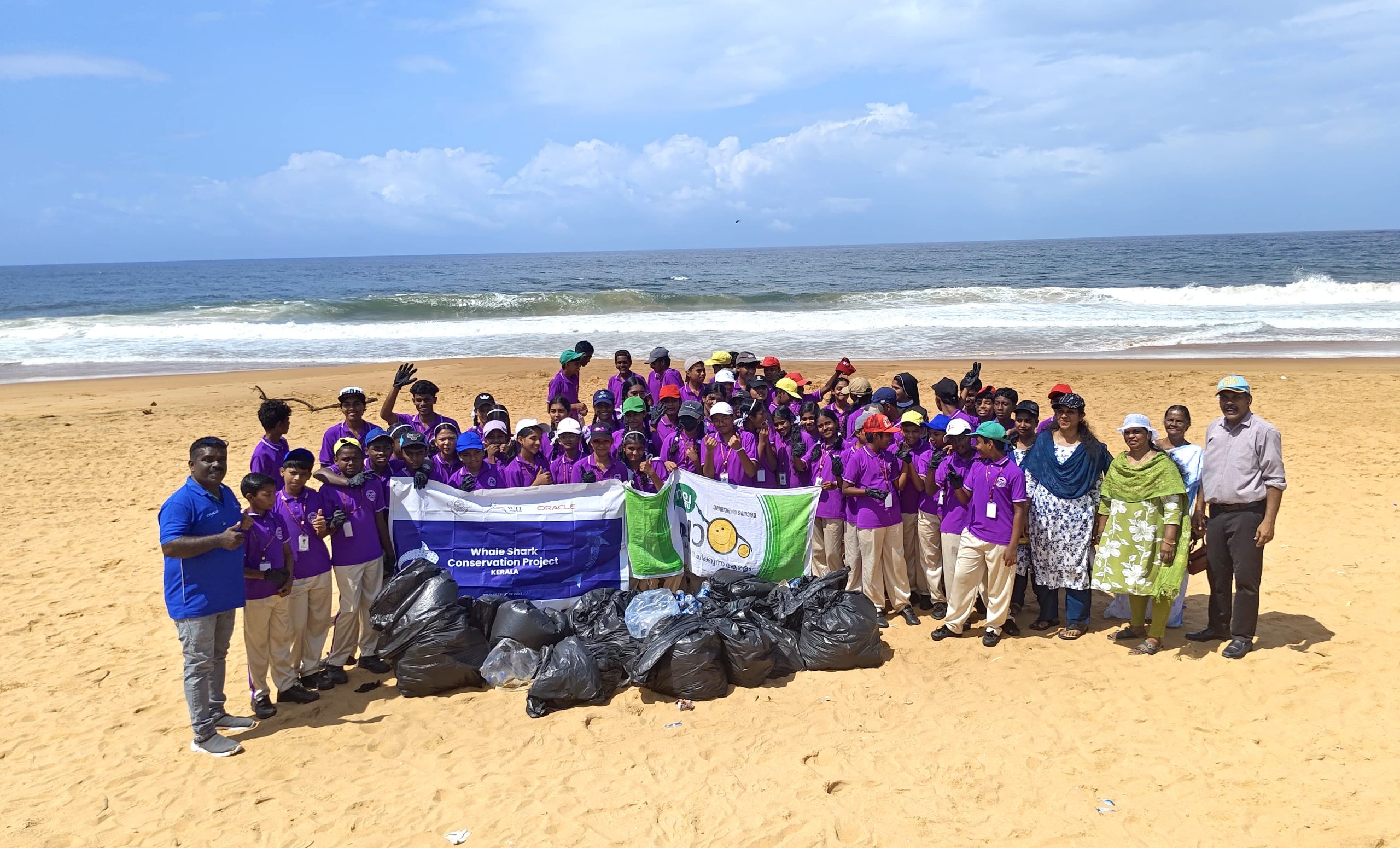
WTI collaborated with Malayala Manorama’s “Nalla Padam” programme to organise a beach cleanup drive at Vettucaud Beach | Photo © Ajith Shanghumugham/WTI
As part of the programme, Baiju C. V., Circle Inspector, Azhikode Coastal Police, conducted an awareness session for students on coastal conservation, responsible waste management and the role of youth in safeguarding marine ecosystems. Following the session, students participated in a cleanup activity at Azhikode Harbour. The collected waste was appropriately segregated and handed over to the Kudumbashree team for responsible disposal and further waste management.
Through these initiatives, WTI and its partners continue to encourage young people and local communities to take an active role in protecting Kerala’s coastline. Community-led efforts such as these help reduce marine litter while strengthening awareness of the connection between clean coastal habitats and healthy marine ecosystems.
Veraval–Somnath coast, Gujarat
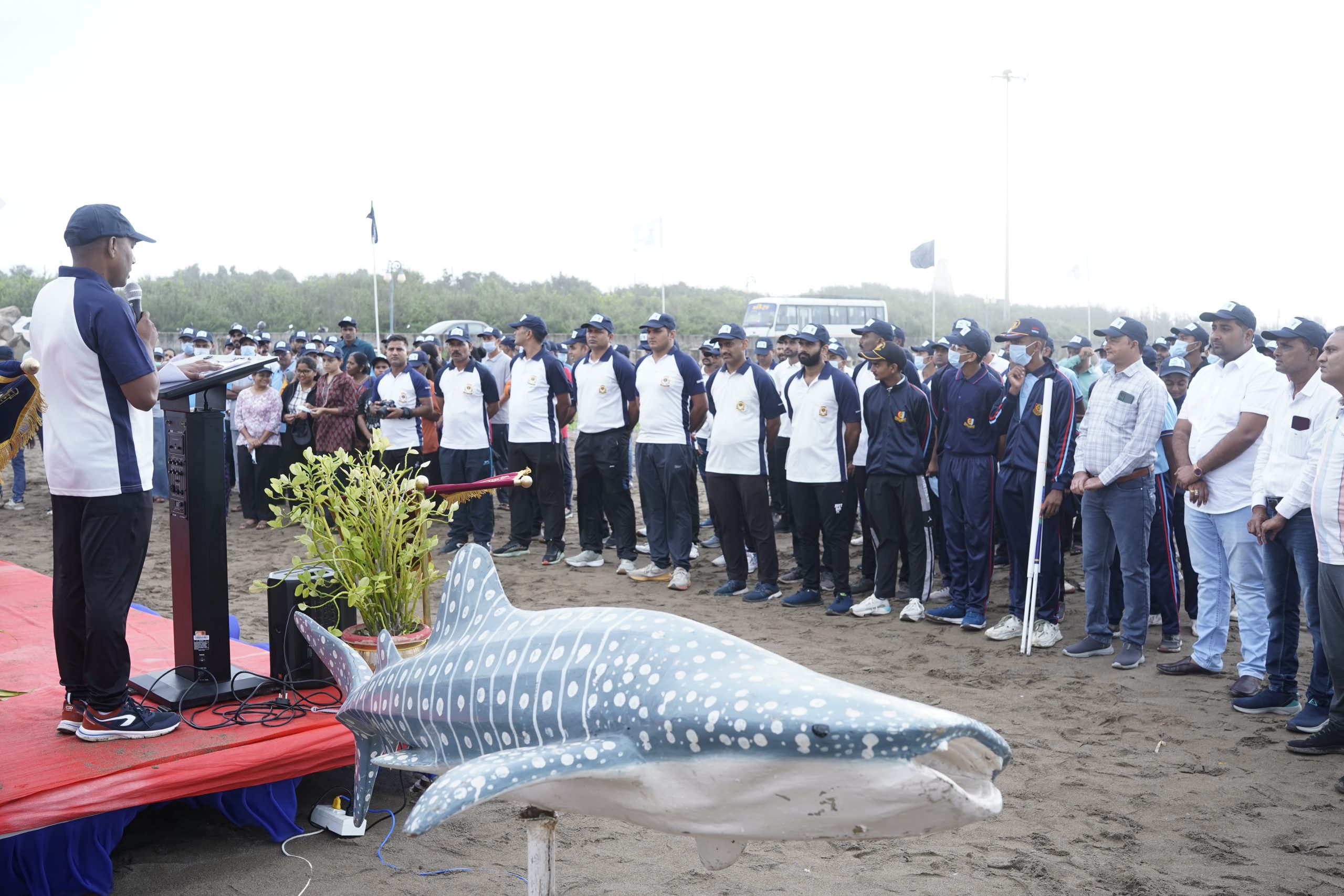
Along the Veraval–Somnath coast in Gujarat, nearly 350 participants came together for a coordinated Marine Debris and Coastal Cleanup Drive. Held in association with the Indian Coast Guard Station, Veraval; ICAR-Central Institute of Fisheries Technology (CIFT), Veraval; ICAR-Central Marine Fisheries Research Institute (CMFRI), Veraval; College of Fisheries Science, Veraval; and Choksi College of Arts & Commerce, Veraval, the initiative brought together government agencies, researchers, students, local administration and community members.
The cleanup formed part of ongoing efforts under WTI’s PAN India Whale Shark Conservation Project, in collaboration with the Gujarat Forest Department and Tata Chemicals Limited, to reduce anthropogenic threats to whale sharks (Rhincodon typus) and other marine wildlife.
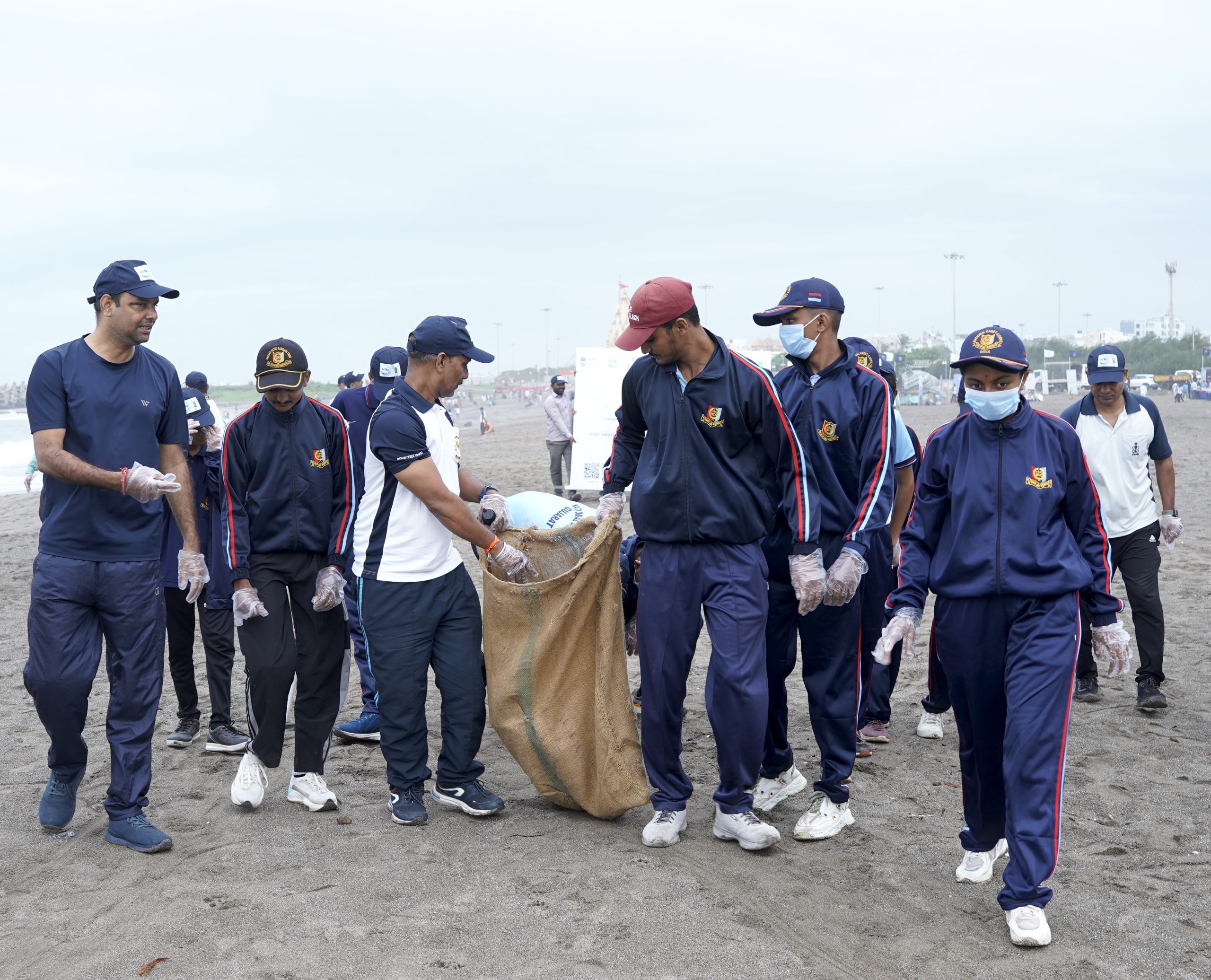
Nearly 350 participants came together to help clean up Somnath Beach | Photo Credit @ Pritesh Jadav, Member of FoWS-Veraval & volunteer, WTI
Participants collected and segregated approximately 800 kg of marine debris, which was subsequently sent to Veraval Municipal Corporation’s recycling facilities.
The cleanup brought together stakeholders from government, research, education, conservation and the local community. Naresh Kumar Gohel, President of Veraval-Patan Municipality, joined the effort with his councillor team, alongside representatives from ICAR-CIFT, ICAR-CMFRI, College of Fisheries Science, the Veraval Range Forest team and WTI’s project team.
The programme opened with a welcome address by Farukhkha Bloch, followed by technical insights from Dr. Swathy Lakshmi and safety guidance from Dr. Ketan Tank. The Indian Coast Guard, Veraval Station, also participated, emphasising the shared responsibility of protecting marine ecosystems and keeping coastal areas clean.
From Gujarat to Goa and Kerala, these cleanup efforts reinforce a shared message: cleaner shores contribute to healthier seas, and protecting marine life begins with collective action on land.