Stakeholders convene to secure safe passage for elephants through North Bengal’s tea estates
Jalpaiguri, August 12, 2026: North Bengal’s tea gardens are among the most recognisable features of the region’s landscape, supporting livelihoods and shaping local economies. Yet beyond their economic significance, many of these estates lie within important habitats and movement corridors for the endangered Asian elephant (Elephas maximus), making them critical spaces where development and conservation intersect.
West Bengal supports an estimated 707 elephants as per the SAAEE 2025 assessment, of which 676 occur in North Bengal, underscoring the region’s importance for elephant conservation and landscape connectivity. As elephants move across forests and adjoining landscapes in search of food, water and suitable habitat, their paths frequently intersect with tea estates, settlements, agricultural areas and transport infrastructure.
This overlap has led to the creation of one of the most challenging human-elephant conflict situations. Although the region supports less than 2% of the country’s elephant population, it accounts for an estimated 10-12% of all human fatalities caused by elephants nationwide. Between 2013 and 2014, nearly 590 people lost their lives in human-elephant conflicts in West Bengal, highlighting the scale of the challenge in landscapes where elephant movement and human activities intersect. For tea estates, this presents a unique set of challenges. Measures introduced to protect workers, communities and estate infrastructure can influence elephant movement, while unrestricted elephant passage can pose risks to people and disrupt estate operations.
Recognising the need for collaborative solutions, the Wildlife Trust of India (WTI), in partnership with SPOAR, convened a multi-stakeholder consultative meeting titled “Securing Right of Passage of Elephants through Tea Gardens, North Bengal” on 12 August 2026 in Chalsa, Jalpaiguri. Bringing together tea estate management, Tea Associations, government agencies and conservation organisations, the meeting sought to foster dialogue around practical measures that can support elephant-friendly estate management, while reducing risks to both people and elephants.
Shared Framework for Coexistence
Addressing the urgent need to balance community safety with wildlife conservation, Shri Manoj Kumar Oraon, Hon’ble Cabinet Minister for Forest Affairs & Environment, Govt of West Bengal, said, “Knowing where the problem areas are is important, but the larger question is whether we are leaving elephants enough space to live and move. Forests are not increasing at the pace required to support growing elephant populations, and we have gradually pushed them into smaller corners of the landscape. At the same time, the growing pressure to document and take selfies with elephants is causing unnecessary disturbance. Unless we address these pressures collectively, human-elephant conflict is likely to increase. These concerns have been raised repeatedly, and it is time we move from recognising the problem to creating space for coexistence.”
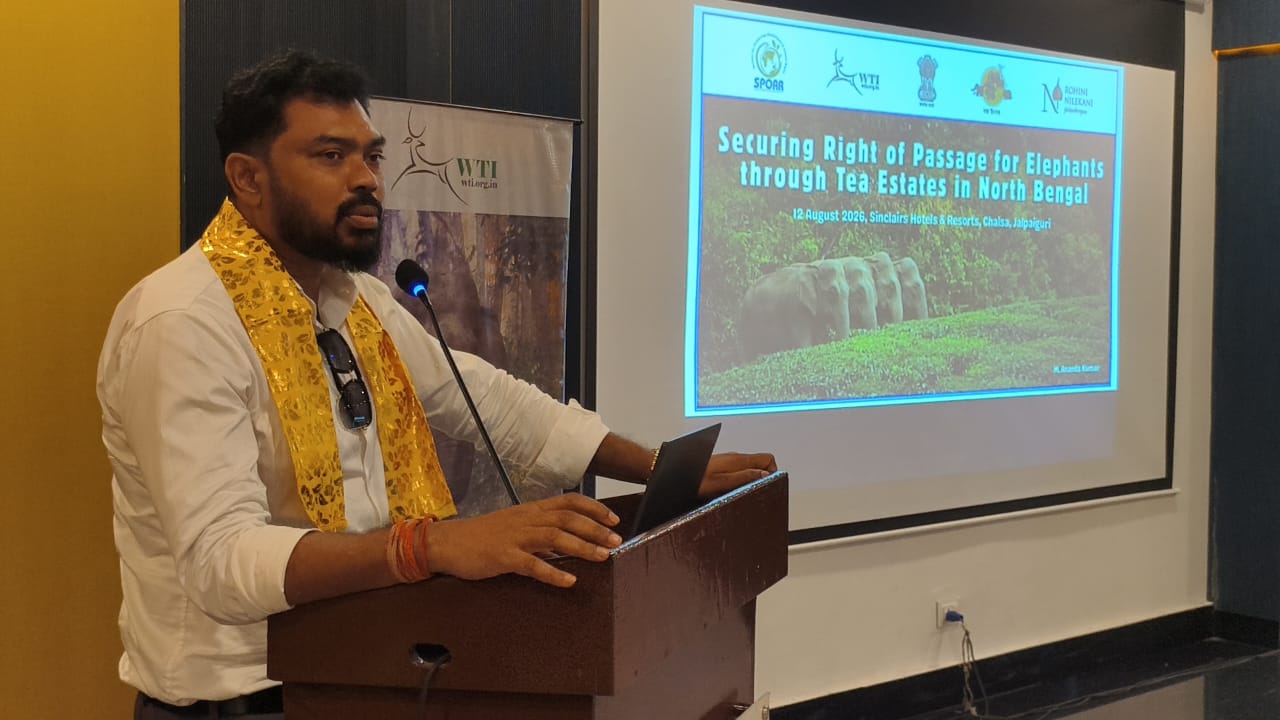
Hon’ble Forest and Environment Minister of West Bengal, Manoj Kumar Oraon, assured full support to our initiatives for elephant conservation in the state
A key focus of the meeting was the introduction of a proposed ‘Elephant-Friendly Tea Estate Charter’, envisioned as a practical framework to help tea estates translate their commitment to coexistence into action. The framework highlights the need for improved preparedness, stronger coordination among stakeholders, practical implementation of coexistence measures, and continued monitoring and learning. Complementing the Charter was a set of proposed actions for tea estates, including maintaining safe elephant movement pathways, promoting elephant-friendly infrastructure and fencing practices, strengthening staff preparedness, supporting monitoring efforts, and fostering knowledge-sharing across the tea estates. Together, these initiatives aim to encourage a coordinated, landscape-level approach to securing elephant passage through North Bengal’s tea estates while supporting the safety of workers, communities and estate operations.
From Dialogue to Action
The discussions at the meeting highlighted that securing elephant passage through tea estates will require action on several fronts. A range of factors contributing to conflict were identified, from habitat fragmentation and encroachment to unsafe electrical infrastructure, fencing, crowding and gaps in coordination. A recurring message was that elephants do not necessarily create conflict simply by moving through human-dominated spaces; rather, the way people respond to their presence determines whether a passage remains safe or escalates into a conflict situation.
Fencing and trenches can obstruct traditional elephant routes, while crowds gathering to photograph or film elephants can further disturb animals. The need for a clear protocol for crowd management was therefore highlighted, alongside awareness for workers, residents and visitors. Tea estate representatives also shared experiences of managing panic when elephants enter labour lines or other estate areas, emphasising the need for better preparedness and coordinated response.
The meeting also drew attention to the role of human activity in shaping conflict. Alcohol consumption was identified as a concern in some areas, while illegal encroachment and construction within and around tea estates were described as growing challenges. Vacant areas of estates are increasingly being occupied for houses, restaurants and plantations, potentially reducing open spaces available for elephant movement. Non-workers highlighted difficulties in accessing compensation for elephant-related damage in long-established tea estate settlements. As families of workers have lived and expanded these settlements across generations, they do not possess the property documents or proof of residence required for compensation claims. They therefore called for a more streamlined verification and compensation process, with greater coordination between tea estate management, district administration and revenue authorities. Participants called for greater involvement of district administration, police and revenue authorities in addressing such encroachments.
Tackling Immediate Risks
One of the most concrete areas of discussion was the risk posed by electrical infrastructure. Survey findings presented during the meeting identified several vulnerable locations, including 27 places where power lines were below 10 feet and another 27 where lines were between 10-13 feet. Sagging lines, bent poles and low transformers were also identified as concerns. Electrocution was highlighted as a significant cause of elephant mortality, underscoring the urgency of addressing these points.
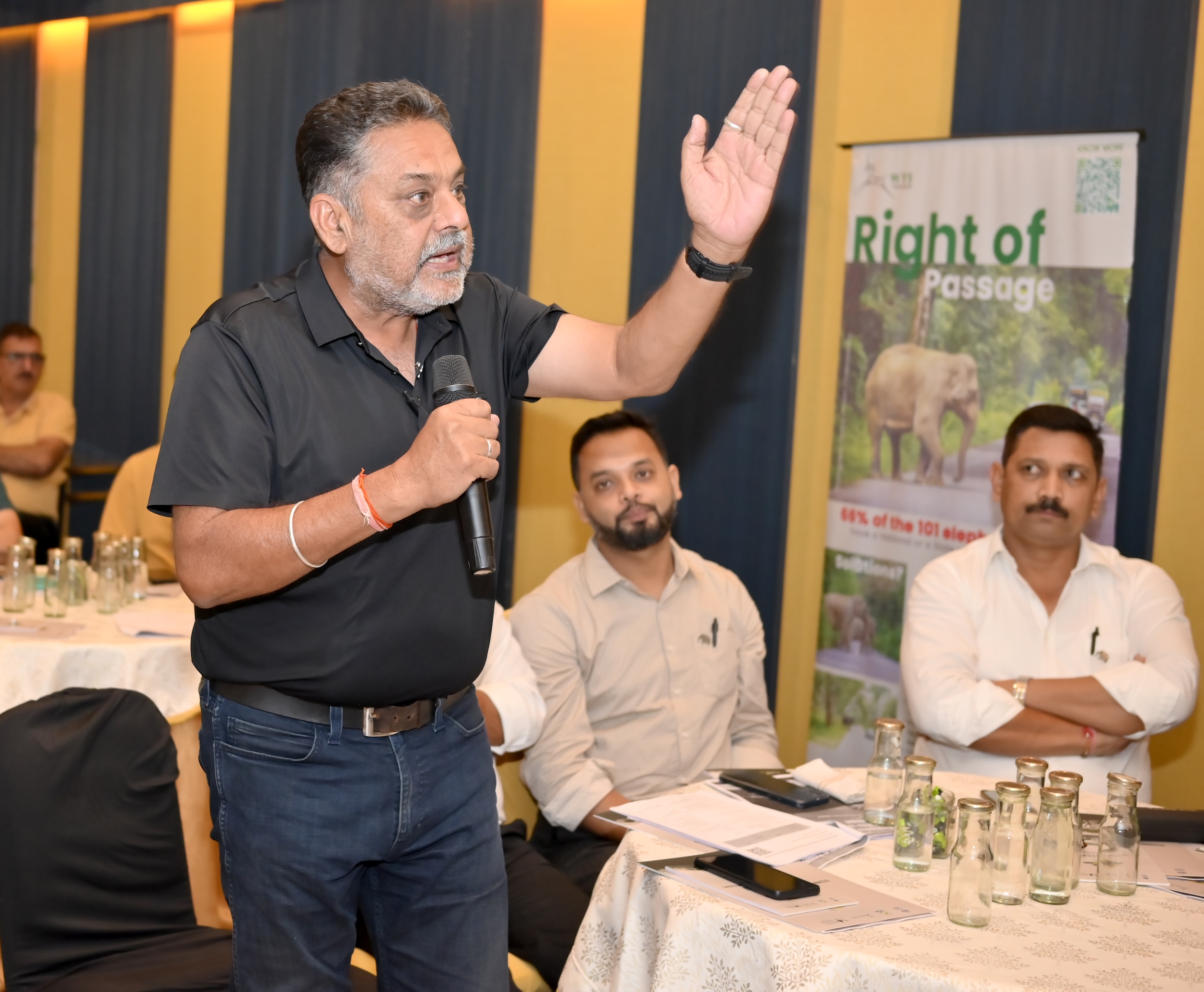
The event provided a platform for various stakeholders to exchange ideas and share challenges and insights.
A practical process was discussed: verify the identified locations, prioritise the most vulnerable infrastructure, correct the problems and close the issues once remedial work is completed. Tea garden management and the Forest Department would support verification on the ground, while the West Bengal State Electricity Distribution Co. Ltd. (WBSEDCL) would identify and address unsafe electrical infrastructure.
WBSEDCL representatives came forward to outline several measures that could support this process. Unsafe or sagging lines and bent poles can be reported through the Bidyut Prahari application, while GPS locations could be used to identify vulnerable transformers and other infrastructure requiring correction. Conversion of several lines to ABC lines is already underway, while the possibility of converting HT lines to cable was also discussed, although the higher cost involved remains a consideration.
The Tea Association of India (TAI) committed to supporting and participating in regular awareness programmes and strengthening coordination among relevant agencies to address negative human–animal interactions. For tea estates, the discussions translated into a more active role in monitoring and prevention. Estate management expressed their willingness to use data on elephant movement and critical pathways, once shared, to identify and remove problematic barriers within their estates. They noted, however, that a few fallow patches associated with new tea plantations may require further consideration, as Guatemala grass (Tripsacum laxu) has been planted in these areas and can be potentially harmful to elephants if consumed. The Tea Board of India’s Plant Protection Code (April 2026, v19.0) advises planting it in vacant/fallow patches inside mature tea areas as a rehabilitation crop, and it’s also used in India and Sri Lanka as a non-host rotational grass to suppress root-rot inoculum before replanting
Strengthening Collaboration on the Ground
The meeting recognised that these measures can only succeed if information and responsibility are shared across institutions. Participants therefore discussed creating a multi-stakeholder mechanism bringing together tea garden managements, the Forest Department, district administration, the Revenue Department and NGOs, with wider coordination involving the Tea Association of India, the Dooars Branch Indian Tea Association, electricity authorities and other agencies.
The mechanism would help to ensure that information about elephant movement, vulnerable infrastructure, conflict incidents and recurring problems reaches the agencies best placed to respond. Regular meetings were suggested to maintain this coordination, with an annual multi-stakeholder forum proposed. Developing a structured feedback form for tea estate managers was proposed, allowing recurring challenges and support requirements to be documented systematically.
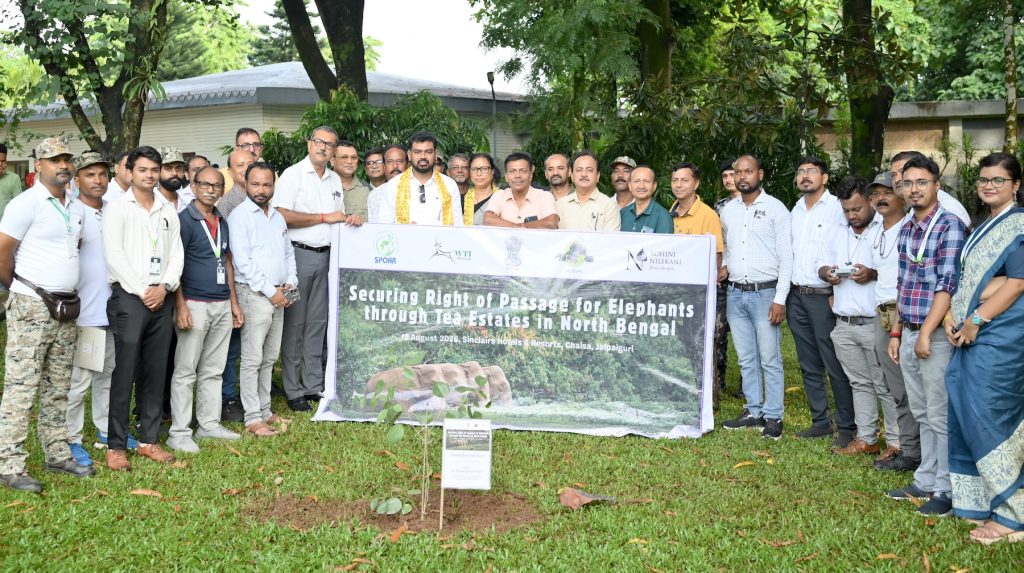
Sapling planted by Hon’ble Forest and Environment Minister of West Bengal to mark World Elephant Day
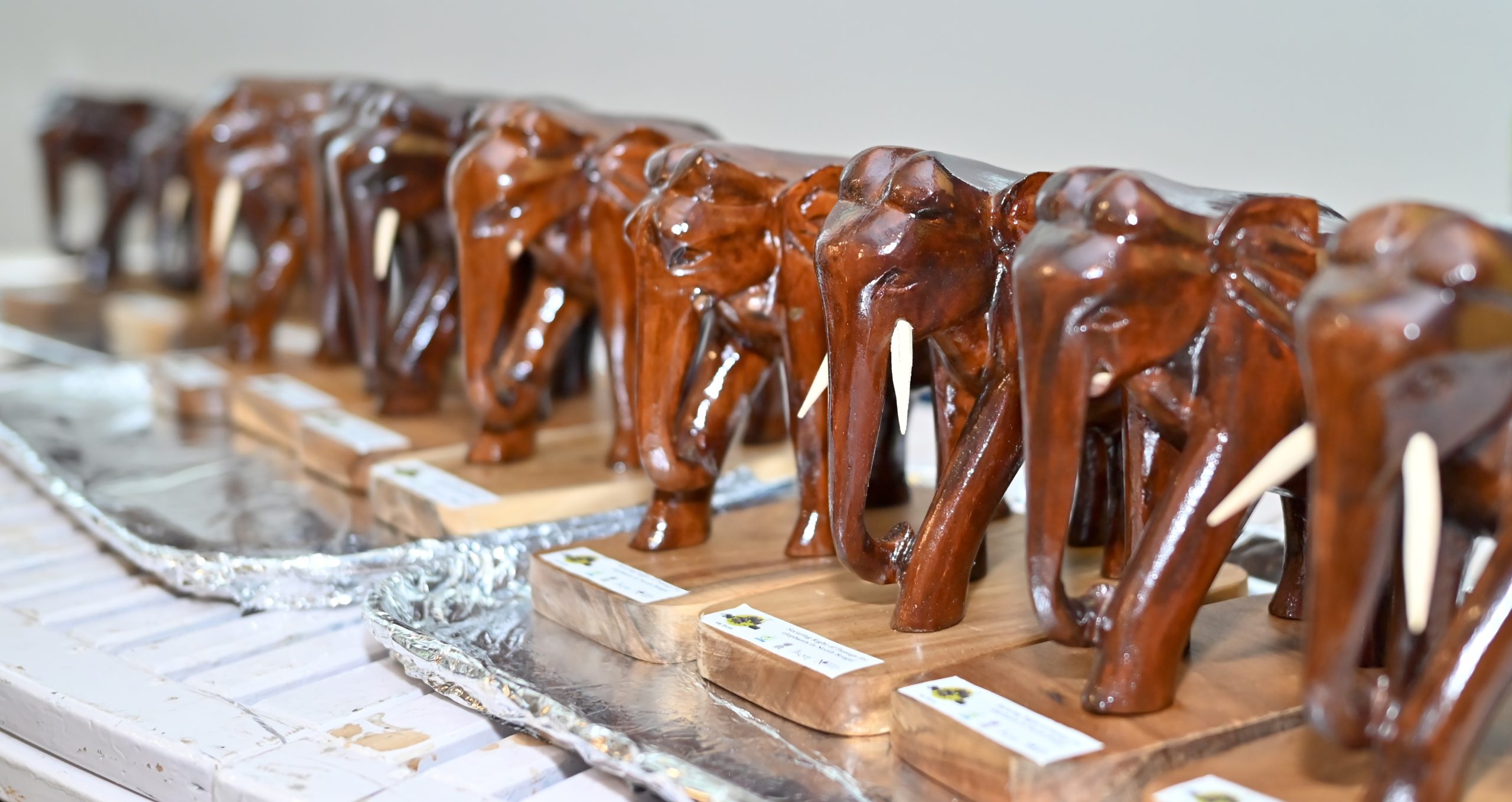
The Forest Department’s role in this collaborative approach was also discussed. While participants acknowledged constraints including shortages of staff, vehicles and fuel, the need for stronger support to frontline response teams was emphasised. The PRT team was noted to have undertaken seven rescues, demonstrating the importance of coordinated rapid response. Also discussed was the value of recognising the contribution of frontline staff, building on existing efforts to provide certificates and token awards to locomotive pilots who have supported elephant rescue and mitigation efforts.
The workshop therefore marked an important step in bringing the different institutions that shape North Bengal’s tea landscapes into a common conversation. With tea estates, government departments, electricity authorities, district administration, police and conservation organisations each contributing different capacities and responsibilities, the next challenge will be to translate these discussions into sustained action.