In the company of dholes: A rare encounter in Valmiki Tiger Reserve
There are certain places that you get drawn to — not because of the noise, but for a certain stillness. A whisper through the leaves of the towering sal (Shorea robusta) trees, a hush across the riverbed, a silence so profound that it sharpens your senses and slows your breath. Valmiki Tiger Reserve in Bihar, has been one of those experiences for me. It is a place that doesn’t boast, but simply waits — for you to listen, to feel and to witness.
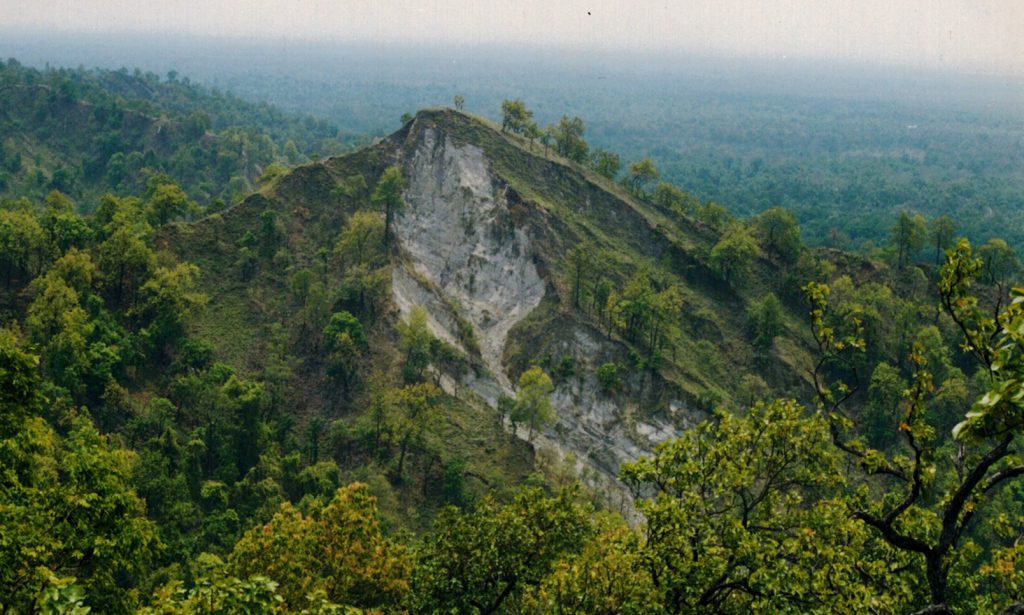
the landscape of Valmiki Tiger Reserve | Photograph by Dr. Samir K Sinha / WTI
For me, Valmiki is more than just a Tiger Reserve, it is where the wild first revealed itself to me—not through textbooks or photographs, but through an experience so raw, so elemental, it shifted something inside me. It was here that I first locked my eyes with a majestic Bengal Tiger (Panthera tigris tigris), back in April 2023, in the trembling quiet of its own kingdom. That moment taught me reverence. I thought nothing could rival the awe I felt that day.
But Valmiki had other plans.
A miraculous turn in the trail
We were making our way back from T-3 APC (Anti-Poaching Camp) after a long, eventful day in Naurangiya Doon, where our team was bringing together a Primary Response Team (PRT). PRTs consist local volunteers who would act as the first line of response during times of wildlife emergencies, assist in enforcement initiatives and would be our eyes on the ground. Our vehicle crept along the winding trail of a remote forest that traces the edges of the Valmikinagar and Ganauli Ranges. The sky, now deepening into dusk, was losing its light, and in the distance, the first tendrils of a storm had begun unfurling. The air was thick with a quiet tension—the wind had risen, the forest had gone still, and everything around us seemed to hold its breath, as if waiting for something.
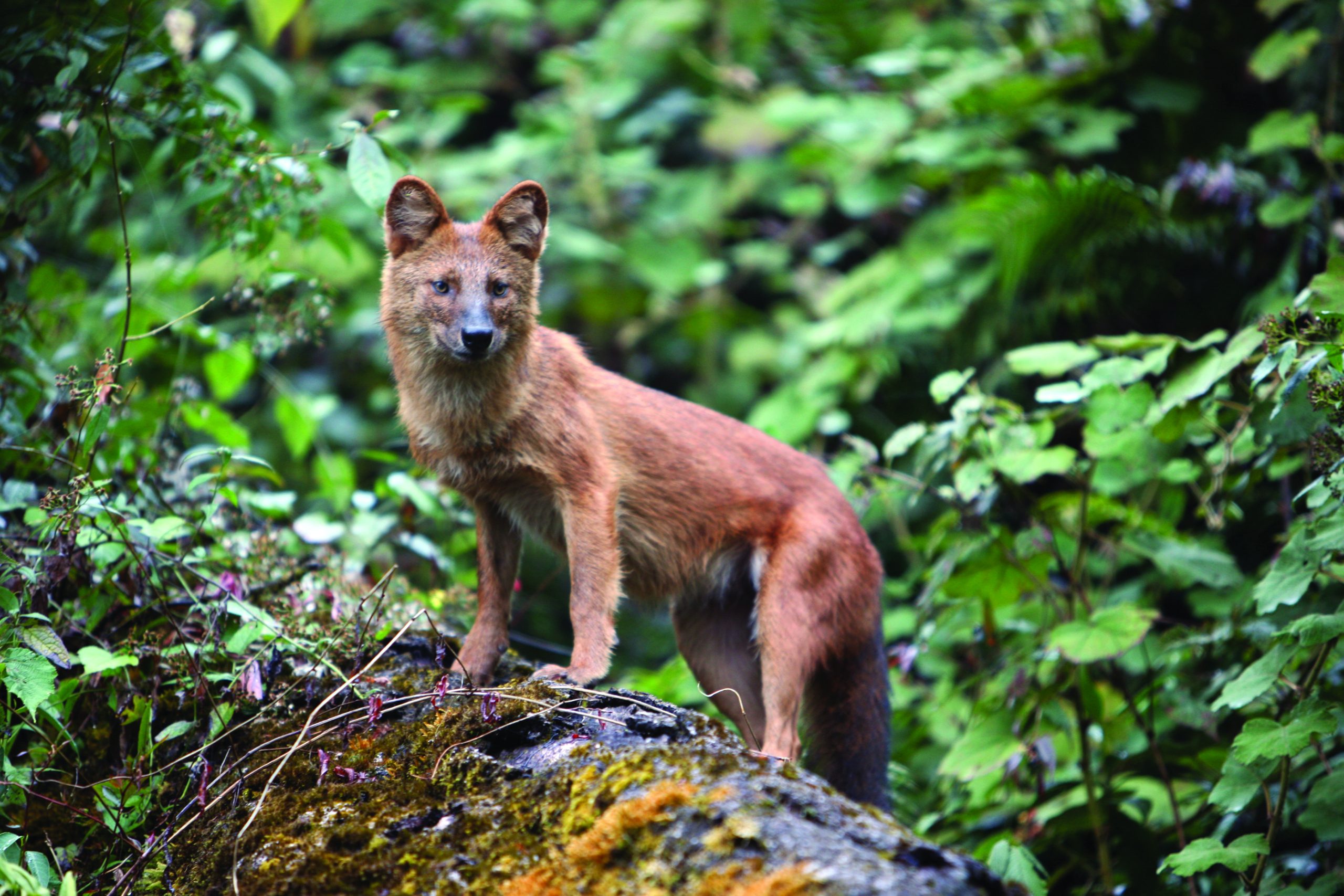
It was an overcast evening, and as storm clouds were gathering over the Sonha River, the forest opened another secret door. Lurking behind was something just as rare, just as wild – a pack of dholes (Cuon alpinus), India’s elusive wild dogs, moving like whispers across the undergrowth.
At first, they were barely noticeable — a shift in movement, a tussle in the undergrowth. But then, one by one, they emerged. A pack of wild dogs moving swiftly but silently across the forest floor. Their reddish coats gleamed faintly in the evening light, their forms sleek and muscular. There were about eight to ten of them, all alert and graceful, slipping through the terrain with a rhythm that spoke of deep instinct and cooperation. One stood still, scanning us from a slight elevation by the riverbank. The others moved like liquid through the leaves, scouting, pausing, regrouping, all in perfect, wordless harmony. They didn’t bark or growl. They didn’t run. They simply appeared—and then, as if cued by the wind, vanished into the jungle’s embrace. We sat still, awed. The jungle had shown us something few get to see—and fewer still forget.
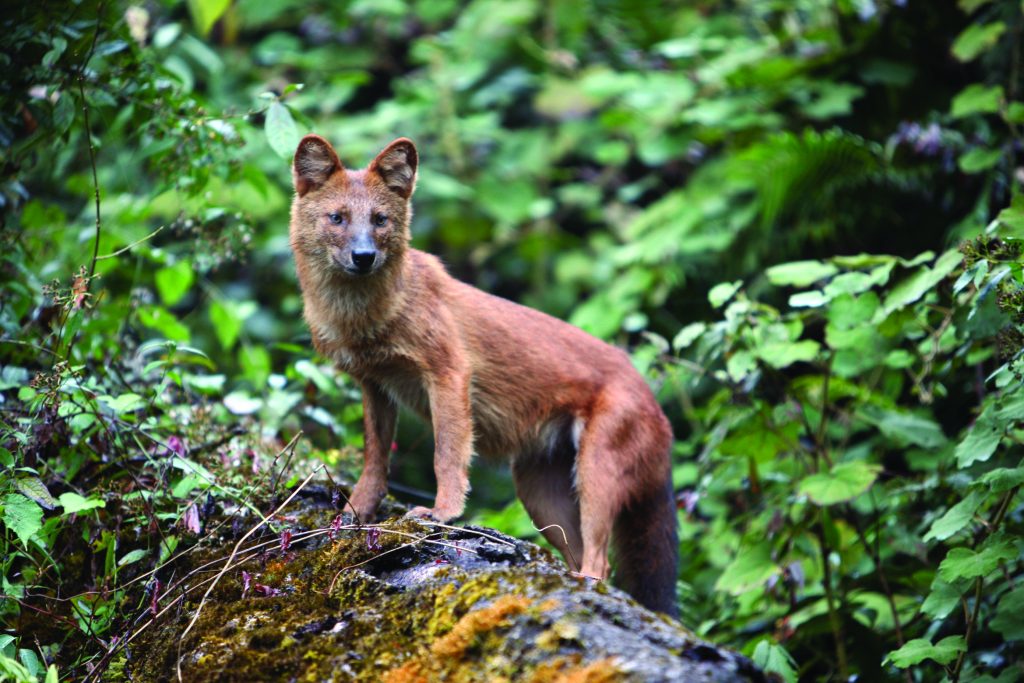
Wild Dog from Pakke Tiger Reserve | Photograph by Shibani Chaudhury
Valmiki: my forest of firsts
As the first drops of rain began to fall, it hit me. This forest—Valmiki—had given me not just one, but two of my life’s most powerful wildlife encounters. My first tiger and my first dhole – Both here, both unexpected and both deeply humbling.
Tigers are solitary, silent symbols of majesty. Seeing one in the wild was like watching royalty pass by in silence. Dholes, on the other hand, are communal, coordinated and quick. They’re the forest’s whispering tacticians—less appreciated, but no less fascinating. To have those encounters unfold naturally, while simply moving through the landscape is a gift I’ll never take for granted.
In India’s conservation story, dholes are often overshadowed by tigers, leopards, and elephants, but they too are apex predators. Social, intelligent and efficient hunters, they play a critical role in maintaining the ecological balance. And yet, sightings remain rare due to shrinking habitats, their declining numbers and their elusive nature.
Reflections on the way back
Driving away slowly from the trail, with thunder rolling in the distance and the canopy dripping the first drops of rain, I felt deeply grateful to have been a part of the plan! This evening, I didn’t just see one of the most enigmatic animals but witnessed the pulse of the wild—the rhythm of something far greater than myself.
Valmiki Tiger Reserve is not just Bihar’s pride, but one of India’s most remarkable but lesser-known wilderness. Its raw beauty, rich wildlife, and tranquil landscapes offer more than just sightings—they offer a deep connection with nature. Every visit here teaches you something new, quietly reminding you of the delicate balance and wonder of the wild. In Valmiki, the forest doesn’t need to shout; its silence says it all. I feel fortunate to be part of a project that aims to protect these very habitats and the wilderness it hosts.

Joint anti-snare walks by members of PRT, Forest Department and WTI in Valmiki Tiger Reserve | Photograph by Madhumay Mallik
A Collective Commitment to Conservation
The resurgence of wildlife in Valmiki Tiger Reserve, including rare sightings of species like the dhole, is a testament to the unwavering commitment of the Bihar Forest Department to conservation. Over the years, the department has invested whole-heartedly in protecting and managing the reserve’s rich biodiversity. Supporting these efforts, the Wildlife Trust of India (WTI) has played a crucial assisting role, particularly through its Wildlife Crime Control Assistance initiative along the Indo-Nepal Border, supported by the Bureau of International Narcotics and Law Enforcement Affairs (INL). By helping to strengthen patrolling protocols and training frontline staff, WTI has complemented the Bihar Forest Department’s work in securing the landscape. This collaborative approach has significantly curbed illegal wildlife activities and improved habitat security, allowing Valmiki’s elusive species to make a comeback. Today, the forests of Valmiki are a testament to conservation, co-existence and hope.
by Pavel Ghosh, Wildlife Crime Control Division