
Saving Gharials – One Egg at a Time
The Gandak River basin hosts one of the few remaining and the second-largest breeding population of gharials. Categorised by the IUCN Red List as Critically Endangered, this reptile relies on natural sandy dunes along river banks to lay its eggs. Females lay clutches of 40-50 eggs once a year, on high sandbanks for natural incubation and in a few months, the hatchlings are ready to crack through the shells, making their way into the waters. Even afterwards, the hatchlings will need to stay by their parents’ side for more than a month, for security. Eventually, they will disperse along the river, but only a few will make it to adulthood. Their survival heavily depends upon the elements, and us.
India’s Crocodile Conservation Project
India’s Crocodile Conservation Project was launched in 1975 to address the rapid decline of species like the gharial, saltwater crocodile and the mugger. With assistance from the United Nations Development Program (UNDP) and the Food and Agriculture Organisation (FAO), the Indian Government launched the project targeted at protecting the last remaining wild population. By collecting the eggs laid in the wild, the strategy was to rear the artificially hatched hatchlings in a specially designing rearing pools, and once they grew to about 1.5 meters, they were released in protected rivers. This ‘Grow and Release Program’ was launched in Odisha (Tikarpada in Satkosia for gharials and Dangamal in Bhitarkanika for saltwater crocodiles) and Uttar Pradesh (Kukrail in Lucknow and along the Girwa River in Katerniaghat for gharials), targeted at stabilising the population of India’s two of the three crocodilian species. By 1979, at least nine other Indian states and one Union Territory joined the project.
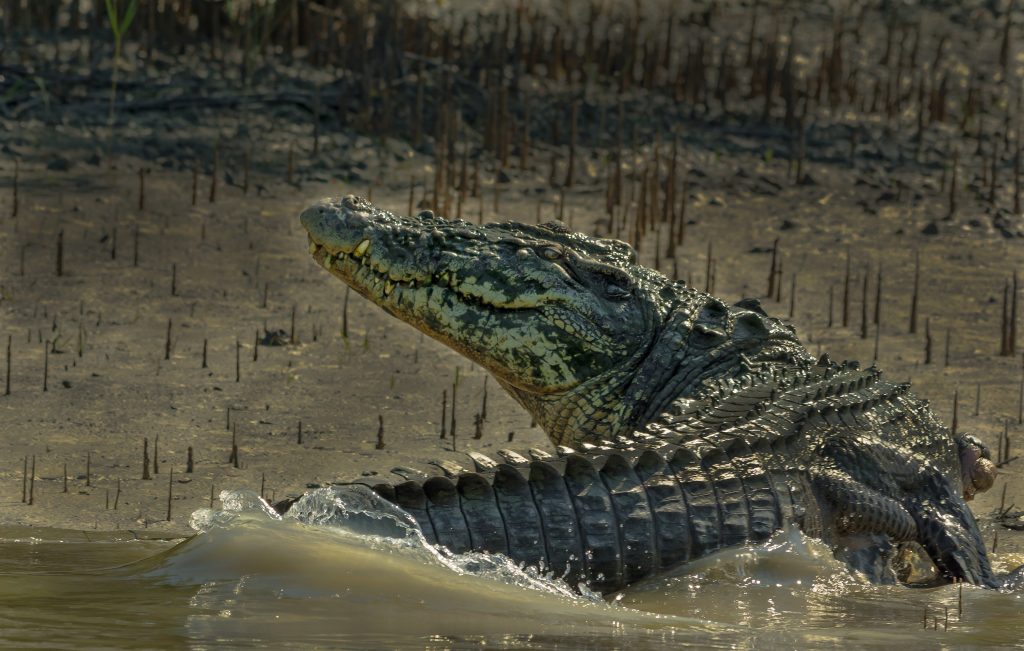
Salt-water crocodile in Sundarbans, West Bengal | Photograph by Satyaki Naha
India, Nepal and Bangladesh are the last remaining habitats for the gharial, unique to the river systems of the Ganges, Brahmaputra, Indus, Irrawaddy and Mahanadi (the only peninsular river). The species became extinct in the rivers of Bhutan, Myanmar and Pakistan in the past decades. The threats included changes in habitats due to the construction of barrages and dams, destructive fishing practices, illegal sand mining activities along crucial riverbanks destroying nesting habitats and targeted hunting for skin and traditional medicinal practices and collection of eggs for aphrodisiac medicine. By the early 70s, gharials were almost on the verge of extinction in India, with wild nests recorded in single digits. The last breeding populations were restricted to the tributary rivers of the Ganges such as Chambal, Gandak and Girwa in India and Narayani and Rapti in Nepal. Furthermore, in 1975, there was also one surviving wild population that was documented in the Mahanadi River, Odisha.
The Crocodile Conservation Project led to the establishment of twenty crocodile rearing and rehabilitation centres and eleven crocodile sanctuaries, including the notification of the National Chambal Sanctuary in 1978-79. A Crocodile Breeding and Management Training Institute was established in 1977 in Hyderabad to train personnel on captive breeding and management of the reptiles, as well as managing their population in protected areas. By 2025, the conservation efforts had brought back all three species from the brink of extinction. India currently hosts 80% of the global gharial population, numbering over 3000 and over 2000 saltwater crocodiles in Bhitarkanika, Sundarbans and the Andaman and Nicobar Islands. Further, there are between 9000-10000 muggers in their entire distribution range in the country.
“Though Bihar was not a state under India’s Crocodile Conservation Project, it contributed the first clutch of gharial eggs from the Gandak River Basin to kick-start the gharial conservation program in Tikarpada, Odisha in 1975”, states Prof. B.C. Choudhury, who started his career with the Tikarpada Centre and is a first-generation crocodile biologist in India. Also the senior advisor (aquatic realm) for Wildlife Trust of India (WTI), Prof. Choudhury adds that “It was the WTI’s Gandak Gharial Recovery Project which was initiated in 2014, in collaboration with the state forest department, that started the strategic interventions required to stabilise the gharial population in the Gandak River Basin, which now has the second largest wild population of the species in the country”.

Juvenile gharials in the Gandak River Basin | Photograph by Madhumay Mallik/WTI
The Gandak Gharial Project
“The reason for the survival of the gharial along the Gandak, Girwa and Chambal Basin can be attributed to minimal human disturbance and habitat degradation due to the remoteness of the landscape, offering natural protection to the species, as opposed to other riverine habitats hosting gharials across the country. Furthermore, Gandak is a fast-flowing river, and its constant meandering has resulted in regular erosion and flooding, making its banks unsuitable for human settlements. However, the meandering river and high-rise sandbanks along the Gandak makes it perfect for gharials”, explains Dr. Samir K. Sinha, Chief Ecologist at Wildlife Trust of India (WTI). Gharial, as a species, are very shy in nature, highly sensitive to environmental changes and uses high sandbanks to lay eggs. The species along the Gandak Basin were far from human habitation, but they too have been facing increasing anthropogenic pressure in the past few decades.
“WTI’s team, in collaboration with the Bihar Forest Department and local fishers, has been working relentlessly since 2014 to ensure protection for the species along the Gandak Basin. The first line of action was to strengthen the remnant population by restocking captive-hatched and reared individuals from the Patna Zoo. Post release monitoring showed positive results, with 60% of the released gharials identified in the same stretch of the river after a six-month period and sharing habitat with wild individuals”, explains Subrat Kr. Behera, the project head.
The WTI team roped in local fishers as nest locators and watchers and spread awareness about the declining numbers. During the country-wide Covid lockdown in 2020, these local watchers saved as many as 94 eggs from getting washed away due to riverbank erosion. With support from the Forest Department, the project team has been constantly tracking the remote river banks of the Gandak.
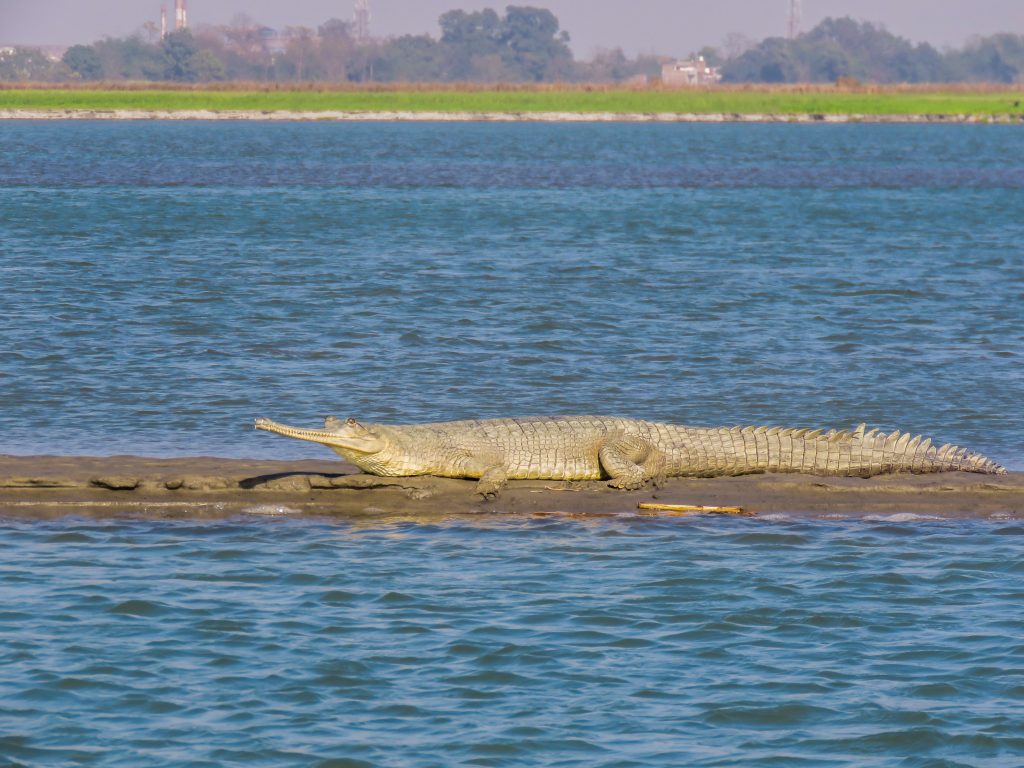
Gharil basking mid channel island in Gandak River | Photograph by Subrat Kr. Behera/WTI
“The nests on the Gandak banks are prone to being washed away by floodwaters every year during the monsoon. While the loss due to rising water levels is a natural process, problems arise when the flooding is human-induced, such as the release of a large volume of water from an upstream barrage. This has been a cause of concern and calls for proactive interventions to enhance the breeding success of the species”, adds Mr. Behera.
Patrolling along the river starts in early March when the team looks for movements of female gharials along nesting sandbanks and any other signs that hint towards the existence of a nest. Once a nest is confirmed, the team continuously monitors the site till the hatchlings come out around the month of June. If it’s too close to the riverbank and is at risk of getting swept away, the team relocates the nest for natural incubation. In other instances, the team, supported by nest watchers, will constantly monitor the site and be on guard till the hatchlings come out and make their way to the river. The threat of targeted hunting, poaching of eggs and destructive fishing practices, which also affected the population of gharials here, was mitigated through conscious consensus, community awareness and stricter enforcement measures. In the past five years, between 2020 and 2024, the team has assisted in the successful hatching of more than 640 gharials, resulting in the much-needed augmentation of the population of the species in the Gandak River.
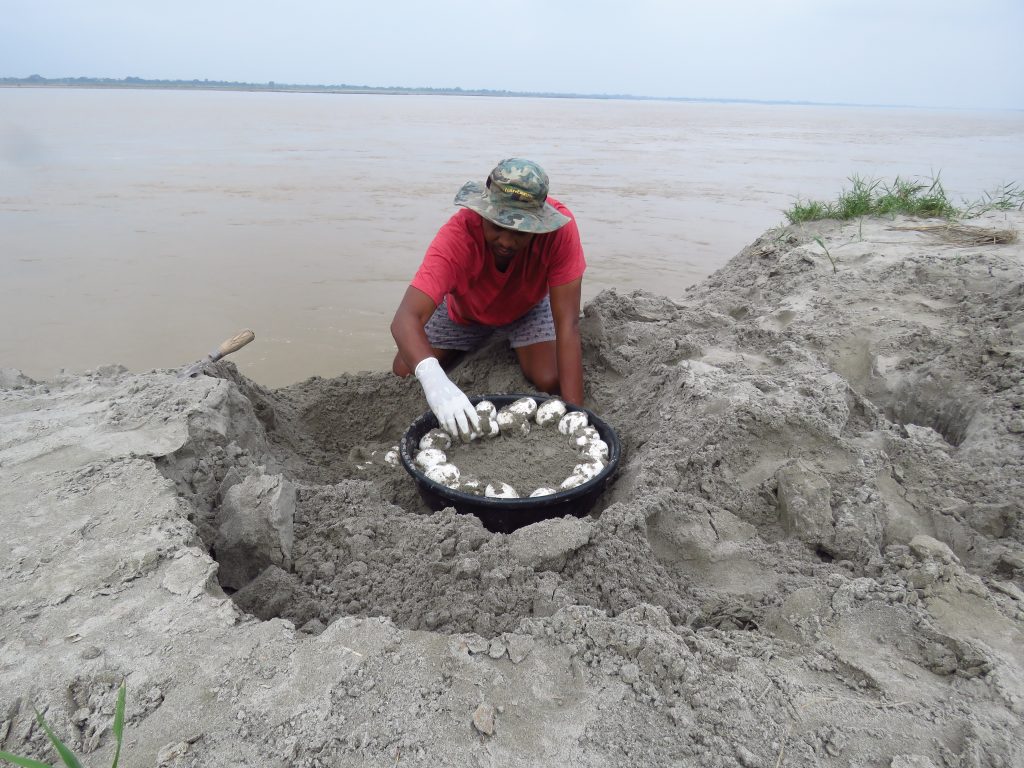
Relocating gharial nest in the Gandak River Basin | Photograph by Pappu Yadav/WTI
“Bihar is rich in aquatic biodiversity, and the state is proactively working towards both in-situ and ex-situ conservation. With respect to the gharial, our sustained and collaborative efforts have led to a remarkable recovery of the species in the Gandak River over the past decade. This commitment will continue to strengthen the status of the gharial and associated aquatic wildlife”, said Shri. Arvindar Singh, Chief Wild Life Warden, Environment, Forest & Climate Change Department, Government of Bihar. In 2025, the team has been monitoring six nests along the banks of the Gandak and as of 17th June, more than 150 successful hatchlings have been recorded to have moved to the river.
50 years of crocodile conservation in India (1975 – 2025)
Back in Odisha, thanks to India’s Crocodile Conservation Project, there have been reports of natural hatching of 29 gharial in the Mahanadi River along the Satkosia Tiger Reserve this year. This is the fifth consecutive time that the threatened species have naturally bred in these waters, adding to the country’s gharial breeding landscape. It is the southernmost habitat of these fish-eating reptiles. However, the most important success is reflected in the 450-km-long tri-state National Chambal Sanctuary, spanning over Madhya Pradesh (1978), Uttar Pradesh (1979) and Rajasthan (1983) where the recent population of gharial is estimated to be over 2000 and over 400 nests are being monitored every year. Gharial breeding in the wild was also observed in the Corbett Tiger Reserve, Son River, Sharda River and Ghagra, and the species might also have possibly bred in the main stem of the Ganges in the Hastinapur Wildlife Sanctuary, Uttar Pradesh. The gharial has also been restocked in the Beas Conservation Reserve in Punjab in an attempt to take the species to its former distribution range in the Indus Basin.
2025 marks 50 years of crocodile conservation efforts for India. For Bhitarkanika National Park, which had a declining population of just 95 saltwater crocodiles in 1975, the numbers for the species have now gone up to over 1,800. Saltwater crocodiles in Sundarbans are estimated to be over 250, and the numbers are similar for the Andaman and Nicobar Islands. Projects like the National Chambal Sanctuary and the Gandak Gharial Recovery Project (led by the Bihar Forest Department and WTI) have contributed to a significant increase in the number of gharials, from about 200 in 1976 to more than 3,000 in 2025. Similarly, for muggers, strategic conservation efforts and awareness initiatives have helped the numbers rise from a scattered and isolated population of about 200 in 1975 to more than 8000 individuals in 2025.
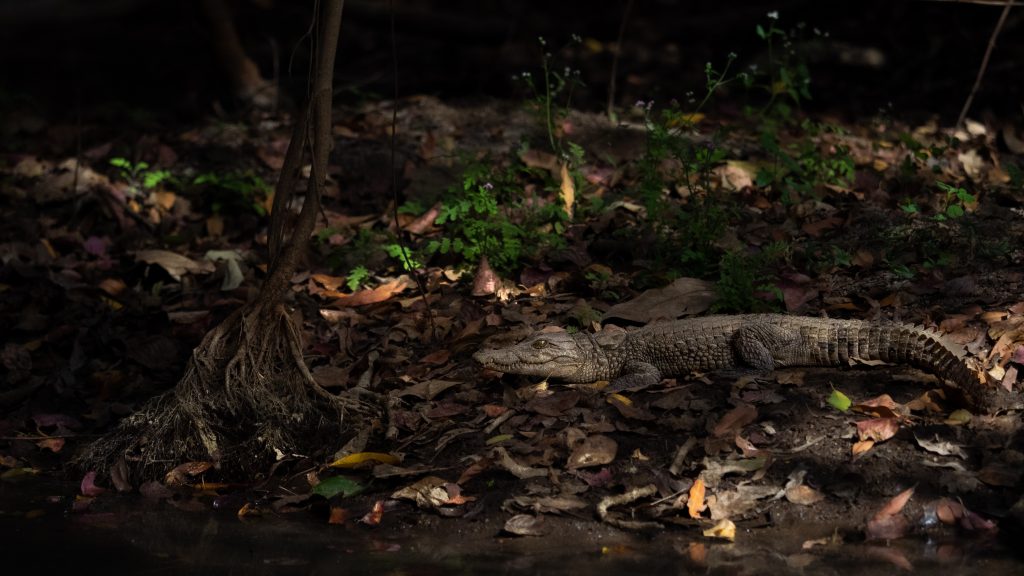
Mugger crocodile in Gir, Gujarat | Photograph by Adil Arif/WTI
The honourable Prime Minister of India has recently announced the initiation of a new conservation project for gharials at the seventh meeting of the National Board for Wildlife (NWB), held in Gir, Gujarat. “The success achieved in Gandak, Chambal and other locations will certainly be a cornerstone to the future of gharial conservation in the country. The new project will ensure that the gharial is re-established into its former distributional range in the country”, adds Prof. Choudhury.
Protecting the local population from habitat expansion
Looking for undisturbed river beds, gharials will disperse hundreds of kilometres from their natal sites, for newer suitable habitats. In fact, a gharial that was released in the Rapti River in Nepal had made its way to the Hooghly River in Nadia in 2020, more than 850 kilometres downstream. The current data proves that protecting a local population ensures that the species has a safe breeding ground and eventually expands its range beyond such areas. “This also necessitates that our conservation measures are extended beyond known breeding grounds and along these vital river systems. Protecting crocodile habitats automatically ensures that other key riverine wildlife, including the Ganges river dolphin, smooth-coated otters, northern river terrapins and a variety of birds and fishes also find safe haven”, adds Dr. Sinha.
By Madhumay Mallik